How Much Is Self Portrait at the Age of 63 Worth?
Last updated: July 28, 2026
Quick Facts
- Last Sale
- $51.1 (1851, Christie, Manson & Woods, London)
- Methodology
- extrapolation
Hypothetical fair-market value for Rembrandt’s Self Portrait at the Age of 63 (1669, National Gallery, London) is estimated at $180–250 million. This reflects the work’s pinnacle status within the artist’s oeuvre, near-zero supply of comparable masterpieces, and nine-figure benchmarks for top Old Masters, led by Rembrandt’s 2016 Marten & Oopjen portraits and reinforced by recent trophy-portrait outcomes.
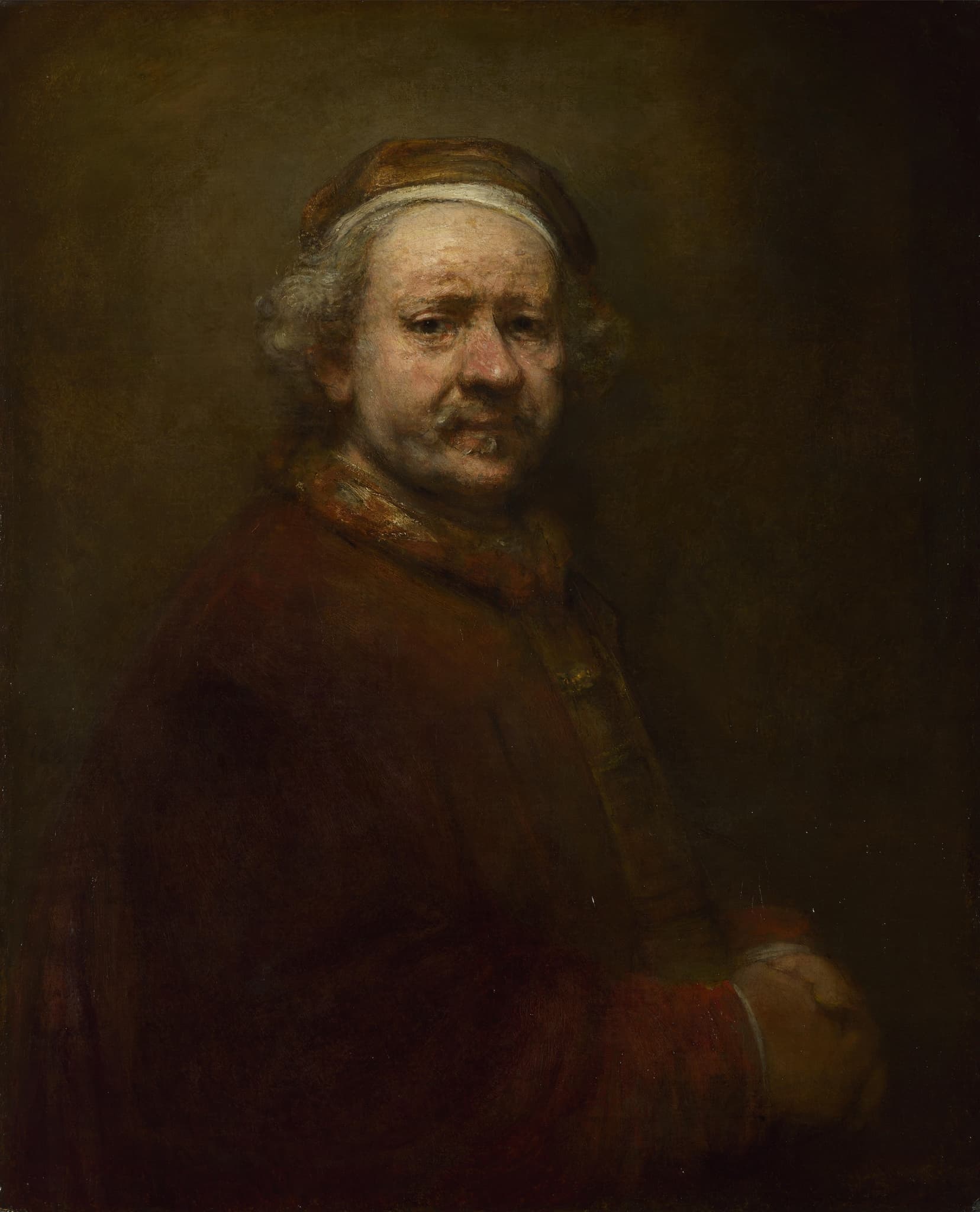
Self Portrait at the Age of 63
Rembrandt van Rijn, 1669 • Oil on canvas
Read full analysis of Self Portrait at the Age of 63 →Valuation Analysis
Conclusion: We estimate a hypothetical fair‑market value of $180–250 million for Rembrandt van Rijn’s Self Portrait at the Age of 63 (1669; National Gallery, London). This late self‑portrait—painted in the year of the artist’s death—is one of the most iconic images in Rembrandt’s oeuvre and in all of Western art, a canonical summary of his late style and a work reproduced in virtually every survey of Baroque painting [1].
Method and key benchmarks: Because securely attributed, museum‑caliber Rembrandt oils rarely trade publicly, we extrapolate from the most relevant trophy comparables. The clearest modern anchor is the 2016 joint acquisition of Rembrandt’s full‑length pendant portraits of Maerten Soolmans and Oopjen Coppit by the Rijksmuseum and the Louvre for about €160 million in total (≈$180 million at the time), or roughly €80 million per painting—establishing nine‑figure pricing for blue‑chip Rembrandt portraits [2]. Public auction evidence is structurally lower: the artist’s auction record stands at $33.2 million (Christie’s London, 2009), while broader Old Master demand at the top end is evidenced by Botticelli’s $92.2 million portrait in 2021 [3][4].
Why this work warrants a premium: Within Rembrandt’s market, a last‑year self‑portrait is a pinnacle category. It concentrates biography, art‑historical importance, and cultural resonance in a single image. Late self‑portraits of this caliber are effectively unobtainable, and nothing of truly equivalent subject, date, and art‑historical weight has been publicly available in modern times. Against the per‑work benchmark implied by the Marten & Oopjen transaction, an iconic late self‑portrait merits a substantial “trophy premium,” placing it well beyond the artist’s public auction record and plausibly above other Old Master portrait records [2][3][4]. The 2020 sale of an earlier, small self‑portrait at $18.7 million underscores the depth of demand for the category even at modest scale and early date, reinforcing the upward extrapolation for a masterpiece of 1669 [6].
Market context and constraints: Demand for singular, museum‑quality Old Masters remains concentrated yet deep at the very top, with institutions and UHNW private collectors competing selectively for “best‑in‑class” works. While the National Gallery’s statutory framework makes any sale or export of this painting highly unlikely, its institutional stature, impeccable provenance, and iconic status amplify perceived value in a hypothetical market scenario [1][5]. As with any 17th‑century oil, realized price would be sensitive to current condition and technical state; absent a recent public report, we build a prudent range that reflects both scarcity and potential variance at auction or private treaty.
Bottom line: Calibrated against the 2016 Rembrandt pendant benchmark, the artist’s public auction record, and contemporary trophy‑portrait results, Self Portrait at the Age of 63 supports a confident $180–250 million valuation in today’s market, subject to standard considerations of condition, venue, and deal structure [2][3][4][6].
Key Valuation Factors
Art Historical Significance
High ImpactPainted in 1669, the year of Rembrandt’s death, this self‑portrait is a capstone of his late style—both technically and psychologically profound. It encapsulates the hallmarks of his mature manner: bravura handling, thick impasto, and searching realism. As one of the most reproduced Rembrandt images worldwide, it occupies a unique place in art history, scholarship, and public consciousness. That cultural centrality commands a premium over even highly important Rembrandt portraits of sitters, as few works communicate the artist’s legacy as directly as his final self‑portraits.
Rarity and Market Scarcity
High ImpactFully accepted Rembrandt oils are scarce; late masterworks are rarer still; and late self‑portraits of this caliber are virtually unobtainable. Supply is constrained by the fact that a vast majority of top Rembrandts reside in public collections and have done so for generations. The absence of close substitutes in private hands produces a pronounced scarcity premium. This scarcity also dampens the usefulness of auction records as price ceilings, necessitating extrapolation from the few nine‑figure private transactions and the broader trophy market.
Comparables and Trophy Benchmarks
High ImpactThe clearest modern reference is the 2016 private acquisition of Marten Soolmans and Oopjen Coppit at roughly €160 million combined, confirming nine‑figure pricing for top Rembrandt portraits. Public auction evidence—Rembrandt’s $33.2 million record and Botticelli’s $92.2 million portrait—further clarifies the contemporary ceiling for Old Master trophies when they surface. Against these guides, an iconic late self‑portrait justifies a premium above routine comparables, positioning this work credibly in the mid‑to‑upper nine figures.
Provenance and Institutional Cachet
Medium ImpactThe painting’s long, stable provenance culminating in its 1851 acquisition by the National Gallery, London, confers exceptional credibility and renown. While UK statutory limits make actual disposal exceedingly unlikely, institutional prestige and continual public exhibition enhance brand‑level recognition and desirability in a hypothetical market context. The museum pedigree, coupled with the painting’s icon status, supports a premium valuation, though legal constraints mean the figure functions as a theoretical fair‑market/insurance analogue rather than an imminent transaction level.
Sale History
Christie, Manson & Woods, London
Viscount Midleton sale, lot 78; 10 guineas (£10.5); acquired for the National Gallery.
Rembrandt van Rijn's Market
Rembrandt’s market is exceptionally deep at the top yet chronically supply‑constrained. Fully accepted paintings with strong dates and subjects appear rarely, and public auction records therefore understate real trophy pricing. The artist’s auction record for a painting stands at $33.2 million (2009), while the 2016 joint purchase of the Marten & Oopjen pendants by the Rijksmuseum and the Louvre at about €160 million combined established a modern nine‑figure benchmark for masterwork portraits. Even smaller or earlier self‑portraits can command eight figures (e.g., the 1632 self‑portrait sold in 2020), confirming consistent global demand. Prints and drawings also perform robustly, but the scarcest oils remain the core drivers of peak Rembrandt valuations.
Comparable Sales
Self‑portrait, half‑length, wearing a ruff and black hat
Rembrandt van Rijn
Same artist and subject (self‑portrait in oil). Though early (1632) and small, it is the closest recent auction benchmark for a Rembrandt painted self‑portrait.
$18.7M
2020, Sotheby's London
~$23.5M adjusted
Portraits of Maerten Soolmans and Oopjen Coppit (pendant portraits)
Rembrandt van Rijn
Same artist; top‑tier, museum‑caliber Rembrandt portraits acquired jointly by two national museums. Establishes a clear nine‑figure benchmark for the very best Rembrandt paintings.
$180.0M
2016, Christie's (private sale to the Louvre and Rijksmuseum)
~$243.7M adjusted
Portrait of a man, half‑length, with his arms akimbo
Rembrandt van Rijn
Same artist; mature half‑length portrait in oil and the artist’s auction record. Strong proxy for pricing of major Rembrandt portraits at public sale.
$33.2M
2009, Christie's London
~$50.3M adjusted
Saint James the Greater
Rembrandt van Rijn
Same artist; important single‑figure half‑length in oil (devotional subject). Longstanding benchmark for high‑quality Rembrandt oils at auction.
$25.8M
2007, Sotheby's New York
~$40.5M adjusted
Portrait of a Young Man Holding a Roundel
Sandro Botticelli
Not Rembrandt, but a trophy Old Master portrait result in the current era. Calibrates top‑end demand for canonical Old Master portraits at auction.
$92.2M
2021, Sotheby's New York
~$110.8M adjusted
Current Market Trends
The Old Masters segment is highly selective but resilient, with demand concentrated on rediscoveries, museum‑caliber pictures, and works with unquestioned authorship, condition, and provenance. Trophy portraits by canonical names have led recent cycles, and cross‑category buyers continue to prize cultural resonance over strict period preferences. While most Old Masters transact well below contemporary art’s headline levels, singular masterpieces have tested and exceeded nine figures privately. Against this backdrop, an iconic, final‑year Rembrandt self‑portrait would command exceptional global competition and pricing power, especially under a high‑profile private‑treaty or guaranteed auction scenario.
Study print
Study this painting as a print
Pair the full artwork with a museum-style study sheet focused on one meaningful detail.
Sources
- National Gallery, London – Rembrandt, Self Portrait at the Age of 63 (NG221)
- Musée du Louvre – Acquisition of Rembrandt’s portraits of Maerten Soolmans and Oopjen Coppit
- Christie’s – 8 December 2009 press release (Rembrandt auction record)
- The Art Newspaper – Botticelli portrait sells for $92.2m (28 Jan 2021)
- UK Parliament – Written question on national museums’ deaccession restrictions (2023)
- Sotheby’s – Rembrandt, Self-portrait (1632) London Evening Sale result (2020)