How Much Is The Anatomy Lesson of Dr. Jan Deijman Worth?
Last updated: July 21, 2026
Quick Facts
- Methodology
- comparable analysis
Hypothetical open‑market value is estimated at $12–22 million. The autograph Rembrandt authorship and the iconic “anatomy lesson” subject drive value, while the work’s fragmentary survival, condition compromises, and public‑collection/export constraints cap the ceiling.
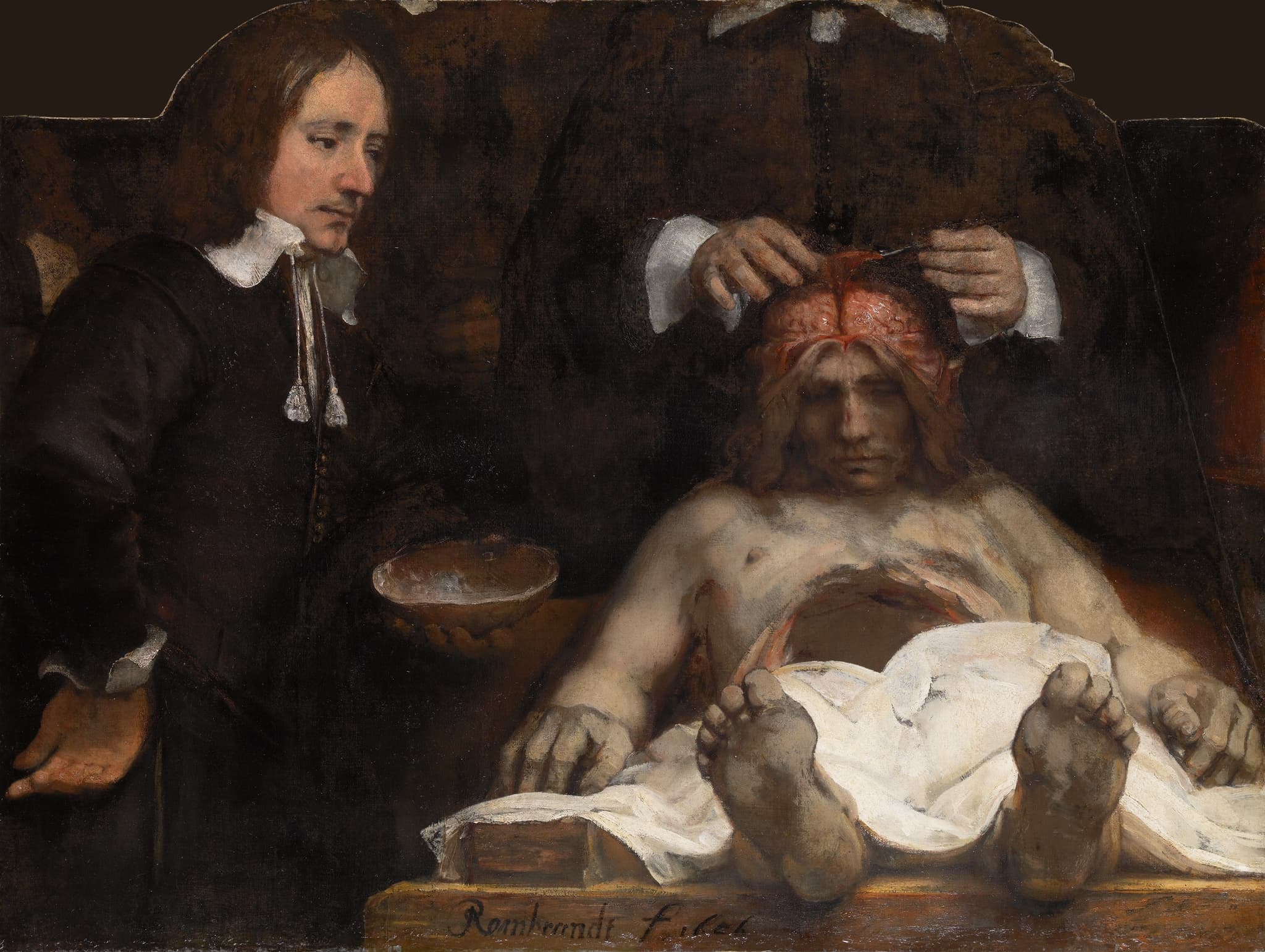
The Anatomy Lesson of Dr. Jan Deijman
Rembrandt van Rijn, 1656 • Oil on canvas
Read full analysis of The Anatomy Lesson of Dr. Jan Deijman →Valuation Analysis
Overview. The Anatomy Lesson of Dr. Jan Deijman (1656) is an autograph Rembrandt oil surviving as the central fragment of a much larger guild commission. The original composition was largely destroyed by fire in 1723; the extant section depicts the cranial dissection and has been a fixture of Amsterdam’s municipal collection (Amsterdam Museum) since 1882, frequently displayed in major national institutions [1][2].
Method. Because the painting has no modern public sale, this valuation uses comparable analysis of recent, intact Rembrandt paintings at auction and key private/public‑treaty benchmarks. Two fresh public results set today’s market context for autograph oils: The Adoration of the Kings sold at Sotheby’s London on 6 Dec 2023 for roughly $13.8 million with fees [3], and Saint John on Patmos realized about $9.0 million in London on 3 Dec 2025 [4]. These anchor mid‑teens pricing for smaller, intact works with strong scholarship.
Drivers of value. The estimate recognizes the significant premium commanded by Rembrandt’s authorship and the exceptional subject. The painting is the artist’s second anatomy‑lesson commission, a theme of extraordinary art‑historical resonance. Autograph Rembrandt oils are exceptionally scarce on the market, and top‑tier, intact masterpieces have recently been acquired by states and leading museums at far higher levels (e.g., The Standard Bearer at €175 million in 2022) [6]. These signals confirm deep demand and a robust upper bound for the very best, reinforcing an eight‑figure floor for important autograph works.
Key discounts. The surviving work is unequivocally a fragment, with extensive loss of the original composition owing to the 1723 fire. This materially limits scale, condition, legibility, and hence private‑collector competition versus intact canvases. In addition, the work is a Dutch municipal museum property and would be subject to strict deaccession policies and EU/Dutch export licensing; such constraints markedly narrow the buyer pool and typically depress price realizations versus freely tradeable masterpieces [1][5].
Positioning of the $12–22 million range. Calibrated against the 2023 and 2025 auction benchmarks for intact oils [3][4], and mindful of the large gap to national‑treasure‑level transactions [6], the recommended range centers on the low‑to‑mid teens, with upside into the low‑twenties if an exceptional scholarly presentation and competitive institutional interest coalesced. In sum, $12–22 million fairly balances the strong authorship/subject premium with the real valuation impact of fragmentary survival and limited marketability, placing the work below intact, market‑ready Rembrandts yet securely in the eight‑figure tier appropriate to its cultural importance [1][2][3][4][5][6].
Key Valuation Factors
Art Historical Significance
High ImpactCommissioned by the Amsterdam Surgeons’ Guild, this painting is Rembrandt’s second treatment of the anatomy-lesson theme—one of the most resonant subjects in Dutch Golden Age art. The surviving fragment captures the rare depiction of a cranial dissection, linking medicine, civic identity, and Baroque pictorial drama. Its continuous institutional presence and frequent display in Amsterdam’s leading museums cement its scholarly importance and international visibility. This level of cultural significance elevates demand among major collectors and institutions, supporting an eight-figure valuation even though the work is incomplete. In essence, subject and authorship combine to create a status piece in the Old Master canon.
Authorship and Rarity
High ImpactAutograph Rembrandt oils are exceptionally scarce on the market; only a small number trade publicly in any decade. Recent sales confirm persistent demand and strong pricing for paintings firmly within the oeuvre, with mid-teens prices achieved for small, intact works and national-treasure masterpieces transacting privately at far higher levels. The work’s unimpeachable provenance within Amsterdam’s civic collections enhances confidence. This scarcity-and-authorship premium is a primary driver of value, ensuring that even a fragmentary Rembrandt commands a significant price, particularly when the subject is canonical within the artist’s career.
Condition and Fragmentary State
High ImpactThe painting is the surviving center of a much larger composition largely destroyed by fire in 1723. While the extant fragment is compelling, it necessarily lacks the original scale, context, and supporting figures, and it has endured historic damage and restoration. Such condition realities narrow the potential buyer base and lower the commercial ceiling relative to intact portraits or history pictures of similar date and authorship. For valuation, this factor mandates a clear discount versus complete, exhibition-ready Rembrandts—hence the positioning of the estimate in the low-to-mid teens, with capped upside into the low twenties under optimal circumstances.
Marketability and Legal Constraints
Medium ImpactAs property of the Amsterdam Museum (municipal collection), any transfer would be subject to stringent deaccession ethics and Dutch/EU export licensing. These constraints reduce liquidity and can deter international private buyers. While certain institutions might compete in a hypothetical, policy-permissible scenario, the practical hurdles typically suppress aggressive bidding compared with freely tradeable masterpieces. Consequently, legal and policy factors are explicitly reflected as a moderating influence on price. This does not erase demand for an autograph Rembrandt but helps explain why the estimate is not higher, despite the work’s historical importance and subject-matter appeal.
Sale History
The Anatomy Lesson of Dr. Jan Deijman has never been sold at public auction.
Rembrandt van Rijn's Market
Rembrandt sits at the apex of the Old Master market. The public auction record for a painting remains the 2009 Portrait of a Man, Half-Length, with his Arms Akimbo at roughly $33 million, while recent intact, smaller-scale oils have achieved $9–14 million at Sotheby’s London in 2025 and 2023. At the very top end, masterpieces transact well above auction levels: The Standard Bearer (1636) was acquired by the Dutch state for about €175 million in 2022. Supply is extremely thin; rediscoveries with persuasive scholarship can catalyze strong competition. Overall, demand is deep among leading collectors and institutions, with pricing highly sensitive to condition, subject, and freshness.
Comparable Sales
The Adoration of the Kings
Rembrandt van Rijn
Same artist; recent public auction of a small, intact autograph oil with strong scholarship momentum. Useful mid-teens benchmark for current demand for autograph Rembrandt paintings.
$13.8M
2023, Sotheby's London
~$14.5M adjusted
Saint John on Patmos
Rembrandt van Rijn
Same artist; late-period religious composition sold publicly in 2025. Sets a recent lower bound for intact, smaller-scale Rembrandt oils without the rediscovery premium.
$9.0M
2025, Sotheby's London
Portrait of a Man, Half-Length, with his Arms Akimbo
Rembrandt van Rijn
Same artist; still the public auction record for a Rembrandt painting. Intact, high-quality mid-size portrait showing the upper auction bound for market-ready works.
$33.2M
2009, Christie's London
~$49.5M adjusted
Saint James the Greater
Rembrandt van Rijn
Same artist; late religious composition with strong auction performance. Useful for gauging pricing of intact, single-figure works in oil of significant quality.
$25.8M
2007, Sotheby's New York
~$39.8M adjusted
The Standard Bearer (De Vaandeldrager)
Rembrandt van Rijn
Same artist; recent headline public-treaty acquisition of an intact, top-tier masterpiece. Establishes the stratospheric ceiling for prime, complete Rembrandt oils.
$198.9M
2022, Dutch State public acquisition (Rijksmuseum, private treaty)
~$217.5M adjusted
Current Market Trends
Old Masters have rebounded since 2024, with 2025–2026 marked by robust performance for trophy material and selective bidding for mid-tier works. Liquidity remains tight due to limited supply, especially for Dutch Golden Age masterpieces. Recent headline results (including a record Canaletto) and active institutional engagement at fairs underscore confidence at the top. For Rembrandt specifically, the market has validated mid-teens prices for intact smaller oils and set new highs for exceptional prints, while national-treasure paintings command far higher sums via public acquisitions. Quality, condition, subject, and scholarship are decisive drivers, and export restrictions can materially affect transacting dynamics.
Study print
Study this painting as a print
Pair the full artwork with a museum-style study sheet focused on one meaningful detail.
Sources
- Amsterdam Museum – Collection record: The Anatomy Lesson of Dr. Deijman
- Public History Amsterdam – Provenance and 1723 fire context
- Sotheby’s London – Rembrandt, The Adoration of the Kings (6 Dec 2023)
- Sotheby’s – Highlights from London’s Old Masters Week (Dec 2025)
- Government of the Netherlands – Export licence for cultural goods
- Dutch Parliament – State acquisition of Rembrandt’s The Standard Bearer (€175m, 2022)