Sanctified surface vs unsettled world
Both Gustav Klimt and Edvard Munch rebuilt painting around inner states—love, desire, anxiety, illness, death. They treat the canvas as an environment that governs feeling rather than a window onto events. Their decisive split lies in what images do to perception: Klimt stabilizes and consecrates it; Munch destabilizes and exposes it.
Comparison frame: How do Klimt and Munch turn seeing into belief or feeling—Klimt by sanctifying surface, Munch by unsettling the world?
Quick Comparison
| Topic | Edvard Munch | Gustav Klimt |
|---|---|---|
| Perception program | Stabilizes vision; ornament confers order and radiance | Destabilizes vision; emotion rewrites space and color |
| Image behaves like | Icon/frieze or tapestry-like field; designed enclosure | Stage for psychic weather; vibrating environment |
| Time handling | Suspends narrative into an abiding present | Unfolds as cycle or crisis (tide of states) |
| Icon strategy | Secular icons in gold; halo-like grounds sanctify seeing | Sacred motifs inverted (halo, Madonna) bind eros to death |
| Landscape space | Flattened, patterned fields that quiet depth | Compressed, canted vistas keyed to anxiety |
| Facture and touch | Mosaic-like units; calibrated, frontal finish | Scraped, scumbled, trembling contours as feeling |
| Serial method | Iterates motifs and square formats to refine gaze | Reworks key subjects across paint and print to test affect |
| Integration | Designed with interiors/architecture (Gesamtkunstwerk) | Linked prose notes, prints, and variants frame meaning |
Shared Ground
Klimt and Munch shift painting’s job from recording appearances to staging inner states. Love, desire, anxiety, illness, and death are not topics on their surfaces; they are systems that organize how those surfaces behave. Each artist built cycles to make that ambition legible—Munch through the Frieze of Life, Klimt through room-scale ensembles such as the Beethoven Frieze and the Stoclet dining-room frieze. In both, meaning follows from how form directs feeling: composition, color, and material serve as instruments rather than decoration.
They also treat images as environments, not windows. Klimt creates ornamental fields—gold grounds, pattern grammars, square landscapes—that surround viewers with designed stillness and integrate seamlessly with interiors and furniture. Munch converts shorelines, streets, and rooms into psychological climates; rhythmic line and spatial compression make nature and city behave like states of mind. Seriality underwrites the inquiry. Klimt revisits formats and motifs (notably his Attersee squares) to discipline looking; Munch replays themes across paintings, pastels, lithographs, and woodcuts to test how medium and facture alter affect.
Finally, both modernize the icon. Klimt mints secular icons of presence in precious matter; Munch recodes the halo and Marian imagery so that sanctity bleeds into eroticism and mortality. Across these shared ambitions, the eye is trained to feel before it explains—an insight that anchors their place in modern art.
Decisive Difference
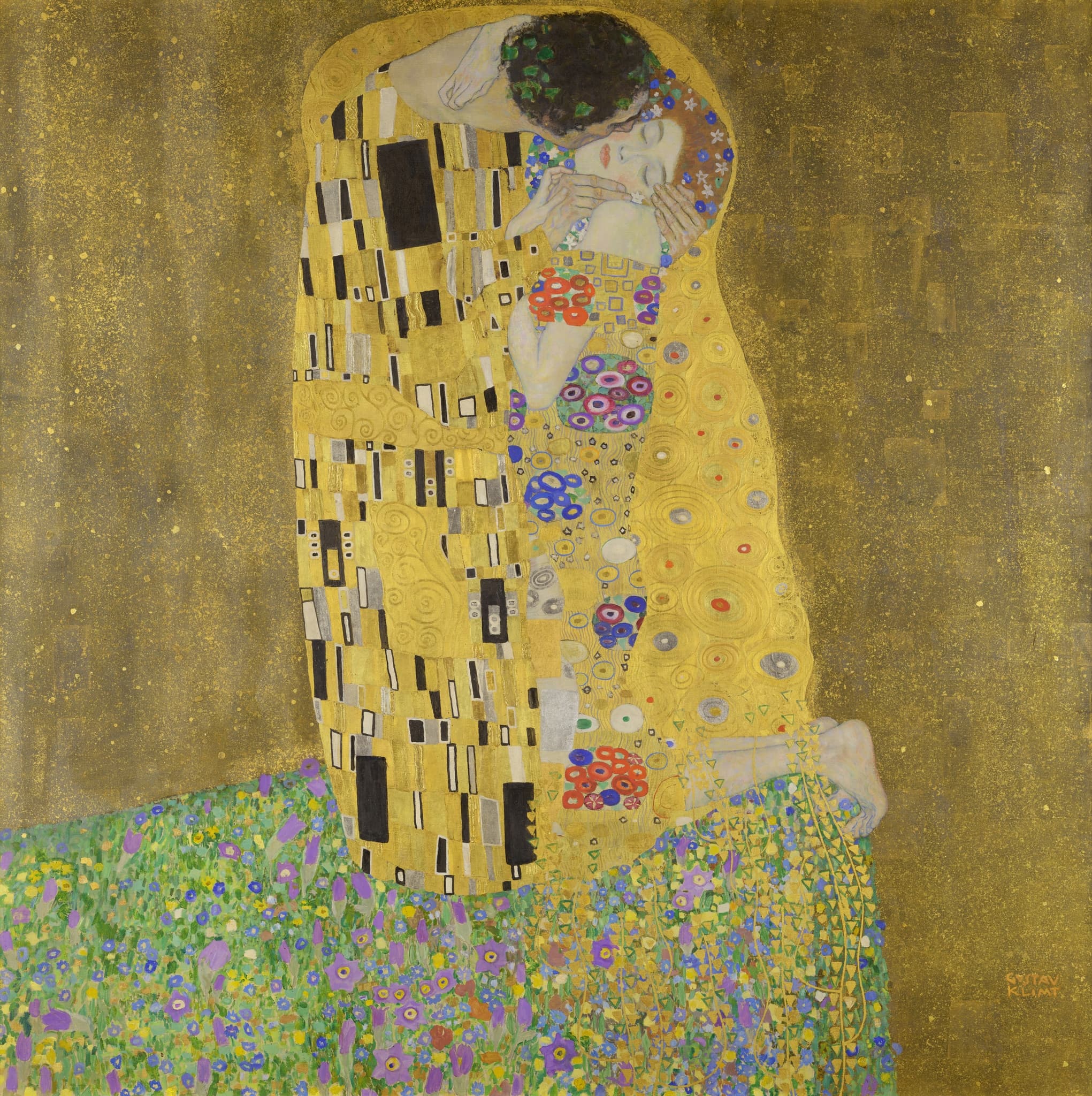
The core split is what painting does to perception. Klimt stabilizes perception by designing a surface that confers order and a sense of timelessness. Gold grounds, frontality, and mosaic-like marks halt narrative time and encourage a drifting, contemplative gaze. The Kiss fuses two figures inside a single aureole; the ground becomes a sanctified medium in which seeing is slow and assured. Even in landscape, as in On Lake Attersee—“a frame full of lake water”—small, patterned units steady the eye; depth recedes into haze while the surface holds attention in a calm present.
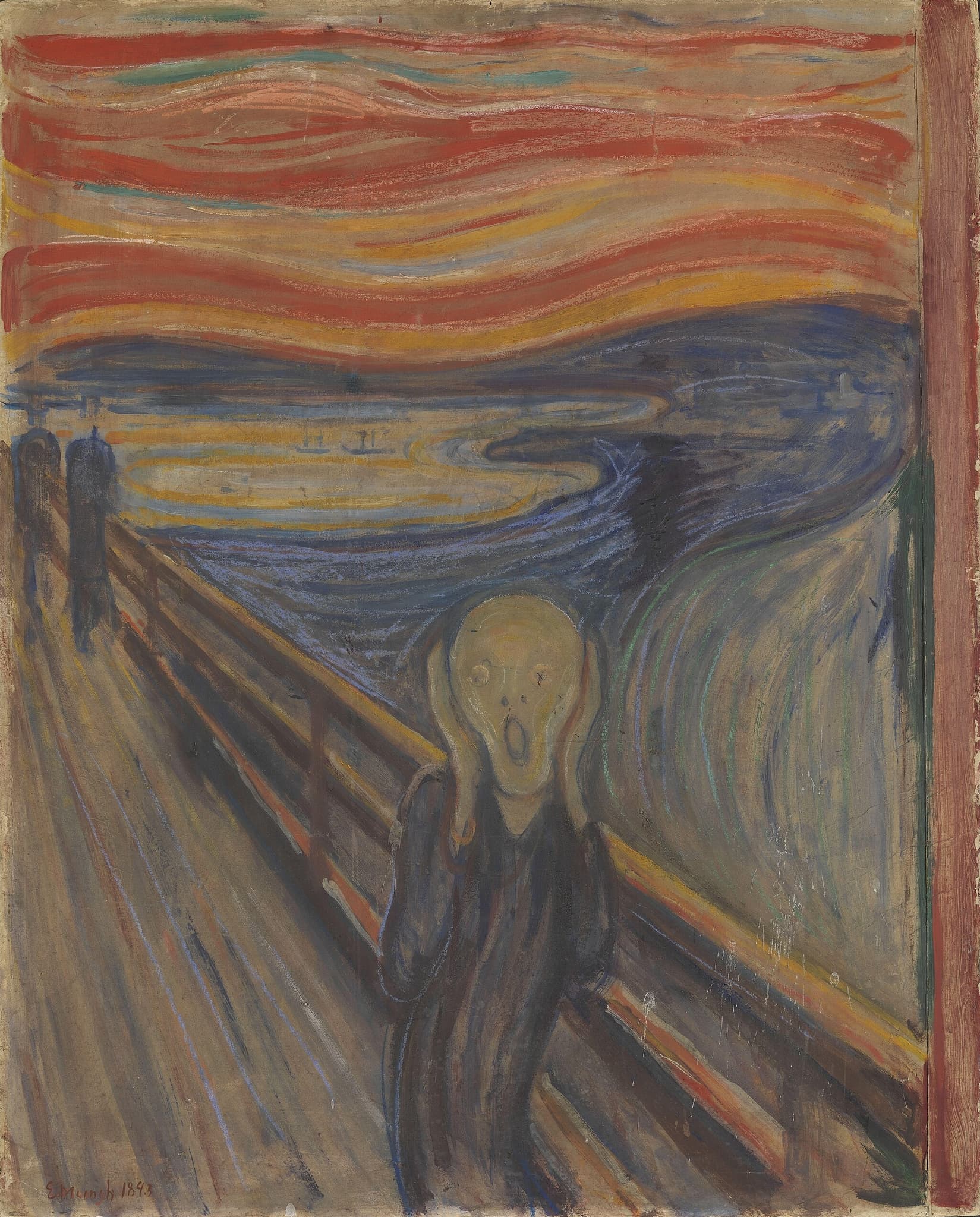
Munch destabilizes perception so that feeling overruns optical stability. In The Scream, vibrating sky and shoreline act like sound waves against the hard rails of a bridge; the world is seized by anxiety and bends to its geometry. Evening on Karl Johan compresses the street and cants façades so the crowd advances like a mask-front, turning promenade into threat. This is not depiction but a programmable distortion where line, color, and space carry mood as fact.
The net effect: Klimt makes seeing feel consecrated—ornament as a way of knowing—while Munch makes seeing feel exposed and contagious, with the psyche saturating the scene. One offers patterned conviction; the other, expressive risk.
Paired Works
Love pictured: timeless icon vs lived cycle
Focus question: Is love a single radiant state or a tide through time?
Klimt’s The Kiss fuses two bodies into one gold-clad silhouette, abolishing duration in favor of an abiding present. Frontality, a halo-like surround, and a carpet of flowers at the brink suspend narrative; pattern is the argument. Hard, rectilinear motifs on the man meet spirals and florals on the woman, then resolve into a single mantle—union as a stable, sanctified form.
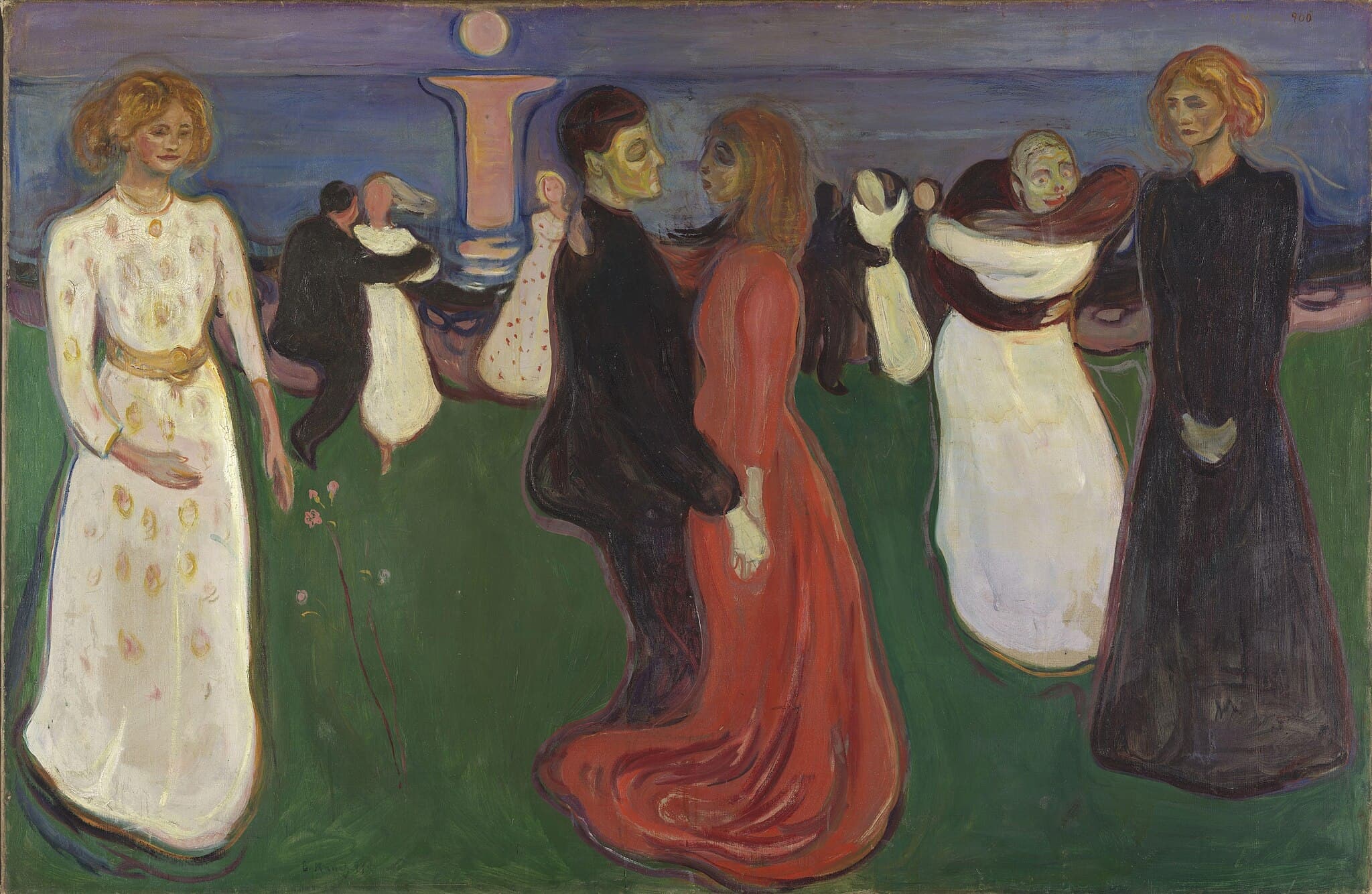
Munch’s The Dance of Life stages love as a temporal arc: youth in white, passion in red, renunciation in black, aligned along a moonlit shore. The central waltz is tense rather than idyllic; masklike faces and a red dress that behaves like a tide bind eros to time and loss. The shoreline and moon function as metronomes, turning private passion into a public, cyclical law.
Placed together, the works clarify the artists’ programs. Klimt pictures love as a condition that can be designed and held; Munch organizes it as a sequence that moves and frays. One stills the gaze in a golden now; the other makes the eye read left to right through inevitability.
Two modern icons: consecration vs provocation
Focus question: What does a modern “icon” do—sanctify presence or expose the terms of creation?
Portrait of Adele Bloch-Bauer I vs Madonna
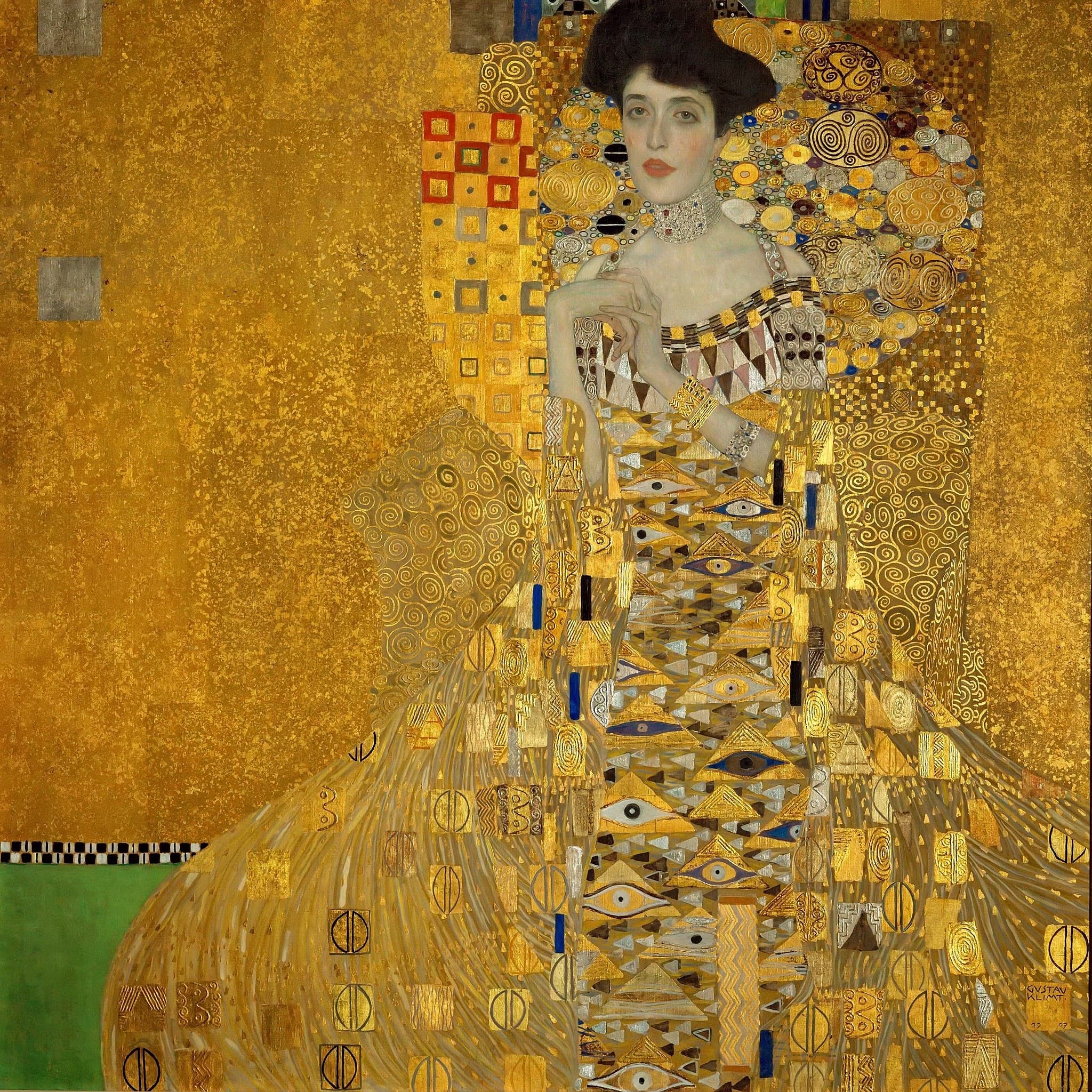
Klimt’s Adele stands as a secular icon: face and hands emerge from a reliquary of gold, eyes, and triangles. The nimbus-like circle field, ornamental grammar, and precious surface convert status into presence. Identity is minted through controlled shine and design; the portrait behaves like an object of veneration where ornament equals conviction.
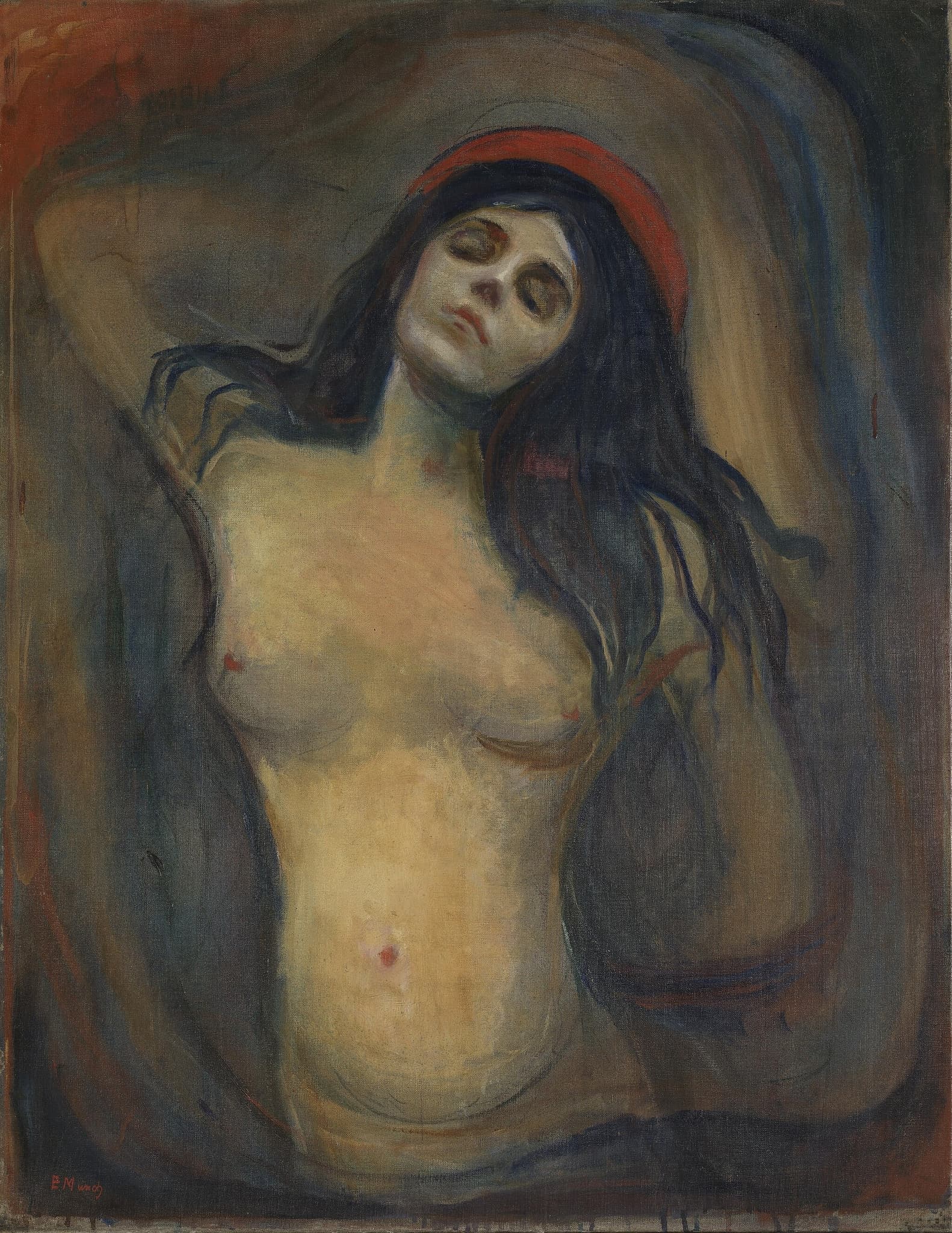
Munch’s Madonna turns the icon inside out. A red nimbus crowns a nude whose closed-eyed rapture merges sanctity and sexuality; the surrounding field flows like amniotic tide. In the lithograph version, a border of sperm and a fetus literalizes conception and death—the sacred frame itself becomes a provocation.
Together they map two fates for the modern icon. Klimt consecrates the sitter by embedding her in patterned light; the icon guarantees belief in presence. Munch weaponizes the icon to expose the costs of life and desire; the halo becomes a warning that creation is shadowed by mortality. Both are authoritative, but they authorize different truths.
Landscape as perception: drift vs alarm
Focus question: When the world is a feeling, how does water differ from a cry?
On Lake Attersee vs The Scream
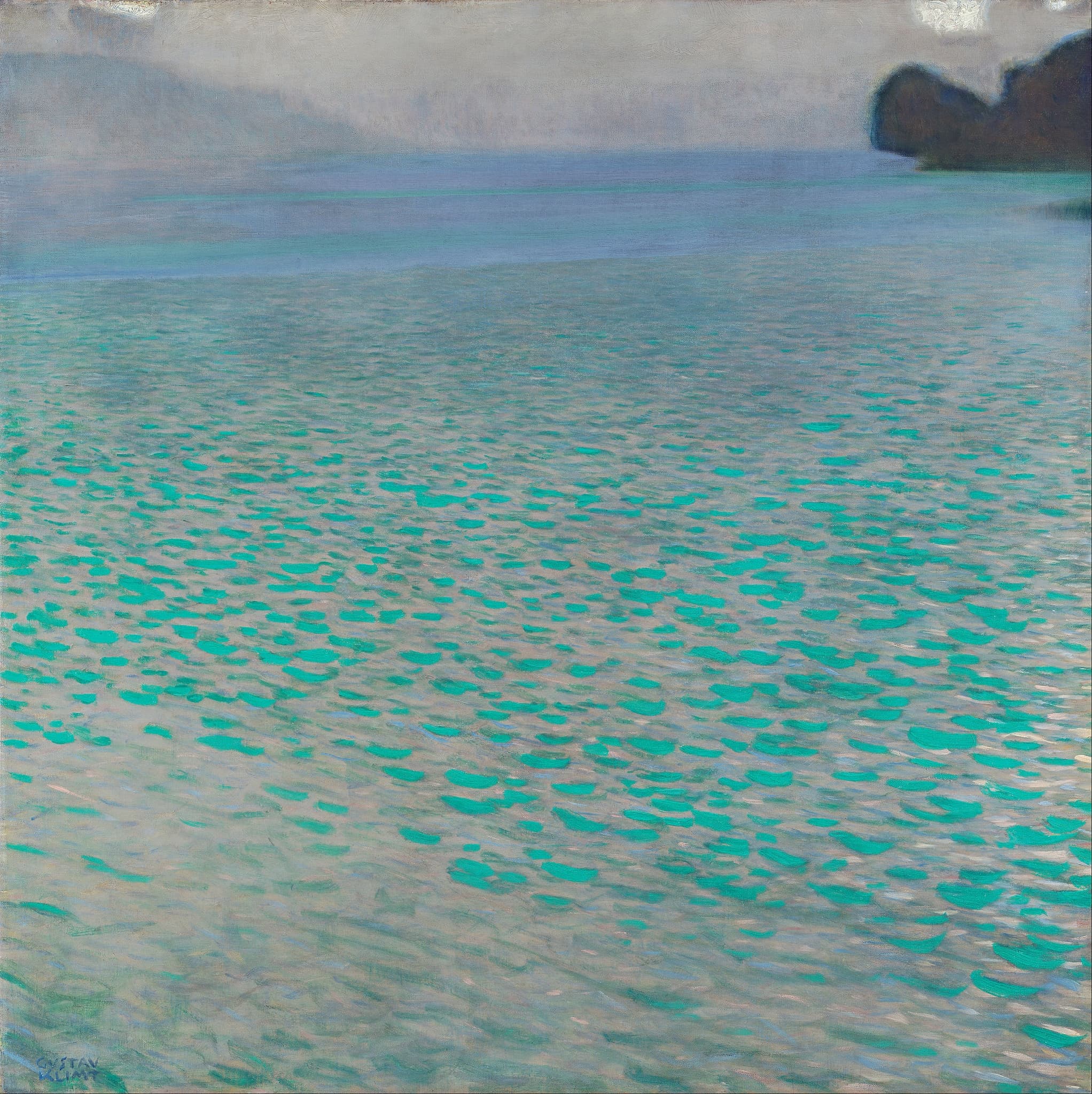
On Lake Attersee is almost all water—a patterned field of turquoise ovals that flatten depth and slow the eye. A tiny headland anchors a horizon veiled by violet haze. Klimt’s tessellated touch turns looking into steady drift; perception feels designed, time modulates into texture.
The Scream makes the field vibrate. Red bands of sky and curving shoreline operate like sound waves; the bridge’s hard rails are the last straight facts in a liquefying world. Color reads as nausea, line as alarm. The image is not a view but a system where emotion dictates physics.
Side by side, they show two models for modern landscape: Klimt’s patterned serenity, which stabilizes seeing into contemplation, and Munch’s vibratory alarm, which makes the scene contagious with dread. Both are faithful to experience, but each defines “experience” differently—one as contemplative order, the other as destabilized perception.
Unfinishedness with purpose: emergence vs erosion
Focus question: What does an incomplete surface argue—becoming self or failing world?
Amalie Zuckerkandl vs The Sick Child
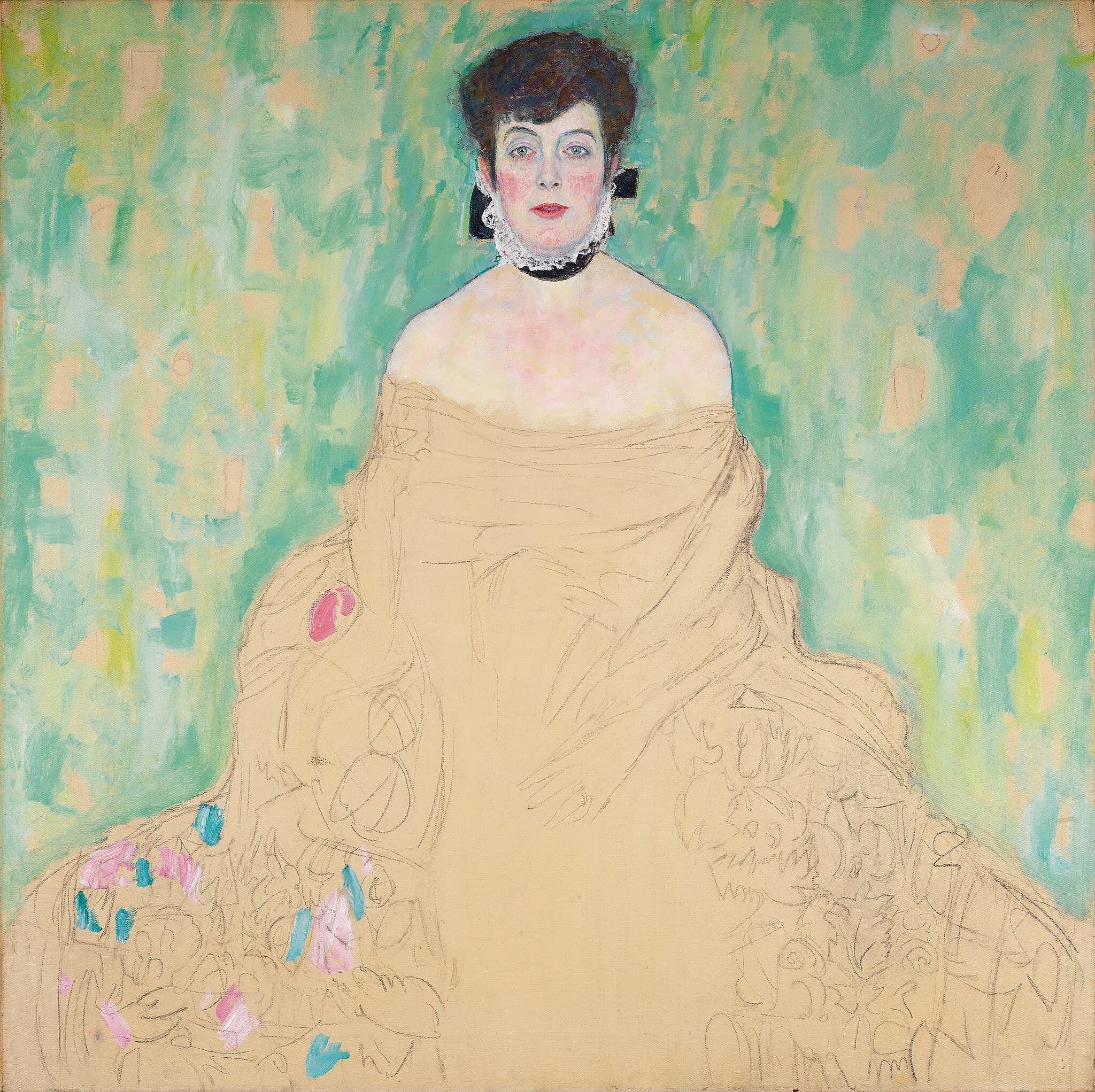
Klimt’s unfinished Amalie concentrates finish at the head and throat while the gown remains graphite, washes, and hints of ornament. Against a cool green field, the black choker and crisp lace collar frame a lucid gaze. The incompletion reads as argument: a modern self emerges while decorative system stays in potential. Unfinishedness stabilizes identity by stripping away everything not essential.
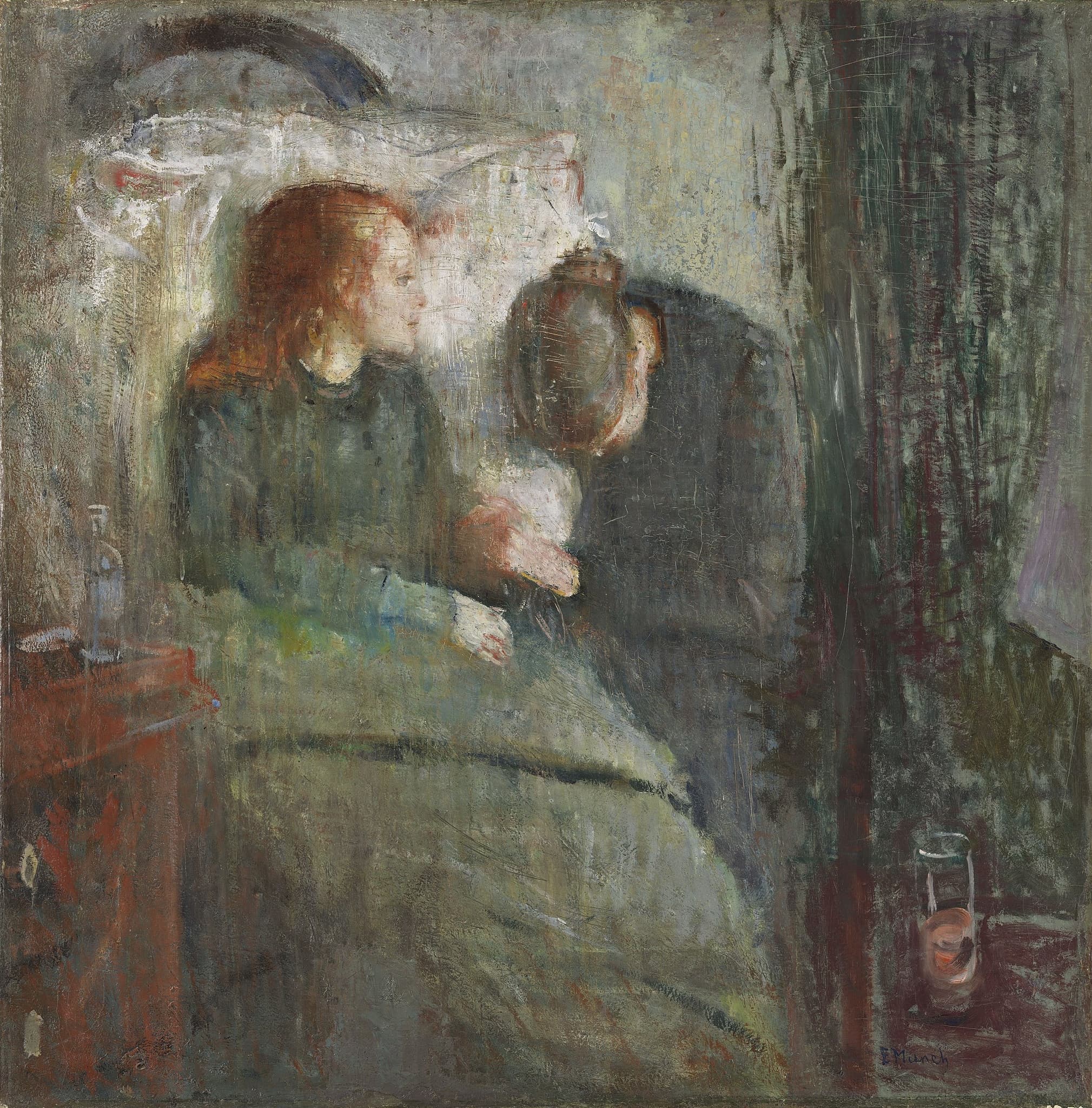
Munch’s The Sick Child uses abrasion and scraping to make grief visible as erosion. A diagonal of diminishing life—pale child, bowed caregiver—slides toward absence; vertical striations veil forms like fraying memory. Sparse props (bottle, glass) are mute witnesses. Here the “unfinished” touch is not a step toward order but evidence of time’s abrasion.
These surfaces diverge in purpose. Klimt’s incompletion clarifies and sanctifies presence; Munch’s exposes love’s powerlessness before loss. Both reject cosmetic finish, but one freezes becoming, the other lets the image be worn by feeling.
Why This Comparison Matters
Looking at Klimt and Munch together clarifies two workable templates for modern art. Klimt shows how design, ornament, and precious matter can stabilize meaning without lapsing into mere decoration; a gold ground or a patterned lake is not garnish but a structure for belief. Munch shows how distortion and facture can make interior states legible at scale; a tilted street or vibrating sky is not an effect but a grammar of feeling.
Those options still map the field today. Environmental images—installations, textiles, immersive screens—owe something to Klimt’s idea that a surface can sanctify attention. Trauma images—news, cinema, social feeds—inherit Munch’s lesson that perception itself can be shaken. The comparison does not pick a winner; it equips a viewer. When a picture makes your eye dwell, you are in Klimt’s world of patterned conviction. When a picture makes your eye tremble, you are in Munch’s world of exposed seeing. Knowing which mode you are in is a practical skill for reading images now.
Related Links
Sources
- Belvedere – Gustav Klimt and His Time (context for The Kiss and Klimt’s program)
- Nasjonalmuseet – The Scream (object page, artist note, inscription analysis)
- MAK – Gustav Klimt: Expectation and Fulfillment (Stoclet Frieze, materials, integration)
- Leopold Museum – Klimt collection overview (square landscapes, Attersee)
- Neue Galerie – Klimt and Adele Bloch-Bauer
- MoMA – Edvard Munch, Madonna (lithograph with border)
- Google Arts & Culture – Klimt and the 1908 Kunstschau
- Nasjonalmuseet – Frieze of Life (guide to Munch’s program)
- Belvedere – Why did Gustav Klimt use gold?
- Leopold Museum – On Lake Attersee (highlight; Hevesi quote)
- KODE – Rasmus Meyer Collection (Evening on Karl Johan context)
- Nasjonalmuseet – The Sick Child (object page, facture and theme)