Aged woman with white bird Symbolism
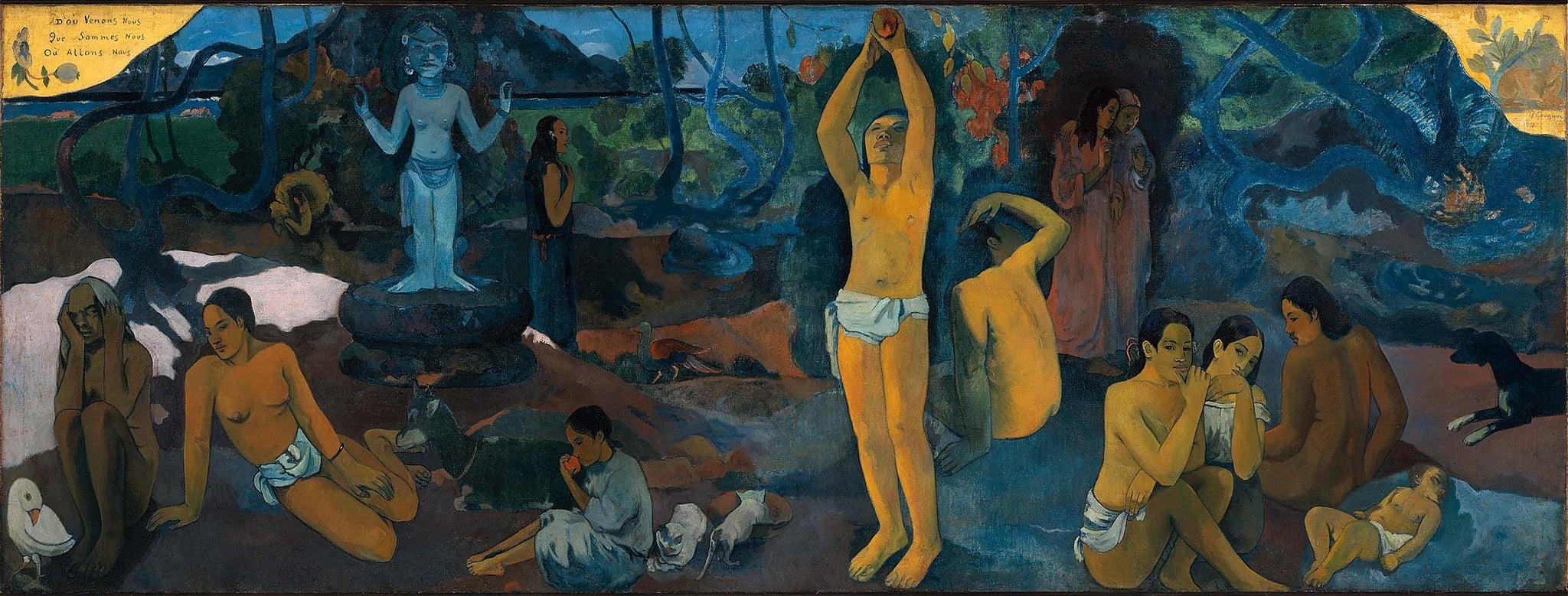
In Paul Gauguin’s Symbolist vocabulary, an aged woman accompanied by a small white bird marks the final threshold of life. The bird’s pallor and quiet presence signal the exhaustion of speech, aligning mortality with the limit of meaning. This pairing condenses life’s end into a mute emblem rather than a narrative statement.
Aged woman with white bird in Where Do We Come From? What Are We? Where Are We Going?
In Where Do We Come From? What Are We? Where Are We Going? (1897–1898) by Paul Gauguin, the composition unfolds right-to-left as a life cycle that culminates in the aged woman at the far left. A small white bird appears near her—an image Gauguin associated with the futility of words at life’s end—fixing the painting’s terminal moment. While the center stages desire and belief through a figure reaching for fruit and a motionless pale-blue idol, the leftmost pair articulates mortality as silence: the cycle closes not with an answer, but with the waning of speech and meaning.