Alps on the horizon Symbolism
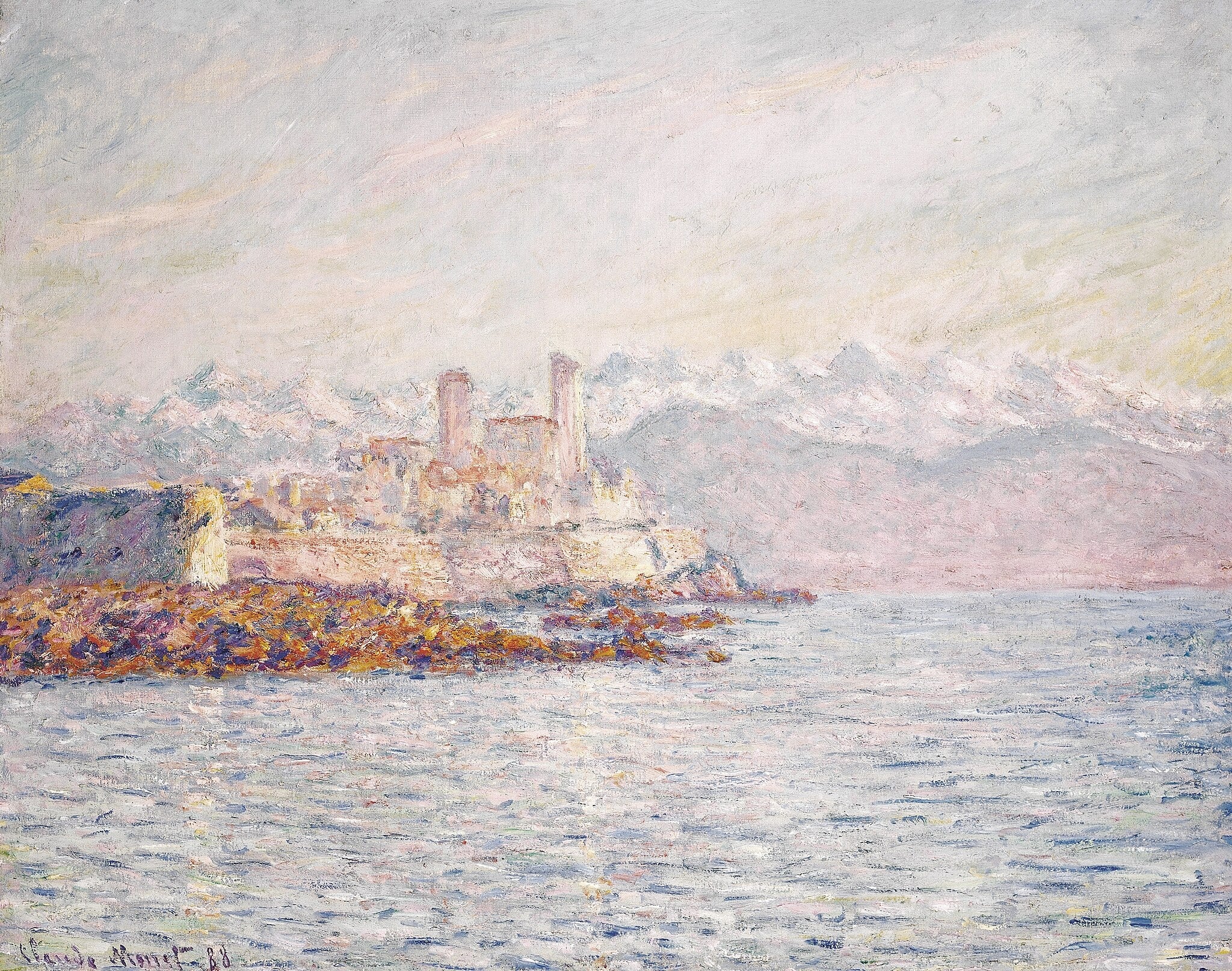
As seen in Claude Monet’s Antibes (1888), the Alps on the horizon can signify enduring geology perceived through shifting atmosphere, turning distance into a field of light and color. There the mountains operate as a luminous boundary where sea, stone, and sky meet, suggesting permanence softened by air.
Alps on the horizon in Antibes
In Antibes (1888), Claude Monet places the far Alps beyond a fortified headland and renders them in trembling strokes of lilac, lemon, blue-green, and rose. The distant range anchors the horizon yet dissolves into the same atmosphere that bathes towers, ramparts, and sea, fusing stone and air so completely that southern light becomes the work’s central subject. In this painting, the Alps on the horizon function less as topographic detail than as a softly edged limit that measures distance and radiance, allowing built form and nature to merge.