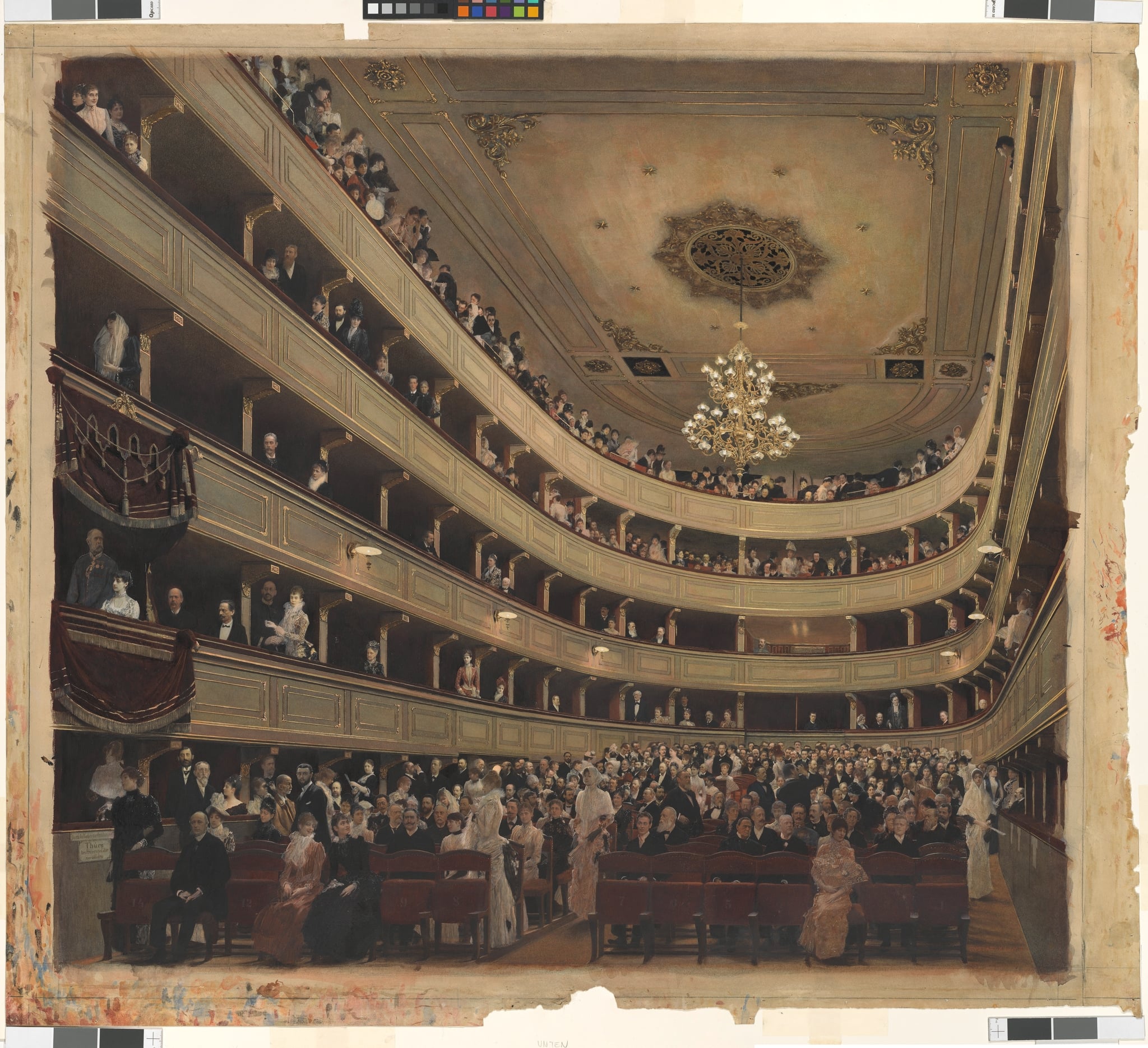
Central chandelier Symbolism
In art and architectural imagery, a central chandelier signifies collective illumination and shared spectacle, gathering a crowd beneath one unifying light. In depictions of theaters and civic halls, especially in the 18th and 19th centuries, it serves as the visual and social axis that organizes space and renders the public visible to itself. The chandelier can also index modern lighting technologies—such as gaslight—that reshaped how audiences saw and were seen.
Central chandelier in Auditorium of the Old Burgtheater
In Gustav Klimt’s Auditorium of the Old Burgtheater (1888–1889), the glowing chandelier crowns the interior and anchors the composition, bathing the sweeping tiers in gaslight. Klimt "turns the stage around": under this shared beacon, hundreds of individualized faces fuse into a single, wave-like body of spectators. Framed by gilded medallions, the central chandelier makes the audience the spectacle and acts as a civic mirror—Vienna watching itself as the old theater was disappearing.