Clerk recording Symbolism
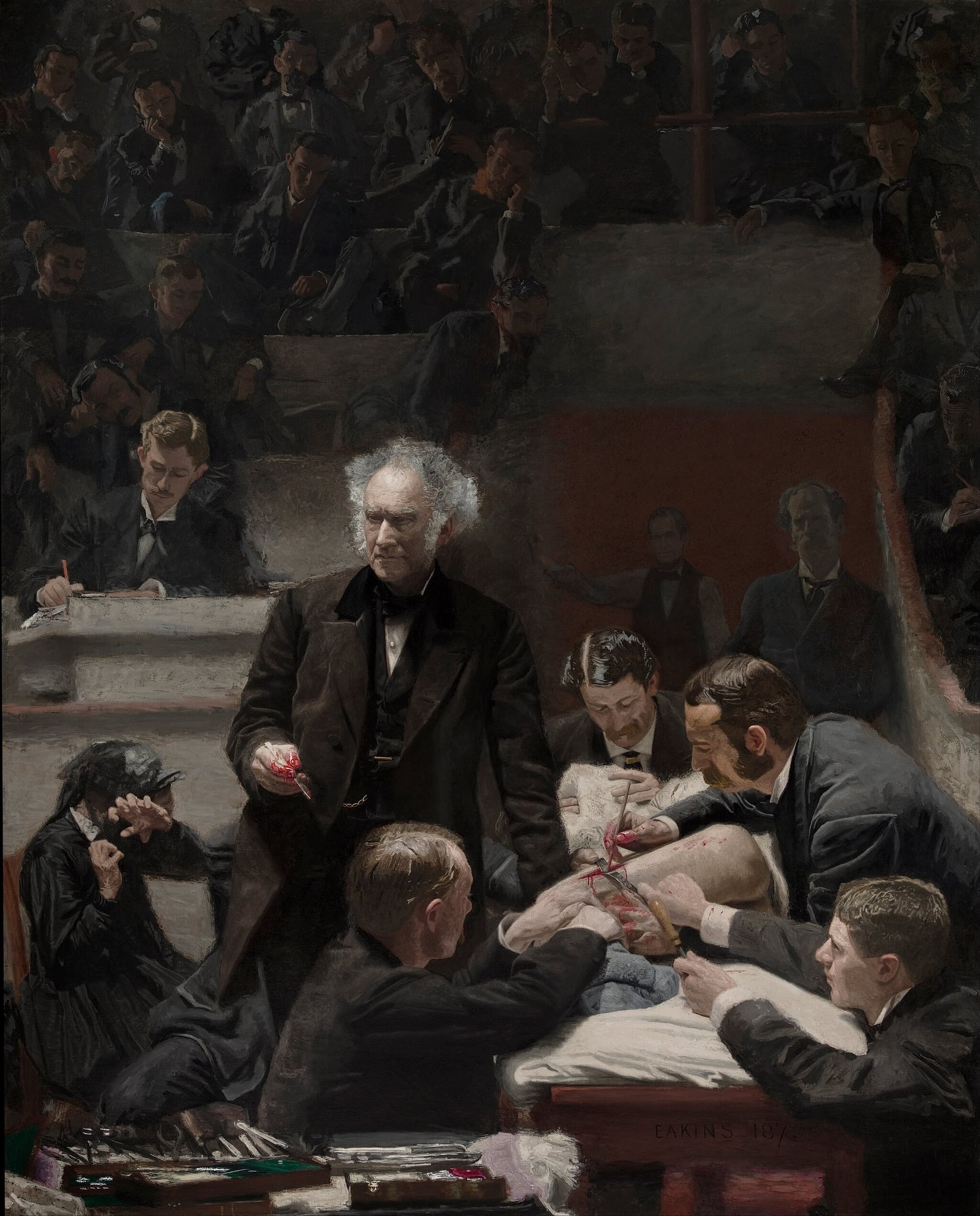
As seen in Thomas Eakins’s The Gross Clinic (1875), the figure of a clerk recording marks the conversion of immediate experience into durable written knowledge. The motif underscores institutional authority and the ethics of witnessing, signaling that what is observed must be measured, named, and transmitted.
Clerk recording in The Gross Clinic
In The Gross Clinic (1875), Thomas Eakins stages a surgical lesson as civic drama: light isolates Dr. Gross’s white hair and bloodied fingers while students recede into shadow, a veiled woman recoils at left, and a clerk at right calmly writes. That clerk anchors the scene’s meaning—transforming spectacle into record, ensuring that the operation becomes teachable knowledge, and modeling responsible witness. His steady posture and task counterbalance emotion and darkness in the amphitheater, framing science as a public act bound to documentation and transmission.