Copper vase Symbolism
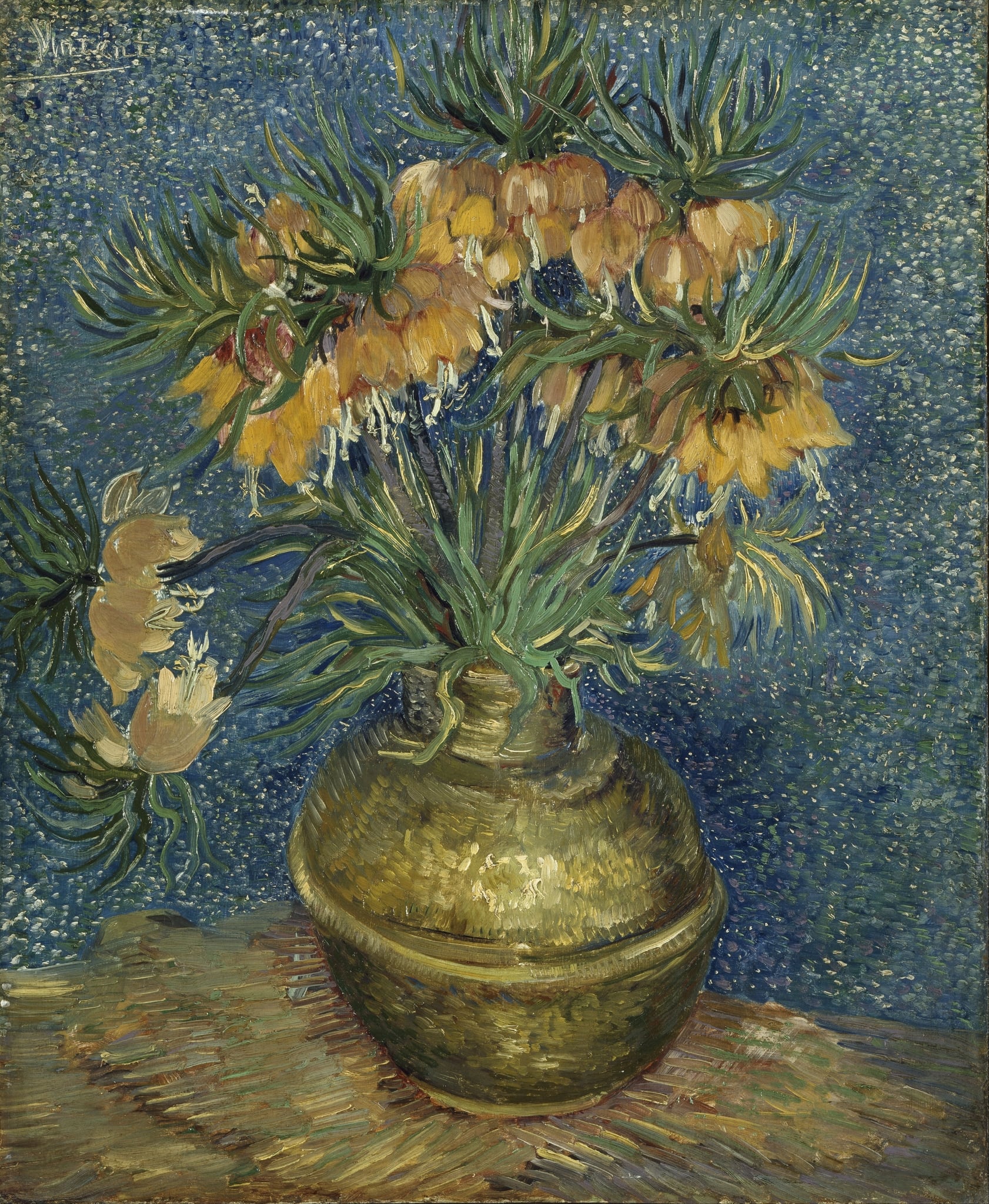
A copper vase in art signals crafted containment and endurance, with a warm, reflective surface that gathers and redistributes surrounding light. In still life, as seen in Vincent van Gogh’s Imperial Fritillaries in a Copper Vase (1887), the metal’s glow actively mediates between object and ground, intensifying color contrasts and animating the arrangement. The vessel reads as both container and radiant core.
Copper vase in Imperial Fritillaries in a Copper Vase
In Vincent van Gogh’s Imperial Fritillaries in a Copper Vase (1887), the rounded copper vessel anchors the composition and charges it with warmth. Set against a stippled, breathing blue field, the vase reflects and deepens the blaze of orange crown‑imperials, creating the painting’s blue–orange counterpoint. The metal appears palpably warm while the air reads cool, so the vase does more than hold flowers: it conducts light, stabilizes the arc of bowing stems, and makes the still life feel like living force. Here the copper vase stands for endurance and crafted containment, yet its reflective skin amplifies the flowers’ radiating power.