Crown of Mary Symbolism
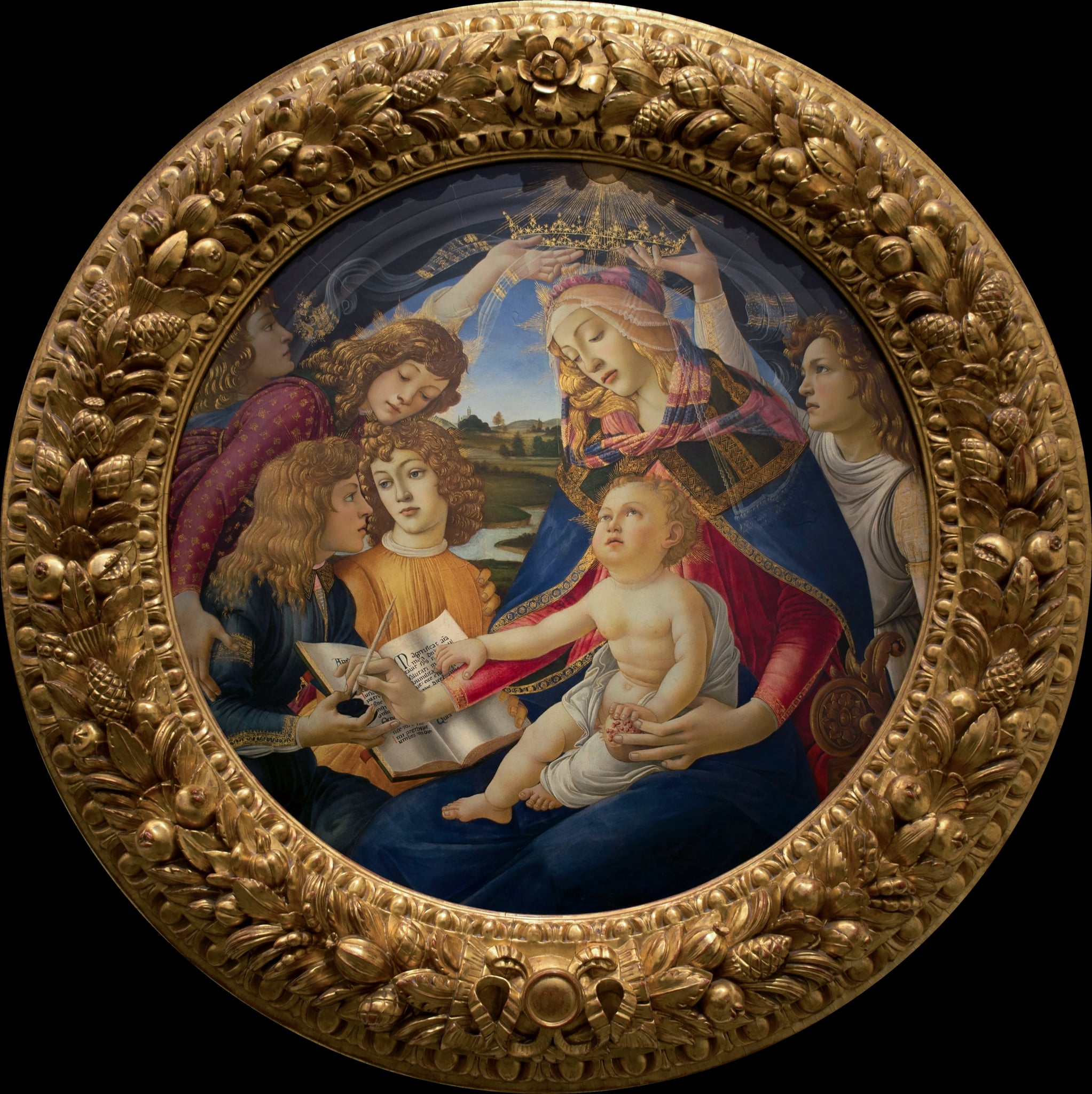
The Crown of Mary signifies the Virgin’s queenship—her exaltation as Queen of Heaven—often visualized as angels placing a diadem upon her head. In Renaissance art, this crowning can accompany scriptural praise to affirm Mary’s honored role in salvation history, as seen in Botticelli’s Madonna of the Magnificat (c. 1483).
Crown of Mary in Madonna of the Magnificat
In Sandro Botticelli’s Madonna of the Magnificat (c. 1483), angels crown the Virgin as she writes the Magnificat, her hand guided by the Christ Child. The act of crowning makes her royal dignity explicit, while the panel’s rich gold and courtly attendants create a ceremonial setting that underscores her exalted status. The split pomegranate in the Child’s grasp prefigures the Passion, placing Mary’s queenship within a program of praise, prophecy, and sacrifice articulated by the hymn she inscribes.
Botticelli also situates this coronation amid a Tuscan view, binding sacred honor to Florentine life. In this way, the crown functions both as a sign of heavenly sovereignty and as a devotional image made immediate to the painting’s contemporary audience.