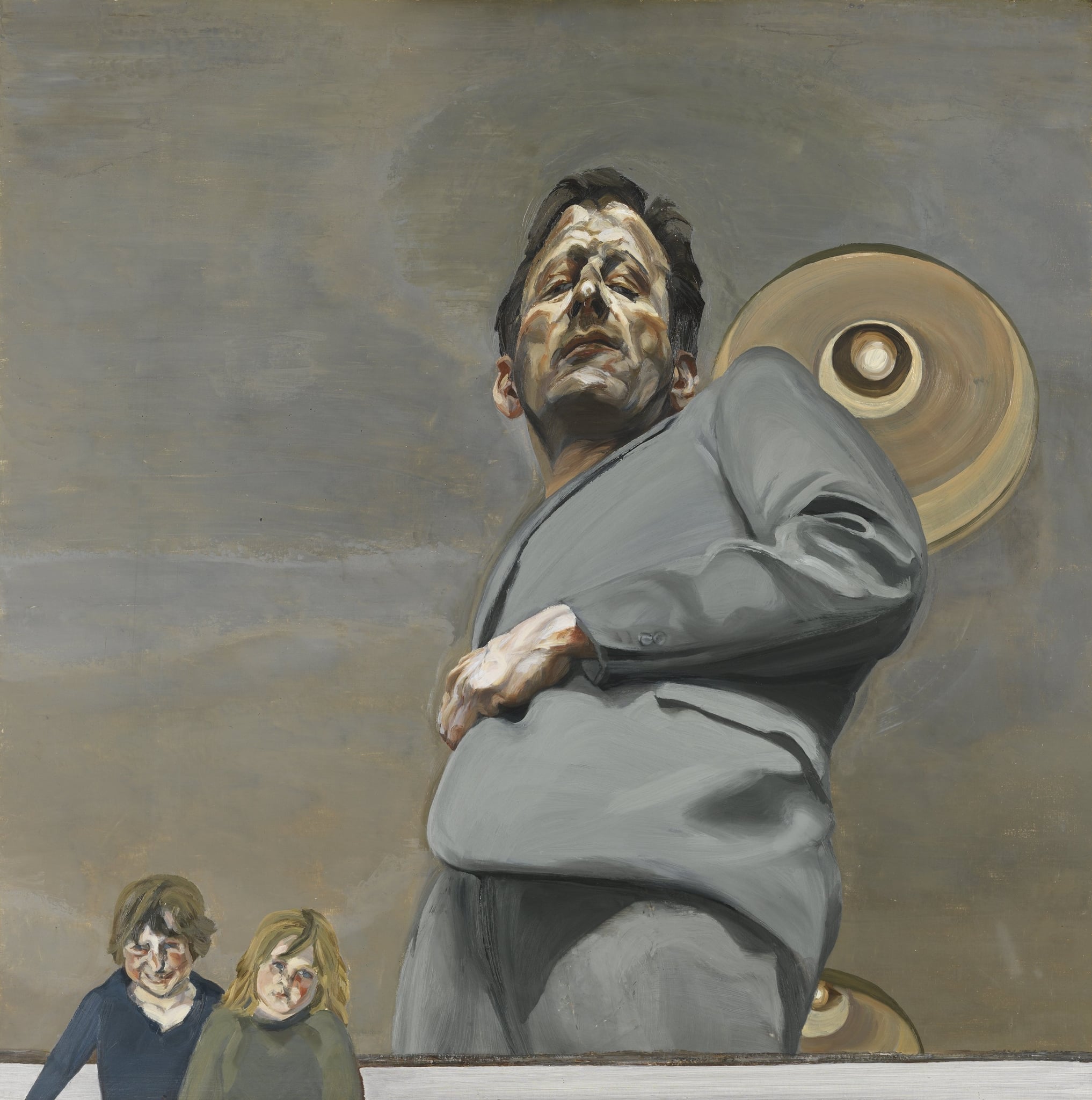
Floor mirror edge Symbolism
The floor mirror edge marks the boundary where reflection begins, turning a simple view into an encounter with mediation and self‑inspection. Set at ground level, this threshold can unsettle perspective, heighten bodily presence, and shift portraiture from straightforward depiction to self‑scrutiny. As a liminal frame, it makes the act of looking spatially and ethically charged.
Floor mirror edge in Reflection with Two Children
In Lucian Freud’s Reflection with Two Children (1965), the self‑portrait is organized around a mirror placed on the floor, so the edge of reflection dictates a vertiginous, low viewpoint. The suited figure looms above this threshold while a ceiling lamp hovers like a disc behind his head, and two small children puncture the composition at the bottom margin—meeting the mirror’s rim and activating it as a boundary between viewer, subject, and space. By staging himself at this brink, Freud converts self‑representation into a drama of authority, exposure, and accountability, making the floor mirror edge the operative sign of mediation rather than straightforward depiction.