Oranges Symbolism
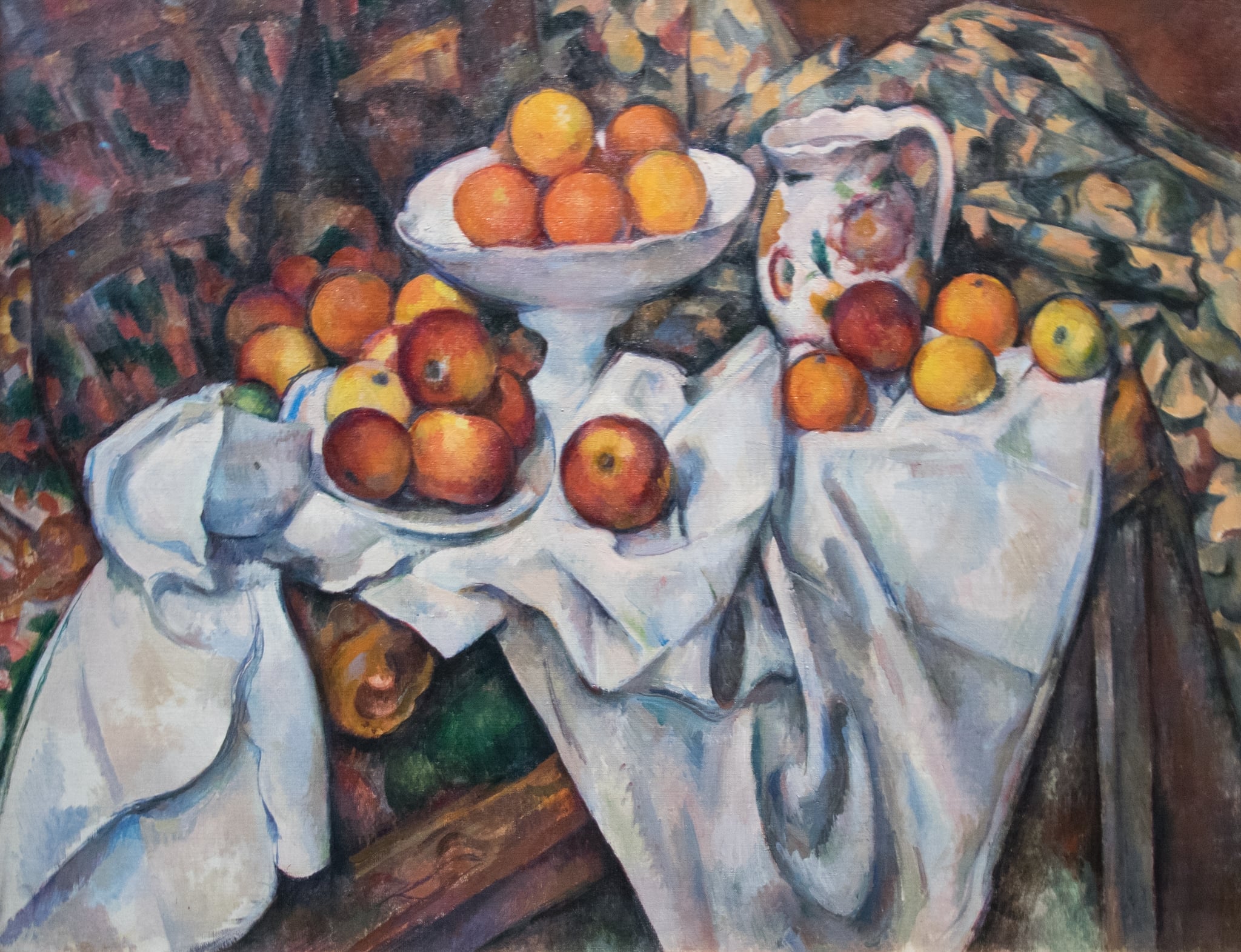
In Cézanne’s still lifes, oranges serve as emblems of abundance and as compact units of color-weight. Their warm hue anchors compositions and helps build form through relationships of color rather than single-point perspective. In this modern use, the fruit becomes a structural tool as much as a motif.
Oranges in Still Life with Apples and Oranges
In Still Life with Apples and Oranges (c. 1899) by Paul Cézanne, oranges anchor a tilting table as they heap in a white compote and scatter across cascading cloths beside a flowered jug. Cézanne stabilizes these domestic things by color relationships, so the oranges read as durable forms without relying on single-point perspective; their repeated, warm chroma exerts gentle forward pressure that counterbalances the scene’s subtle instability. The result is a still life that feels both solid and slightly unsettled, with oranges doing the work of holding the composition together while testing how vision is constructed.