Masaccio
Biography
Themes in Their Work
Most Expensive Masaccio Paintings
Explore ranked valuations of Masaccio's most valuable works →
Featured Artworks
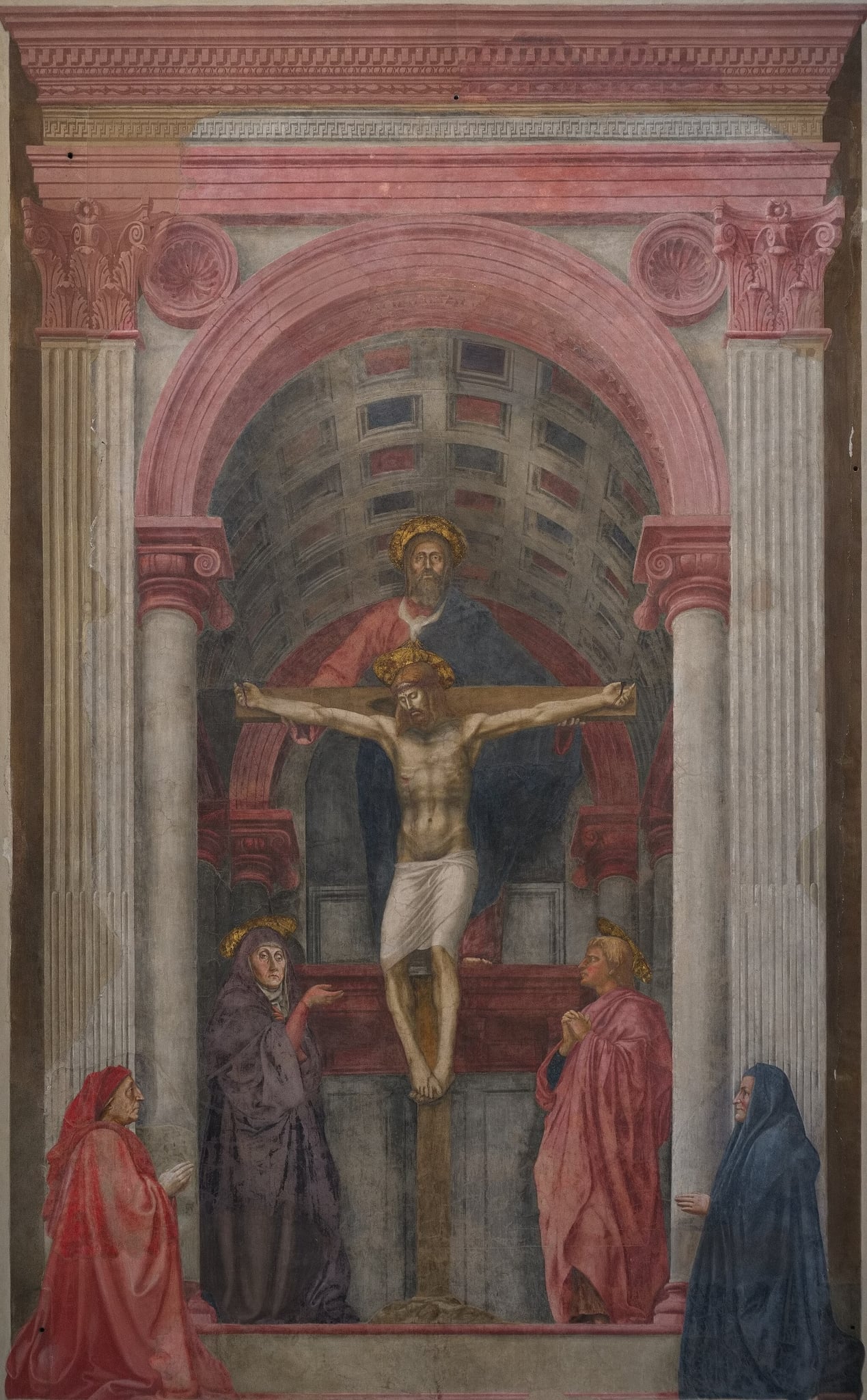
The Holy Trinity
Masaccio (c. 1425–1427)
Masaccio’s The Holy Trinity stages salvation as a rigorously ordered reality: a "Throne of Mercy" Trinity set inside a mathematically precise, coffered barrel vault. With <strong>one‑point perspective</strong>, the fictive chapel opens to the nave, placing kneeling donors at our eye level while Mary presents Christ and John prays in grief <sup>[1]</sup><sup>[2]</sup>.
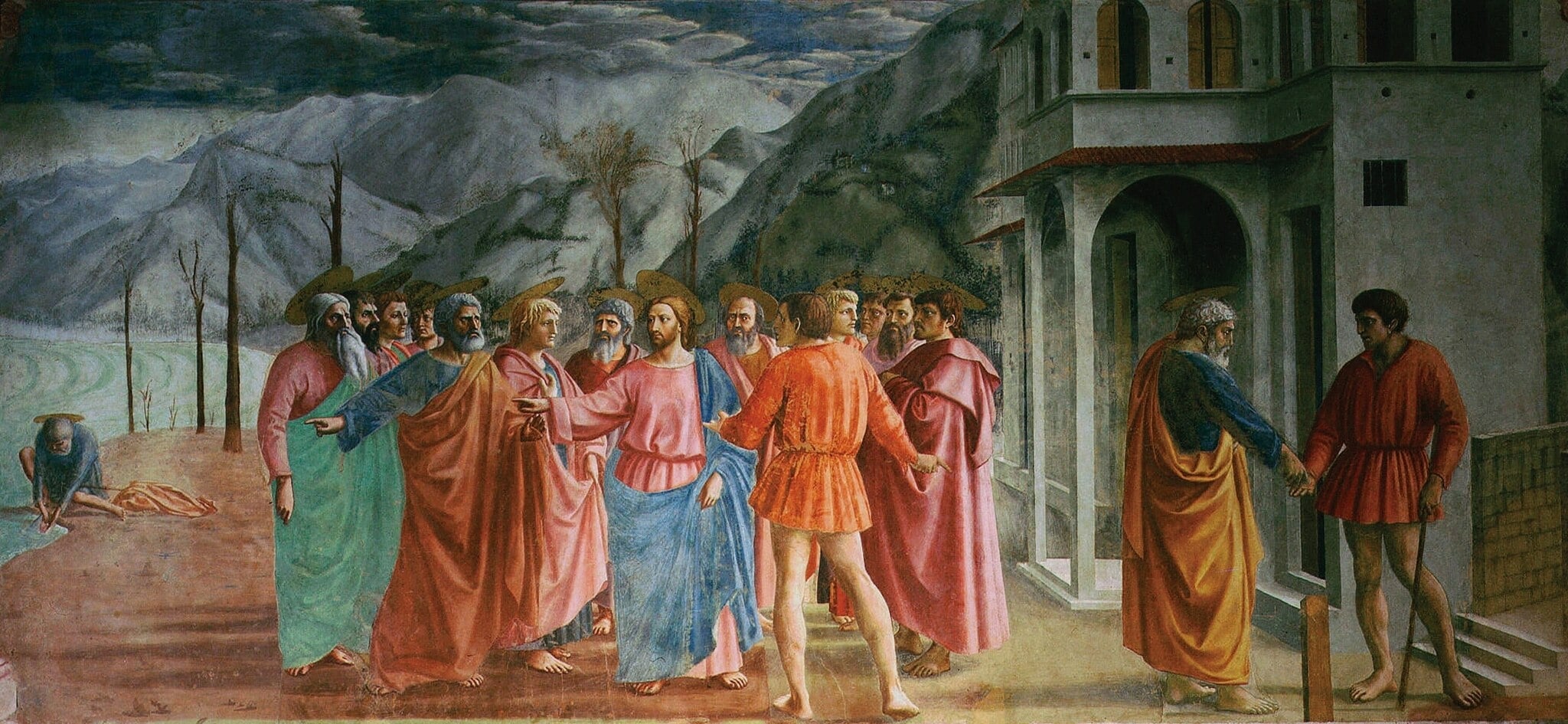
The Tribute Money
Masaccio (c. 1425–1427)
Masaccio’s The Tribute Money unifies three Gospel moments into one rational space, using <strong>continuous narrative</strong>, coherent <strong>light from the right</strong>, and strict <strong>linear perspective</strong> to dramatize Christ’s directive to Peter about the temple tax. The red-clad tax collector confronts the group at center, Peter retrieves the coin at the lake on the left, and he pays the dues at the portico on the right, all bound by emphatic pointing hands and a shared illumination <sup>[2]</sup><sup>[3]</sup>.