Blackboard
by Cy Twombly
Study Print Studio
Create a personal study print
Build a companion study sheet around the part of this painting that speaks to you most. Choose a detail, shape an interpretation, and walk away with something personal and display-worthy.
Fast Facts
- Year
- 1968
- Medium
- Oil‑based house paint and crayon on canvas
- Dimensions
- 172.8 × 216 cm (68 1/8 × 87 1/8 in.)
- Location
- The Museum of Modern Art, New York
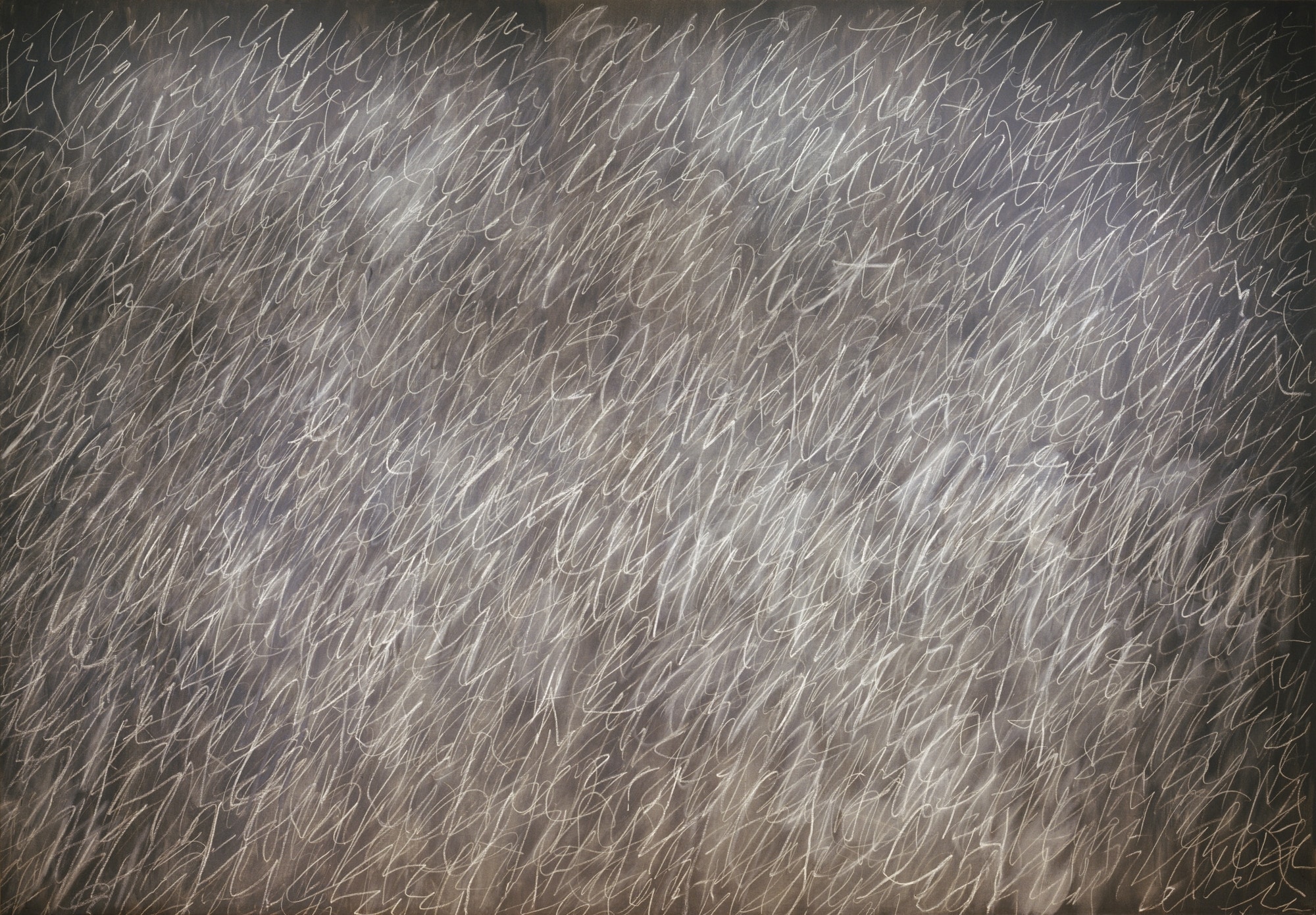
Click on any numbered symbol to learn more about its meaning
Meaning & Symbolism
Explore Deeper with AI
Ask questions about Blackboard
Popular questions:
Powered by AI • Get instant insights about this artwork
Interpretations
Semiotic Reading (Asemic Enunciation)
Source: Roland Barthes (Twombly essays); Whitney Museum of American Art
Diagrammatics & Science (Leonardo to Twombly)
Source: Whitney Museum of American Art
Performance & Duration (The One-Breath Line)
Source: Museum Brandhorst; CASVA/National Gallery of Art
Material Intelligence (House Paint, Crayon, and Drag)
Source: The Museum of Modern Art; Whitney Museum of American Art
Between Gesturalism and Systems (A Third Term)
Source: Whitney Museum of American Art; SFMOMA
Related Themes
About Cy Twombly
More by Cy Twombly
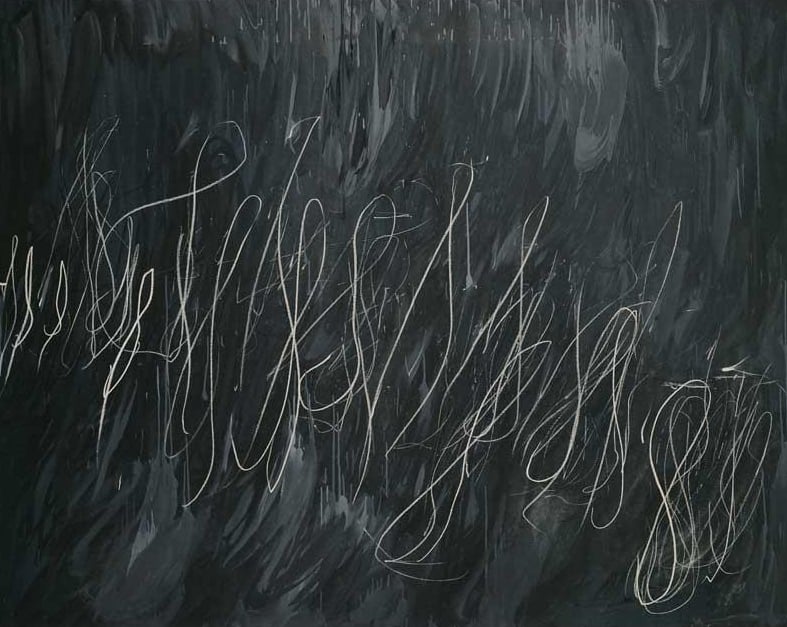
Untitled (New York City)
Cy Twombly (1968)
Cy Twombly’s Untitled (New York City) (1968) converts the city into <strong>tempo and gesture</strong>: white, looping lines lash across a slate field like cursive untethered from words. The work stages <strong>writing-as-motion</strong>, registering pressure shifts, drips, and erasures as a live record of urban time <sup>[1]</sup><sup>[5]</sup>.
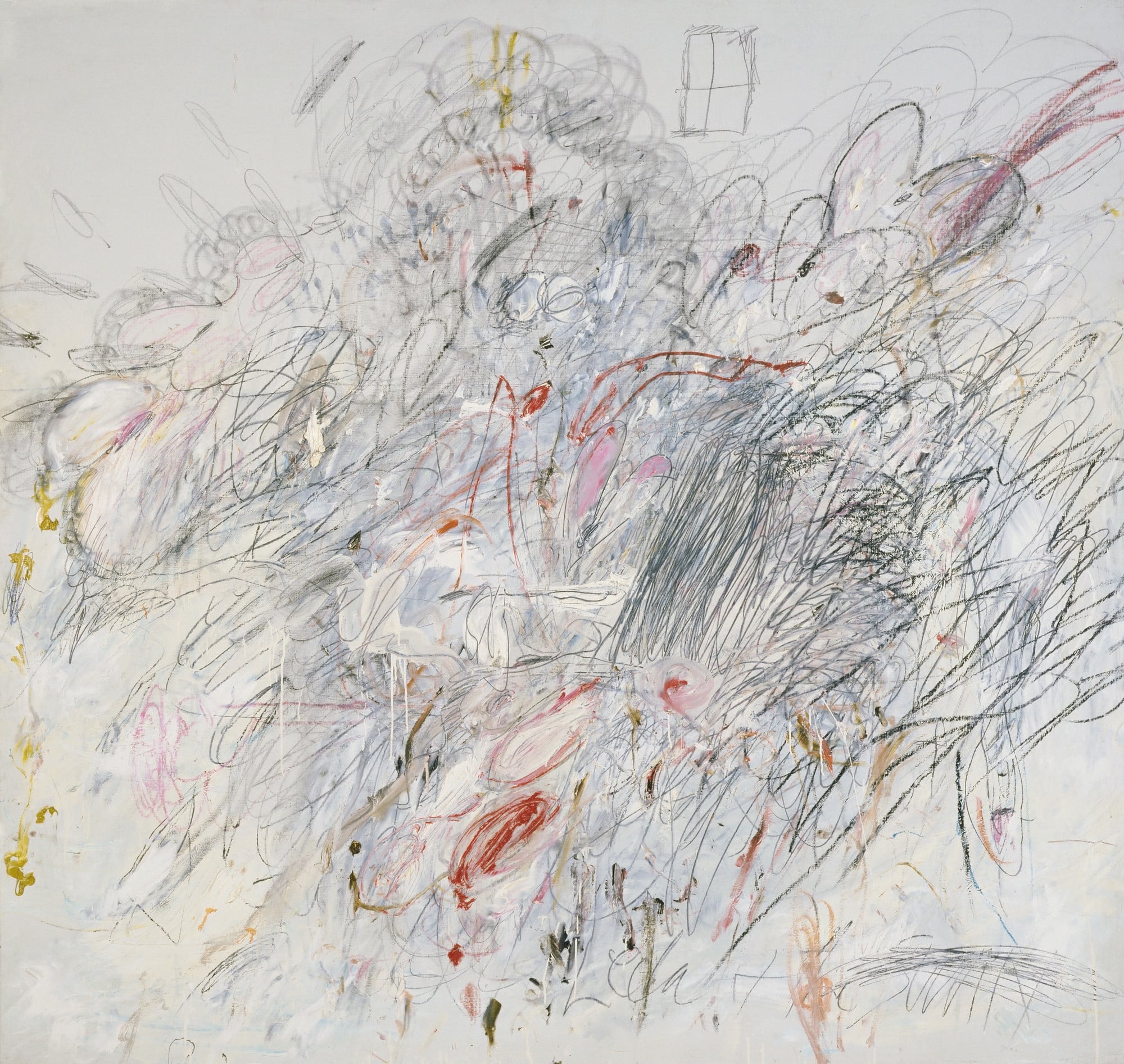
Leda and the Swan
Cy Twombly (1962)
Cy Twombly’s Leda and the Swan condenses the Greek myth into an <strong>orgiastic collision</strong> of marks: graphite scrawls, smeared whites, blush pinks, and eruptive reds radiate from a dark, compressed vortex. A sketched <strong>window-like rectangle</strong>, heart and phallic glyphs puncture the storm, making desire and violence legible as emblems rather than images <sup>[1]</sup>.
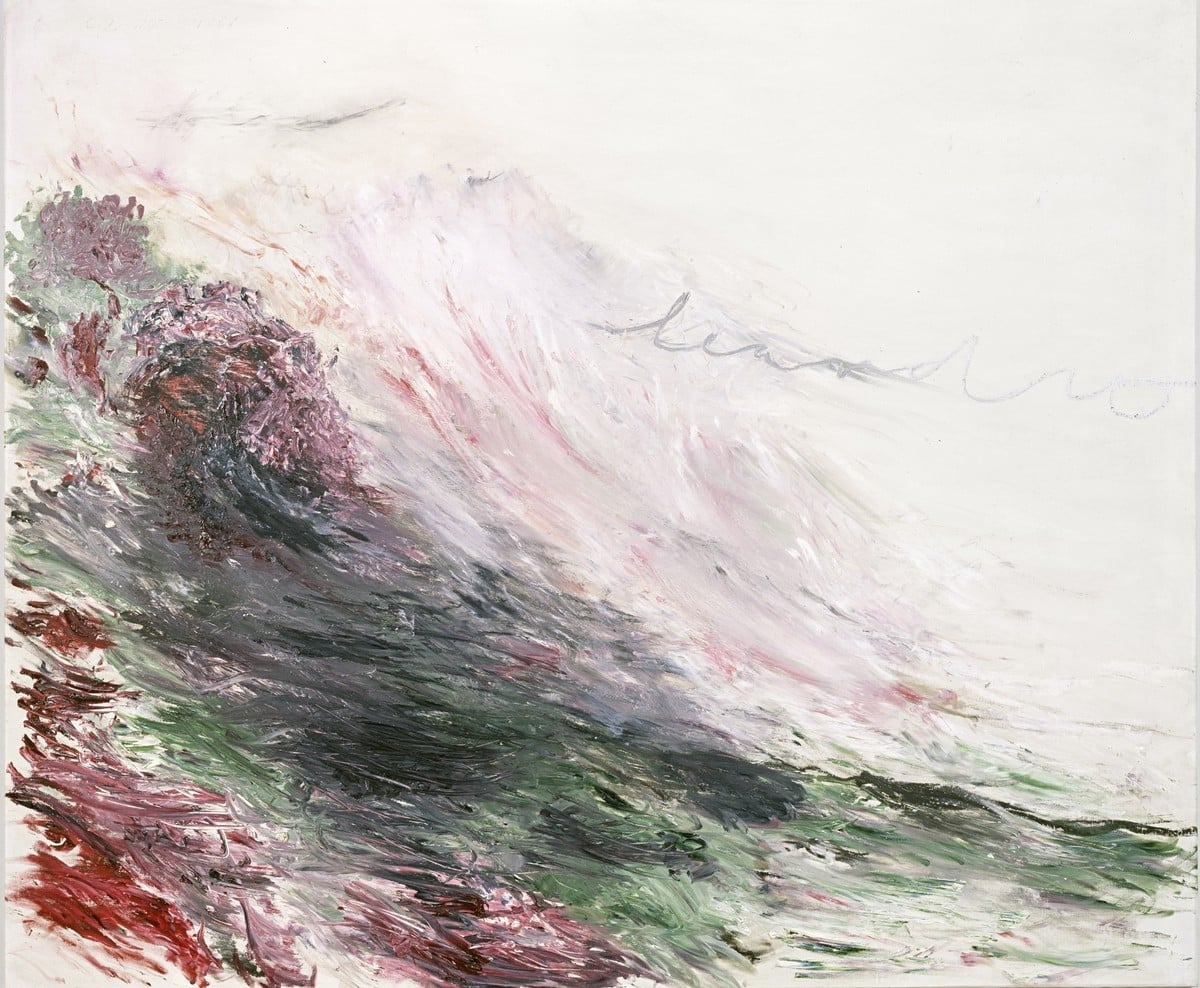
Hero and Leandro
Cy Twombly (1985)
<strong>Hero and Leandro</strong> compresses myth into a single, diagonal surge of paint that fuses sea, storm, and desire. The impasto wave drives from lower left to upper right, while the faint graphite name “leandro” thins into the white ground, turning language into a last breath. Twombly converts Marlowe’s poem and the Greek legend into a <strong>painterly elegy</strong> where gesture stands in for fate <sup>[1]</sup><sup>[2]</sup><sup>[3]</sup>.