Two ways a series measures change
Both painters hold a view steady and let the world move. Sisley tests how weather alters durable forms; Pissarro tracks how a city organizes motion and light. Seen together, they clarify what a painting can measure: atmosphere or circulation, stone or system.
Comparison frame: When one motif is held constant, does vision record atmosphere (Sisley) or social circulation (Pissarro)—and how does that choice redefine truth in painting?
Quick Comparison
| Topic | Alfred Sisley | Camille Pissarro |
|---|---|---|
| What the series measures | Atmosphere acting on enduring architecture and landscape | Urban flow, modern light, and collective tempo |
| Typical vantage | Ground-level or modest window opposite the motif | High hotel windows; axial/diagonal boulevards |
| Treatment of structure | Architectural legibility maintained; edges modulate, masses hold | Façades as conduits/planes organizing flows; less about individual buildings |
| Light systems | Daylight weather; water reflections as barometers | Electric vs gaslight vs cab lamps; wet stone multiplies sources |
| Human presence | Scale-giving walkers; routine adaptation to natural cycles | Anonymous units of tempo; crowds and traffic as rhythm |
| Infrastructure | Bridges, quays, market sheds within a working ecology | Boulevards and lighting as scaffolds of perception |
| Palette and touch | Silvery cools; even broken strokes; calm tonal range | Vibrating patches; freer touch after 1890; bolder temperature contrasts |
| Stance toward modernity | Modernization viewed from the riverbank/street; continuity with nature | Inside the engineered city; modern systems structure what is seen |
Shared Ground
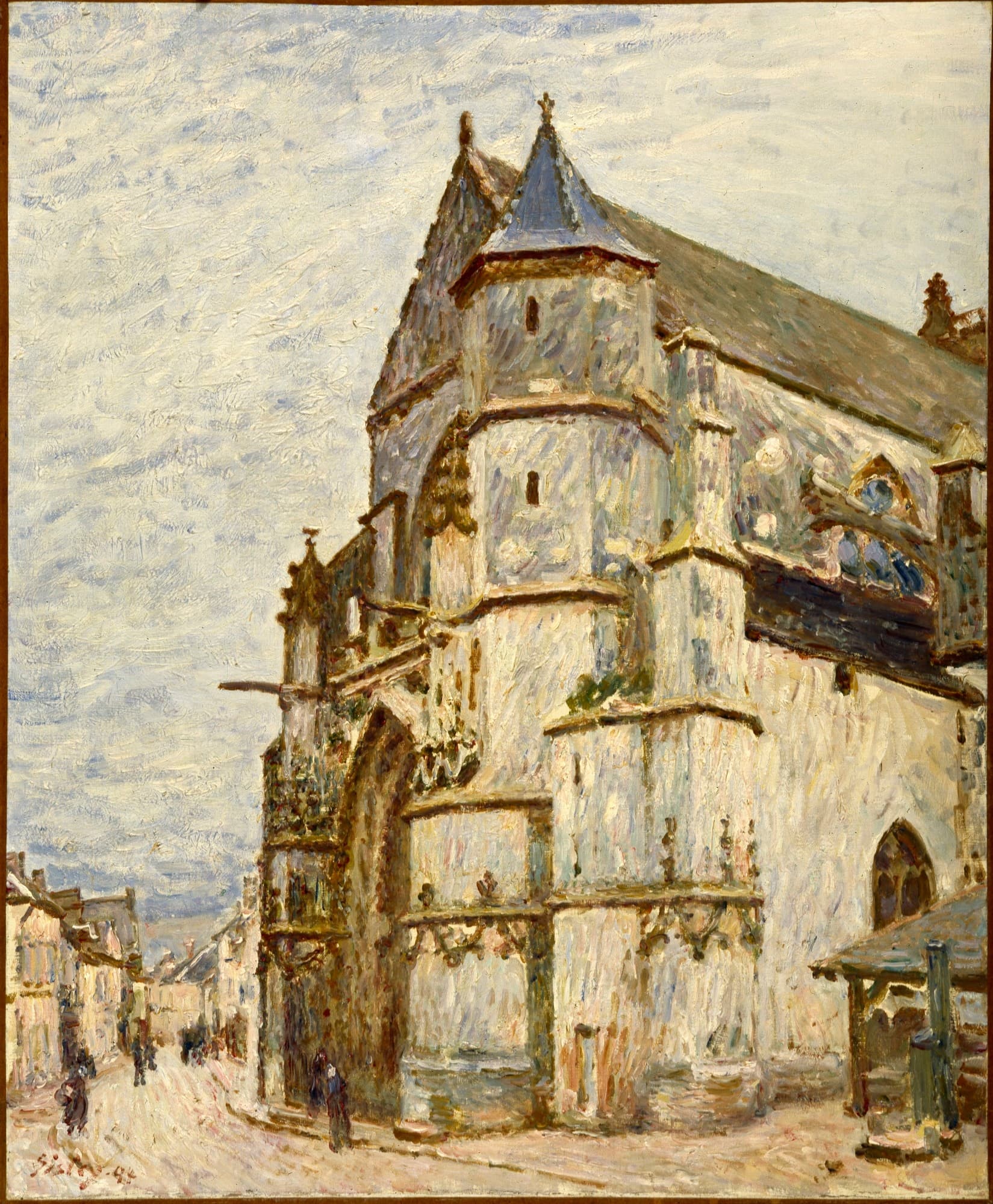
Both artists turn painting into a measured practice: fix the vantage, vary the hour and weather, and watch the world rewrite itself. Sisley’s late cycle of the Church at Moret (1893–94) and Pissarro’s Boulevard Montmartre campaign (1897) are conceived as serial laboratories rather than one-off views. In each, a stable motif becomes the control variable; light, season, and traffic supply the changes. The method yields a new kind of evidence: not the drama of events but the patterned ways places are co-authored by climate, use, and circulation.
They also share a commitment to built forms living inside atmospheres. Sisley binds river bridges, quays, flood streets, and village squares to sky and weather so that stone and water share the same optical life. Pissarro knits Haussmann façades, kiosks, and lamp standards into fog, rain, and glare so that urban surfaces register as climate-sensitive. Neither privileges monuments over ordinary fixtures: shopfronts, pruned trees, market sheds, and curbside kiosks earn their visual weight by how they participate in light and movement. Figures function less as portraits than as units of scale and tempo.
Reflections are a shared device. Sisley’s water doubles buildings to make time legible; Pissarro’s wet pavements multiply lamps and windows into a grammar of urban light. In both, small, distributed strokes standardize sensation across materials, allowing atmosphere to join architecture without melodrama. The result is a democratic description of place, attentive to how ordinary sites disclose their structure through change.
Decisive Difference
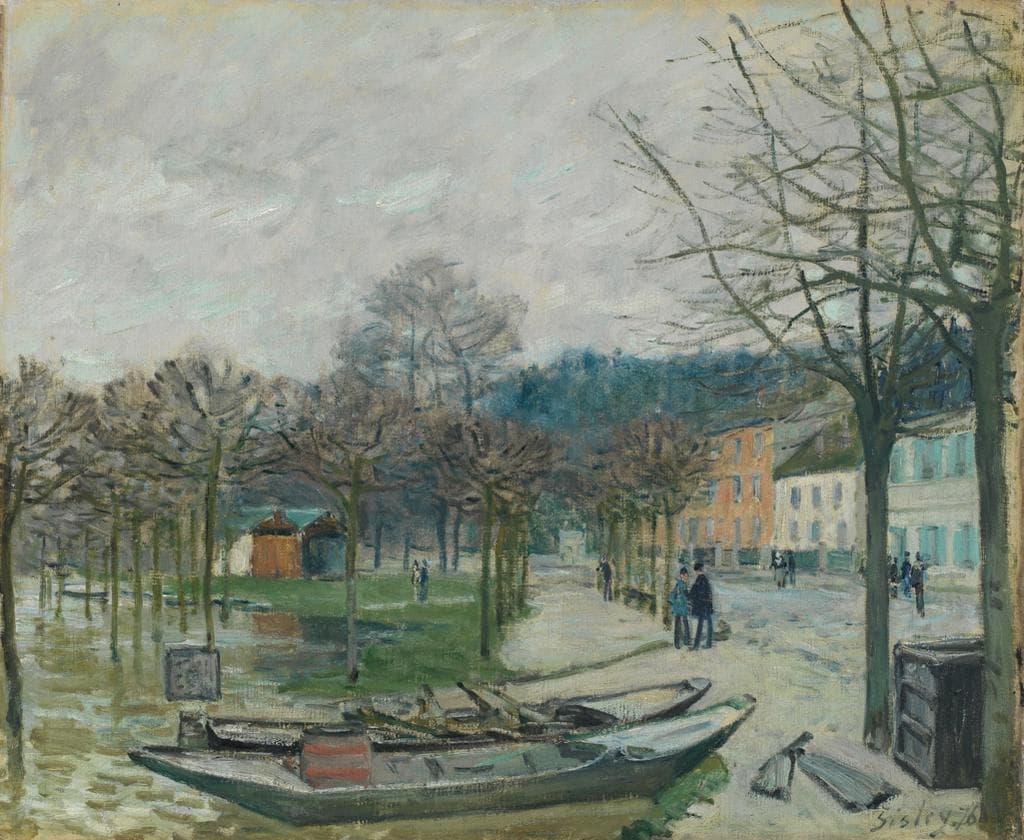
The fulcrum is what each artist asks a series to measure. Sisley makes painting a calibrated barometer of weather acting on durable form. In the Church at Moret canvases, façade, buttress, and portal remain constructively readable while light and moisture modulate tonality and edge. In Flood at Port-Marly, aligned trees and façades operate like gauges inside a calm hydrology; reflections confirm contingency without dissolving structure. The ground-level stance matters: streets, quays, and bridges are experienced as places you can enter, where architecture endures while appearances shift.
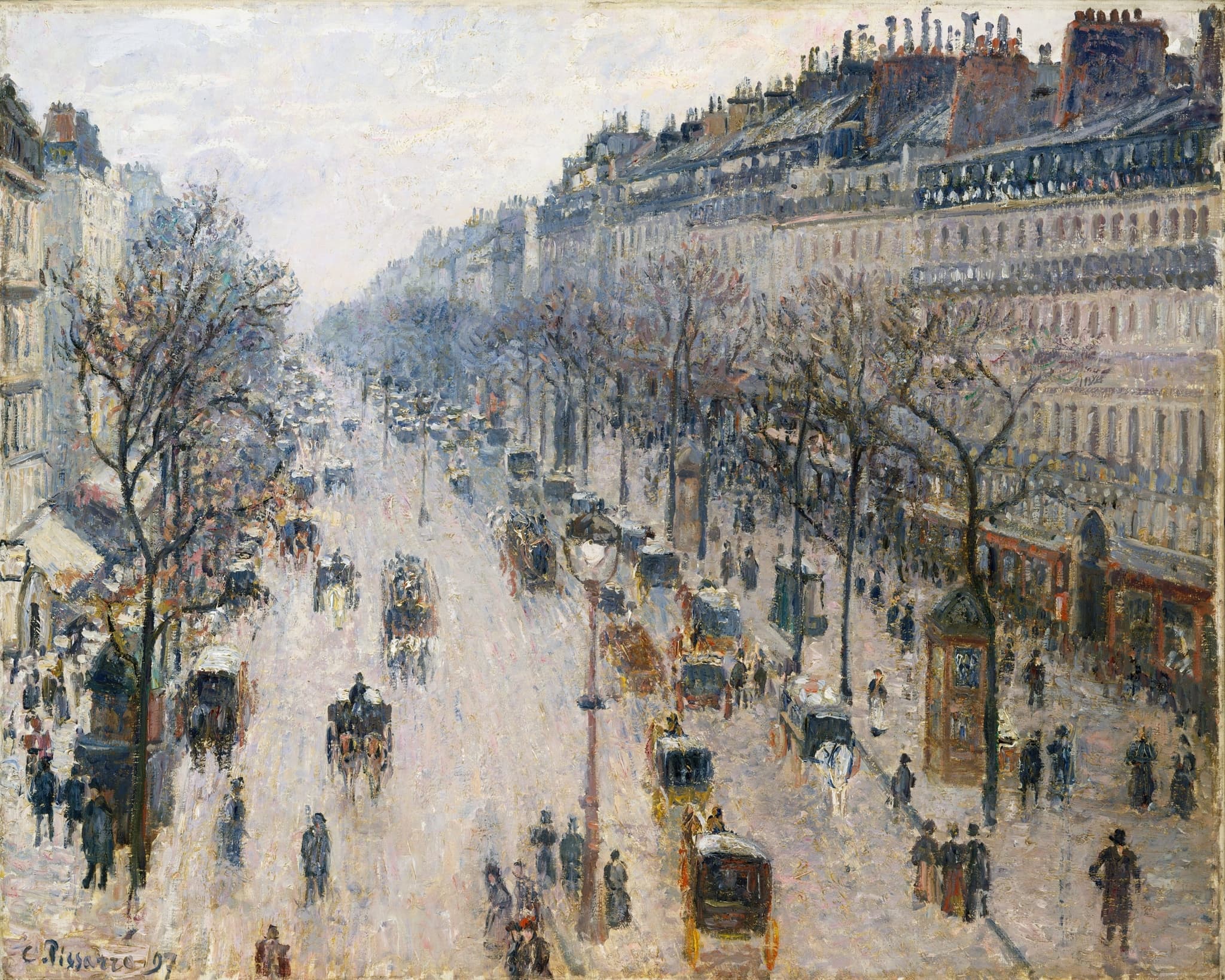
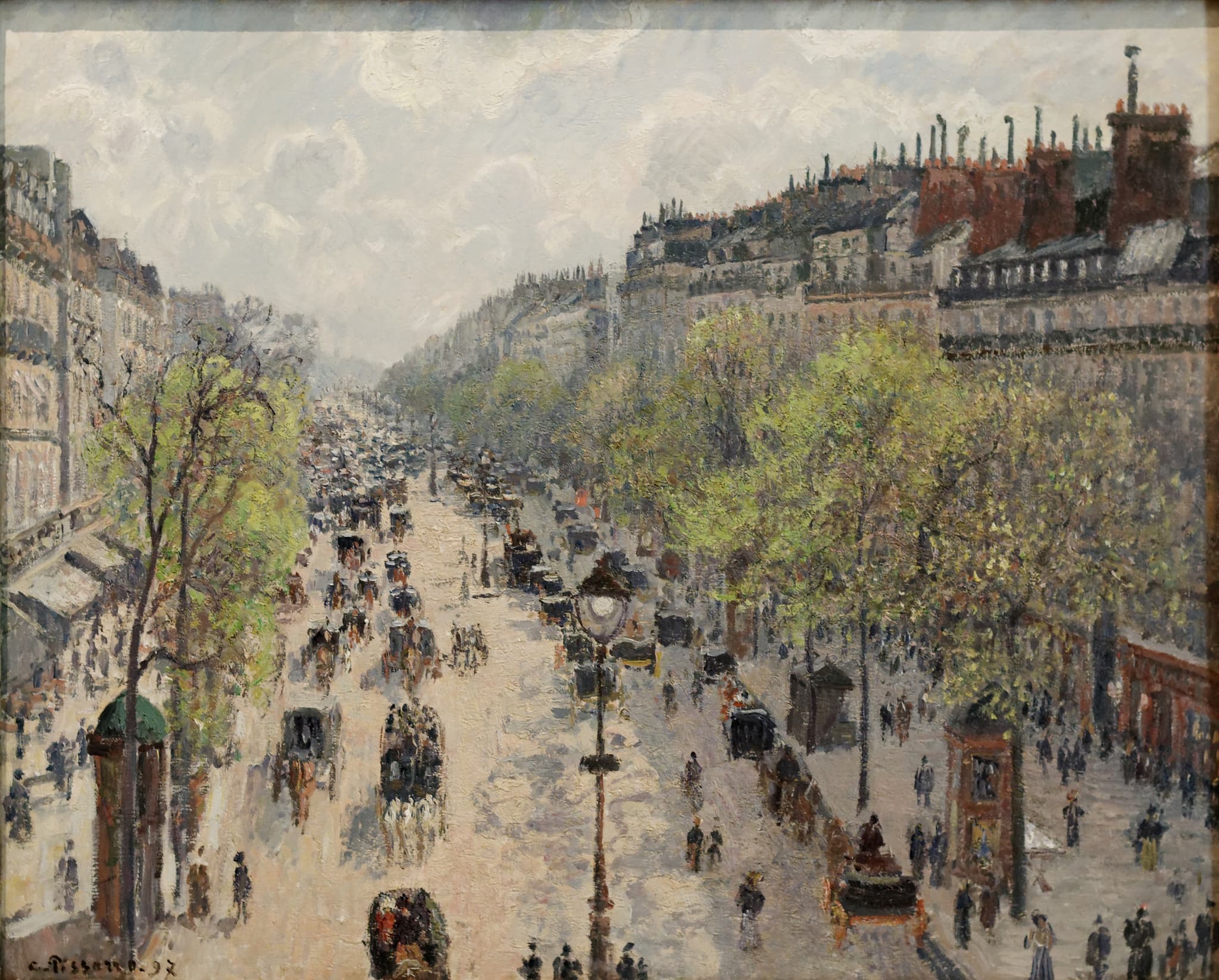
Pissarro converts the series into social optics. From high hotel windows he treats boulevards as engineered conduits that choreograph vision and movement. Boulevard Montmartre at Night distinguishes cold electric arcs from warm shopfront gaslight, then counts pedestrians and cabs as pulses within a collective stream. The Winter Morning variant makes wet stone a reflector that tallies daily circulation. Here infrastructure is not a motif among others; it is the scaffold of perception itself. Individual buildings cede identity to façades-as-planes organizing flow; figures become units of tempo rather than subjects.
So the decisive difference is a standard of truth. For Sisley, truth is structural clarity held steady under atmospheric change. For Pissarro, truth is the aggregation of rhythms within a modern system of light and mobility. One records weather’s editing of form; the other maps how the city edits experience.
Paired Works
Serial effects, two logics of change
Focus question: When the motif is held constant, what does each artist ask time to reveal?
The Church at Moret vs Boulevard Montmartre at Night
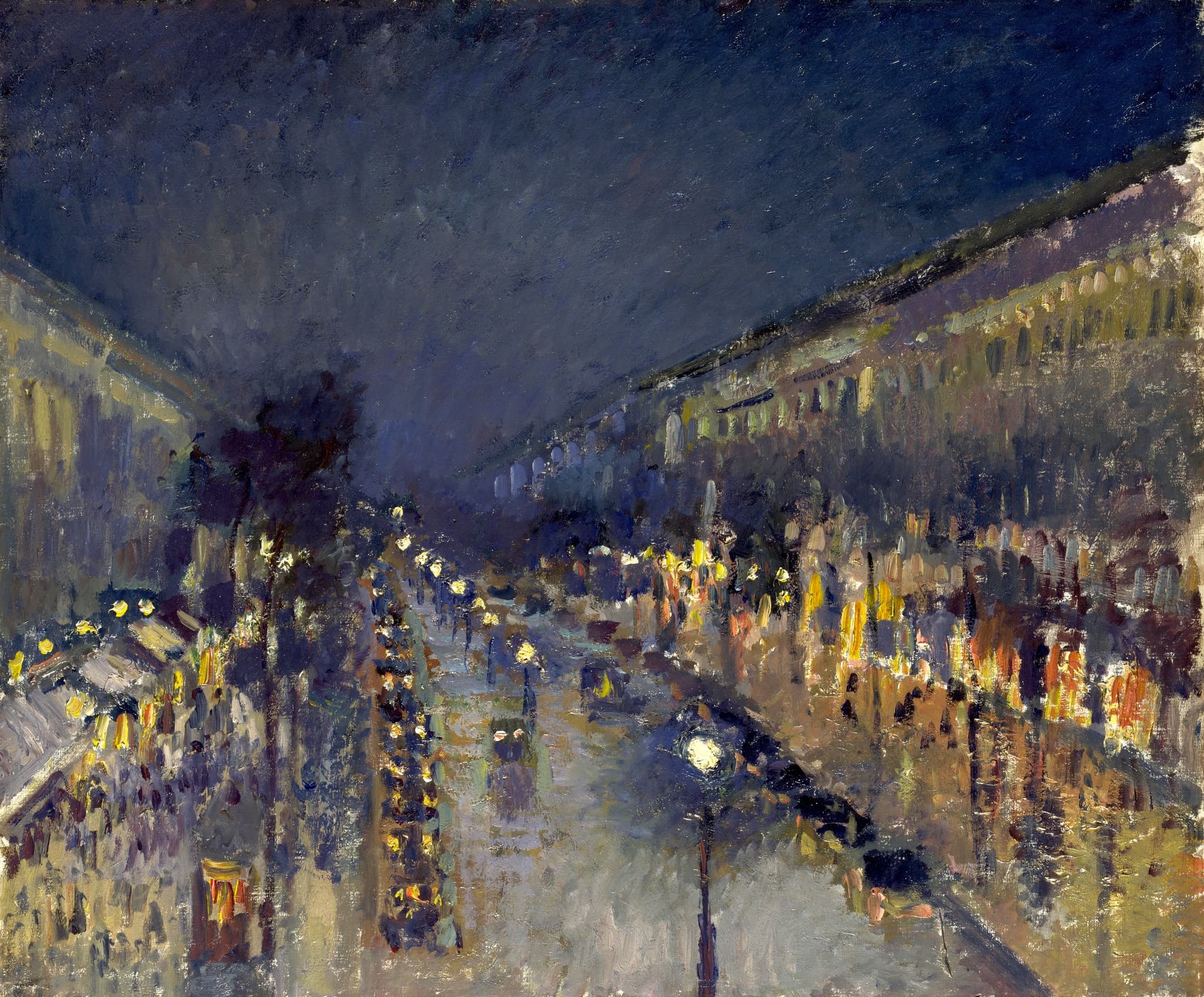
Reflections as timekeepers: water vs wet stone
Focus question: Do reflections register natural cycles or civic pulse?
Flood at Port-Marly vs The Boulevard Montmartre on a Winter Morning
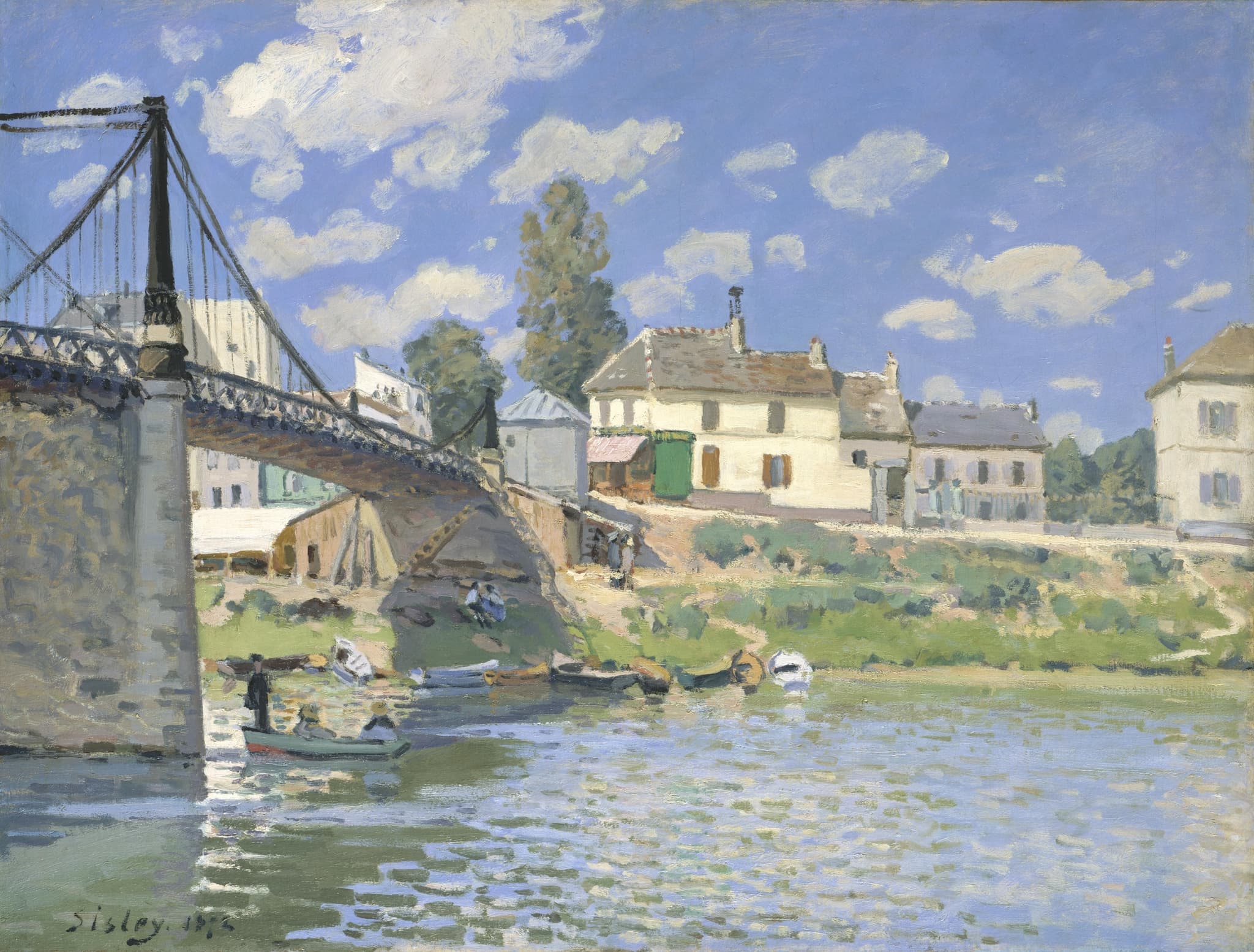
Modern circulation from two angles
Focus question: How does each painter picture movement enabled by infrastructure?
The Bridge at Villeneuve-la-Garenne vs The Boulevard Montmartre on a Spring Morning
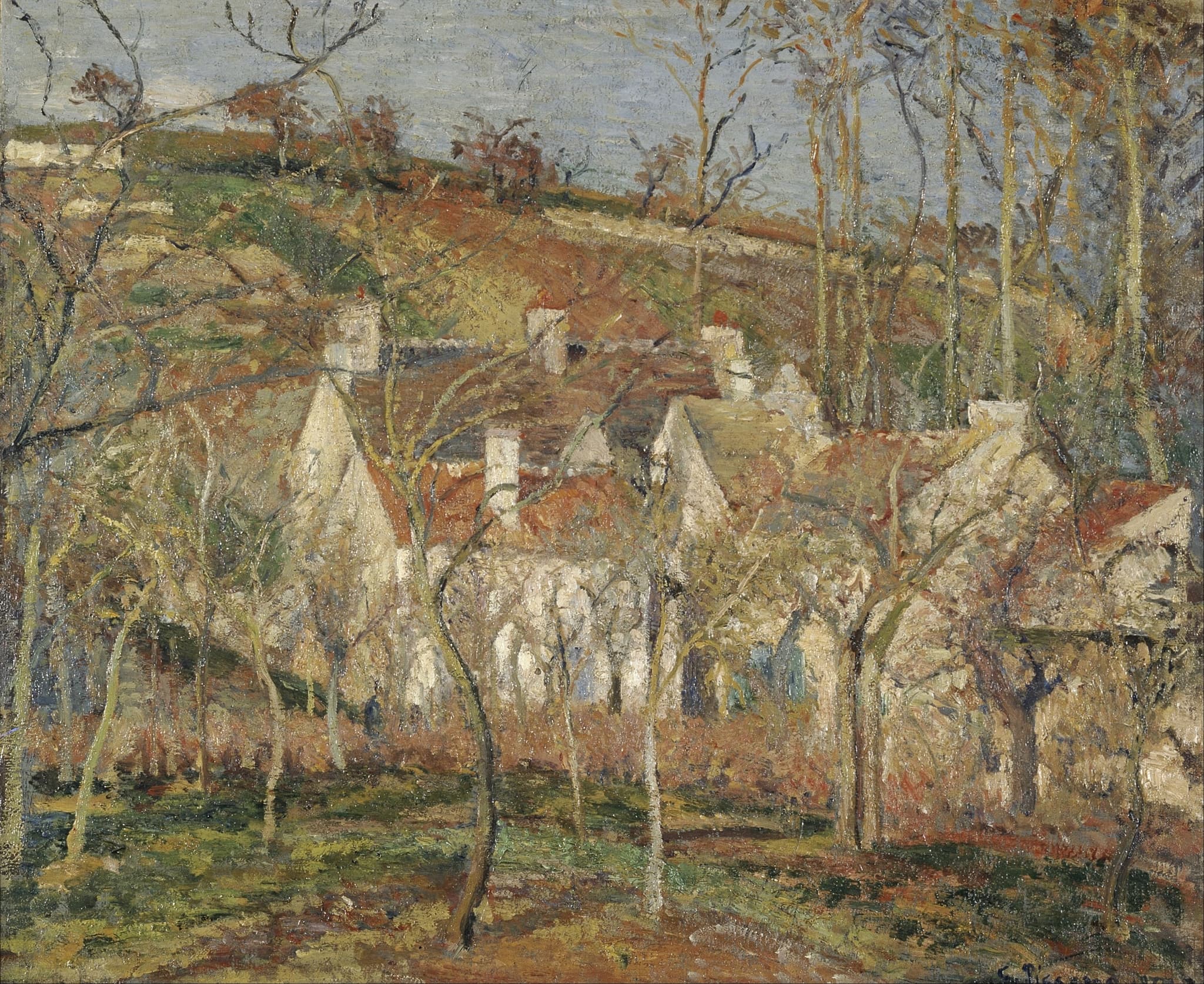
Structure in nature
Focus question: When landscape is the subject, how do order and change meet?
Flood at Port-Marly vs Red Roofs
Why This Comparison Matters
Putting Sisley beside Pissarro clarifies two durable models for modern painting. One treats a series as a weather station for solid things: how stone, streets, and trees keep their identity while appearances drift. The other treats a series as a civic sensor: how a city organizes bodies, light, and desire into rhythms. Those positions carry forward. Landscape and city pictures after Impressionism—Cézanne’s planes, Seurat’s crowds, even contemporary photography of climate and infrastructure—inherit these questions about what to measure and from where.
For viewers, the comparison sharpens looking. In Sisley, search for the joints that hold while edges soften; in Pissarro, count the intervals—lamps, kiosks, aligned trees—that convert place into tempo. Both ask us to see the ordinary as a system of relations rather than as scenery. That is why the pairing matters now: it offers clear tools for reading change, whether seasonal variability along a river or the engineered choreography of a boulevard. It shows how calm description can still carry large ideas about how we inhabit the world.
Related Links
Sources
- National Gallery, London – Camille Pissarro, The Boulevard Montmartre at Night
- The Metropolitan Museum of Art – Camille Pissarro, The Boulevard Montmartre on a Winter Morning
- Musée d’Orsay – Camille Pissarro, Red Roofs (Côte Saint-Denis)
- Detroit Institute of Arts – Alfred Sisley, Church at Moret after the Rain (1894)
- Musée des Beaux-Arts de Rouen – Alfred Sisley, The Church at Moret (Morning Sun)
- The Metropolitan Museum of Art – Alfred Sisley, The Bridge at Villeneuve-la-Garenne
- National Gallery of Art, Washington – Alfred Sisley, Flood at Port-Marly
- Ashmolean Museum – Pissarro gallery overview
- Cambridge University Press – Jean Grave and French Anarchism (context for Pissarro’s social outlook)