Red Roofs
Study Print Studio
Create a personal study print
Build a companion study sheet around the part of this painting that speaks to you most. Choose a detail, shape an interpretation, and walk away with something personal and display-worthy.
Fast Facts
- Year
- 1877
- Medium
- Oil on canvas
- Dimensions
- 54.5 × 65.6 cm
- Location
- Musée d’Orsay, Paris
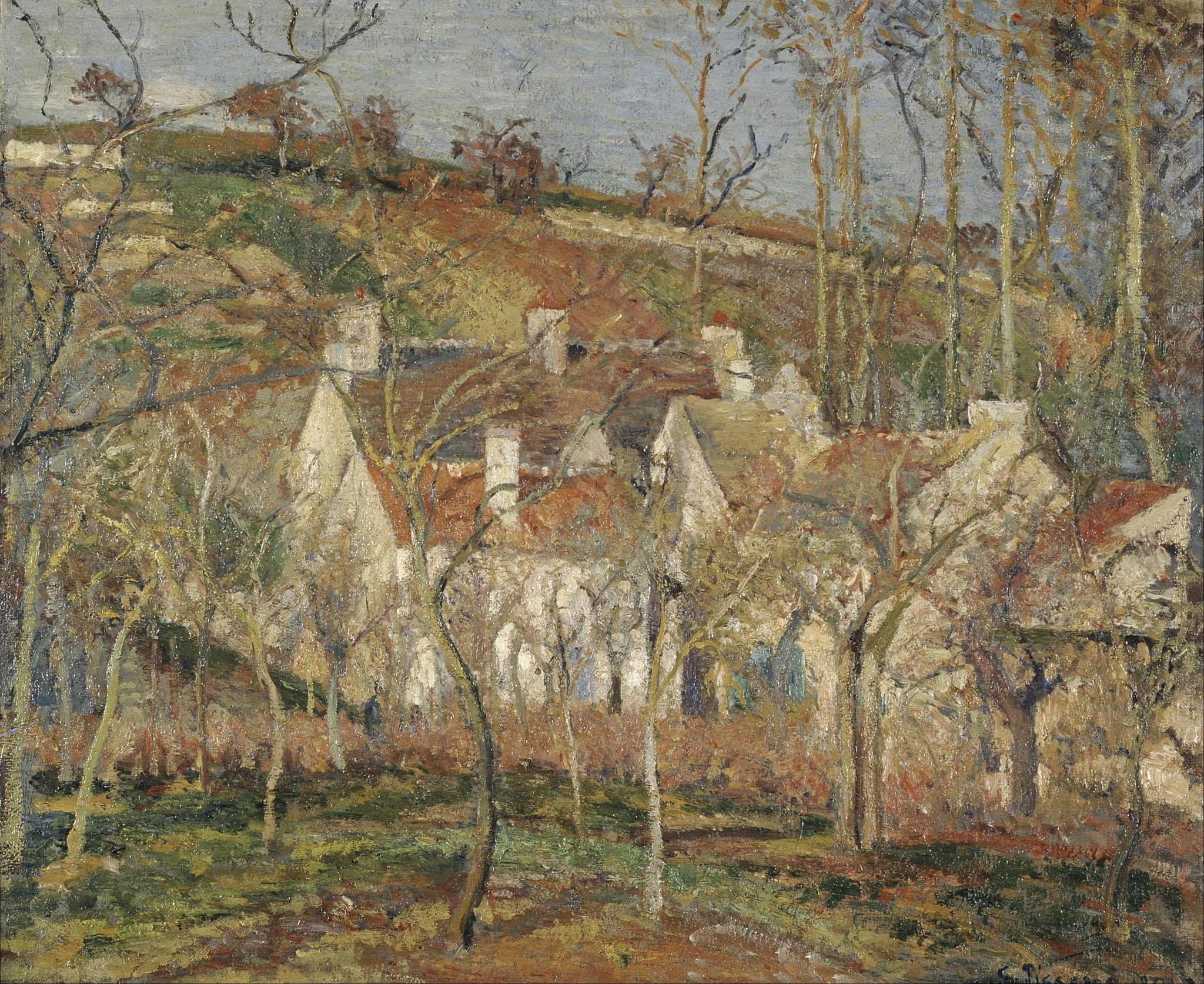
Click on any numbered symbol to learn more about its meaning
Meaning & Symbolism
Explore Deeper with AI
Ask questions about Red Roofs
Popular questions:
Powered by AI • Get instant insights about this artwork
Interpretations
Formal Analysis: Planar Orchestration and the Visual Veil
Source: Musée d’Orsay; Nelson‑Atkins Museum of Art
Comparative Lens: Pissarro and Cézanne at Côte Saint‑Denis
Source: Musée d’Orsay; MoMA (Cézanne & Pissarro 1865–1885)
Environmental Ethic: Integration over Dominance
Source: Musée d’Orsay; Nelson‑Atkins Museum of Art; National Gallery of Canada
Material Poetics: Impasto as Weather, Labor as Texture
Source: Musée d’Orsay
Exhibition Context: From Impressionist Sensation to Structural Modernism
Source: Musée d’Orsay; National Gallery, London
Seen in Comparisons
Related Themes
About Camille Pissarro
More by Camille Pissarro
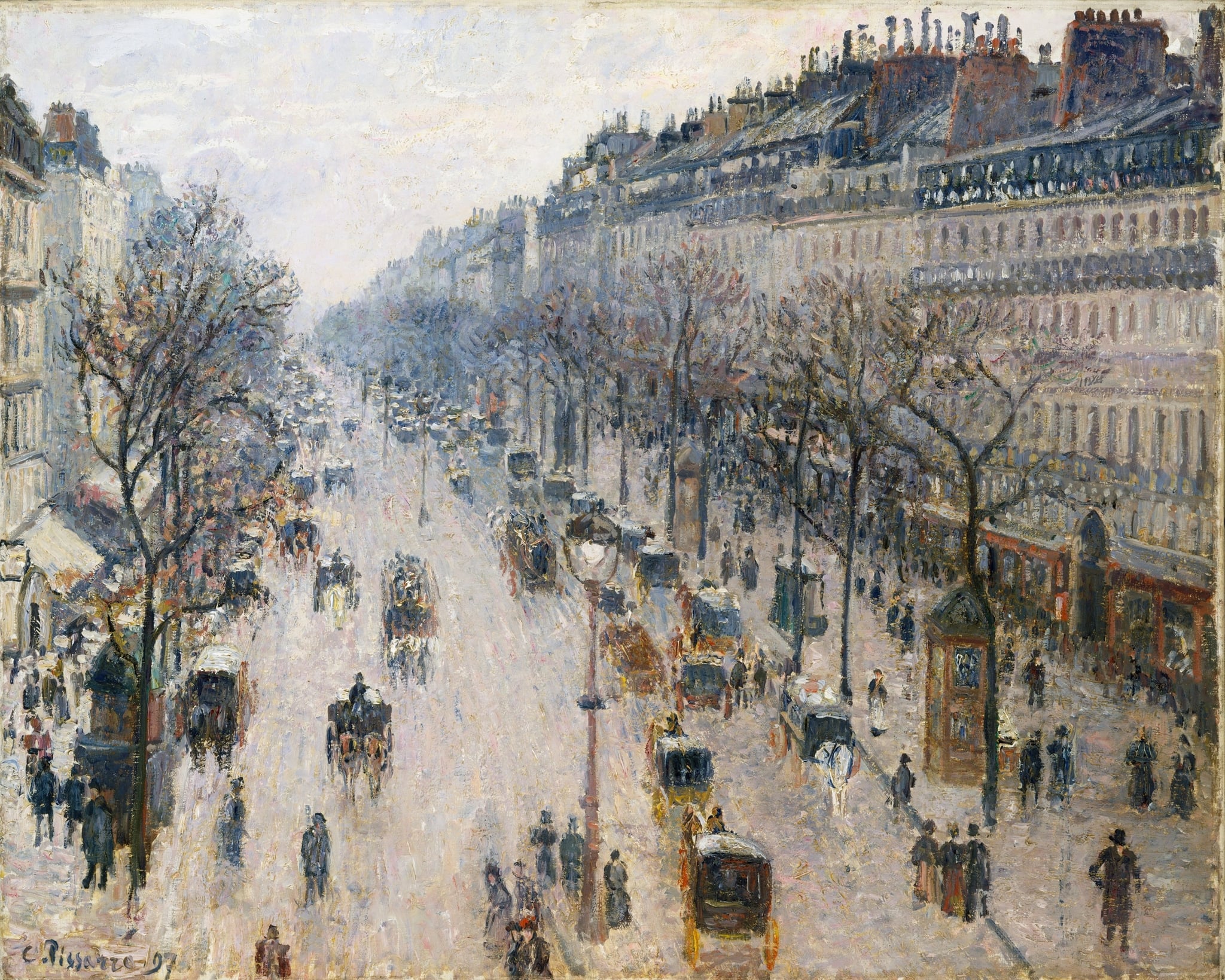
The Boulevard Montmartre on a Winter Morning
Camille Pissarro (1897)
From a high hotel window, Camille Pissarro renders Paris as a living system—its Haussmann boulevard dissolving into winter light, its crowds and vehicles fused into a soft, <strong>rhythmic flow</strong>. Broken strokes in cool grays, lilacs, and ochres turn fog, steam, and motion into <strong>texture of time</strong>, dignifying the city’s ordinary morning pulse <sup>[1]</sup><sup>[3]</sup>.
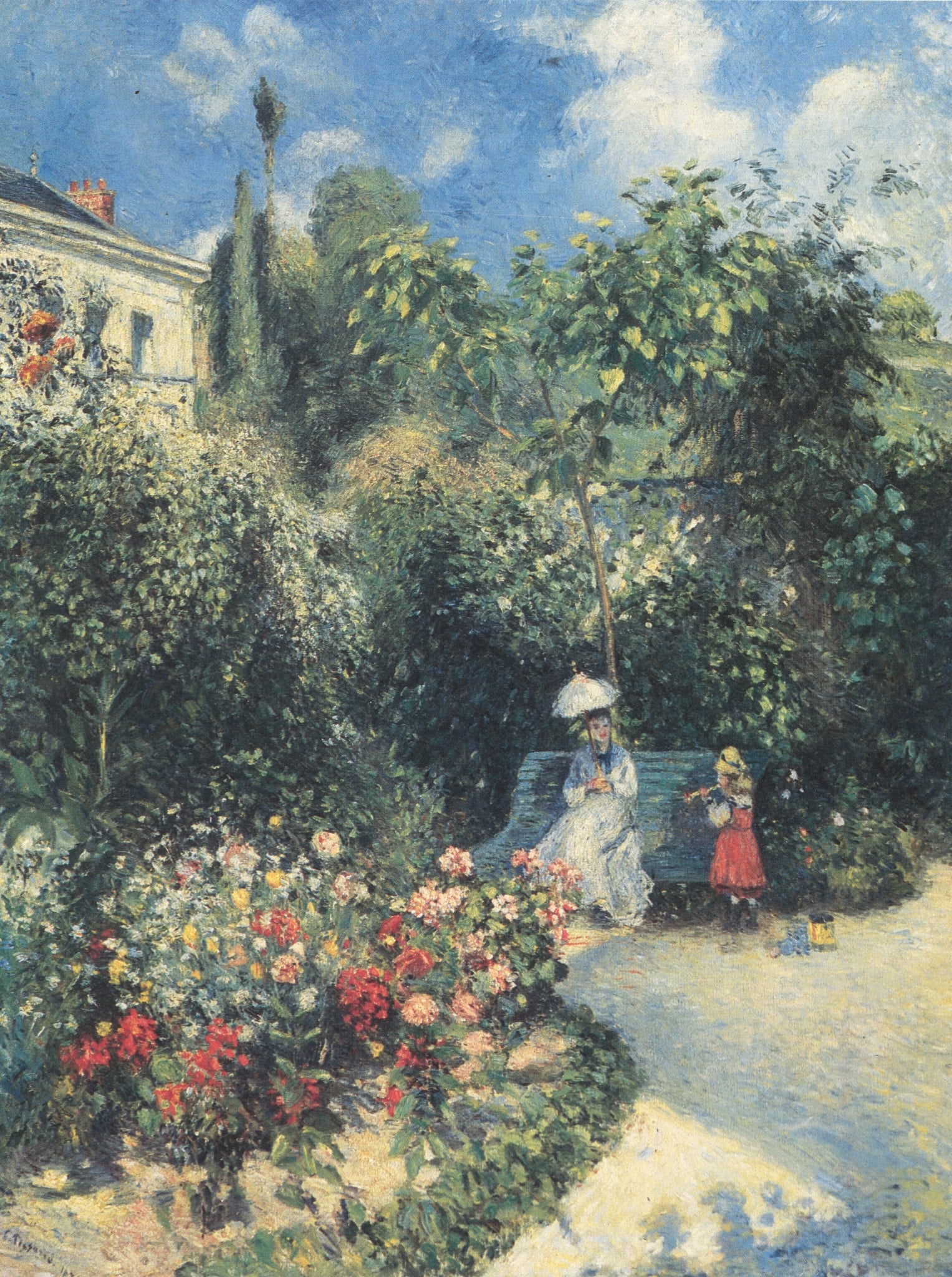
The Garden of Pontoise
Camille Pissarro (1874)
In The Garden of Pontoise, Camille Pissarro turns a modest suburban plot into a stage for <strong>modern leisure</strong> and <strong>fugitive light</strong>. A woman shaded by a parasol and a child in a bright red skirt punctuate the deep greens, while a curving sand path and beds of red–pink blossoms draw the eye toward a pale house and cloud‑flecked sky. The painting asserts that everyday, cultivated nature can be a <strong>modern Eden</strong> where time, season, and social ritual quietly unfold <sup>[1]</sup><sup>[3]</sup>.
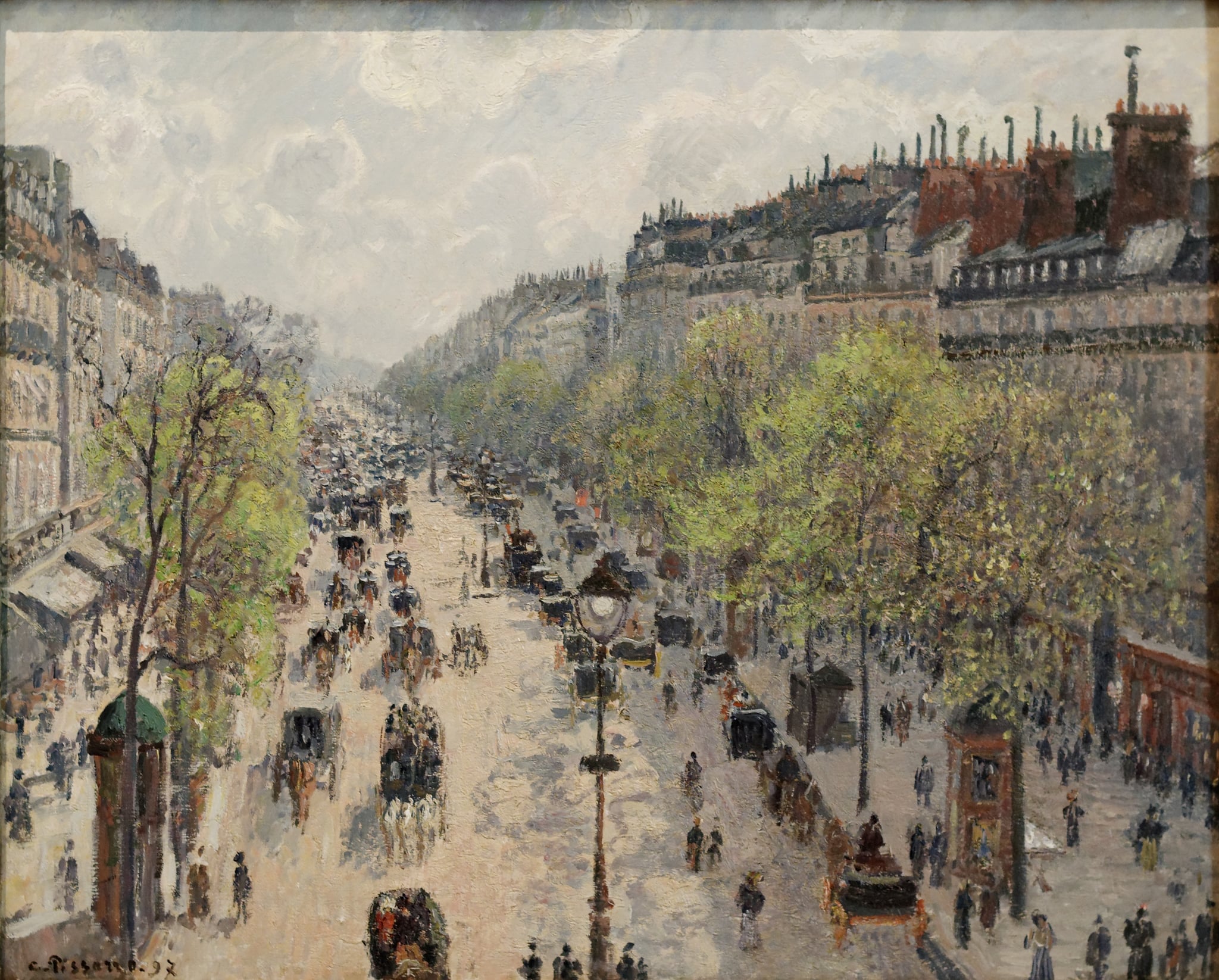
The Boulevard Montmartre on a Spring Morning
Camille Pissarro (1897)
From a high hotel window, Camille Pissarro turns Paris’s grands boulevards into a river of light and motion. In The Boulevard Montmartre on a Spring Morning, pale roadway, <strong>tender greens</strong>, and <strong>flickering brushwork</strong> fuse crowds, carriages, and iron streetlamps into a single urban current <sup>[1]</sup><sup>[2]</sup>. The scene demonstrates Impressionism’s commitment to time, weather, and modern life, distilled through a fixed vantage across a serial project <sup>[1]</sup><sup>[3]</sup>.
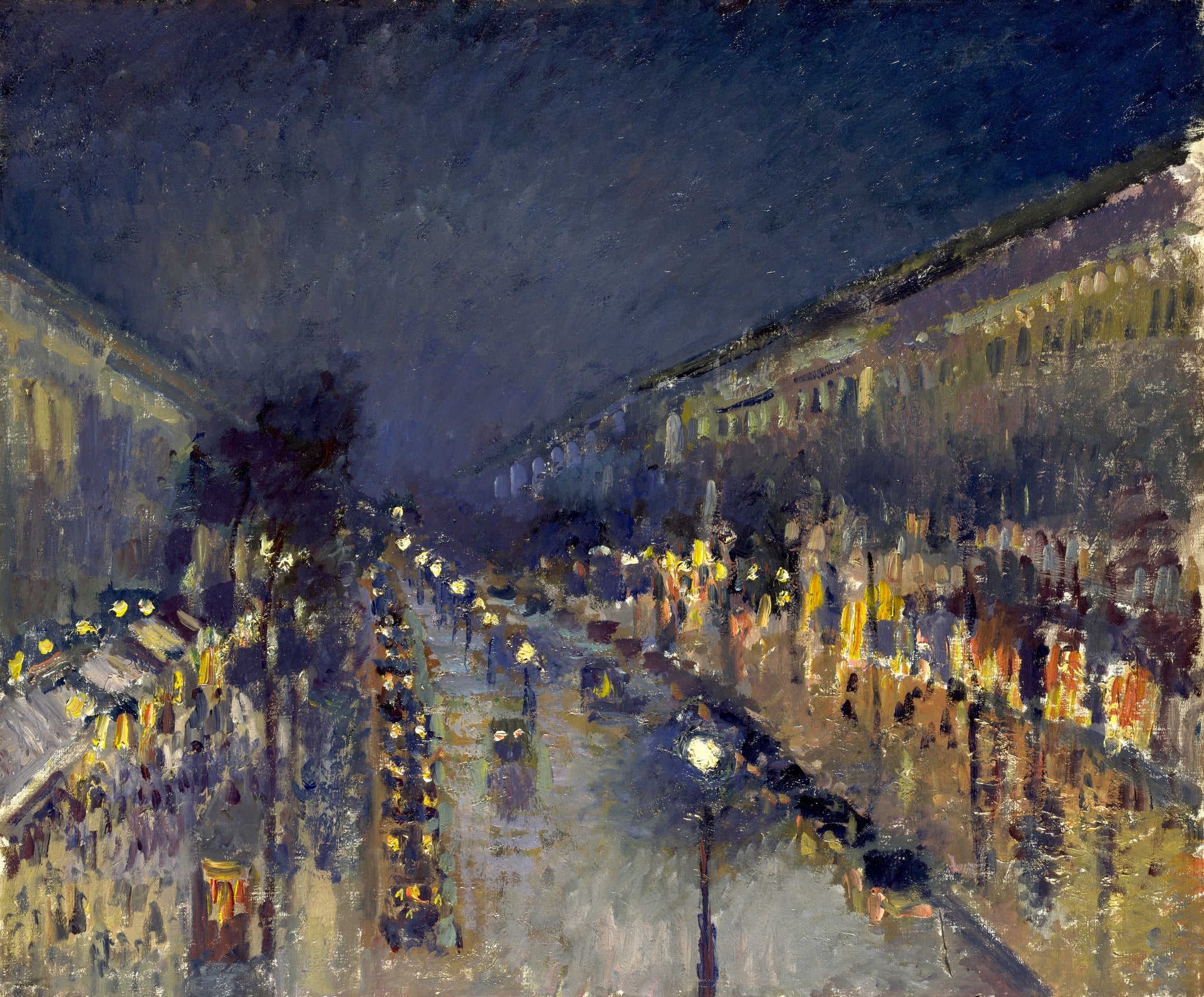
Boulevard Montmartre at Night
Camille Pissarro (1897)
A high window turns Paris into a flowing current: in Boulevard Montmartre at Night, Camille Pissarro fuses <strong>modern light</strong> and <strong>urban movement</strong> into a single, restless rhythm. Cool electric halos and warm gaslit windows shimmer across rain‑slick stone, where carriages and crowds dissolve into <strong>pulse-like blurs</strong> <sup>[1]</sup><sup>[2]</sup>.
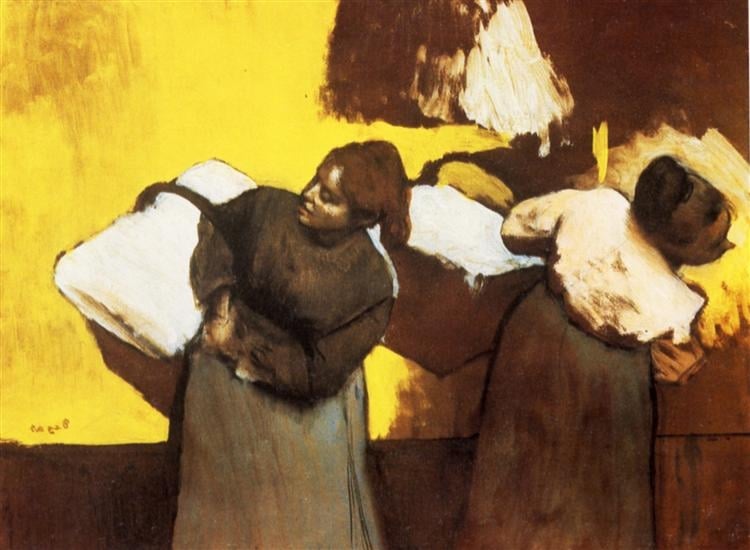
Laundresses Carrying Linen in Town
Camille Pissarro (1879)
In Laundresses Carrying Linen in Town, two working women strain under <strong>white bundles</strong> that flare against a <strong>flat yellow ground</strong> and a <strong>dark brown band</strong>. The abrupt cropping and opposing diagonals turn anonymous labor into a <strong>monumental, modern frieze</strong> of effort and motion.
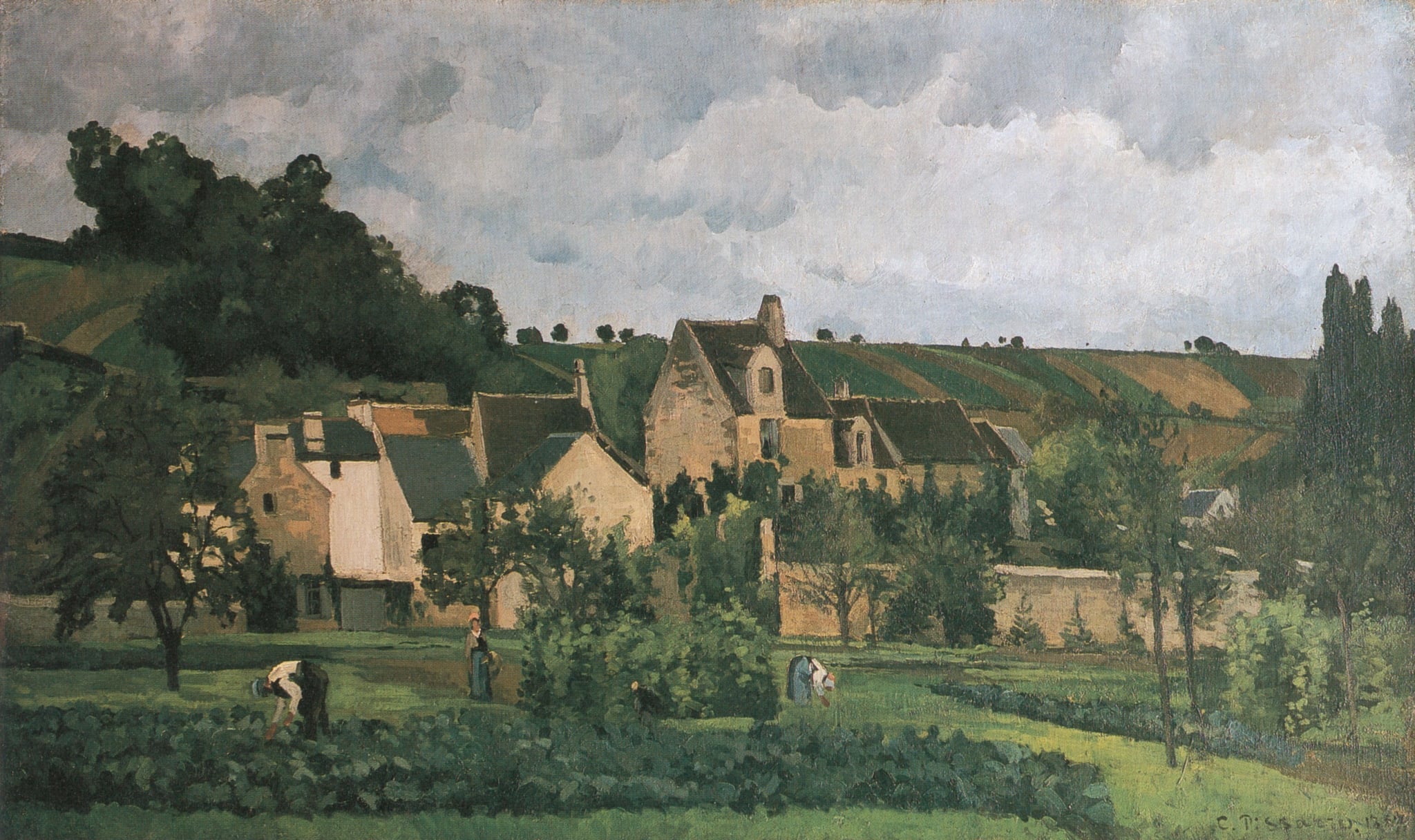
The Hermitage at Pontoise
Camille Pissarro (ca. 1867)
Camille Pissarro’s The Hermitage at Pontoise shows a hillside village interlaced with <strong>kitchen gardens</strong>, stone houses, and workers bent to their tasks under a <strong>low, cloud-laden sky</strong>. The painting binds human labor to place, staging a quiet counterpoint between <strong>architectural permanence</strong> and the <strong>seasonal flux</strong> of fields and weather <sup>[1]</sup><sup>[3]</sup>.