Unity-in-Flux vs Construction-as-Seeing
Both artists treat painting as a way to reconcile many partial lookings on a flat surface. In the 1870s they worked side by side near Pontoise, testing how short strokes and color relations could build a world without narrative props. Pissarro synchronizes conditions and crowds into a civic flow; Cézanne assembles planes so relations, not a single viewpoint, hold the picture together.
Comparison frame: From serial flow to built order: how do Pissarro and Cézanne turn many moments of looking into one picture?
Quick Comparison
| Topic | Camille Pissarro | Paul Cézanne |
|---|---|---|
| Core aim | Unity-in-flux: synchronize weather, movement, and place into one optical rhythm. | Durable order: build stability from sequential lookings and color-planes. |
| Serial method | One motif, many conditions from a fixed view (Boulevard Montmartre series). | One motif, shifting vantages across years (Mont Sainte-Victoire). |
| Brushwork | Even, broken touch that democratizes crowds, trees, façades, and sky. | Constructive strokes that facet volumes and lock planes. |
| Space built by | Cadenced diagonals, atmosphere, and infrastructural rhythm. | Stacked warm–cool planes and purposeful perspectival misfits. |
| View of the human | Collective movement; figures as pulses within a shared field. | Concentrated presence; figures/objects as weighted, structural units. |
| Touchstones | Boulevard Montmartre at Night; Red Roofs. | The Basket of Apples; Mont Sainte-Victoire. |
| Time in the picture | One view across changing hours and weathers (time flows within the frame). | Many viewpoints fused into one present (time as construction). |
Shared Ground
Across two careers that repeatedly intersected, Pissarro and Cézanne turn painting into a test of how vision unfolds over time. Working in and around Pontoise and Auvers in the 1870s, they often tackled the same motifs to compare procedures rather than stories. Each artist uses serial practice as a laboratory: Pissarro returns to boulevards and village lanes as hours and seasons change; Cézanne revisits a mountain, an apple-laden table, or a portrait, adjusting vantage and balance until relations cohere. The subject is ordinary—rooftops, gardens, streets, baskets of fruit—but the wager is high: can a surface hold many separate lookings and still read as a world?
Both construct through color. Short, modular strokes replace theatrical chiaroscuro, and color relations do the modeling. For Cézanne, this becomes an alternative to single-point perspective: warm–cool modulations and faceted strokes stabilize space. For Pissarro, the same means integrate atmosphere, traffic, and social life without hard outlines, distributing attention evenly across figures, trees, stone, and sky. Each artist also elevates the everyday by stripping anecdote; meaning is carried by structure and procedure. Their shared ground is thus not a style label but a method: use repetition and a visible, incremental touch to convert the fragments of looking into a workable order on the flat plane.
Decisive Difference
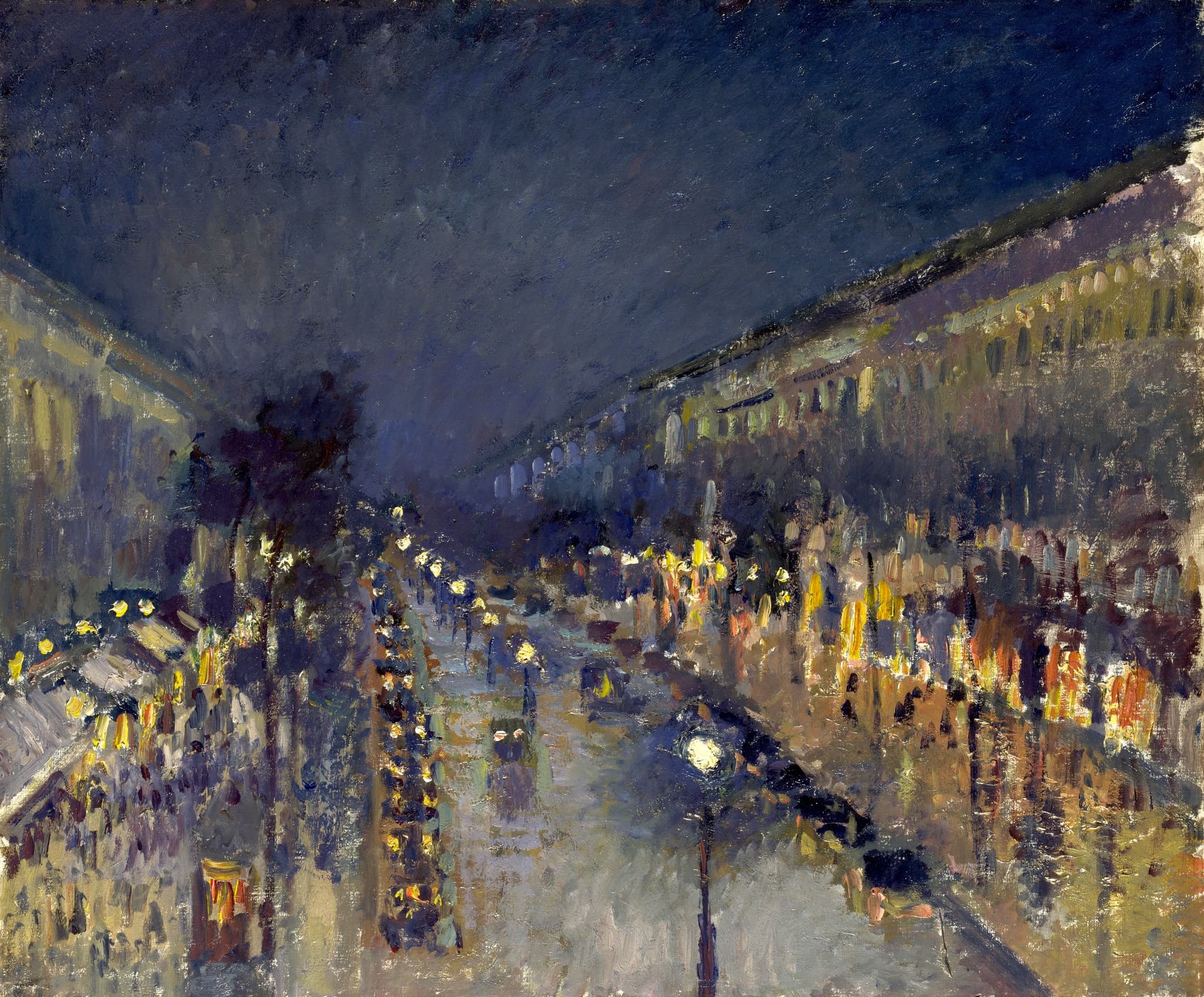
Pissarro organizes perception as unity-in-flux. In his 1897 Boulevard Montmartre series, a fixed hotel-window view receives changing weather, crowds, and—crucially—modern light. Electric arc lamps read as cool, evenly spaced orbs; gaslit windows glow warm at street level; cab lamps pepper the traffic. Rain turns the boulevard into a reflective conduit that doubles illumination and circulation. His brushwork treats pedestrians, vehicles, façades, and trees in a single, democratic currency of dabs and dashes. The point is civic and time-based: one vantage, many conditions, synchronized into a legible flow. Even the rare nocturne keeps the series’ ethics intact—technology and atmosphere co-author what can be seen.
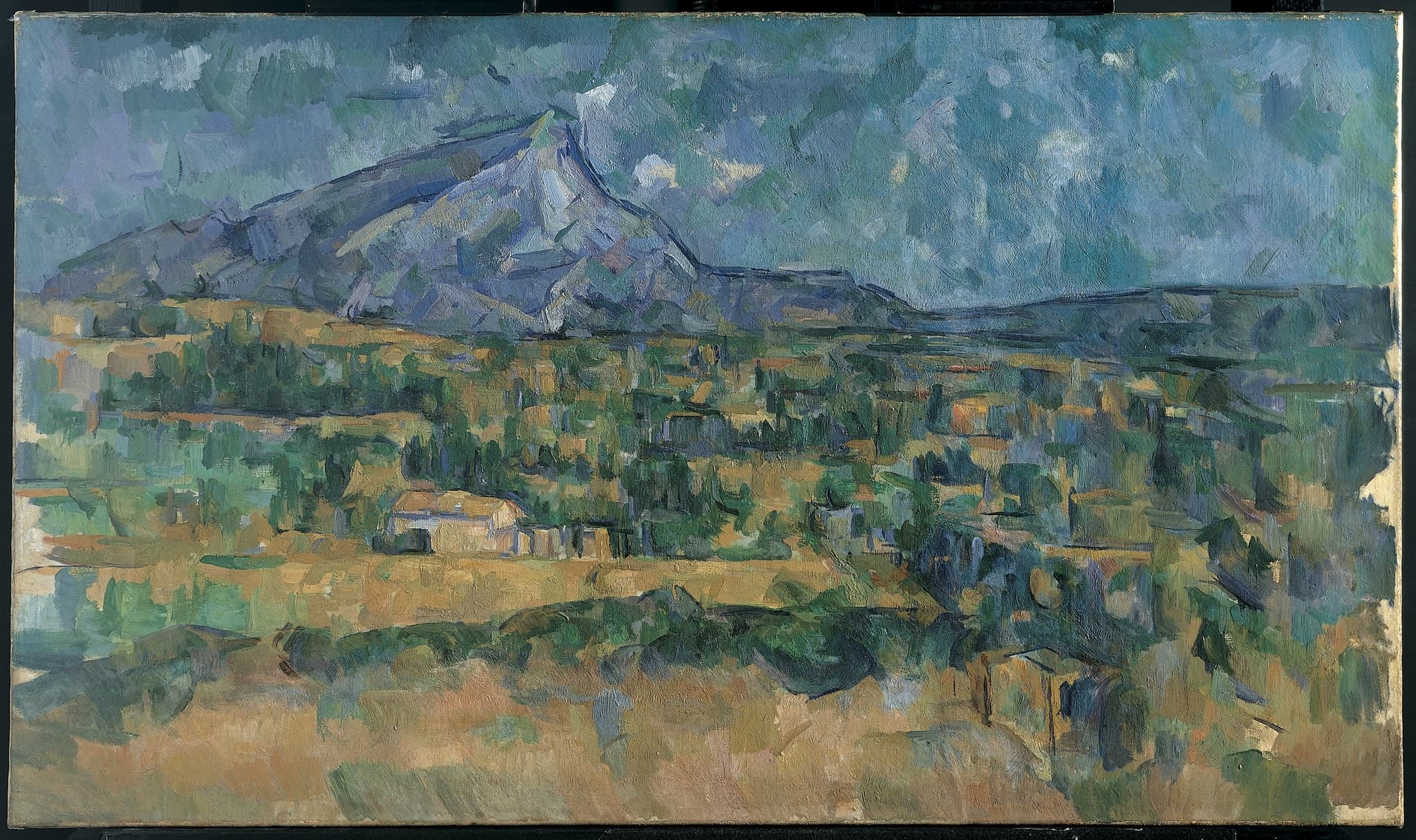
Cézanne, by contrast, makes construction the content of seeing. In still lifes such as The Basket of Apples, edges misalign, bottles lean, and plates are read from more than one angle—intentional “misfits” that record sequential glances before they are reconciled by chromatic structure. In Mont Sainte-Victoire, stacked planes and warm–cool shifts substitute for linear perspective; sky, mountain, and fields interlock as calibrated modules. He builds stability from many partial lookings so relations, not a privileged viewpoint, hold the picture together. Where Pissarro translates time as synchronized conditions within one frame, Cézanne compresses time as the act of constructing order—a difference that shaped modern painting’s twin paths: rhythmic flux and structural analysis.
Paired Works
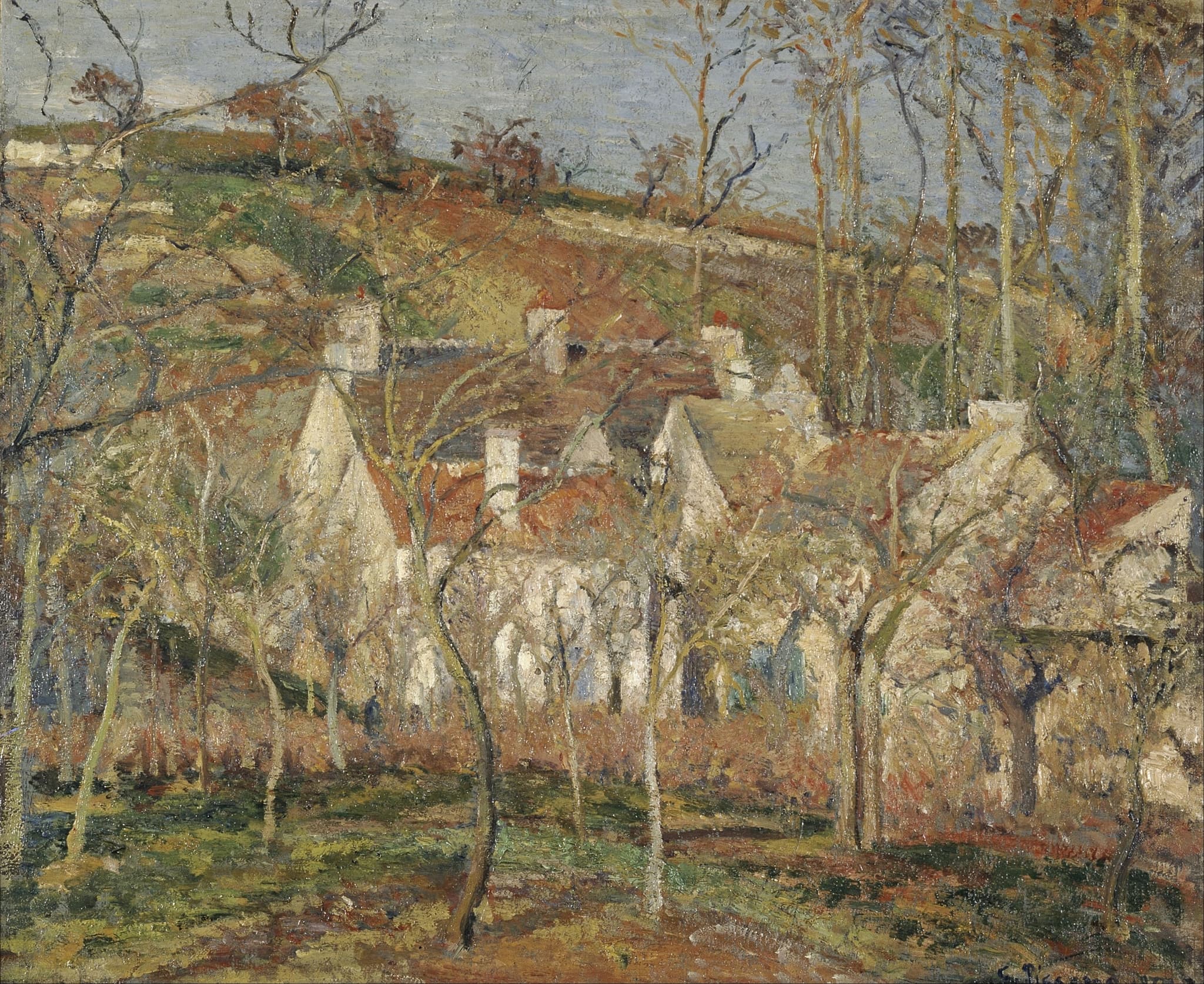
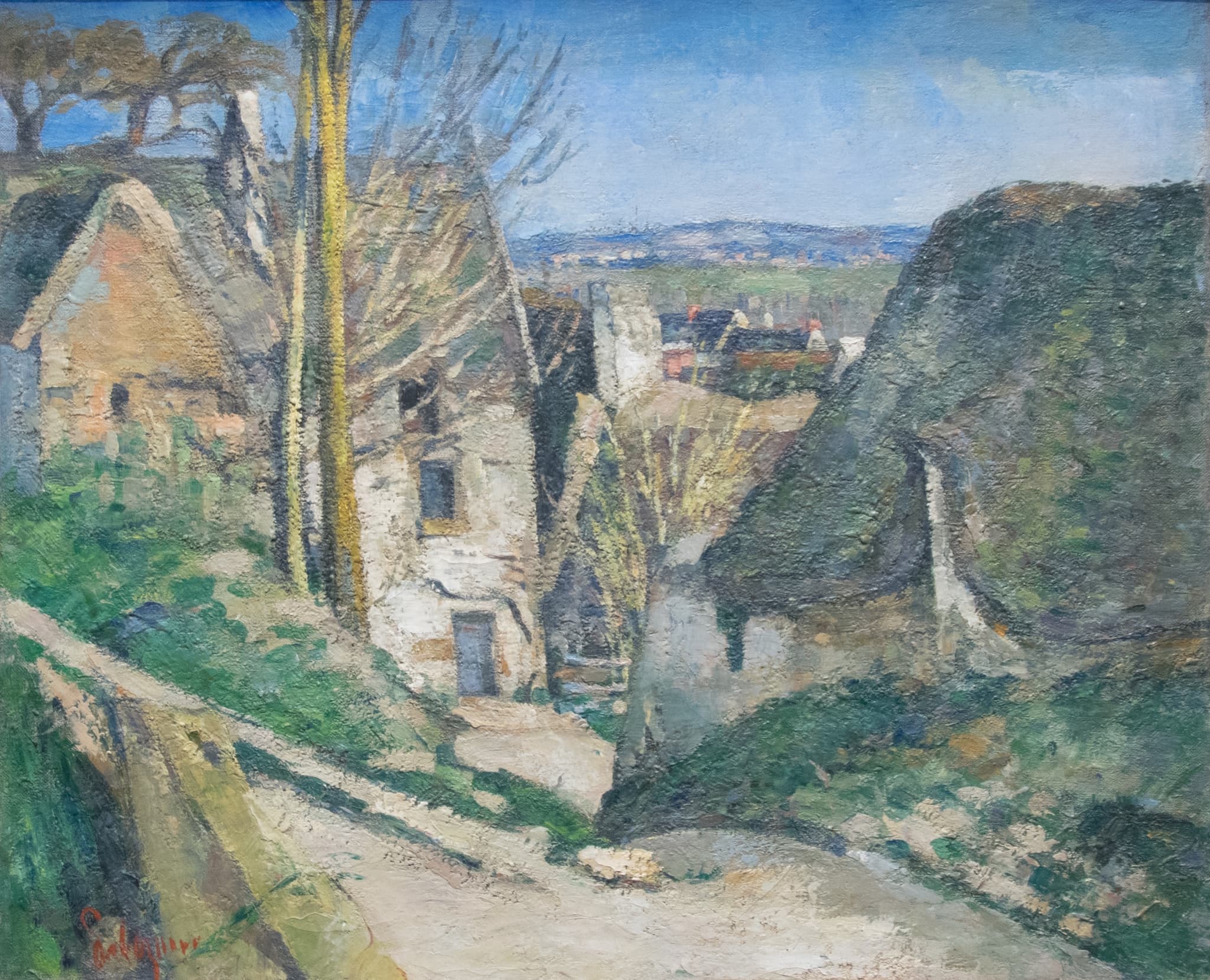
Building a Village: Integration vs Engineered Tension
Focus question: When a village is "built" in paint, what holds it together?
Red Roofs vs The House of the Hanged Man
City Night vs Mountain Day: Time or Structure?
Focus question: What organizes the image when the subject is spectacle versus permanence?
Boulevard Montmartre at Night vs Mont Sainte-Victoire
Social Optic vs Interior Structure
Focus question: Do we locate meaning in shared routines or in the balance of planes and color?
The Garden of Pontoise vs Madame Cézanne in a Red Armchair
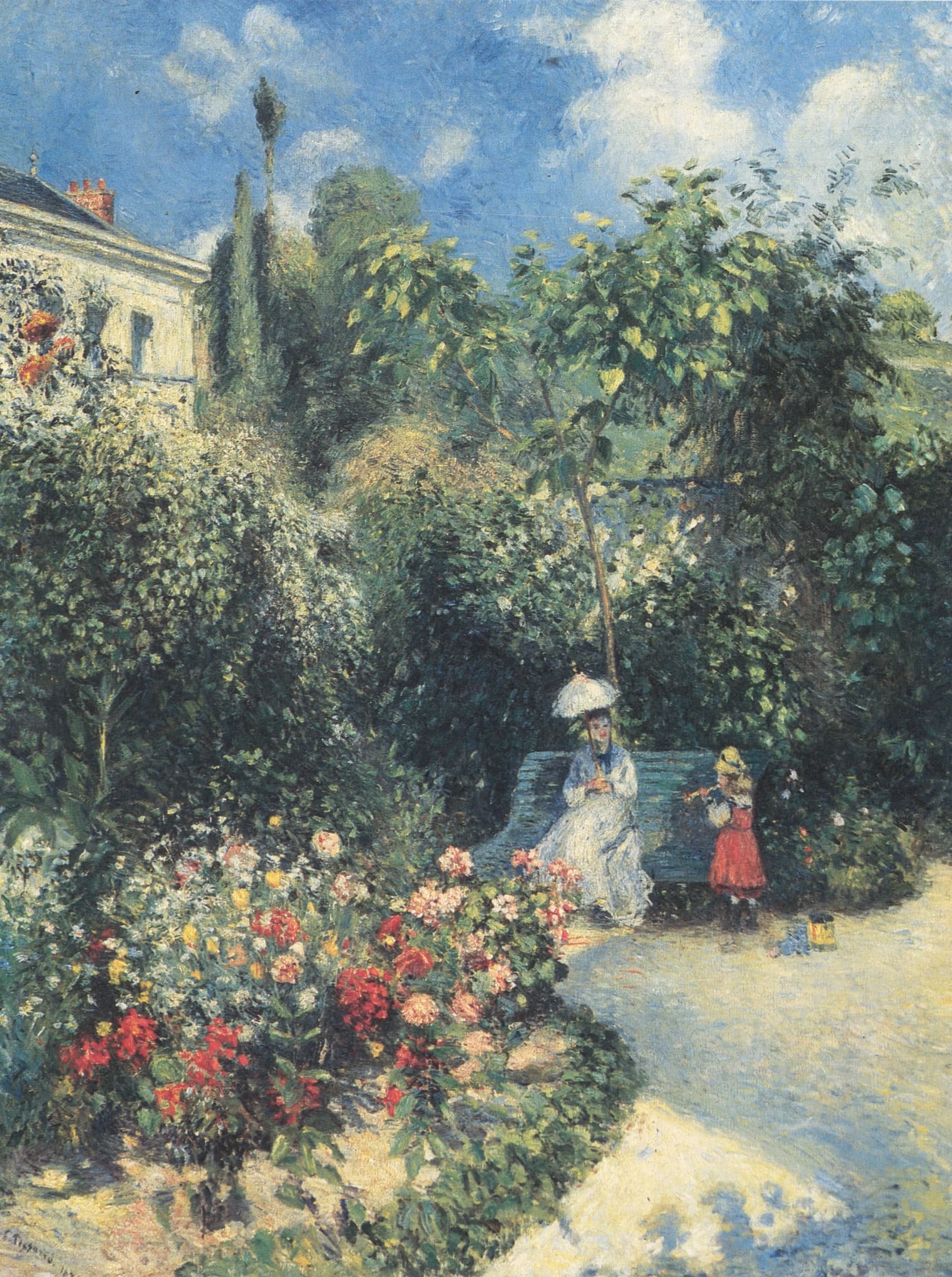
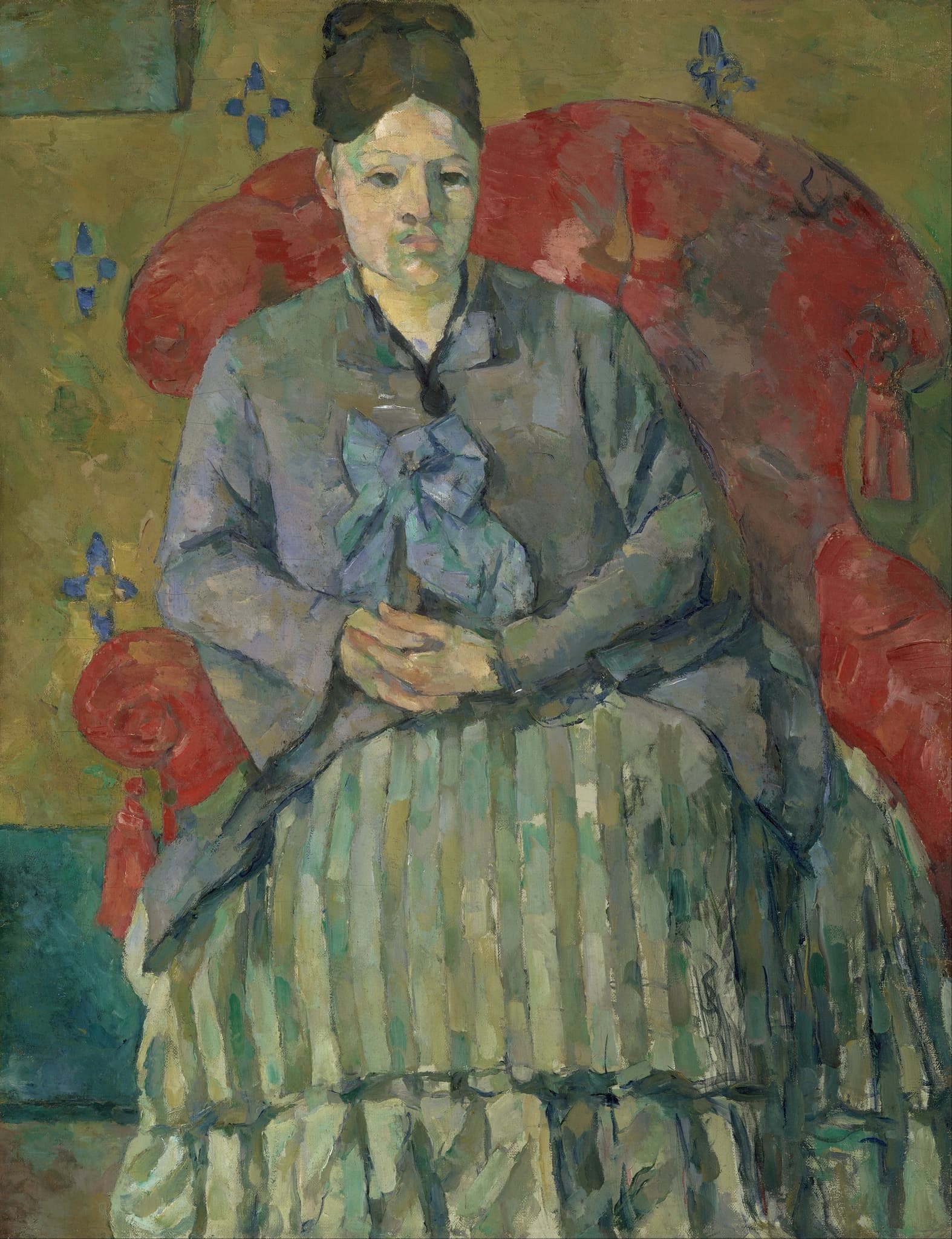
How Many Moments Fit in One Picture?
Focus question: Does time enter by changing the world or by changing the vantage?
The Boulevard Montmartre on a Winter Morning vs The Basket of Apples
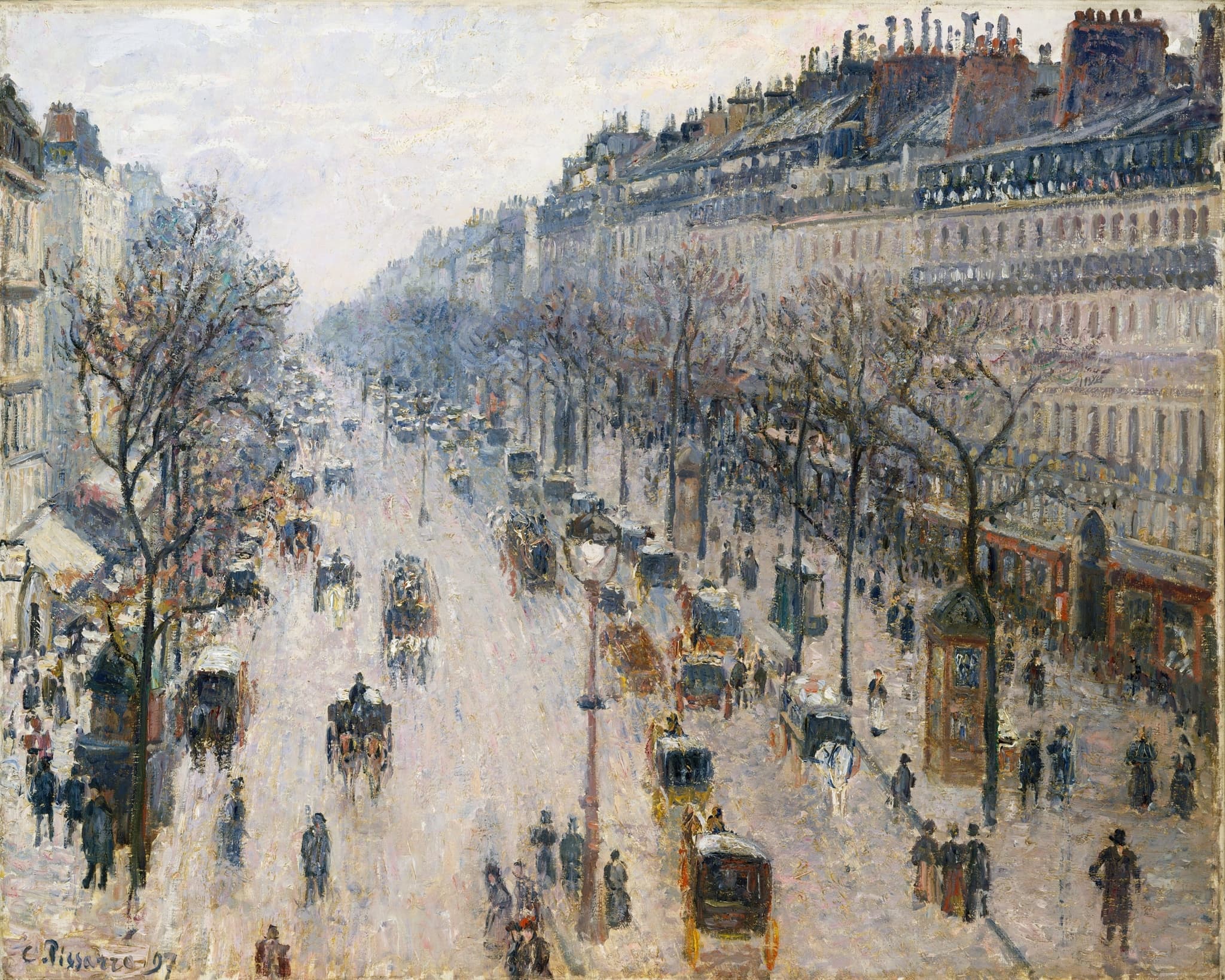
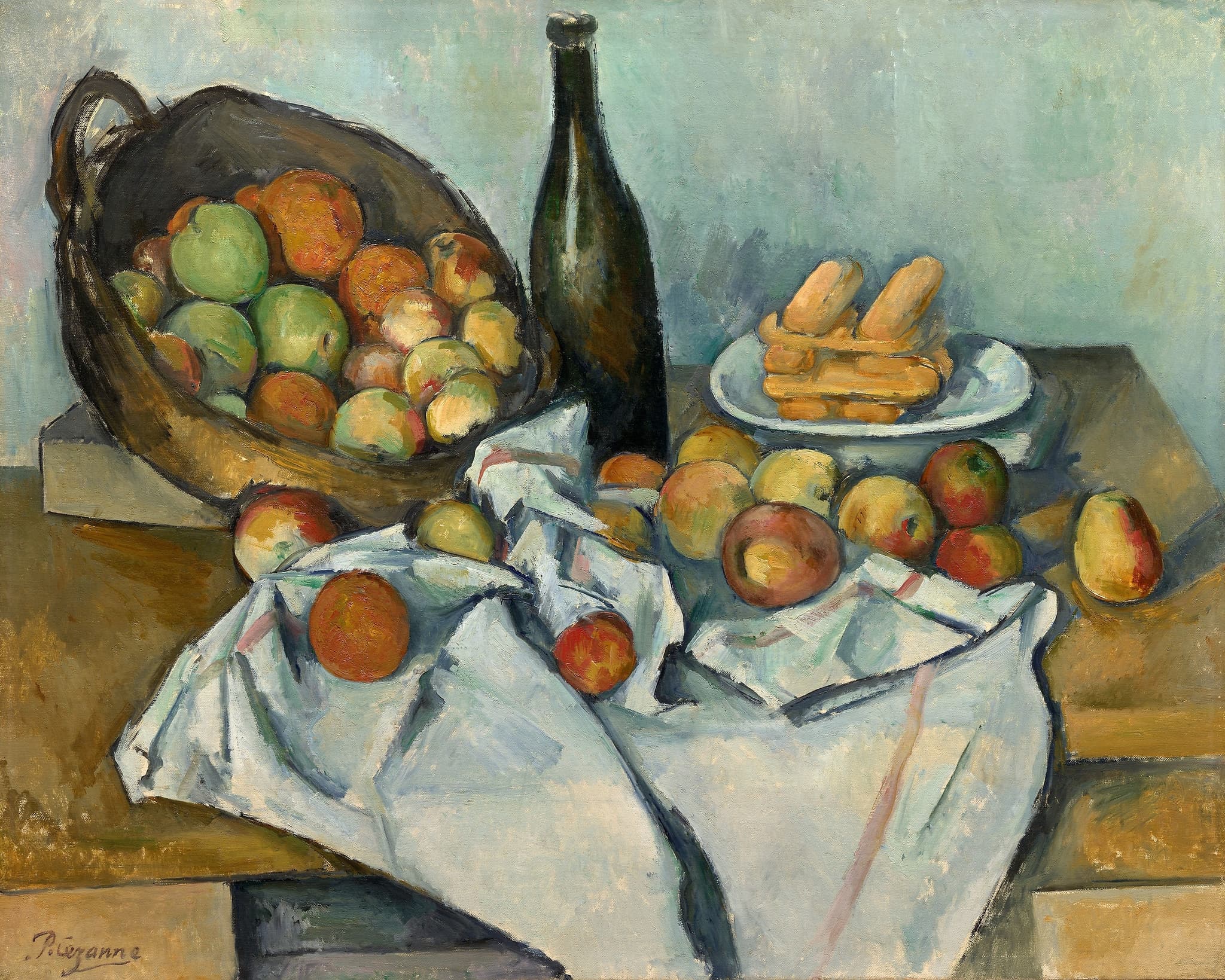
Why This Comparison Matters
This pairing clarifies two durable templates for modern art. Pissarro shows how a painting can be ethical and civic without narrative: distribute attention evenly, stage change as a shared condition, and let weather, movement, and infrastructure co-author what we see. Cézanne shows how a painting can be rigorous without being cold: allow edges to misfit, viewpoints to shift, and then bind the parts by color and plane until a new stability emerges. Together they redefine realism as procedure rather than imitation. Their solutions—unity-in-flux and construction-as-seeing—become the twin roots of twentieth-century practice, from urban modernisms that picture circulation to analytic styles that treat the canvas as a system of relations. Learning to read these logics trains the eye to notice not only what a picture shows, but how it holds itself together.
Related Links
Sources
- MoMA – Cézanne & Pissarro 1865–1885 (exhibition framing their partnership)
- National Gallery, London – The Boulevard Montmartre at Night (series, electric vs gas light, vantage, nocturne)
- The Met – Heilbrunn Timeline: Paul Cézanne (constructive method; bridge to modernism)
- National Galleries of Scotland – Mont Sainte-Victoire (late Les Lauves construction)
- Musée d’Orsay – The House of the Hanged Man (exhibited 1874)
- POP (France) – Pissarro, Red Roofs (shown in Third Impressionist Exhibition, 1877)
- Smarthistory – Cézanne, The Basket of Apples (purposeful misalignments)
- Britannica – Camille Pissarro: The Impressionist years (serial practice; exhibitions)
- Philadelphia Museum of Art – The Large Bathers (Cézanne’s rhetoric of durable order)
- Smithsonian Libraries – Brettell & Joachim Pissarro, The Impressionist and the City (urban series scholarship)