Androgynous skull-faced figure Symbolism
An androgynous, skull-faced figure merges the long-standing association of the skull with mortality and fear with modern art’s drive to visualize universal psychic crisis. By effacing gender and individual traits, the visage becomes a stand-in for any viewer, concentrating private terror into a shared human condition. In late 19th‑century modernism, such a stripped, skeletal face often serves as a compact emblem of existential dread.
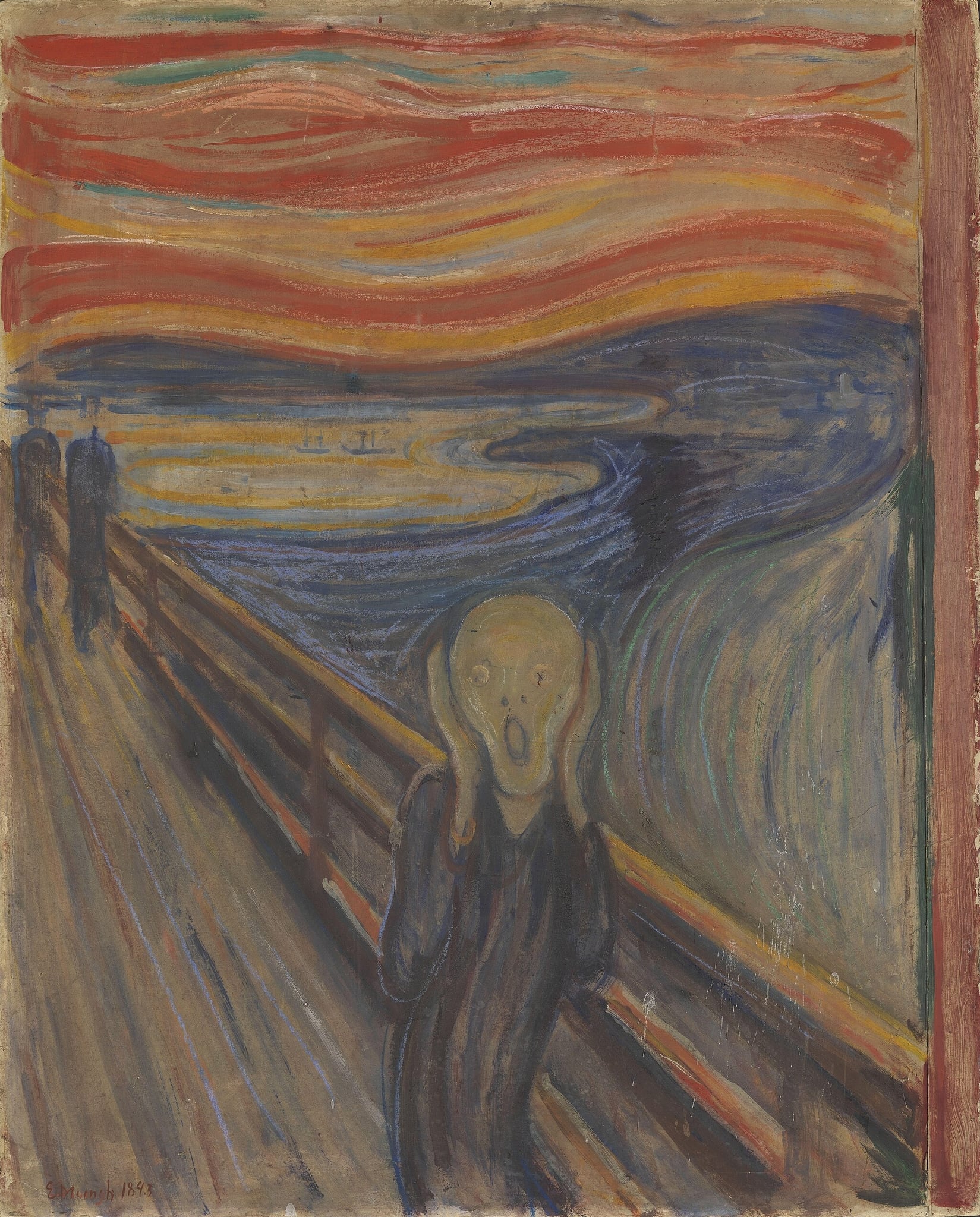
Androgynous skull-faced figure in The Scream
In Edvard Munch’s The Scream (1893), the central figure is explicitly androgynous and skull-like, gripping its head as a blood-red sky and vibrating shoreline pulse around it. The reduced, skeletal face and ungendered body strip away individual identity so viewers can inhabit the panic, aligning with the work’s image of the self and the world collapsing into one field of dread. Munch stages this crisis against the rigid, receding bridge rails, whose order counters the turbulence; the androgynous skull-faced figure thus becomes the hinge between inner terror and outer reality, making the symbol legible and intensely immediate.