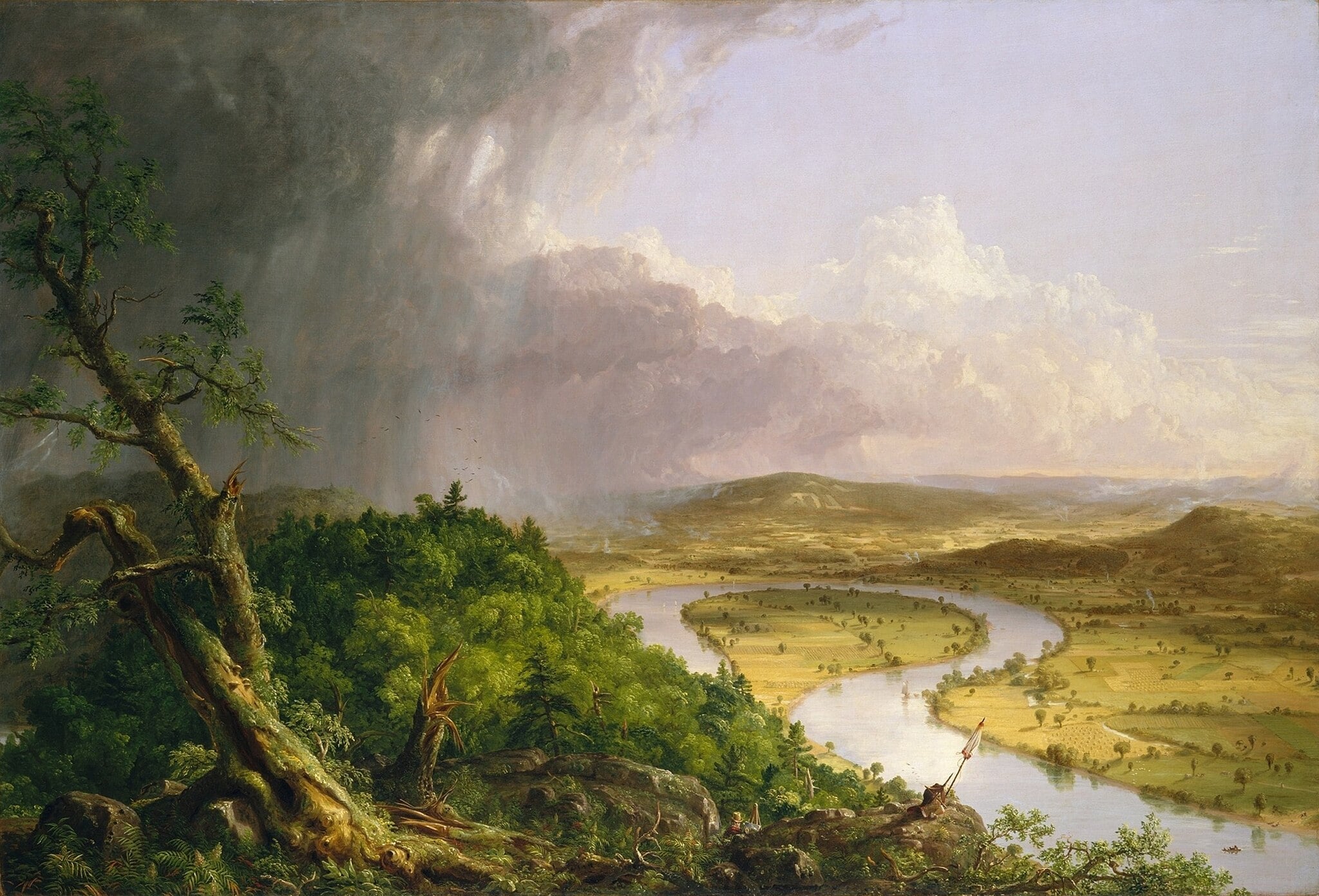
Blasted tree trunk Symbolism
Blasted tree trunks—dead, splintered, or stripped of leaves—are a long-standing device in eighteenth- and nineteenth-century landscape painting to convey the sublime: nature’s danger, power, and untamed force. Their jagged forms evoke storm, decay, and the aftermath of violent weather, sharpening the contrast between wilderness and human order.
Blasted tree trunk in The Oxbow (View from Mount Holyoke)
In Thomas Cole’s The Oxbow (View from Mount Holyoke) (1836), a splintered tree in the storm-lashed left foreground serves as the emblem of wilderness. Its broken limbs echo the dark squall above and assert nature’s power and risk.
Set against the sunlit, cultivated farmland to the right—and near the tiny figure of the artist with his easel—the blasted trunk helps stage the painting’s central comparison of sublime and pastoral. It marks the threshold where awe shades into warning, anchoring the work’s meditation on the American landscape.