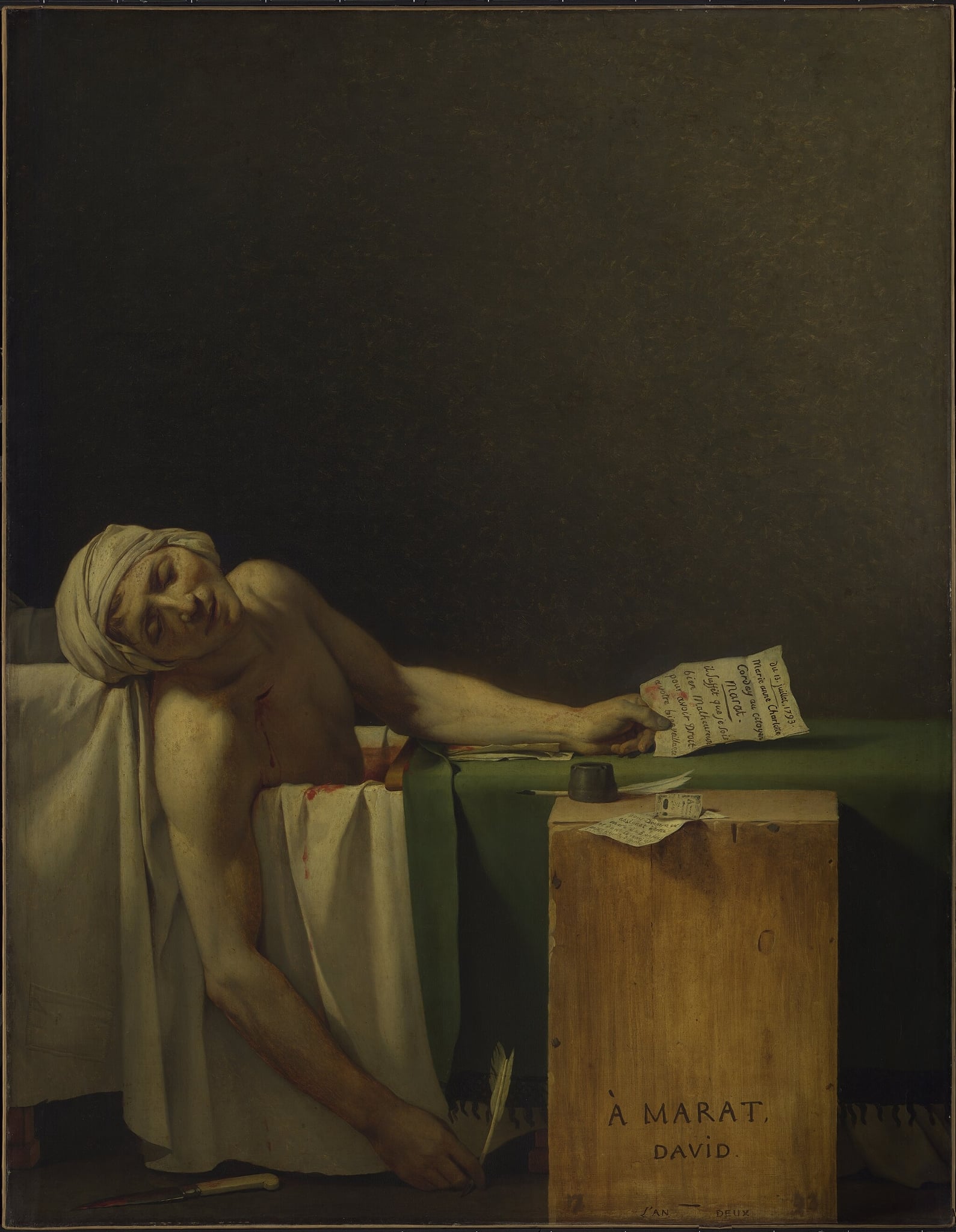
Bloodied knife Symbolism
A bloodied knife in art signals murder, betrayal, and a violent rupture of civic life. In history painting, it can mark the moment when persuasion and writing give way to force. Its stain fixes a private act as a public sign.
Bloodied knife in The Death of Marat
In The Death of Marat (1793) by Jacques-Louis David, the bloodied knife lies beside the inkwell and the quill slipping from Marat’s hand, casting violence as the stark counterpoint to reasoned discourse and written appeal. Set against a vast dark void and organized by calm light and austere geometry, the humble objects—the green baize plank and the crate inscribed “À MARAT, DAVID, L’AN DEUX”—are raised to civic emblems; within this program, the knife functions as the emblem of assassination and treachery that turns a private murder into secular martyrdom.