White daisies Symbolism
In European art, white daisies often signify purity, youth, and renewal. Their pale petals around a sun-like center and their daily opening and closing make them emblems of cyclical return. In modern painting, daisy heads can also function as repeating units that emphasize pattern, optical shimmer, and nature’s rhythms.
White daisies in Cottage Garden with Sunflowers
In Gustav Klimt’s Cottage Garden with Sunflowers (1906–1907, signed 1907), a square, horizonless field of blooms is woven into an all-over pattern anchored by a vertical column of sunflowers. Klimt’s fusion of ornament and nature forms a radiant matrix of cyclical life and renewal; even without isolating specific daisies, the painting’s repeating flower heads and sun-centered forms echo the daisy’s associations with return and purity.
In Flowering Poppies (1907), Klimt explicitly includes daisies among red poppies and fruiting trees, compressing depth into a shimmering, immersive field. The daisies punctuate the surface as small, disc-like motifs that heighten decorative abstraction and sustain a drifting gaze, while threading the scene’s close study of nature with connotations of purity and cyclical return.
Common Themes
Artworks Featuring This Symbol
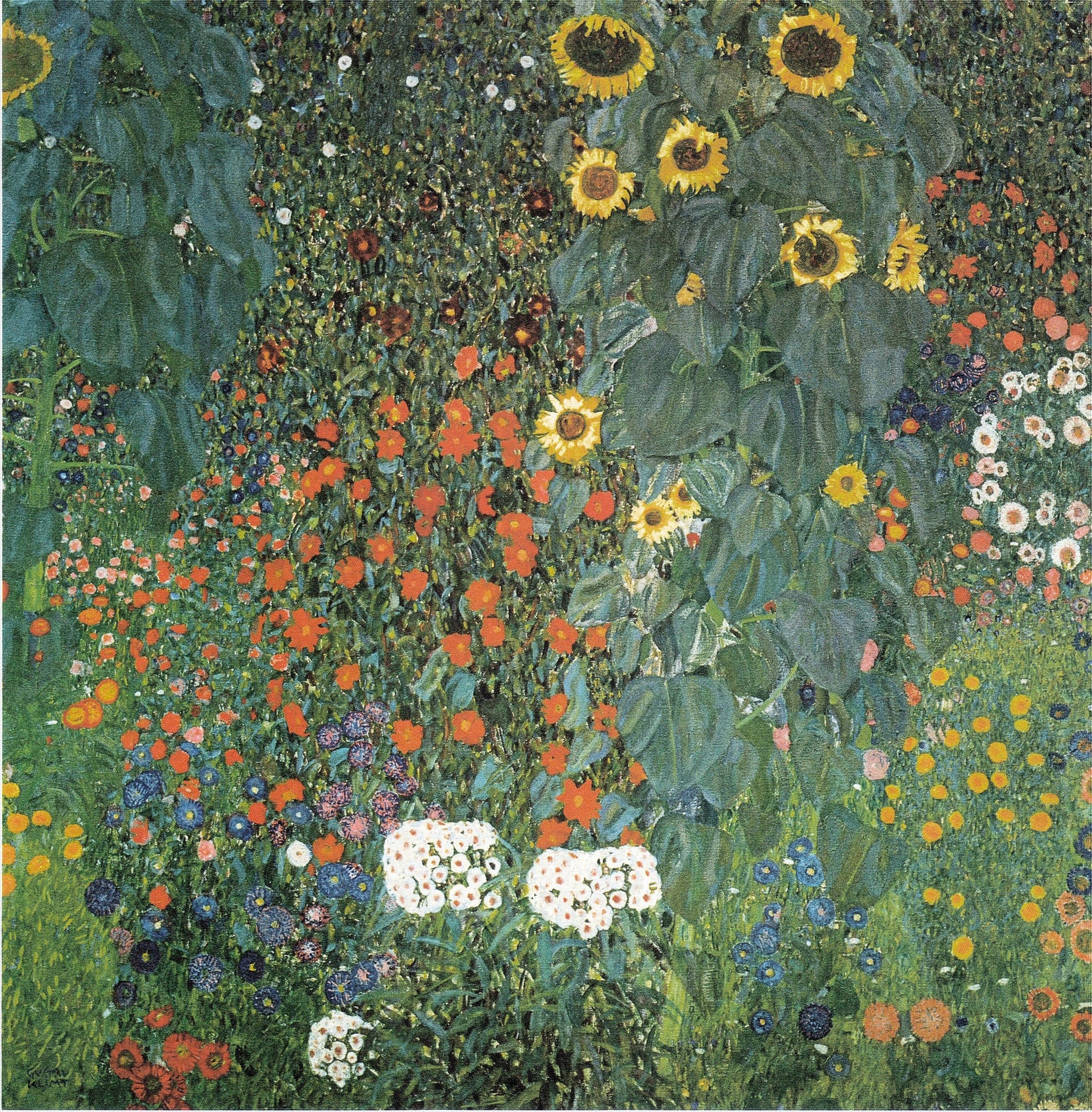
Cottage Garden with Sunflowers
Gustav Klimt (1906–1907 (signed 1907))
Cottage Garden with Sunflowers is a square, horizonless field of blooms where a vertical column of <strong>sunflowers</strong> anchors an all-over weave of color and pattern. Klimt fuses <strong>ornament and nature</strong>, turning a humble Litzlberg cottage plot into a radiant matrix of cyclical life and renewal <sup>[1]</sup><sup>[4]</sup><sup>[5]</sup>.
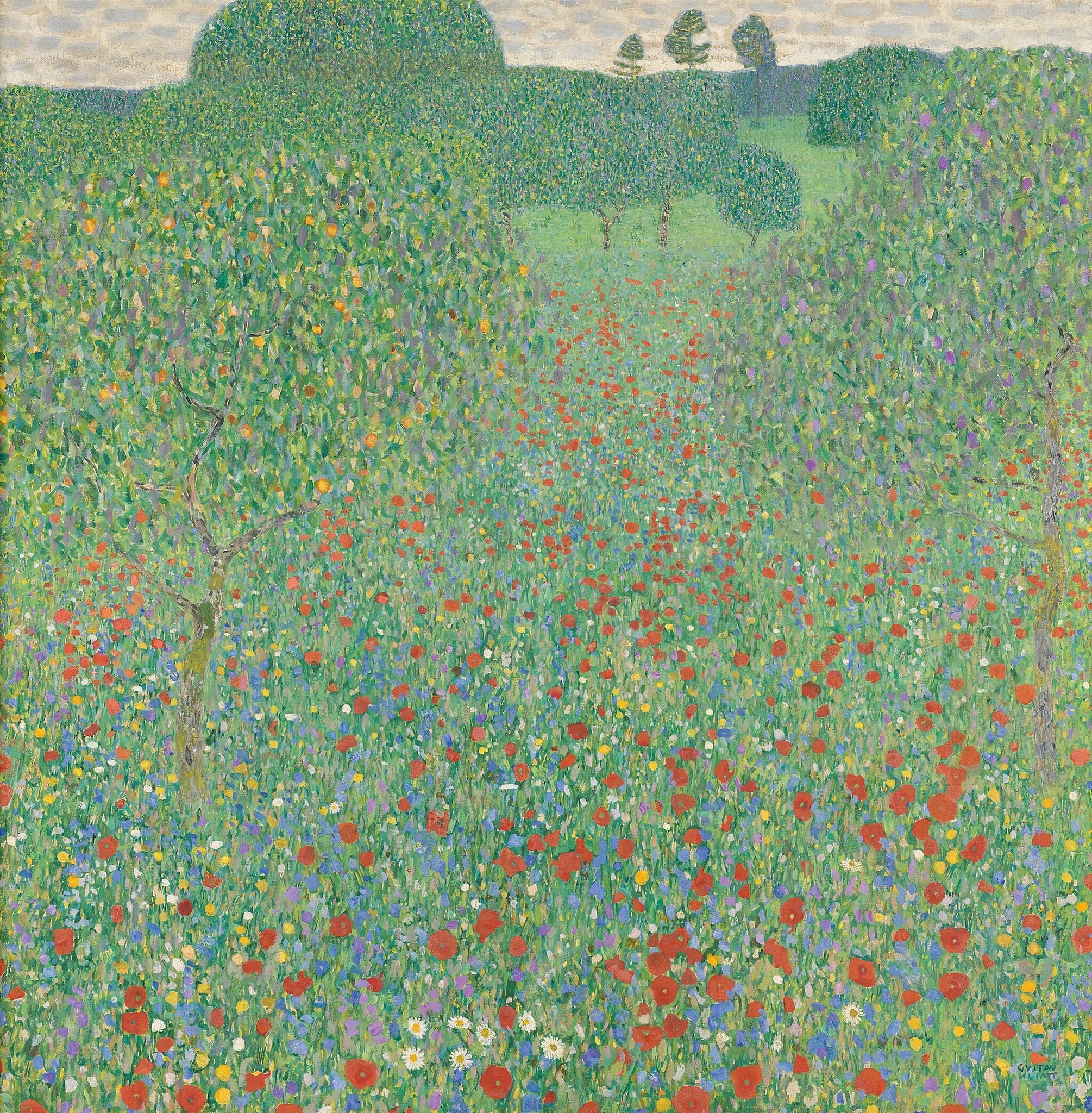
Flowering Poppies
Gustav Klimt (1907)
Gustav Klimt’s <strong>Flowering Poppies</strong> (1907) turns a meadow into a shimmering, all-over field where botany becomes <strong>ornament</strong>. A square canvas packed with red poppies, daisies, and fruiting trees compresses depth and invites a drifting gaze rather than linear recession <sup>[1]</sup><sup>[2]</sup>. The result is a sensuous, immersive vision that fuses observed nature with <strong>decorative abstraction</strong> <sup>[2]</sup>.