Most Expensive Cy Twombly Paintings
Cy Twombly occupies a singular position in the postwar market: simultaneously elusive and fiercely collectible, his scrawled lyricism and classical allusions translate into some of the highest auction ceilings in contemporary art. At the apex sits Fifty Days at Iliam (a painting in ten parts), the monumental cycle that can command an estimated $100–150 million, while other iconic groupings such as The Four Seasons (Quattro Stagioni) are quoted between $40–120 million, signaling both scarcity and deep institutional appetite. Paintings like Leda and the Swan ($45–75 million) and Untitled (six-panel, from "A Scattering of Blossoms") ($55–75 million) illustrate how Twombly’s large-scale mythic narratives fetch premium sums, whereas works from the Blackboard series ($45–65 million) and The Rose panels ($25–60 million) show collectors prize textural immediacy as much as provenance. Even single canvases listed more modestly—Untitled (New York City) at $10–60 million or Untitled [Bolsena] at $30–45 million—can soar when tied to exhibition history or rarity. In short, Twombly’s market blends academic cachet, poetic mystique and scarcity, producing the high-price permutations detailed above.
$100-150 million
The $100–150M estimate reflects Twombly’s top‑tier auction precedents and the premium collectors pay for an intact, museum‑quality ten‑panel Fifty Days at Iliam installation.
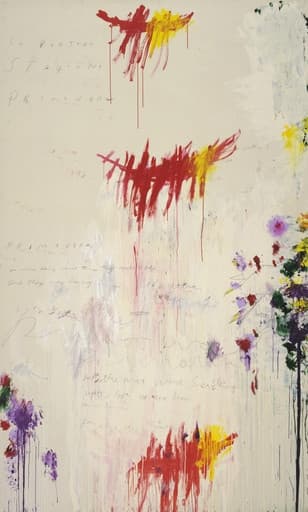
$40-120 million
The $40–120M range is driven by major auction comparables for large Twombly multi‑panel cycles, adjusted for provenance, condition, and institutional significance.
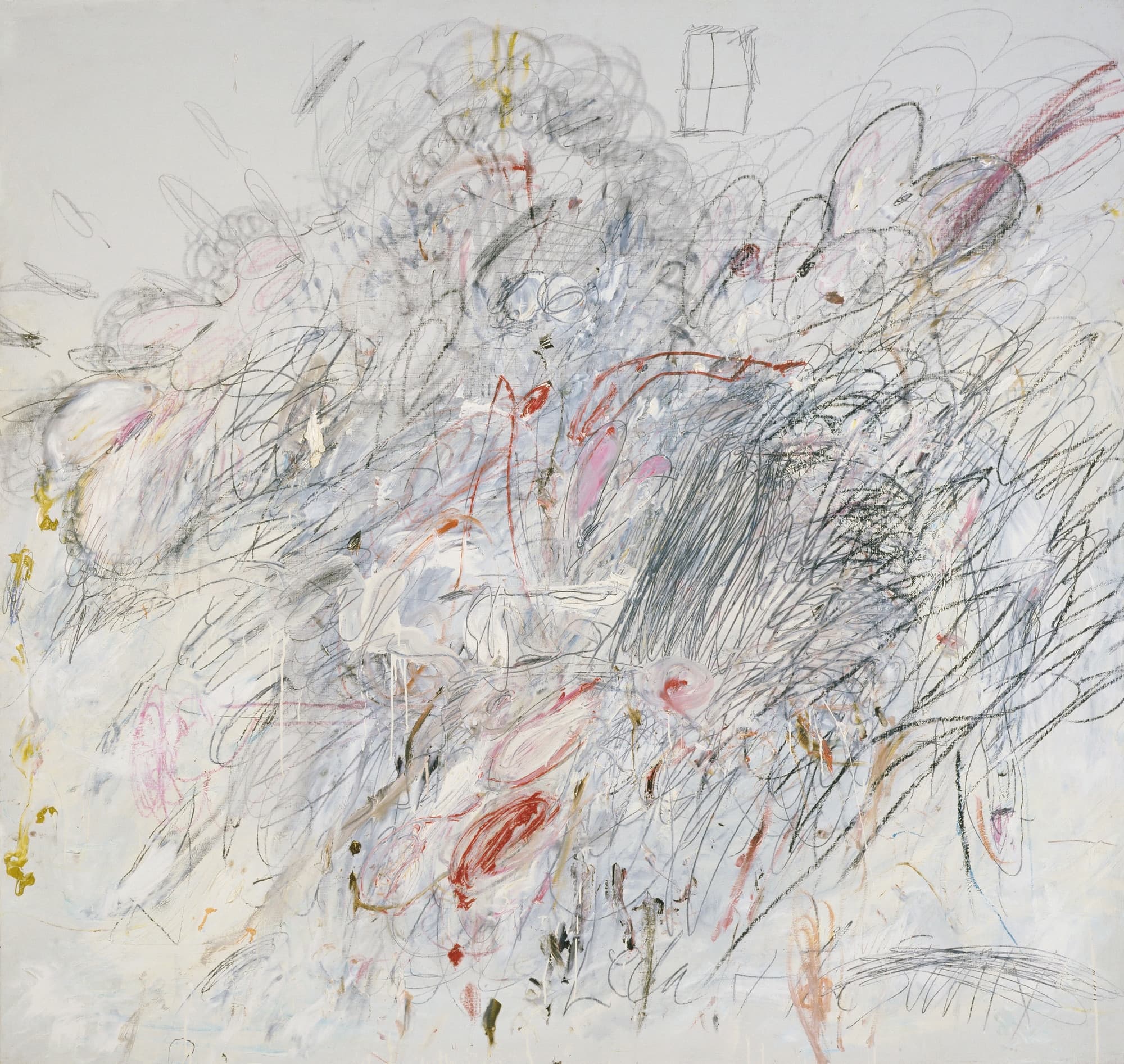
$45-75 million
Anchored to Christie’s May 17, 2017 sister Leda realization of $52,887,500, the $45–75M estimate tracks scale, condition, provenance and sale method.
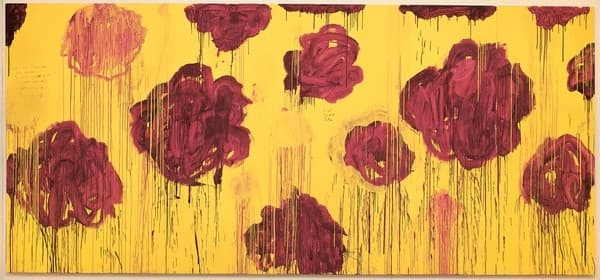
$55-75 million
Based on Sotheby’s 15 Nov 2021 realization of ≈$58.9M for the identical six‑panel work, the $55–75M range reflects that direct market precedent and provenance.

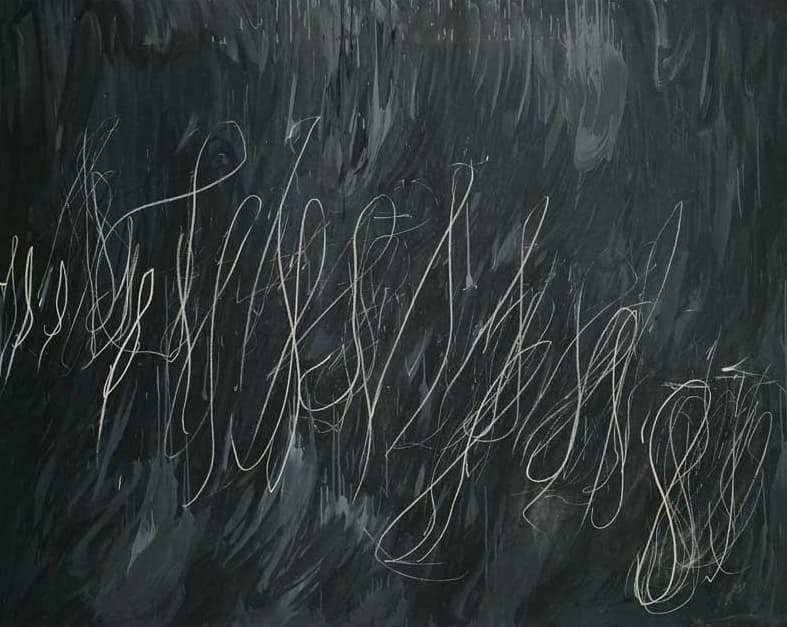
$45–65 million
The $45–65M valuation uses MoMA provenance and benchmarks against the $70.5M 2015 record for a larger 1968 Blackboard and recent peer results.
$10-60 million
The $10–60M spread reflects Museum Brandhorst ownership and the absence of a public sale record, making provenance, condition and exhibition history determinative.
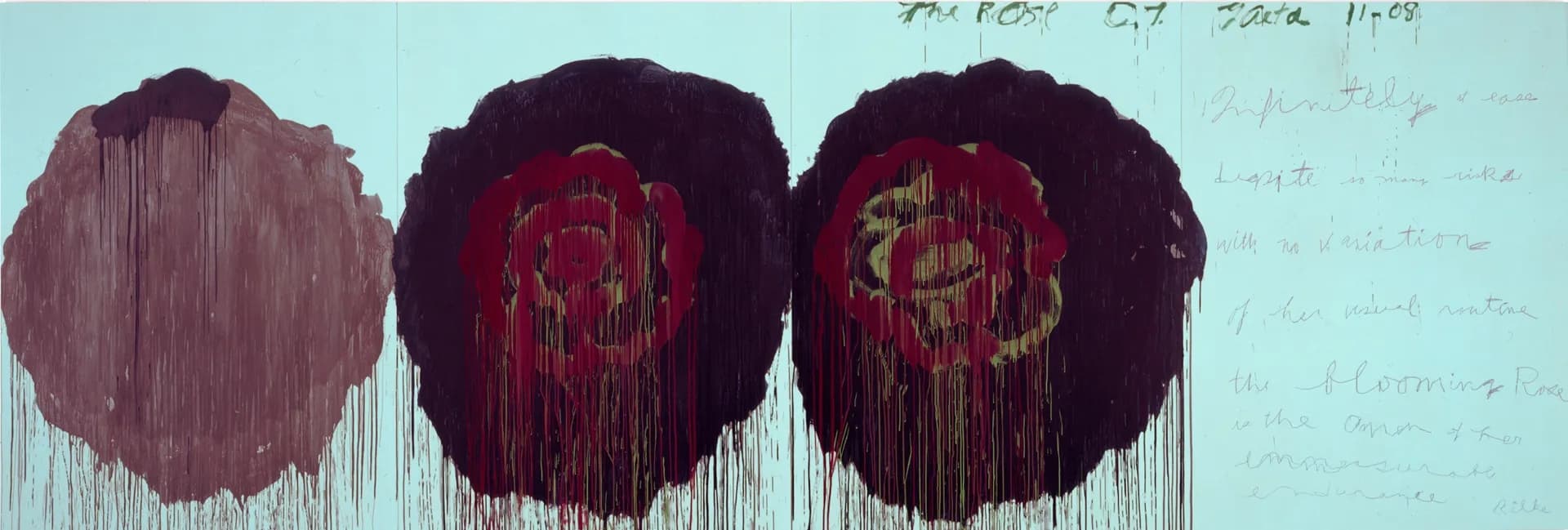
$25-60 million
A complete, museum‑quality Rose multi‑panel is estimated $25–60M, versus typical single‑panel trades of $3–8M and museum‑grade single panels at $8–25M.
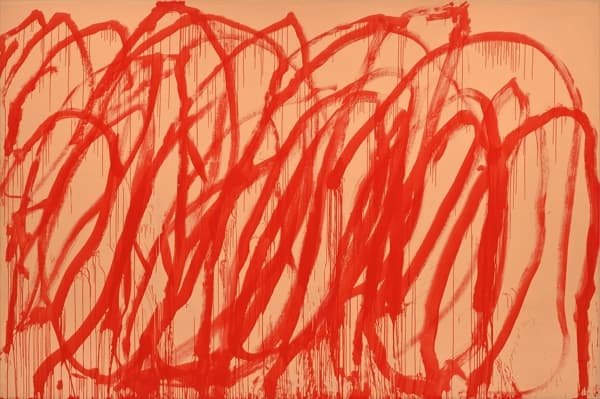
$35-55 million
The $35–55M estimate is anchored to recent large Bacchus auction comparables (notably Christie’s Nov 2017 and Phillips Nov 2022), adjusted for provenance and condition.
![Untitled [Bolsena]](/_next/image?url=https%3A%2F%2Fstorage.googleapis.com%2Fsite-images-programmatic%2Fpaintings%2F1782474088005-dunwdb.jpg&w=3840&q=75&dpl=dpl_ASiQPiqukSad84i91Tcm2dUShHhL)
$30-45 million
Anchored by Christie’s New York sale realizing $38,685,000, the $30–45M range reflects the Bolsena canvas’s scale, Saatchi provenance and condition sensitivity.
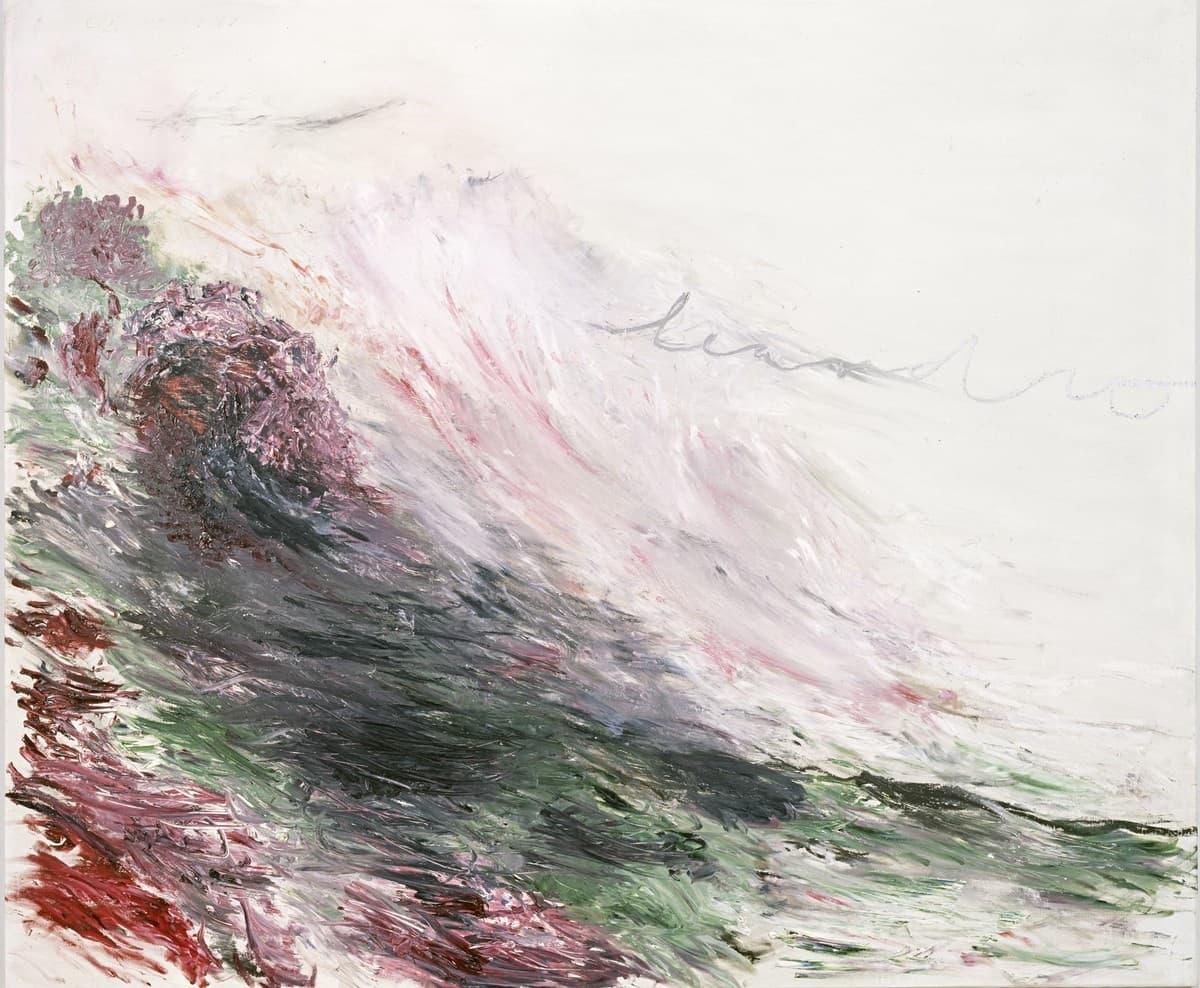
$25-40 million
Valued $25–40M, Hero and Leandro’s museum scale, Dulwich exhibition history and recent eight‑figure mythic Twombly comparables support upside in a guaranteed evening sale.
What Drives Value in Cy Twombly's Work
Canonical period & dating (1960s apex)
Twombly’s mid‑ to late‑1960s work (Blackboards, Bolsena, 1968 Untitled/New York City, 1962 Leda) forms the market apex: these Rome‑period canvases carry the greatest scholarly weight and price ceilings. Auction records—e.g., Untitled (New York City) ~$70.5M and Blackboard‑period trophies—show buyers pay a premium for prime‑year examples. Later late‑career monuments are valuable, but 1960s provenance consistently anchors top‑end valuations for Twombly.
Monumentality & cycle completeness (panels vs intact ensembles)
Twombly’s multi‑panel cycles—Fifty Days at Iliam (ten canvases), Quattro Stagioni, the six‑panel A Scattering of Blossoms and Rose ensembles—derive outsized value when offered intact. Institutions and collectors prize installation integrity: Sotheby’s six‑panel blossom result (~$58.9M) and museum desire for complete cycles show that separated panels usually trade at steep discounts compared with intact canonical sets.
Surface materials and condition specificity
Twombly’s distinct media—matte house paint and wax/oil crayon in Blackboards, acrylic/crayon on wood for late panel works, mixed oil/house paint for mythic canvases—are technically fragile and materially diagnostic. Condition reports materially shift value: an unrestored prime Blackboard or a stable six‑panel blossom commands top prices, whereas abrasion, unstable crayon marks or undocumented relining on Twombly surfaces produce substantial downward adjustments.
Named myths, provenance & authoritative authentication
Twombly’s named mythic works (Leda, Bacchus, Hero and Leandro, Fifty Days at Iliam) carry narrative potency that drives institutional bids, especially when combined with museum provenance or single‑owner marquee sales. Documentary strength—Heiner Bastian catalogue raisonné entries, Twombly Foundation corroboration and museum custody (MoMA, Philadelphia, Brandhorst, Menil) or blue‑chip provenance (Saatchi, Macklowe)—is a decisive premium driver for Twombly specifically.
Market Context
Cy Twombly’s auction market remains blue‑chip and highly tiered: his record sale is $70.53M (Sotheby’s, 2015) and canonical large canvases—notably Blackboard series works from the late 1960s–early 1970s—continue to attract museums, foundations and ultra‑high‑net‑worth collectors and to produce headline results, while works on paper and smaller pieces trade at substantially lower levels. Since 2021 the market has bifurcated: top museum‑quality canvases retain strong demand and premium pricing, often sold via guaranteed or private placements, whereas overall auction volume softened and mid‑market material became more selective. Provenance, condition, exhibition history and sale mechanics drive realized prices, and institutional programming, foundation gifts and single‑owner consignments are key to sustaining demand for the very best examples.