Most Expensive Jean-Michel Basquiat Paintings
Jean-Michel Basquiat occupies a rarefied position in the contemporary-art market, where raw street energy and sophisticated art-historical references merge into highly collectible objects; works such as Untitled (Devil), estimated at $100–150 million, and Boy and Dog in a Johnnypump, at $100–140 million, have pushed him into blue-chip territory alongside postwar masters. Record prices for paintings like In This Case ($95–120 million) and the vibrant Dustheads ($60–80 million) reflect not only scarcity but the artist’s singular visual language—graffiti-inflected iconography, frenetic line, and loaded symbolism—that appeals to museums, private collectors and investors alike. Provenance, condition and exhibition history amplify value, as seen with El Gran Espectaculo (The Nile) and other marquee works that trade in the $60–80 million bracket, while smaller-scale or more recent rediscoveries—Untitled ($55–80 million), Versus Medici ($45–70 million), Untitled (ELMAR) ($35–65 million), Flexible ($35–55 million) and Self‑Portrait as a Heel (Part Two) ($35,000,000–$55,000,000)—demonstrate the depth of demand across tiers. Collectibility thus stems from Basquiat’s cultural cachet, historical significance and the market’s appetite for his uncompromising, myth-making canvases.
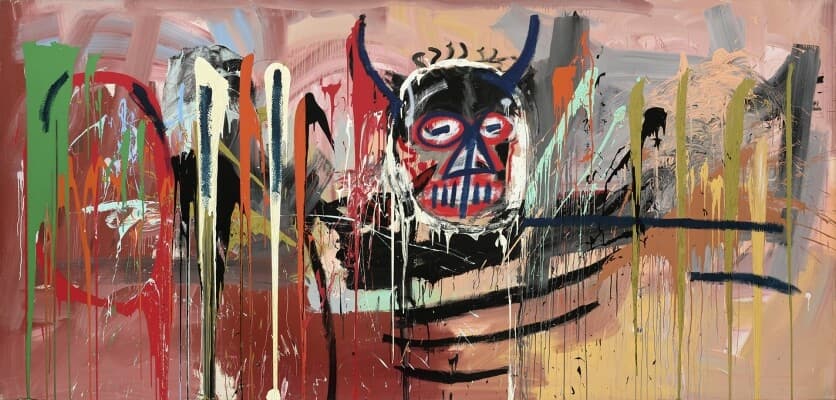
$100-150 million
Anchored to its 2022 Phillips USD 85M sale, this Modena‑cycle 1982 Basquiat is valued at USD 100–150M for rarity and institutional validation.
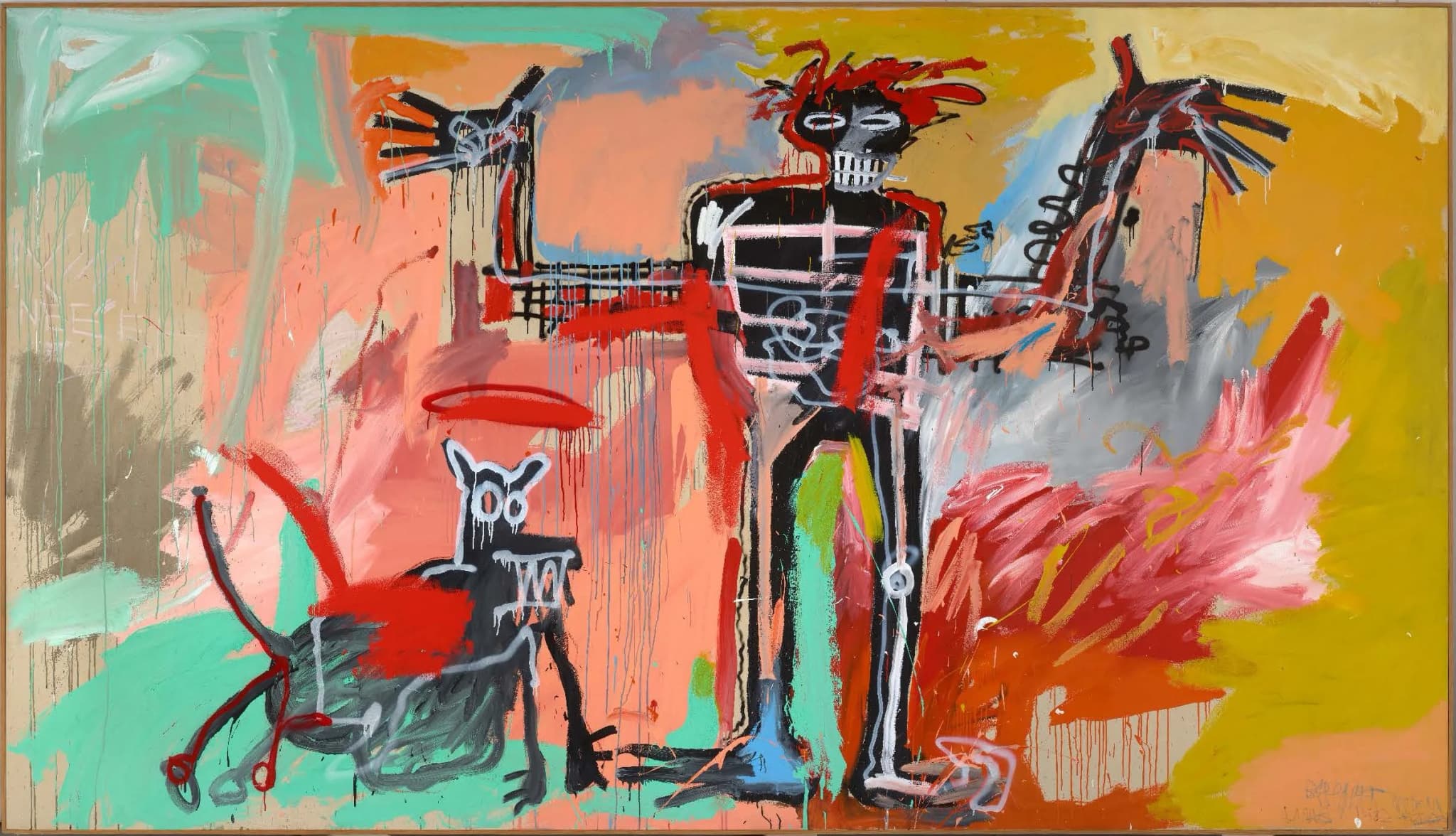
$100-140 million
Reportedly sold privately to Ken Griffin for over $100M in 2020, Boy and Dog in a Johnnypump’s museum exhibition history anchors a $100–140M valuation.
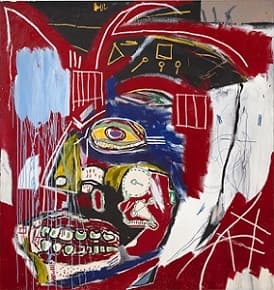
$95-120 million
Anchored to Christie’s May 11, 2021 $93,105,000 sale, this monumental 1983 skull commands a $95–120M trophy‑work valuation.
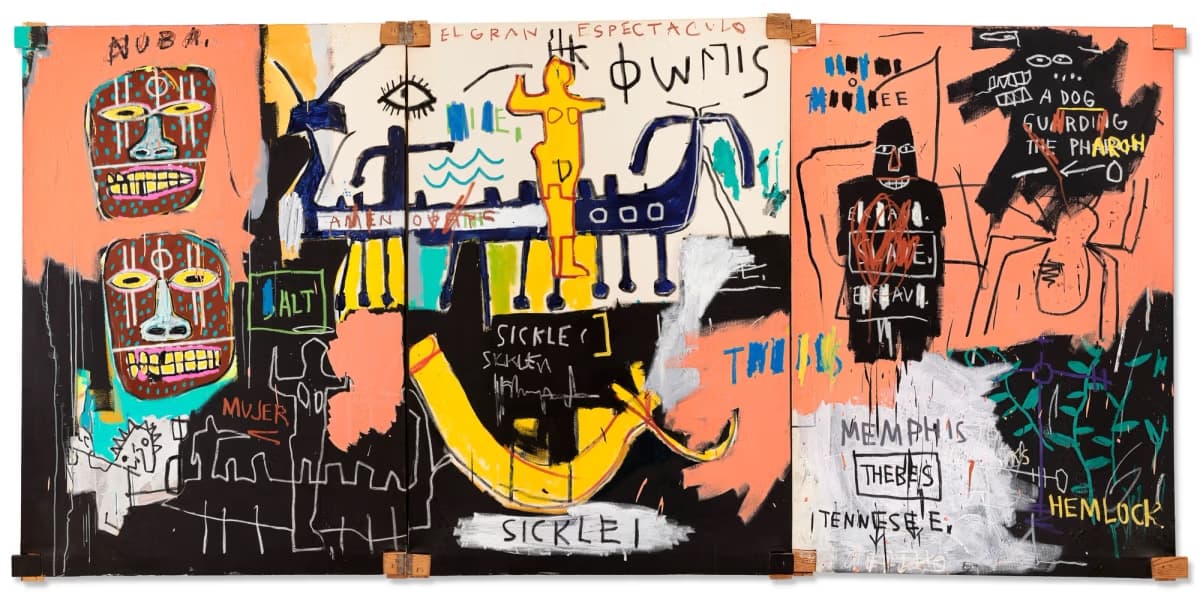
$60-80 million
Anchored by Christie’s May 15, 2023 price realised of $67,110,000, this intact 1983 Basquiat triptych is valued at USD 60–80M.
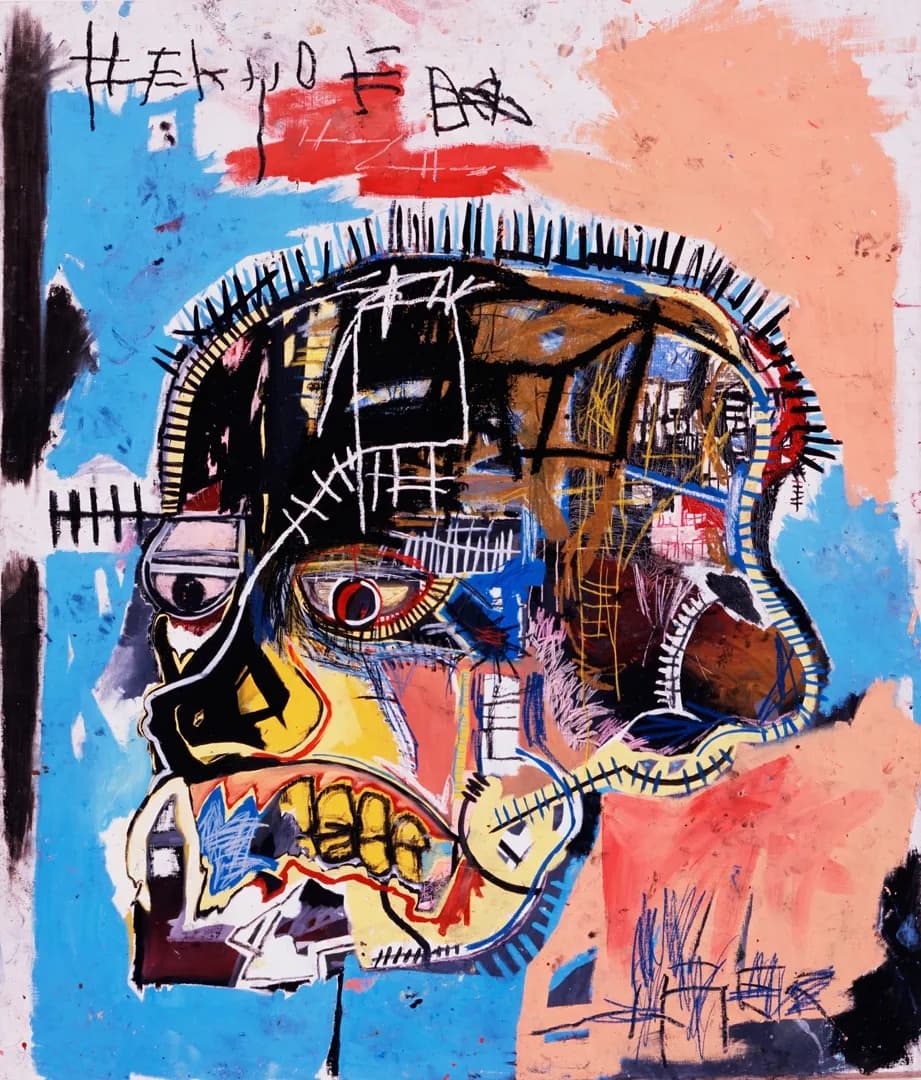
$55-80 million
Long held by The Broad and anchored to mid‑$30M 1981 benchmarks and 2023–24 top results, this prime 1981 head is valued USD 55–80M.
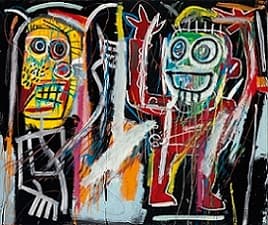
$60-80 million
With a 2013 public benchmark of $48.84M and strong 1982 comps, Dustheads is estimated today at USD 60–80M.
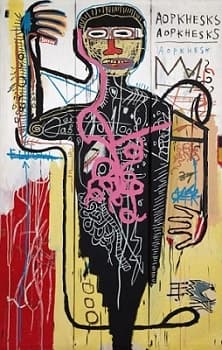
$45-70 million
Anchored to Sotheby’s May 12, 2021 realized price of $50,820,000, Versus Medici is market‑positioned at USD 45–70M for evening‑sale competitiveness.
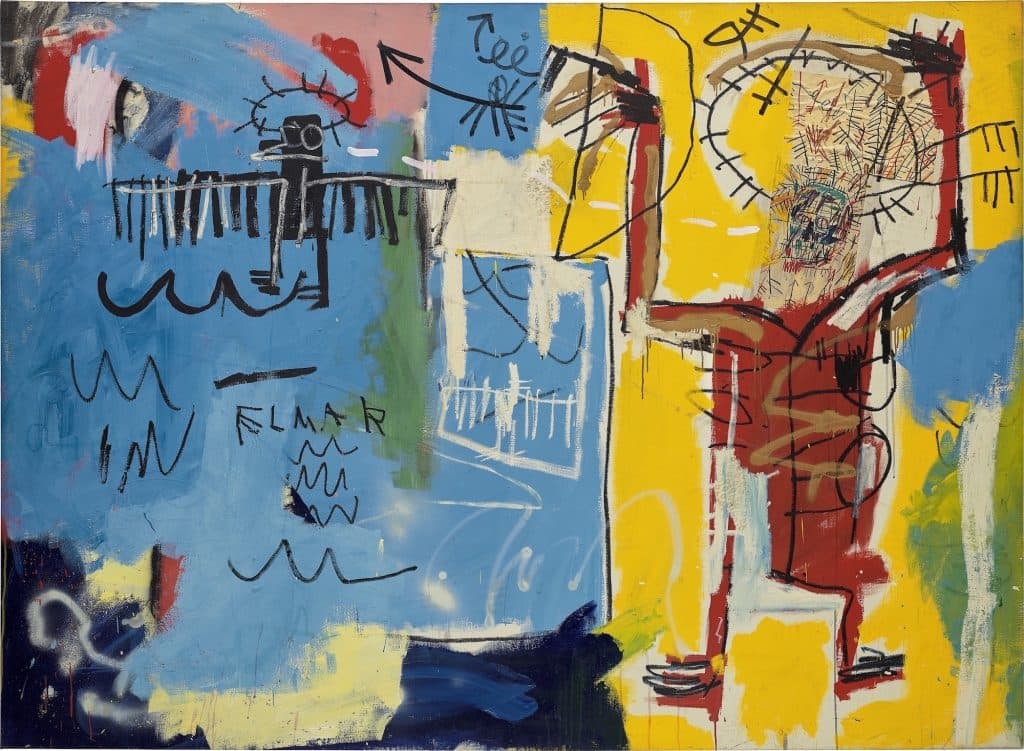
$35-65 million
Anchored to Phillips May 14, 2024 sale at $46,479,000 and Nosei→Pellizzi provenance, Untitled (ELMAR) is valued at USD 35–65M.
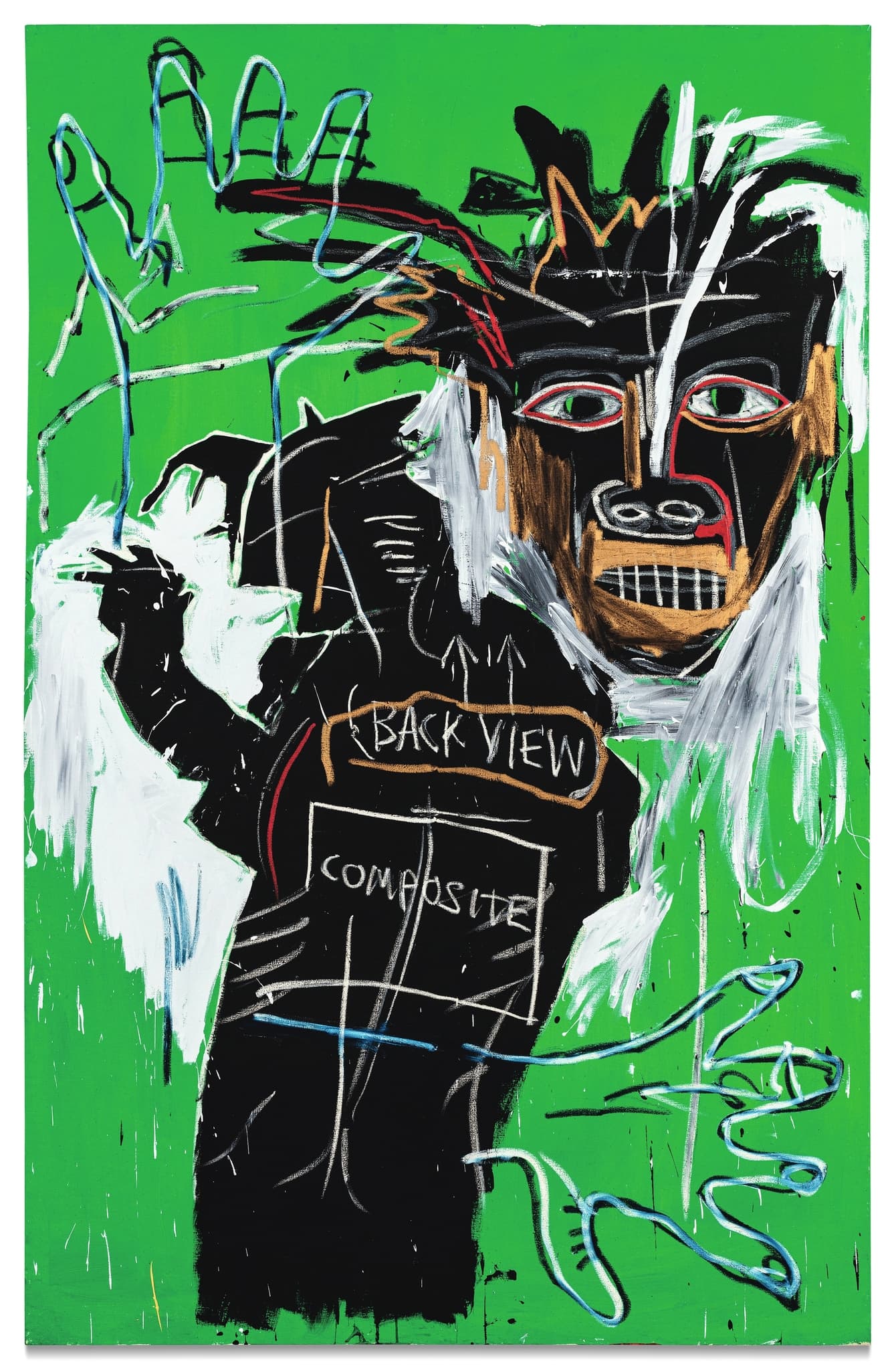
$35,000,000–$55,000,000
Realizing $42,000,000 at Sotheby’s Nov 15, 2023, Self‑Portrait as a Heel (Part Two) is banded USD 35–55M reflecting sale channel, timing and condition.
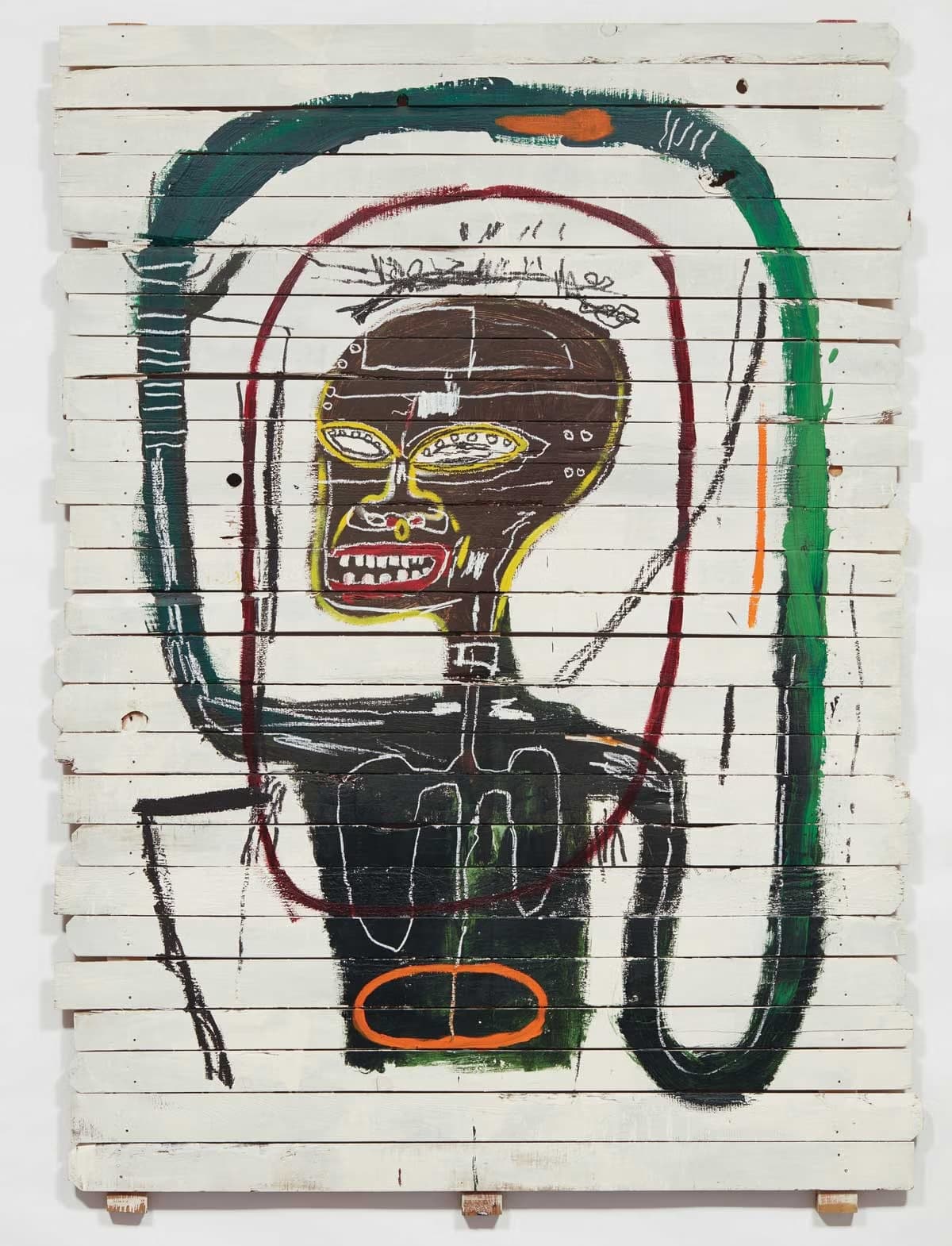
$35-55 million
Based on Phillips May 17, 2018 sale of $45,315,000, Flexible’s Estate provenance and wooden‑slat support inform its USD 35–55M valuation.
What Drives Value in Jean-Michel Basquiat's Work
1981–83 Peak Dating (especially 1982)
Basquiat’s market is dominated by a narrow chronological premium: works dated 1981–83—and 1982 in particular—command outsized prices. Examples: the 1982 skull record at $110.5M, Untitled (Devil) and other 1982 trophies hitting $85M (2022) or the $67.1M Nile (2023). Valuers and buyers treat a clear 1982 date as a primary signal of ‘canonical’ Basquiat production and routinely price these canvases multiple times above later or undated works.
Iconography: Skulls/Heads vs Other Motifs
Specific motifs drive Basquiat valuations: monumental skulls/heads sit at the apex (only three major skull/heads exist), with In This Case and the record skull commanding the highest bids. Large, iconic street images—Boy and Dog in a Johnnypump—or dynamic two‑figure compositions like Dustheads also trade at trophy levels, but the skull/head family uniquely captures collector and institutional obsession and trades at a structural premium versus other subjects.
Monumental Scale & Format (panoramas, triptychs)
Size and format are uniquely value‑creating for Basquiat: monumental panoramas, multi‑panel works and dramatic large canvases are extremely scarce and trophy‑priced. Boy and Dog (c. 96×164 in.) reportedly sold >$100M privately; triptychs such as The Nile (1983) and large double‑figure canvases like Dustheads sit materially above smaller works. Market demand concentrates on these wall‑power pieces because they are irreplaceable within Basquiat’s oeuvre.
Museum‑testing & High‑profile Provenance
For Basquiat, institutional exposure and elite collectors/dealers add a distinctive premium: Broad museum placement, ownership by Peter Brant, Ken Griffin, Valentino or direct acquisition from Annina Nosei/Gagosian materially lift prices. ‘Museum‑tested’ canvases (extensive exhibition/catalogue history) reduce attribution friction in a market with high stakes. Conversely, complex ownership episodes—e.g., Dustheads’ reported links to Jho Low and creditor loans—can dent confidence and compress results unless fully cleared.
Market Context
Jean‑Michel Basquiat remains a blue‑chip, highly liquid postwar/contemporary artist whose auction ceiling was set by Untitled (1982, skull) at $110.5 million (Sotheby’s, 2017); subsequent marquee results include In This Case ($93.1m, 2021), El Gran Espectáculo/The Nile ($67.1m, 2023) and several $40–55m sales in 2024–2026. Institutional exhibitions, museum pedigrees and prominent private collectors across the U.S., Europe and Asia sustain demand, but since the 2017 high‑water mark and especially after 2023 the market has grown more selective: museum‑quality, well‑provenanced 1981–83 canvases—particularly prime 1982 works—command outsized premiums, while smaller or poorly documented lots face greater price dispersion. Scarcity of top‑tier works, guarantees and evening‑sale placement continue to drive competitive bidding for trophy Basquiats.