Red Canna
Study Print Studio
Create a personal study print
Build a companion study sheet around the part of this painting that speaks to you most. Choose a detail, shape an interpretation, and walk away with something personal and display-worthy.
Fast Facts
- Year
- 1925–1928
- Medium
- Oil on canvas mounted to Masonite
- Dimensions
- 35 3/4 × 29 3/4 in. (90.8 × 75.6 cm)
- Location
- University of Arizona Museum of Art, Tucson
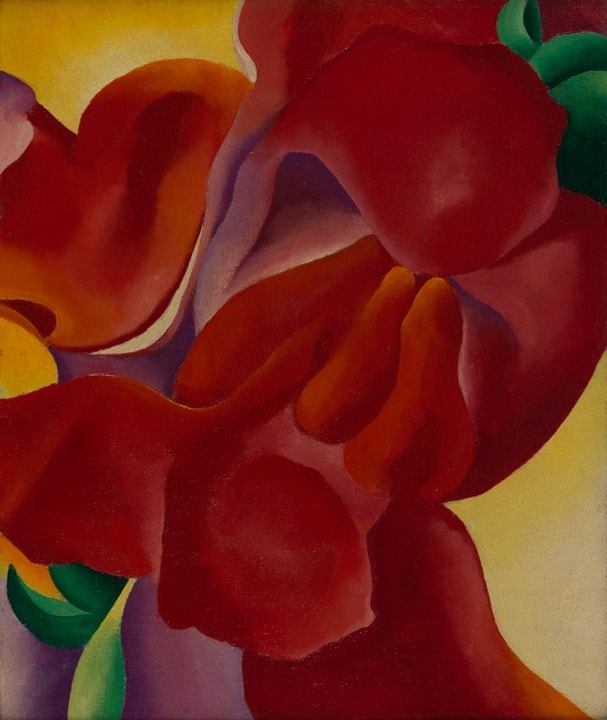
Click on any numbered symbol to learn more about its meaning
Meaning & Symbolism
Explore Deeper with AI
Ask questions about Red Canna
Popular questions:
Powered by AI • Get instant insights about this artwork
Interpretations
Color as Modernist Argument
Source: Pennsylvania Academy of the Fine Arts; Britannica
Place-Based Abstraction: Lake George to the Gallery
Source: High Museum of Art; Georgia O’Keeffe Museum (Access O’Keeffe)
Vitalism and the Flame Motif
Source: Georgia O’Keeffe Museum (Access O’Keeffe); Amon Carter Museum of American Art
Reception History and the Gendered Gaze
Source: National Gallery of Art; Amon Carter Museum; The Met; Tate Modern (via The Guardian)
Phenomenology of Scale and Attention
Source: National Gallery of Art; Pennsylvania Academy of the Fine Arts
Seriality, Medium, and Dating: A Motif in Motion
Source: Yale University Art Gallery; Pennsylvania Academy of the Fine Arts; High Museum of Art; Georgia O’Keeffe Museum (Access O’Keeffe)
Related Themes
About Georgia O’Keeffe
More by Georgia O’Keeffe
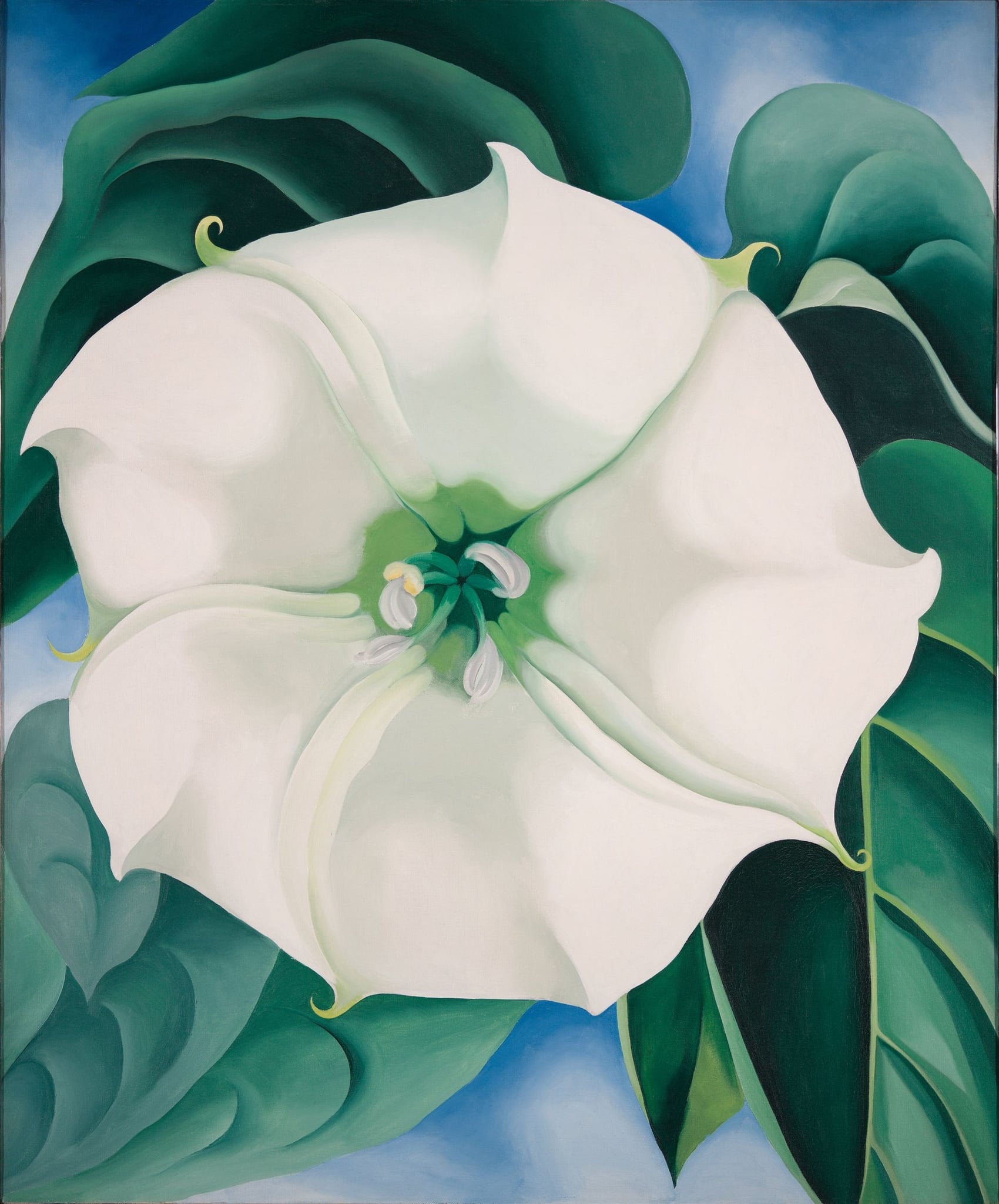
Jimson Weed/White Flower No. 1
Georgia O’Keeffe (1932)
Georgia O’Keeffe’s Jimson Weed/White Flower No. 1 turns a humble roadside blossom into a <strong>monumental icon</strong> of American modernism. The enlarged, close-cropped white trumpet radiates from a cool green throat, set against undulating leaves and a calm blue ground, so the viewer confronts <strong>form, scale, and stillness</strong> rather than botanical detail. Its immaculate bloom, drawn from the poisonous jimson weed, carries a charged tension between <strong>purity and peril</strong>.
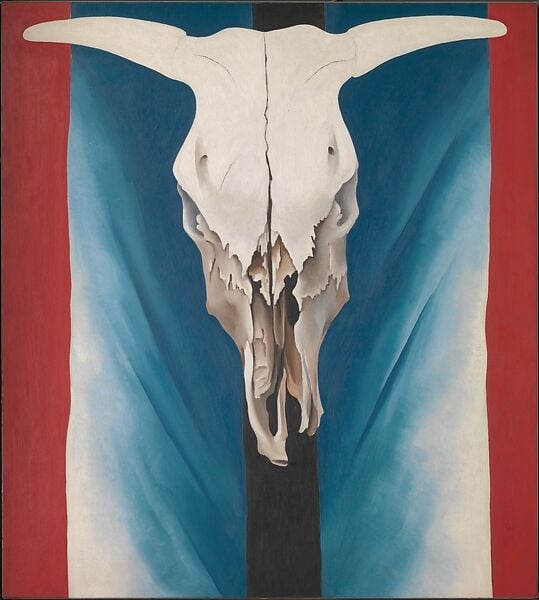
Cow’s Skull: Red, White, and Blue
Georgia O’Keeffe (1931)
Georgia O’Keeffe’s Cow’s Skull: Red, White, and Blue (1931) turns a sun‑bleached bovine skull into a <strong>modern American emblem</strong>, set against a tricolor field that quietly evokes the flag. The skull’s chalky surface becomes the composition’s <strong>white</strong>, framed by red side bands and a folded blue ground cleaved by a dark vertical bar, asserting <strong>resilience</strong> rather than morbidity <sup>[1]</sup><sup>[2]</sup>.
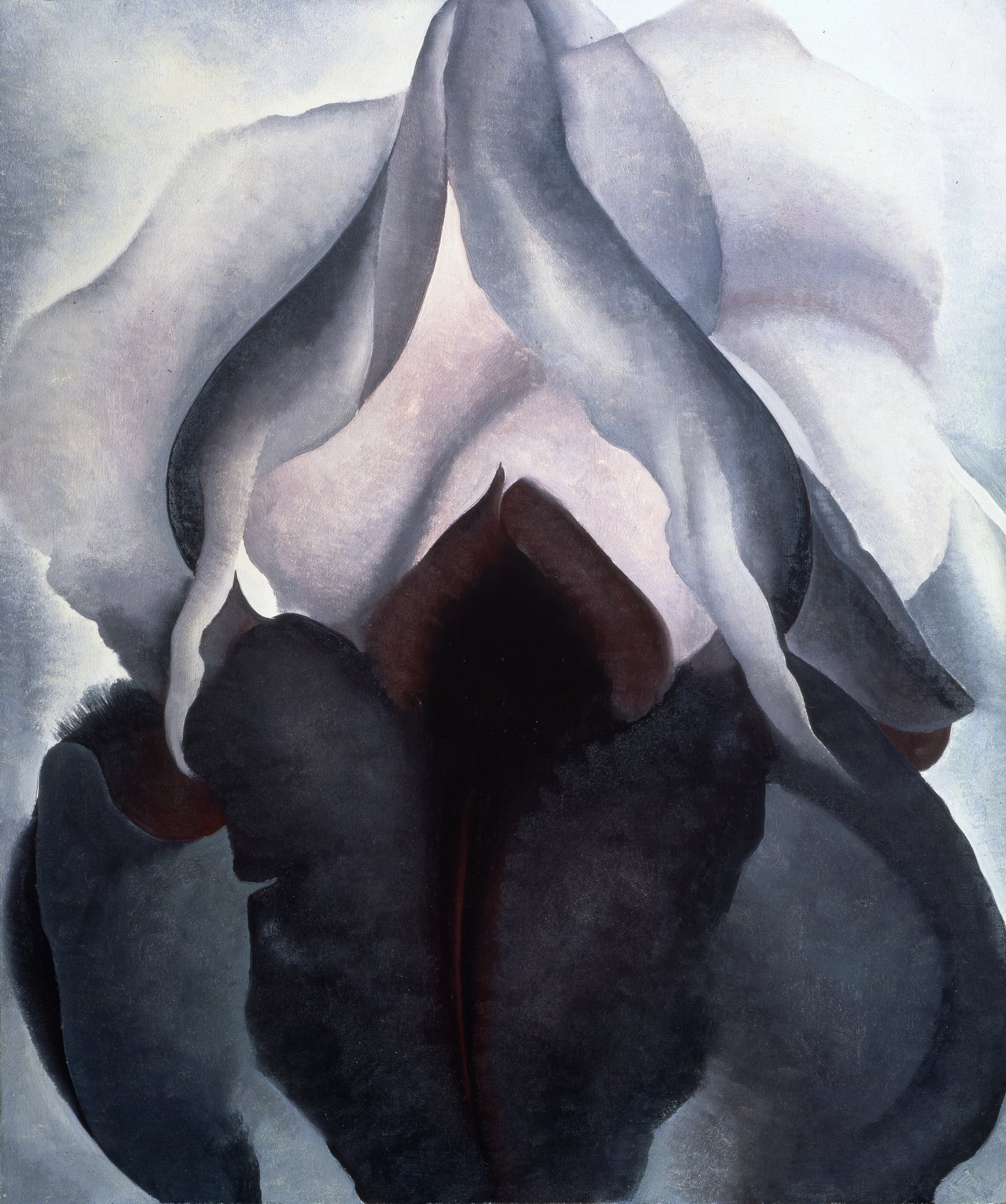
Black Iris
Georgia O’Keeffe (1926)
In Black Iris, Georgia O’Keeffe enlarges a single bloom to monumental scale, transforming it into <strong>luminous gradients</strong> and <strong>architectural folds</strong>. The pale, misted upper petals frame a velvety, wine‑black center, turning a familiar flower into an immersive field of <strong>abstraction and depth</strong> <sup>[1]</sup><sup>[3]</sup>.