La Maison de La Crau (The Old Mill)

by Vincent van Gogh

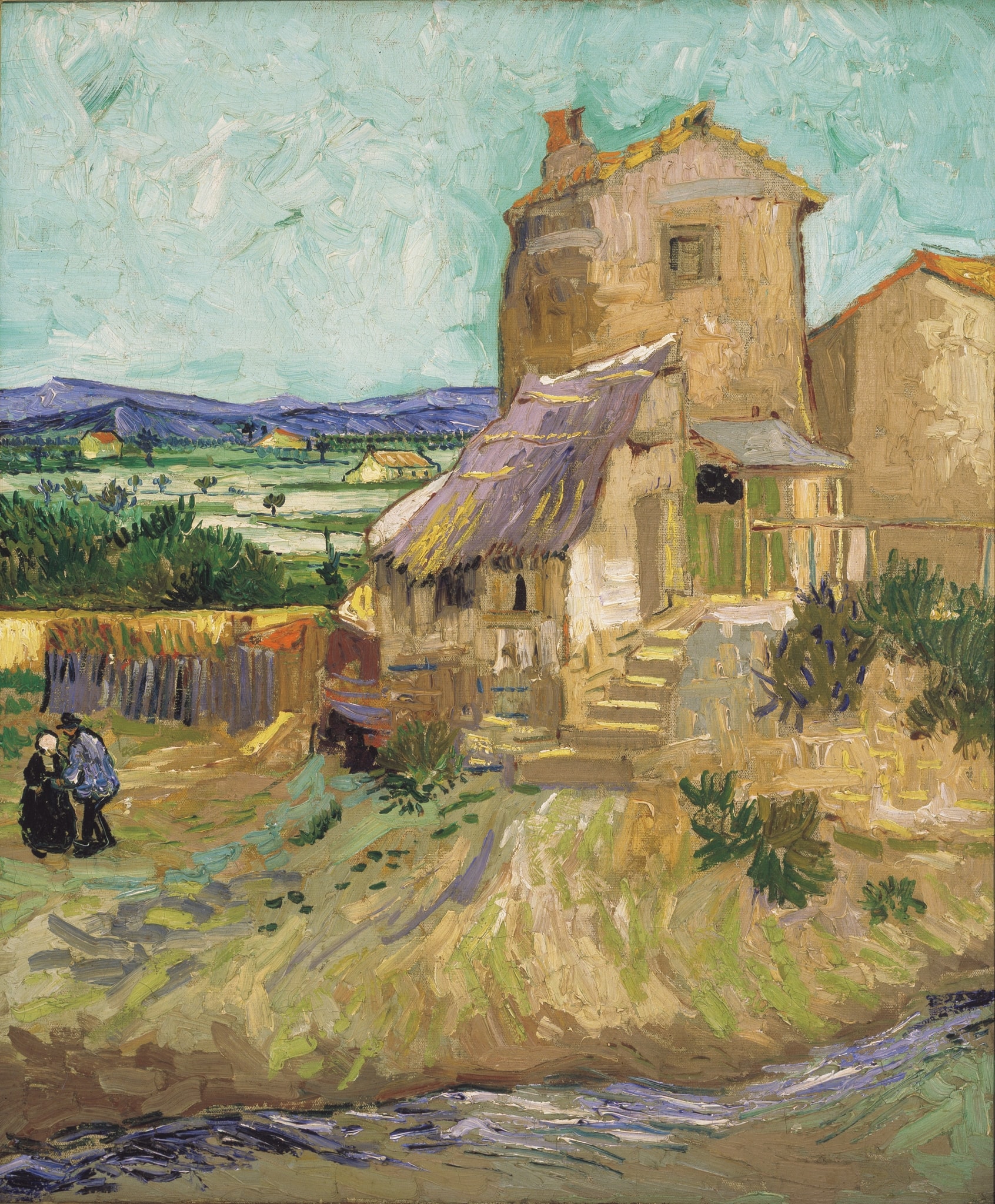
Van Gogh turns a modest Arles windmill into an emblem of resilience and human labor by staging its sun-baked tower against a wind-tossed, cool sky and the distant blue Alpilles. Rhythmic, directional strokes drive the eye from the rippling stream through the zigzag steps to the chimneyed tower, fusing workaday architecture with a modern language of expressive color and structure [1][3].

Study Print Studio

Create a personal study print

Build a companion study sheet around the part of this painting that speaks to you most. Choose a detail, shape an interpretation, and walk away with something personal and display-worthy.

Fast Facts

Year
1888
Medium
Oil on canvas
Dimensions
64.8 × 54.0 cm
Location
Buffalo AKG Art Museum, Buffalo, New York
See all Vincent van Gogh paintings in New York
La Maison de La Crau (The Old Mill) by Vincent van Gogh (1888) featuring Tower-mill with chimney, Zigzag steps, Rippling stream, Wind-scraped sky

Click on any numbered symbol to learn more about its meaning

Meaning & Symbolism

Van Gogh constructs the image as a ladder of persistence. The eye begins at the bottom edge where the creek flashes with blue and lavender strokes; those undulating marks pivot the gaze to the sandy incline striped with ochres and greens, then to the steep, zigzagging steps that clinch the ascent to the tower-mill and its chimney. This rising motion is not scenic filler; it is a claim about endurance and aspiration. The mill’s walls are patched and irregular, its lean‑to roof a thatch of ochre and purple, yet the vertical mass holds firm against a field of cool, wind-scraped sky. By varying stroke direction—horizontal ripples in water, diagonal swipes along the bank, and compact masonry strokes in the tower—Van Gogh binds disparate zones into a single, pulsing structure, countering the myth of haste with deliberate construction 1. The two small figures at left—scaled to fence height and shadowed by dark clothing—fix the painting to daily life and the mill’s social economy, but they do not dominate; the building and its path of access remain the protagonist, a social machine made emblematic. Color is the vehicle of meaning. Across the plain of La Crau, the blue Alpilles rise like a cool chord against the mill’s heated ochres, a classic complementary opposition that generates a visual ‘vibration’ Van Gogh actively sought in Arles 3. Purples pool under the thatch and fence shadows, balancing the golden earth; sap greens and turquoise salt the middle distance, cooling space without surrendering intensity. These choices do not mimic local tone so much as declare a mood—work under weather, light against matter—consistent with the Buffalo AKG’s reading that color is freed from mere description in this canvas 1. Even the sky’s whipped impasto behaves like wind; short, impelled strokes register air as a force as real as stone. The result is a symbolic landscape: labor’s house, weathered yet upright, under an active firmament. The painting also encodes Van Gogh’s artistic networks and ambitions in late 1888. Writing to Theo around 11 September, he singled out his “study of an old mill… in broken tones,” situating it among a surge of Arles canvases testing facture and complementary harmonies 23. Within weeks, he sent the work into the Pont‑Aven exchange, where artists like Bernard and Gauguin were pursuing synthetist simplifications; the mill thus functioned as an argument in paint about how far structure and color could carry meaning without literalism 2. Locally, the motif connected to Arles’s working landscape—known by nicknames such as the “tabatière” or “Jonquet”—so the image speaks both to a specific community and to a broader, modern claim about painting’s expressive power 1. That double anchoring—rooted in place, tuned to avant‑garde dialogue—explains the picture’s durable charge. La Maison de La Crau (The Old Mill) is less a topographic record than a manifesto of resilience, where human making, chromatic tension, and measured brushwork stand their ground amid the flux of light and wind 123.

Explore Deeper with AI

Ask questions about La Maison de La Crau (The Old Mill)

Popular questions:

Powered by AI • Get instant insights about this artwork

💬 Ask questions about this artwork!

Interpretations

Formal Analysis: Engineered Brushwork, Not Haste

The canvas reads like a constructed edifice of strokes: horizontal ripples articulate water, diagonals brace the bank, and compact masonry marks consolidate the mill’s body. This orchestration is a refutation of the cliché of van Gogh’s “rush.” The image advances in tiers—stream, slope, zigzagging steps, tower—each zone assigned a tactility that locks into the next, so that facture is both descriptive and structural. The tower’s firmness results not from outline but from a density and orientation of touches that counter the sky’s shearing motion. In short, the painting is a lesson in how directional facture and impasto bind disparate motifs into an integrated organism, turning view into built form 16.

Source: Buffalo AKG Art Museum; Van Gogh in America

Chromatic Structure: Complementaries as Narrative Force

Color acts here as plot. The mill’s heated ochres and violets push against the blue Alpilles and sea‑green sky, a calibrated use of complementary pairs (yellow–violet; blue–orange; red–green) that produces the vibrating tensions van Gogh sought in Arles. Shadows pool purple beneath the thatch and along the fence, stabilizing the golden earth; turquoise and sap green cool the middle distance without diluting intensity. These choices are not descriptive reportage but an expressive grammar—“the colour has to do the job”—through which labor, weather, and endurance are felt rather than merely seen. The result is a chromatic engine that drives the ascent from creek to mill, giving the climb both heat and atmospheric counterforce 15.

Source: Van Gogh Museum; Buffalo AKG Art Museum

Social-Historical Reading: Rural Industry and Class Texture

Identified locally as the “tabatière” or “Jonquet,” the mill plugs the painting into Arles’s working landscape—grain, grinding, and the seasonal cycles that also animate the harvest scenes of 1888. The two small figures, scaled to the fence, tether the motif to daily economies without turning it anecdotal; the building remains protagonist, a “social machine” emblematic of collective labor. Van Gogh’s admiration for Millet’s peasant subjects informs this empathy, yet he modernizes it by letting color and brushwork—rather than genre narrative—carry the ethical weight. Labor is dignified not by sentimental iconography but by the steadfast mass of the mill confronted by wind and distance, a quiet statement about work’s resilience in the open plain 17.

Source: Buffalo AKG Art Museum; The Frick Collection (Letters from Arles)

Networked Modernism: An Argument with Pont‑Aven

Within weeks of painting it, van Gogh routed The Old Mill into the Pont‑Aven exchange, where Bernard and Gauguin were testing synthetist flattening. Sending this canvas to Chamaillard positioned it as a counter‑proposal: structure and color can bear meaning without collapsing space into planar cloisonné. The stair’s telescoping recession, the masonry’s built touch, and the wind‑loaded sky collectively insist on a constructed depth that remains emphatically modern. The work thus stages a dialogue between expressive simplification and maintained spatial engineering, aligning van Gogh with avant‑garde debates while preserving his commitment to the material articulation of form and air 34.

Source: The Van Gogh Letters (Huygens Institute/Van Gogh Museum); The Metropolitan Museum of Art (Van Gogh in Arles)

Environmental Phenomenology: Painting the Mistral

The “cool, wind‑scraped sky” is not backdrop but a kinetic partner. Short, impelled strokes register the mistral as palpable pressure, shearing laterally against the mill’s vertical stance. This environmental physics is echoed in the stream’s agitated blue‑lavender surface and the bank’s diagonal sweep, so that each zone manifests a different vector of force. Place (La Crau and the Alpilles) becomes climatology rendered in pigment: air as touch, distance as temperature. The mill’s uprightness is thereby tested and affirmed in real time, transforming a topographic motif into a phenomenological study of weather meeting work—Provence’s light and wind condensed into paint behavior 14.

Source: Buffalo AKG Art Museum; The Metropolitan Museum of Art (Van Gogh in Arles)

Object Biography: From Arles to American Modernism

Painted in September 1888 and first owned by Pont‑Aven circle painter Ernest Ponthier de Chamaillard, The Old Mill later entered the collection of A. Conger Goodyear, a key American modernist patron, before his bequest to the Albright‑Knox (now Buffalo AKG). This trajectory maps the work’s dual identity: a local Arlesian subject that also served as a modernist touchstone for U.S. collecting and exhibition. Its reception history underscores how van Gogh’s arguments—color as meaning, facture as structure—were legible to early 20th‑century champions of modern art, who prized the painting not as rustic genre but as a manifesto of method and vision 1.

Source: Buffalo AKG Art Museum

Related Themes

About Vincent van Gogh

Vincent van Gogh (1853–1890) developed a radical, emotion‑driven use of color after moving from Paris to Arles in 1888, seeking southern light and an artists’ community. In Arles he created the Sunflowers series to decorate the Yellow House ahead of Gauguin’s visit. His late work fused impasto, high chroma, and symbolic motifs that shaped modern painting [2][5].
View all works by Vincent van Gogh

More by Vincent van Gogh
Café Terrace at Night by Vincent van Gogh

Café Terrace at Night

Vincent van Gogh (1888)

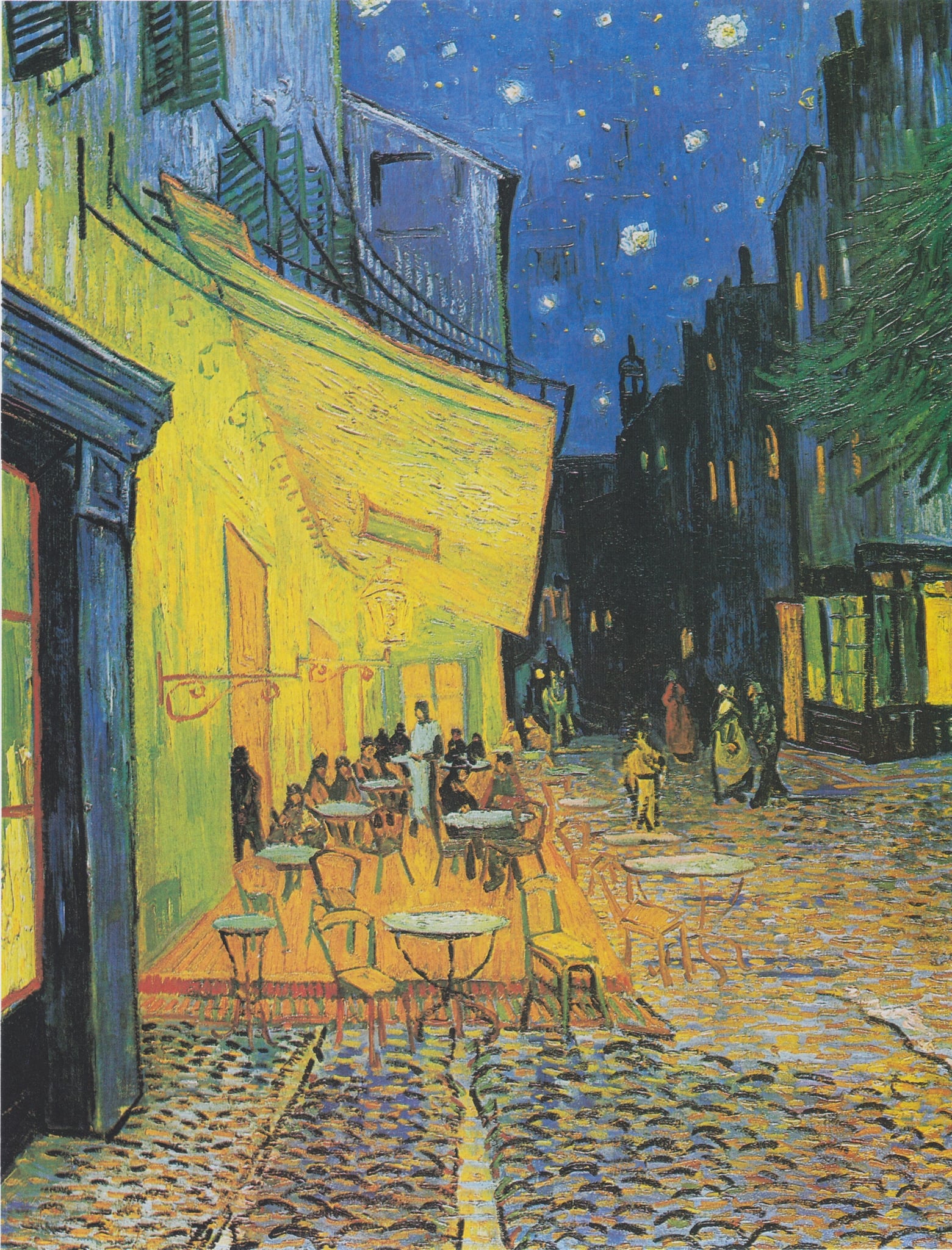
In Café Terrace at Night, Vincent van Gogh turns nocturne into <strong>luminous color</strong>: a gas‑lit terrace glows in yellows and oranges against a deep <strong>ultramarine sky</strong> pricked with stars. By building night “<strong>without black</strong>,” he stages a vivid encounter between human sociability and the vastness overhead <sup>[1]</sup><sup>[2]</sup>.
Red Cabbages and Onions by Vincent van Gogh

Red Cabbages and Onions

Vincent van Gogh (1887)

In Red Cabbages and Onions, Vincent van Gogh turns everyday produce into a drama of <strong>complementary color</strong> and <strong>restless brushwork</strong>. Hot red contours cinch violet cabbages and pale yellow bulbs against a cool, striated blue table, while a mustard‑yellow patch in the upper right tilts the space and sharpens the chromatic clash. The result asserts ordinary food as a locus of <strong>resilience</strong> and <strong>experimentation</strong> <sup>[1]</sup><sup>[2]</sup>.

Irises by Vincent van Gogh

Irises

Vincent van Gogh (1889)

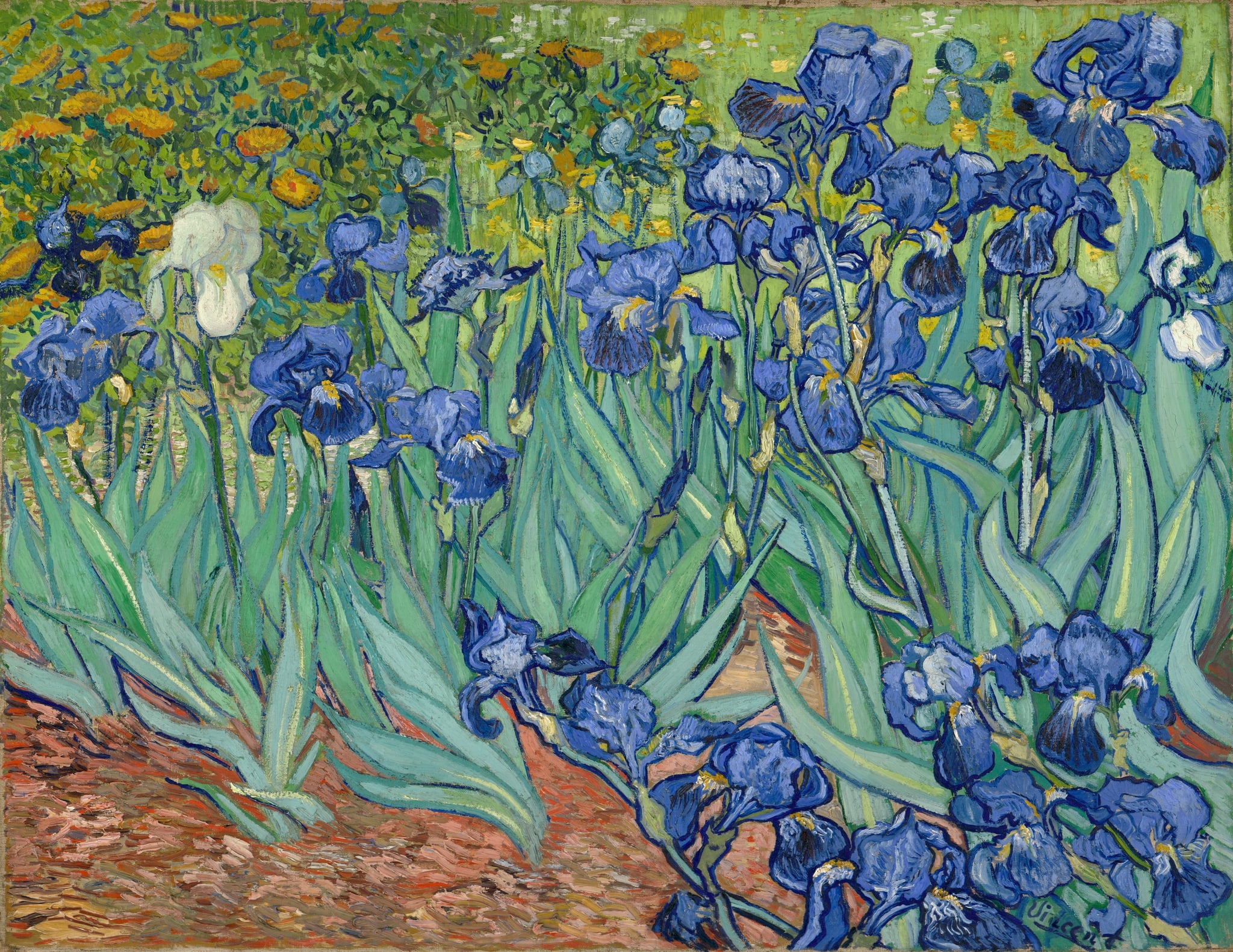
Painted in May 1889 at the Saint-Rémy asylum garden, Vincent van Gogh’s <strong>Irises</strong> turns close observation into an act of repair. Dark contours, a cropped, print-like vantage, and vibrating complements—violet/blue blossoms against <strong>yellow-green</strong> ground—stage a living frieze whose lone <strong>white iris</strong> punctuates the field with arresting clarity <sup>[1]</sup><sup>[2]</sup>.
Sunflowers by Vincent van Gogh

Sunflowers

Vincent van Gogh (1888)

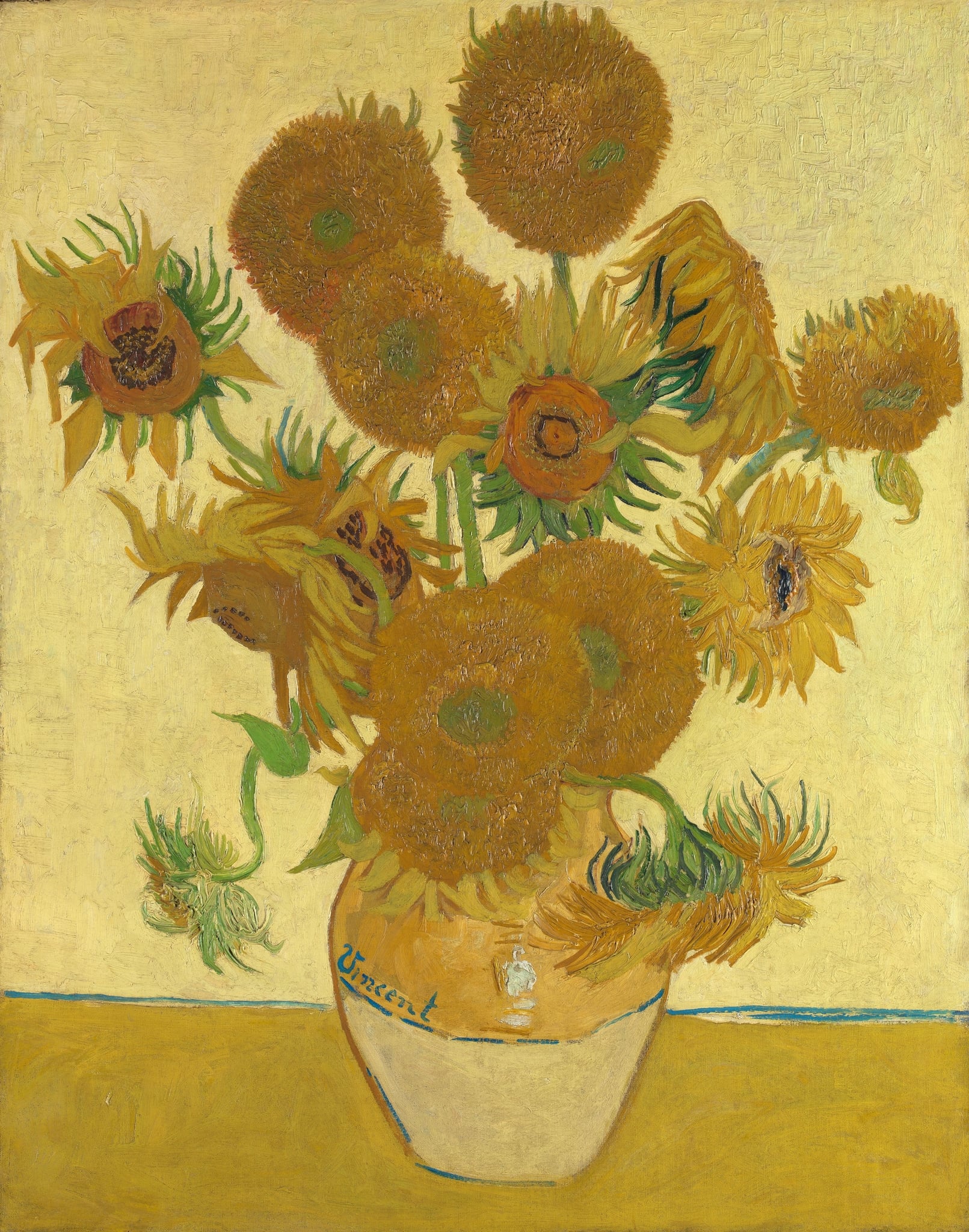
Vincent van Gogh’s Sunflowers (1888) is a <strong>yellow-on-yellow</strong> still life that stages a full <strong>cycle of life</strong> in fifteen blooms, from fresh buds to brittle seed heads. The thick impasto, green shocks of stem and bract, and the vase signed <strong>“Vincent”</strong> turn a humble bouquet into an emblem of endurance and fellowship <sup>[1]</sup><sup>[2]</sup>.

Garden with Courting Couples: Square Saint-Pierre by Vincent van Gogh

Garden with Courting Couples: Square Saint-Pierre

Vincent van Gogh (1887)

In Garden with Courting Couples: Square Saint-Pierre, Vincent van Gogh turns a small Montmartre park into a stage where <strong>spring</strong>, <strong>intimacy</strong>, and <strong>urban leisure</strong> converge. Short, shimmering strokes fuse pink chestnut blossoms, curving paths, and paired figures into one pulse of <strong>renewal</strong> and <strong>togetherness</strong> <sup>[1]</sup><sup>[2]</sup>.

In the Café: Agostina Segatori in Le Tambourin by Vincent van Gogh

In the Café: Agostina Segatori in Le Tambourin

Vincent van Gogh (1887 (Jan–Mar))

Van Gogh casts Agostina Segatori at a tiny, tambourine‑like café table, turning Le Tambourin into a <strong>stage of modern life</strong>. Cool greens and greys make the red <strong>flame‑plume hat</strong> and the foaming <strong>beer</strong> flare, while folded arms and a set‑aside <strong>parasol</strong> register private fatigue amid public display <sup>[1]</sup><sup>[2]</sup><sup>[3]</sup>.