How Rembrandt and Vermeer Make the Real Present
Both painters turn light into judgment, not just illumination: it selects what matters and leaves the rest to time and conscience. Rembrandt makes viewers witnesses to events that test vision and mercy; Vermeer builds rooms and tasks where significance gathers through measured attention. Their shared ground is presence; their difference is how seeing is earned—through crisis or through order.
Comparison frame: How do Rembrandt and Vermeer use light to teach us how to look—through crisis and compassion versus patience and order?
Quick Comparison
| Topic | Johannes Vermeer | Rembrandt van Rijn |
|---|---|---|
| Light’s job | Dramatic, selective beam that singles out ethical centers; shadow withholds. | Stable, metronomic daylight that calibrates attention; shadow tidies edges. |
| What is a painting? | An event to be witnessed—crisis, mercy, decision. | An instrument for ordered seeing—clarity earned through patience. |
| Handling of paint | Often reworked; late impasto and scraping turn matter into feeling. | Controlled surfaces with pointillés and deliberate simplifications. |
| Preferred time-sense | Threshold instants (Tulp’s first lift; the embrace; the storm’s spike). | Durations of work or weather (pouring milk; a still city; studio order). |
| Optics and tools | Theatrical staging of observation; no optical effects foregrounded. | Attention engineered with selective focus and precise highlights; optical study likely. |
| Composition | Off‑axis diagonals and deep chiaroscuro implicate the viewer. | Frontal geometries, tiled grids, and measured horizons steady space. |
| Claim on knowledge/history | Body–book–mind align to validate public science (Anatomy Lesson). | Painter–muse–map align to claim history and nation (Art of Painting). |
Shared Ground
Rembrandt van Rijn (1606–1669) and Johannes Vermeer (1632–1675) share a core conviction: painting does not merely record light; it uses light to decide meaning. In both, illumination is selective and temporal—what is lit asks for assent, what is withheld asks for patience. This is why their pictures feel present. Rembrandt stages charged encounters where viewers are turned into witnesses—scientific demonstration, storm and deliverance, return and embrace. Vermeer crafts interiors and prospects where attention is disciplined until clarity blooms—milk poured, lace made, a city held in drifting weather.
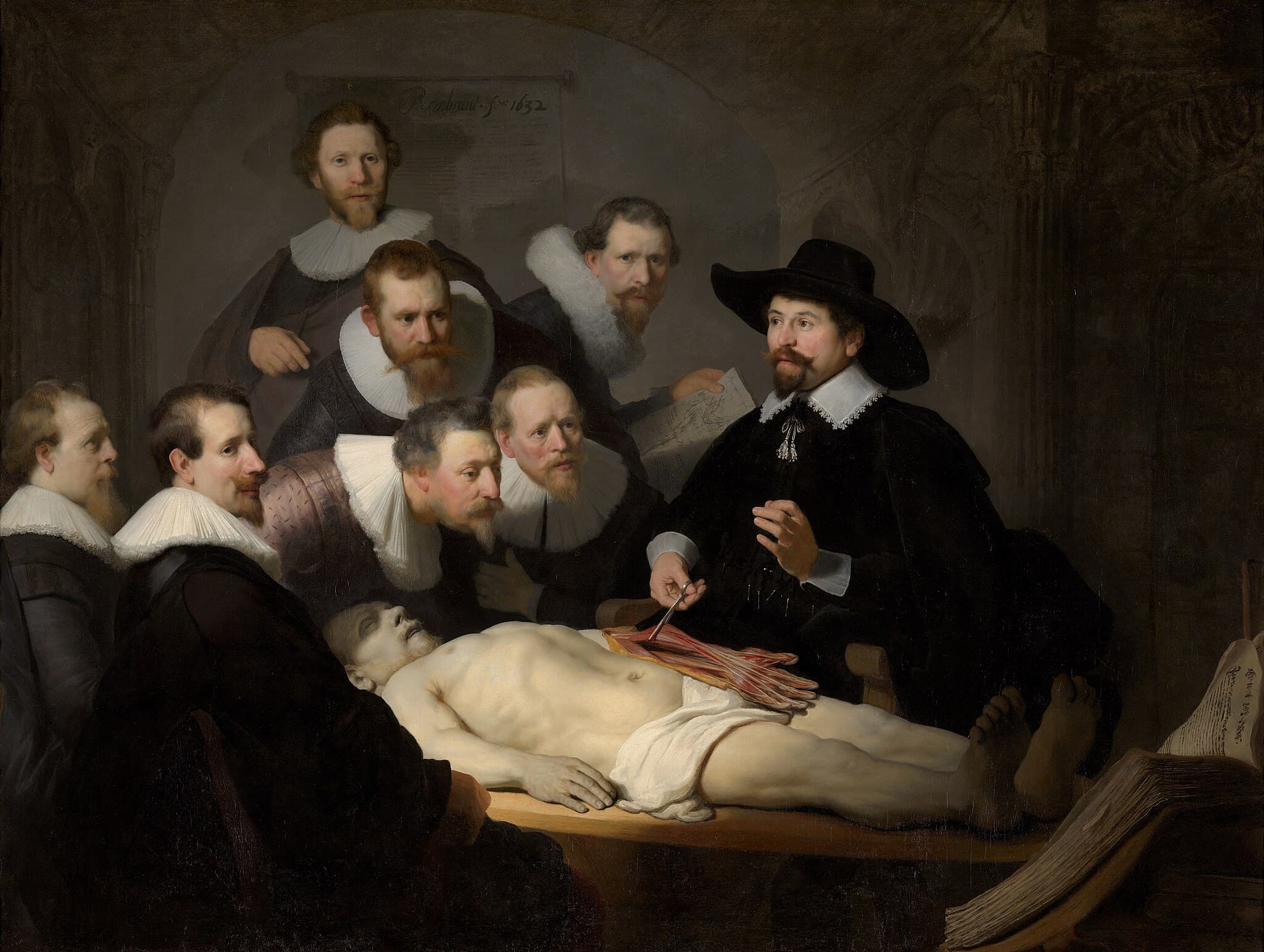
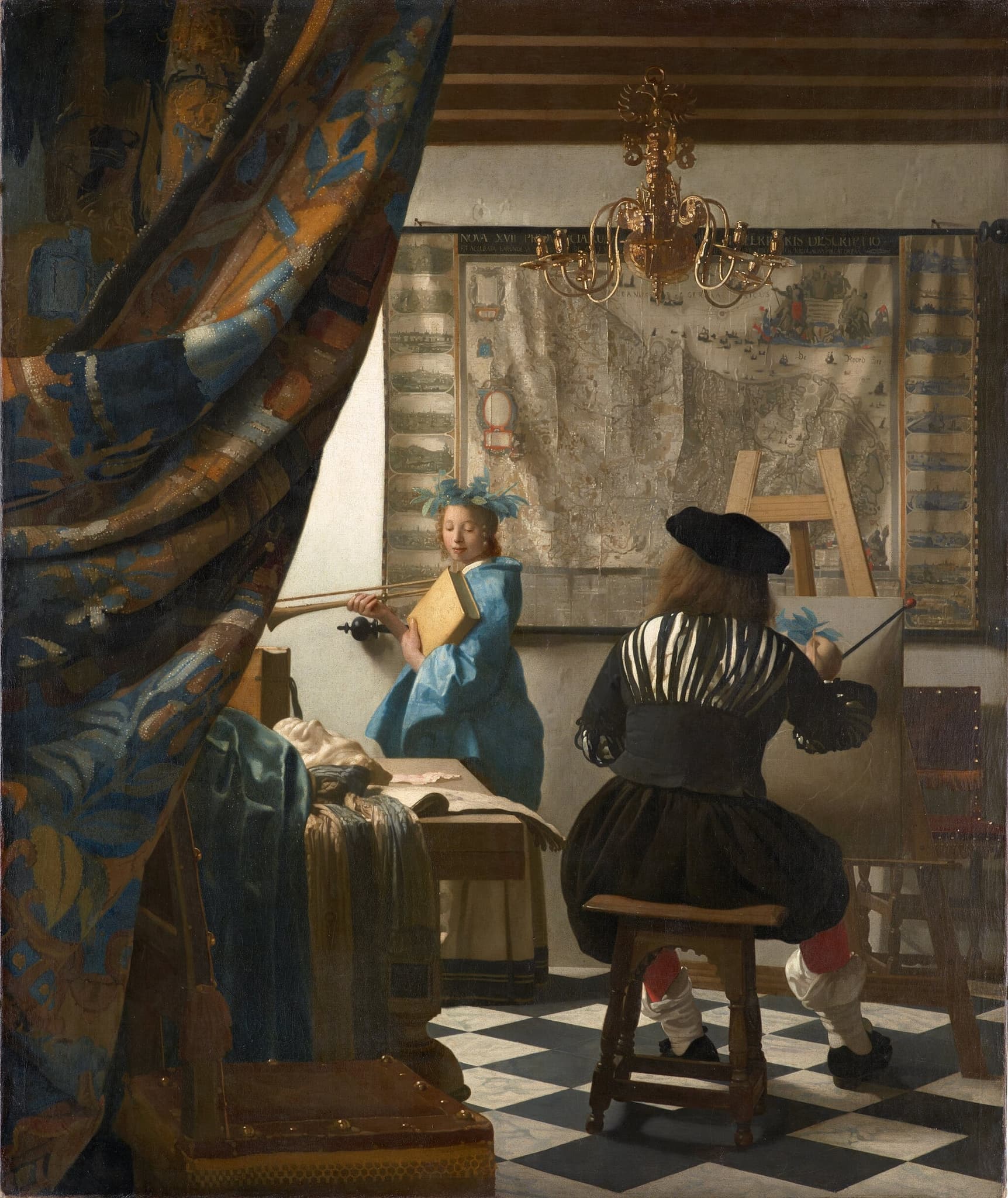
Each builds arguments about truth by showing how images relate to texts, tools, and time. Rembrandt’s The Anatomy Lesson of Dr. Nicolaes Tulp triangulates body, book, and mind so that knowledge passes through looking and judgment. Vermeer’s The Art of Painting aligns painter, muse, and a Visscher map of the Seventeen Provinces to claim that pictura belongs to civic memory as much as to imitation. Both painters refine Dutch ideas about staging, illusion, and the management of light and shadow into distinct optics: light does work, shadow slows us. They also compress time: Rembrandt chooses threshold moments that test conscience; Vermeer engineers slow seeing that organizes a room, a task, or a skyline into ordered presence. This shared ground—light as a selector of meaning and painting as a method of making the real present—frames the comparison.
Decisive Difference
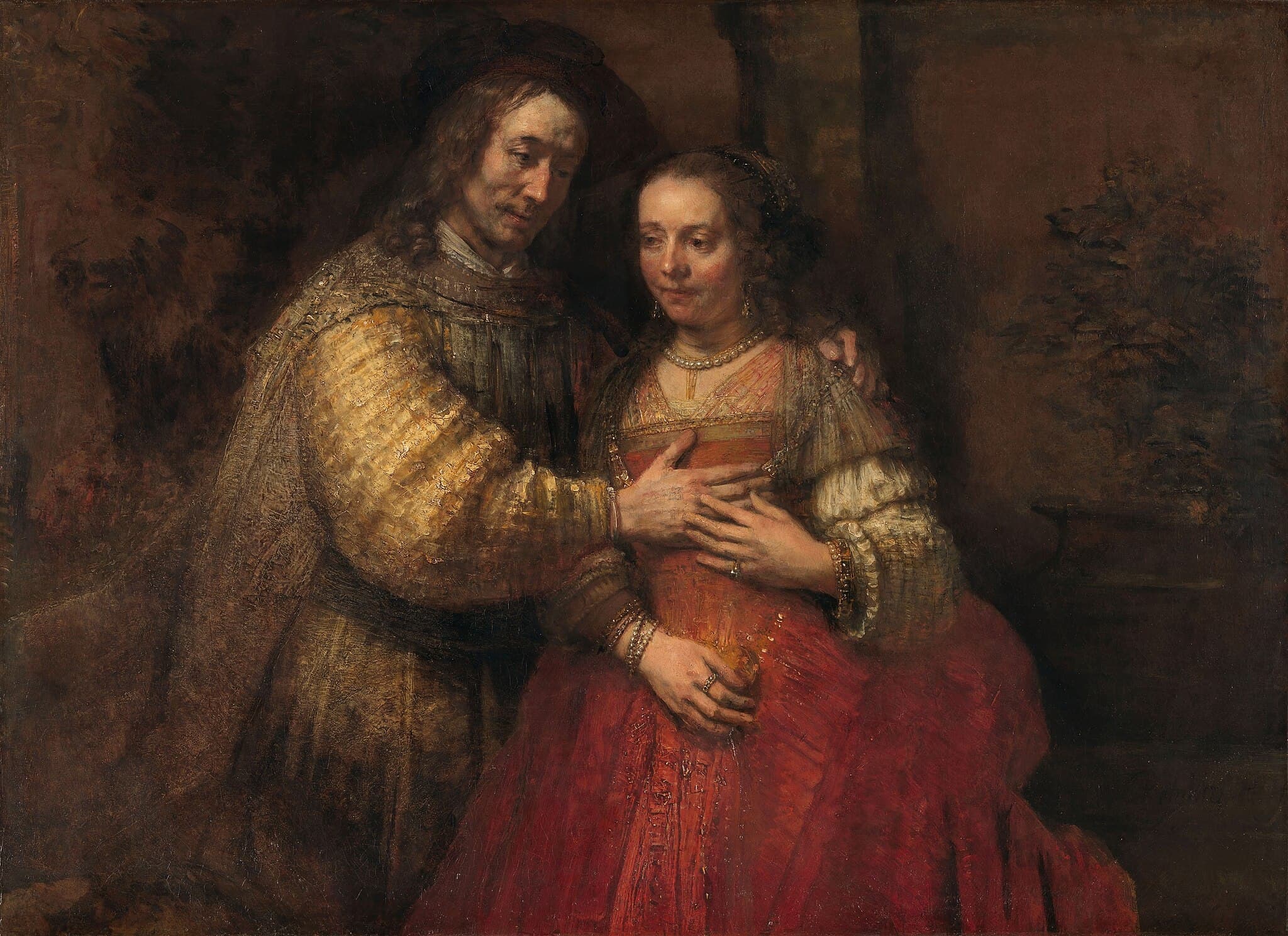
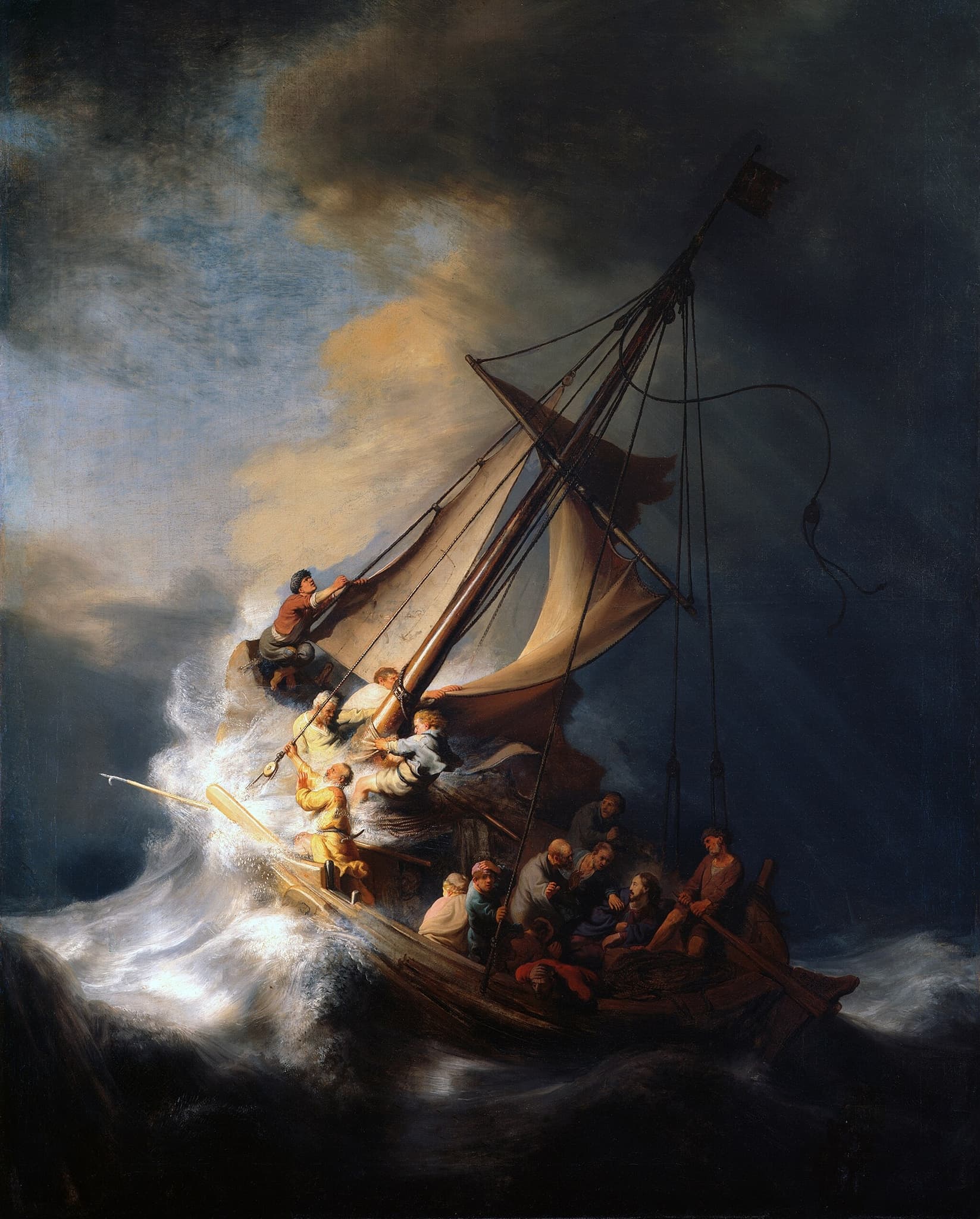
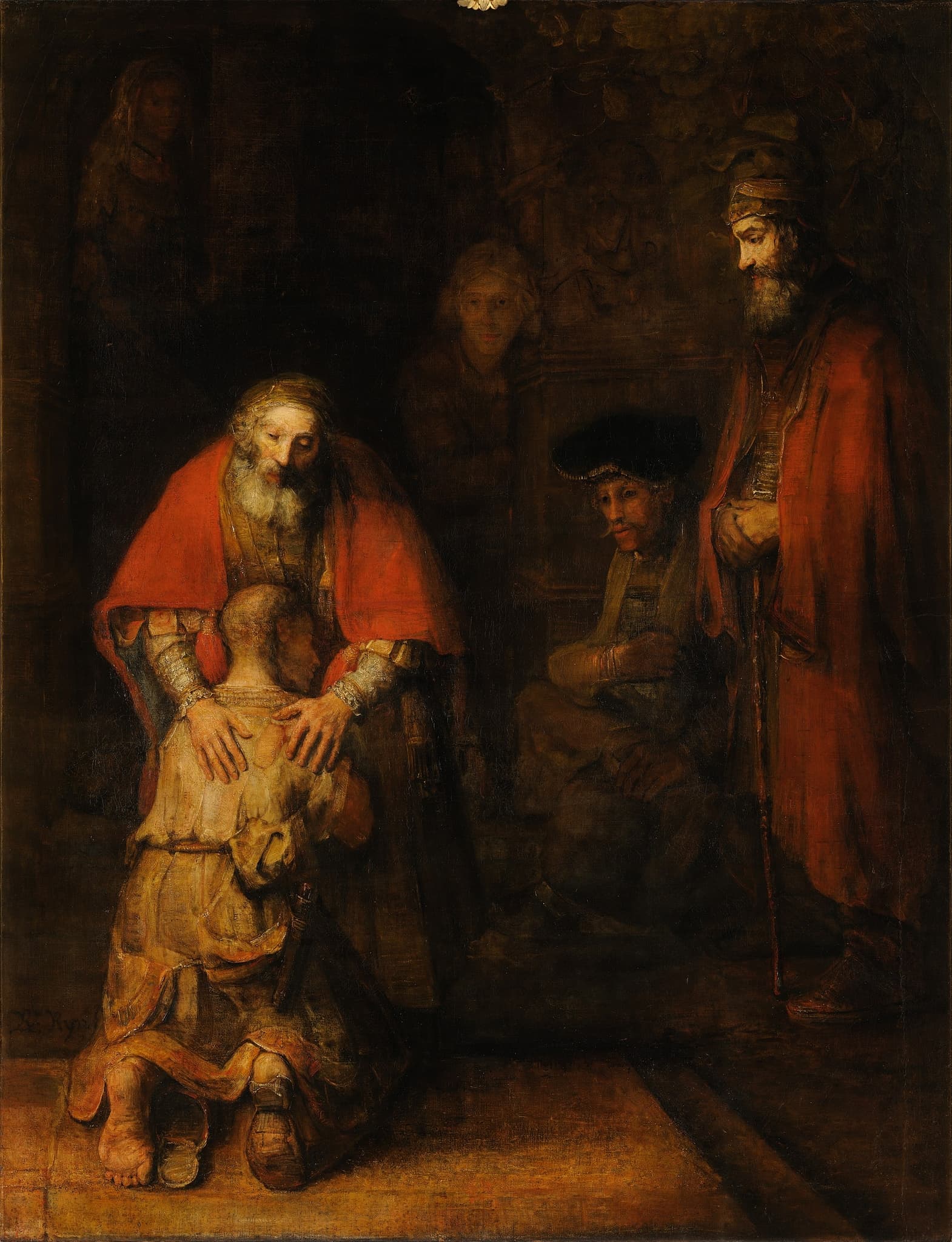
Rembrandt treats painting as an event. Light falls like an ethical summons on faces and hands, and narrative is compressed to a decisive instant. In The Anatomy Lesson of Dr. Nicolaes Tulp, illumination binds the cadaver’s arm to a Vesalian book and to Tulp’s expressive demonstration so we witness knowledge becoming public. In The Storm on the Sea of Galilee, a pitched diagonal and a rare vertical format conscript us into crisis as a calm Christ steadies chaos. In late works such as The Jewish Bride or The Return of the Prodigal Son, paint itself—built up, reworked, scraped—becomes touch and mercy. His surfaces are materially eloquent because inner life is at stake; we are asked to feel our way to truth.
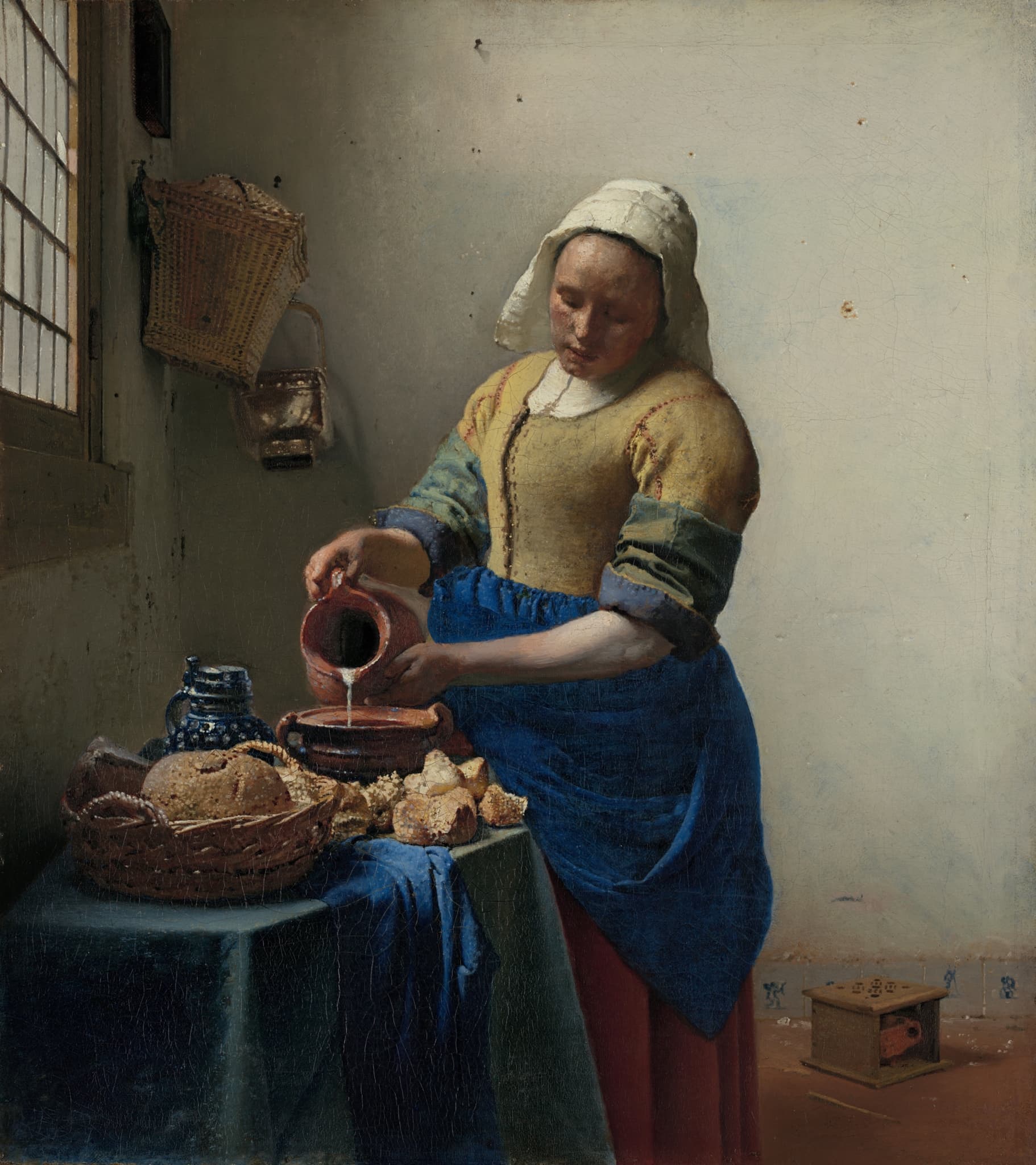
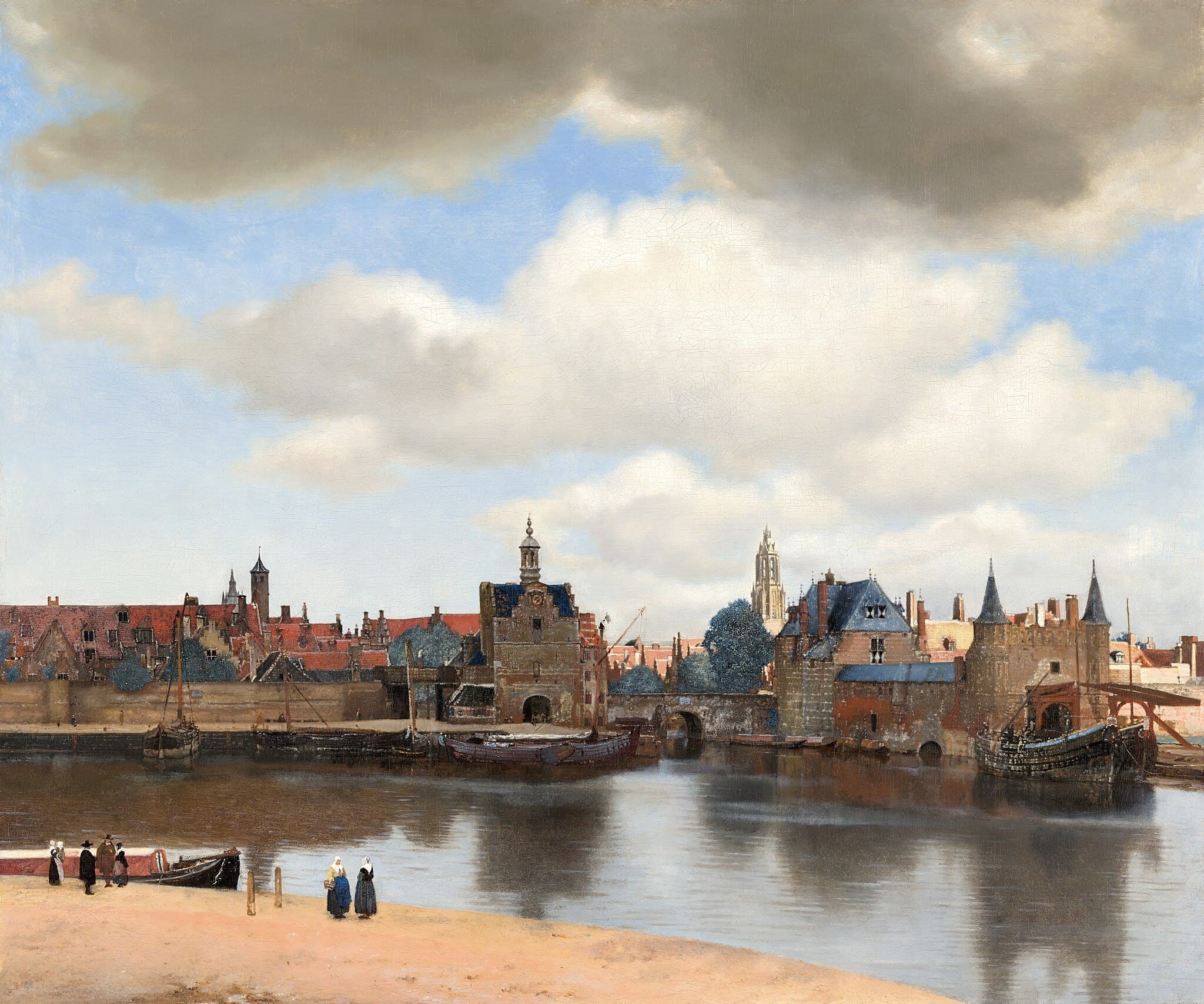
Vermeer treats painting as an instrument of calibrated attention. Light is stable and cool, usually from the left, ordering matter into lucid hierarchies. In The Milkmaid, simplifications uncovered by imaging and tiny optical effects (selective focus, pointillés) focus our eye on the task, not the anecdote. In View of Delft, drifting cloud and reflective water articulate civic order where the bright Nieuwe Kerk anchors memory. In The Art of Painting, a parted curtain, Clio’s attributes, and a mapped Netherlands argue that painting disciplines the world into clarity—and then claims history. Surfaces are controlled; costly ultramarine undergirds his calm tonality. We are asked to see our way to truth through patience and order. Two programs, one aim: presence.
Paired Works
Demonstration vs Allegory
Focus question: What authority does painting claim over knowledge and history?
The Anatomy Lesson of Dr. Nicolaes Tulp vs The Art of Painting
Touch and Work
Focus question: How can paint make everyday touch or labor carry moral weight?
The Jewish Bride vs The Milkmaid
Weather and Community
Focus question: How do water and weather model time and communal life?
The Storm on the Sea of Galilee vs View of Delft
Hands and Inward Life
Focus question: What can hands reveal about inward life?
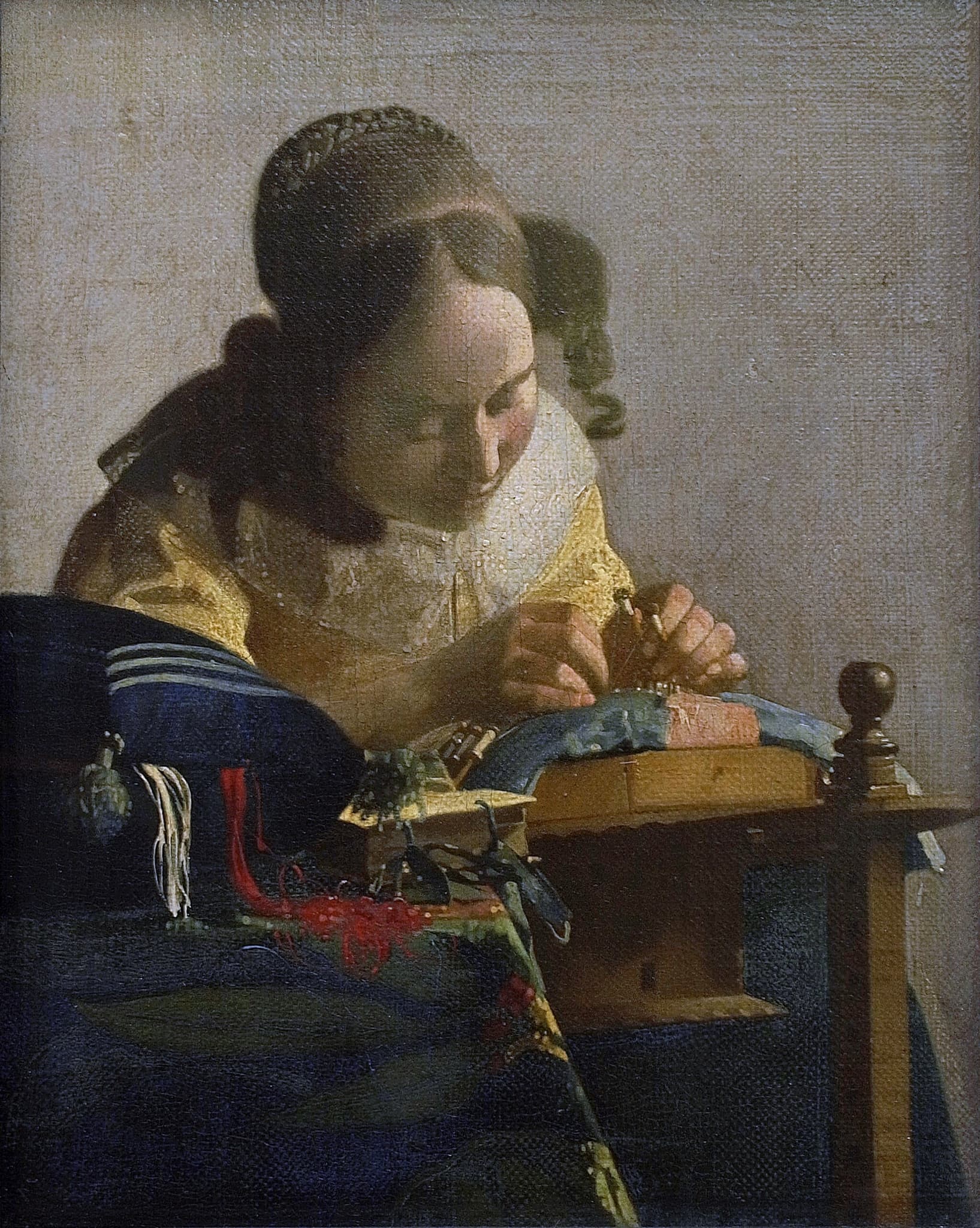
The Return of the Prodigal Son vs The Embroiderer
Why This Comparison Matters
This pairing clarifies two durable habits of looking. Rembrandt trains us to recognize decisive human moments—knowledge demonstrated, mercy given, fear steadied—and to accept that paint can carry the pressure of those events. Vermeer trains us to build clarity by degrees—to let measured light, simplified design, and careful focus disclose value in ordinary rooms, tasks, and cities.
Understanding the difference matters beyond art history. In a culture flooded with images, Rembrandt’s program asks for witness: pay attention when the stakes are highest and let feeling and ethics guide your eye. Vermeer’s program asks for discipline: reduce noise, order what you see, and let patience refine judgment. Both argue that truth is not merely shown but made present through how we look. Seen together, they map a spectrum of Dutch realism—from crisis-led insight to attention-led clarity—that still shapes how pictures persuade.
Related Links
Sources
- Mauritshuis – Rembrandt, The Anatomy Lesson of Dr. Nicolaes Tulp
- Mauritshuis – Vermeer, View of Delft
- Isabella Stewart Gardner Museum – Rembrandt, The Storm on the Sea of Galilee
- Rijksmuseum – Rembrandt, The Jewish Bride
- Kunsthistorisches Museum – Vermeer, The Art of Painting
- Rijksmuseum – Discoveries on Vermeer’s The Milkmaid (technical studies)
- National Gallery, London – Rembrandt: The Late Works (press material on surface handling)
- NGA – Samuel van Hoogstraten, Inleyding tot de Hooge Schoole der Schilderkonst
- Heritage Science – Vermeer’s use of ultramarine and materials
- Rijksmuseum – Vermeer Technical Studies (2022–2023)
- NGA – Artist info: Rembrandt van Rijn
- Google Arts & Culture – The Art of Painting (context and iconography)
- Louvre-Lens – The Lacemaker (on selective focus in Vermeer)