Apples Symbolism
In the still lifes by Paul Cézanne in our collection, apples function less as narrative emblems and more as resilient units of form and perception. Their rounded presence is built through calibrated color and shifting viewpoints rather than strict, single-point perspective. They invite slow looking, focusing attention on balance and the construction of space.
Apples in The Basket of Apples
In The Basket of Apples (c. 1893) by Paul Cézanne, a tilted basket spills apples across a rumpled white cloth toward a dark bottle and a plate of biscuits. The tabletop’s misaligned edges and the play of multiple viewpoints set a quiet drama of balance, with the apples’ steady, rounded forms anchoring the scene as they traverse the cloth and mediate between horizontal and vertical elements.
Still Life with Apples and Oranges (c. 1899) by Paul Cézanne builds a quietly monumental world in which fruit becomes durable form. Here the apples, gathered in a white compote and scattered across a tilting table amid cascading cloths and a flowered jug, are stabilized by color relationships rather than single-point perspective—appearing both solid and subtly unstable as the painting reflects how vision is constructed.
Common Themes
Artworks Featuring This Symbol
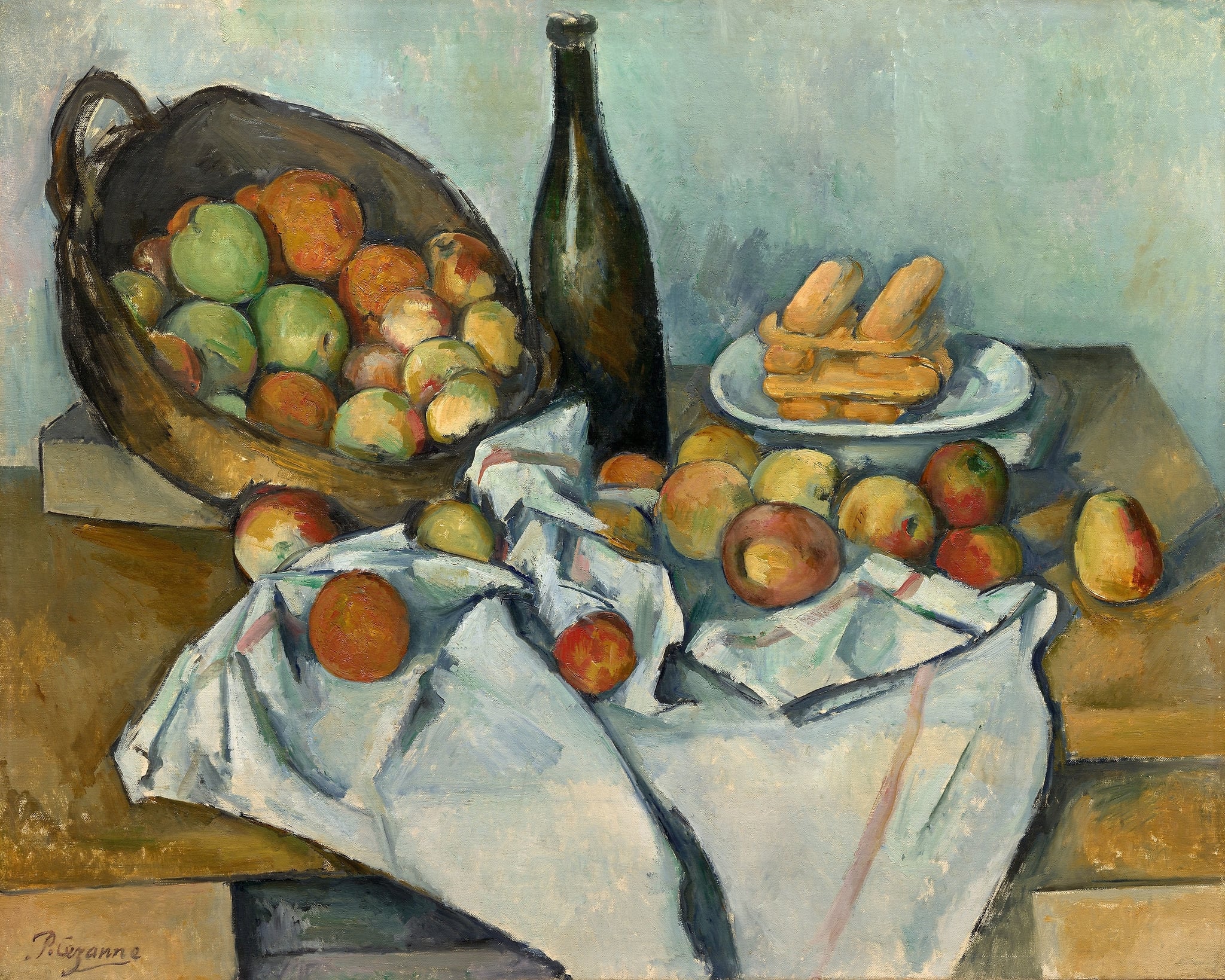
The Basket of Apples
Paul Cézanne (c. 1893)
Paul Cézanne’s The Basket of Apples stages a quiet drama of <strong>balance and perception</strong>. A tilted basket spills apples across a <strong>rumpled white cloth</strong> toward a <strong>dark vertical bottle</strong> and a plate of <strong>biscuits</strong>, while the tabletop’s edges refuse to align—an intentional play of <strong>multiple viewpoints</strong> <sup>[1]</sup><sup>[2]</sup><sup>[3]</sup>.
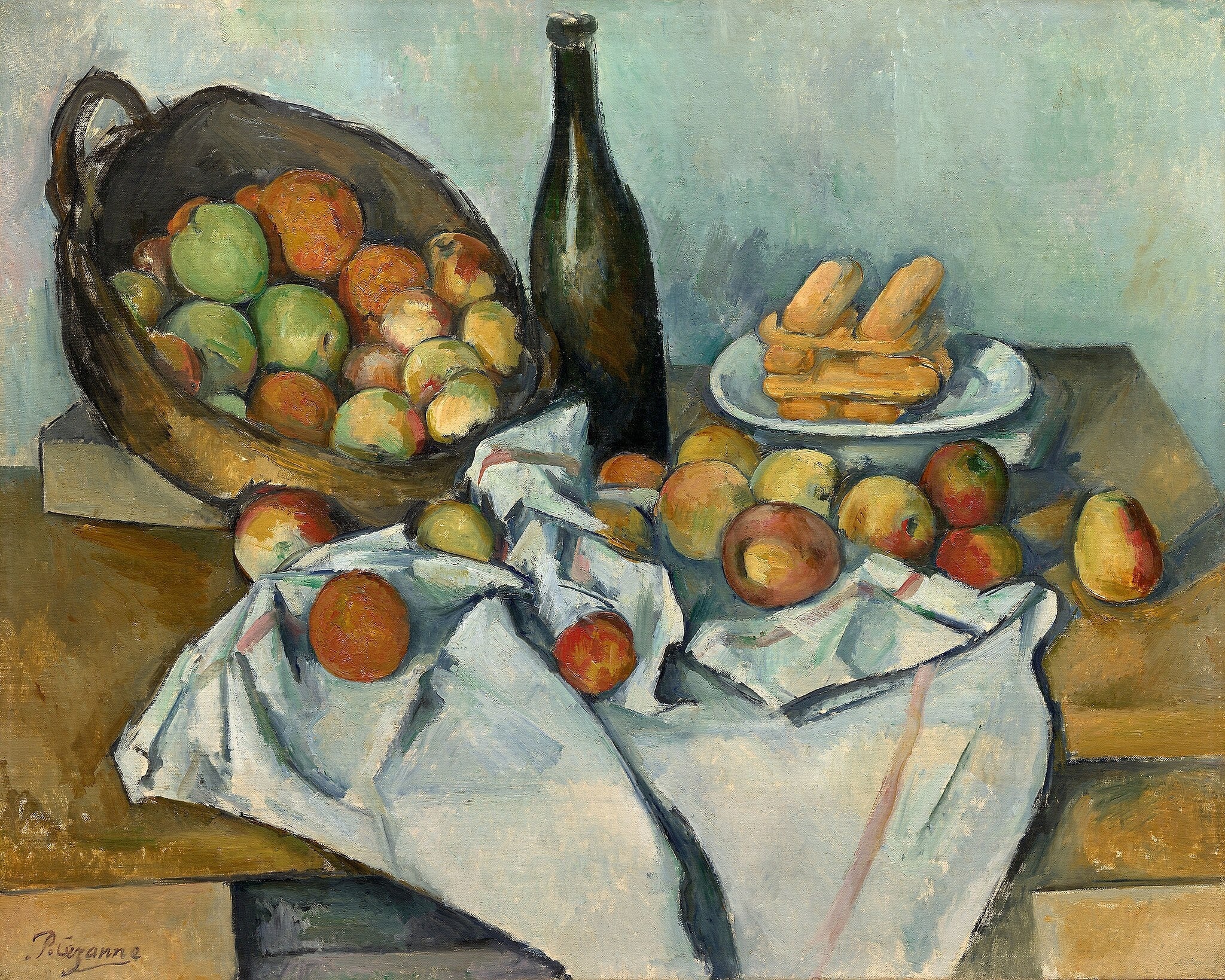
Still Life with a Basket of Apples
Paul Cézanne (c. 1893 (AIC range 1887–1900))
Paul Cezanne’s Still Life with a Basket of Apples stages a quiet crisis of balance: a basket tilts forward, a dark bottle leans, and a rumpled cloth surges like a ridge across the table. Through <strong>purposeful misalignments</strong> and <strong>constructed color</strong>, the painting turns ordinary fruit into an inquiry into how we see over time <sup>[1]</sup><sup>[3]</sup>.
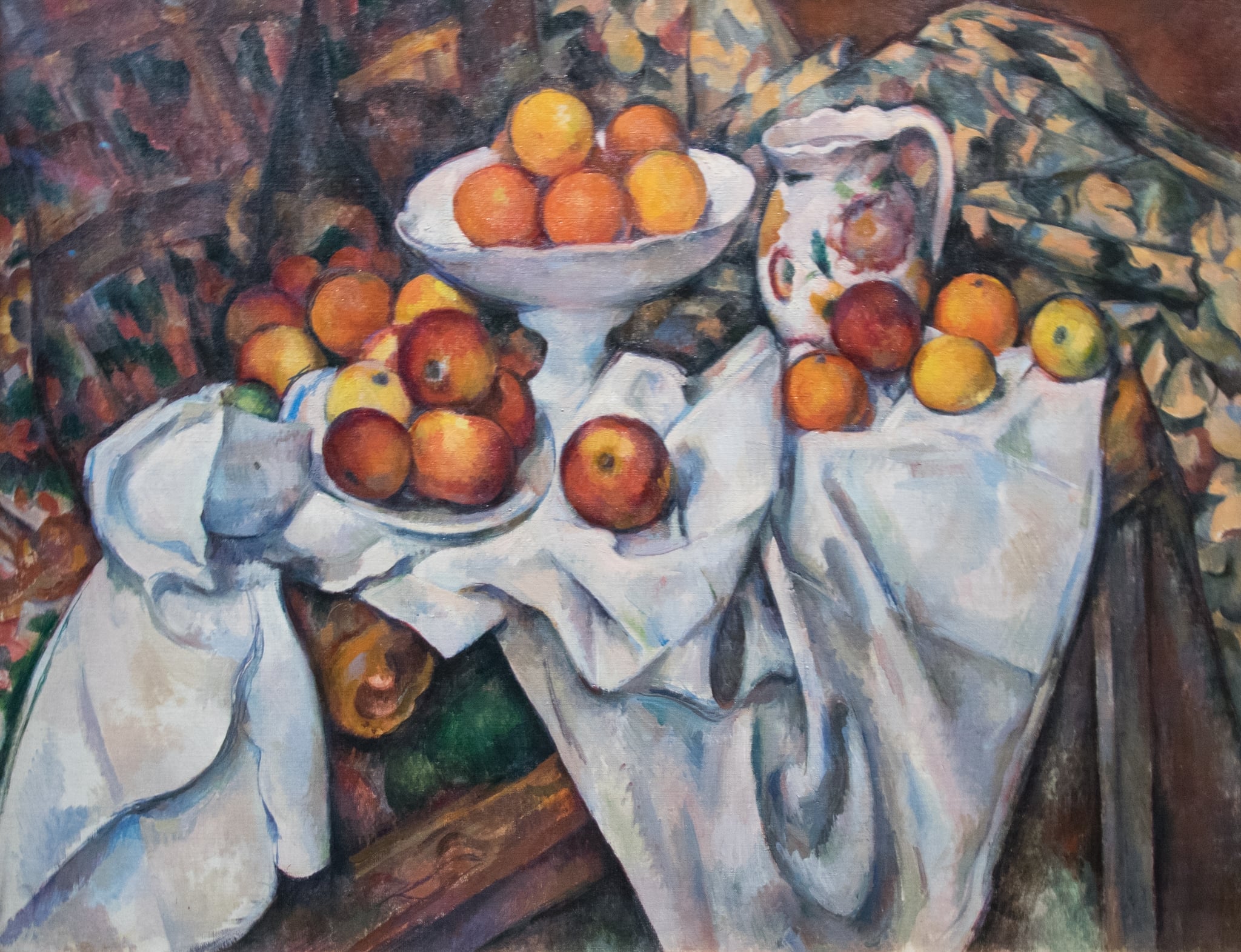
Still Life with Apples and Oranges
Paul Cézanne (c. 1899)
Paul Cézanne’s Still Life with Apples and Oranges builds a quietly monumental world from domestic things. A tilting table, a heaped white compote, a flowered jug, and cascading cloths turn fruit into <strong>durable forms</strong> stabilized by <strong>color relationships</strong> rather than single‑point perspective <sup>[1]</sup><sup>[2]</sup>. The result is a still life that feels both solid and subtly <strong>unstable</strong>, a meditation on how we construct vision.