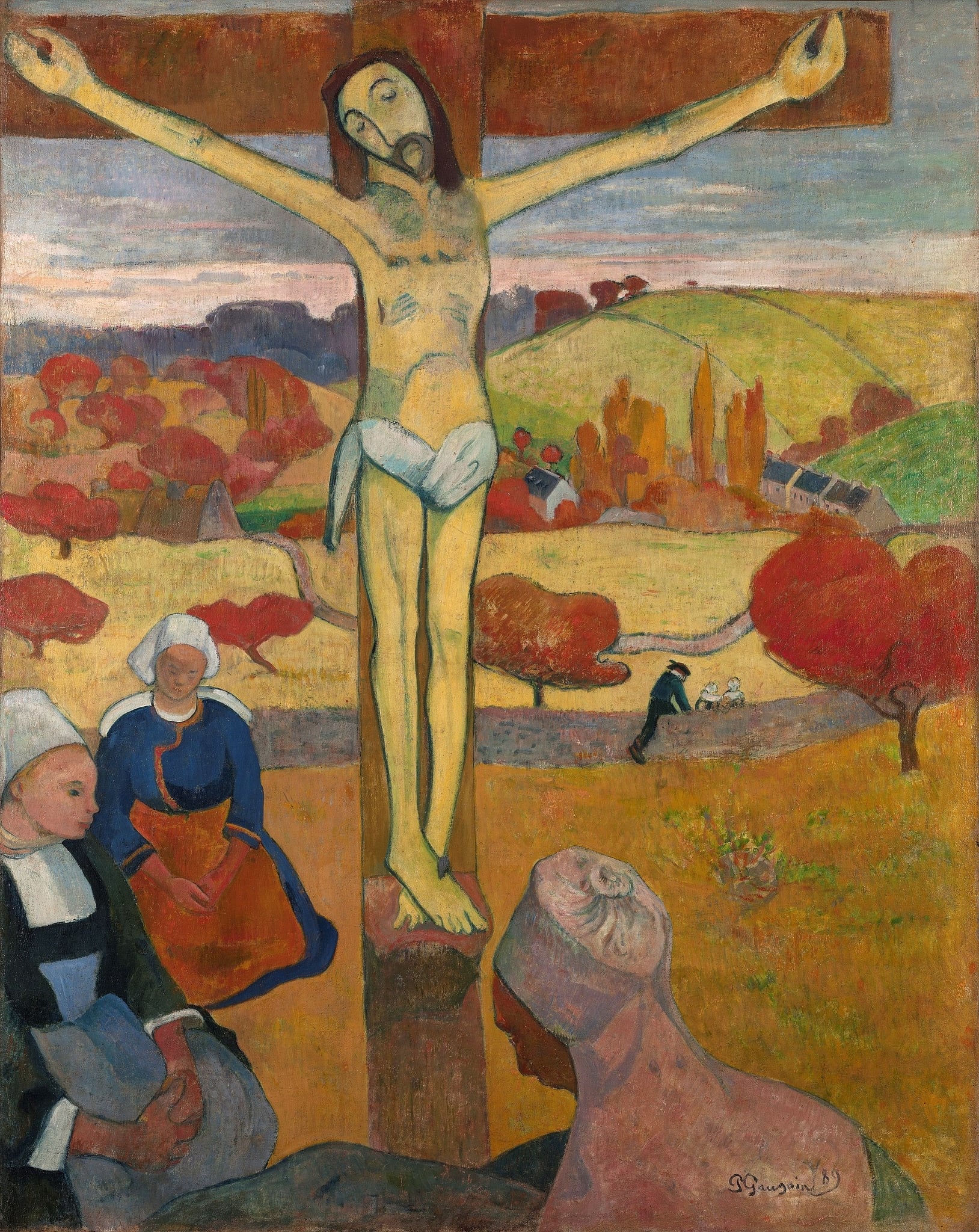
Breton calvary (wooden cross) Symbolism
A Breton calvary is a wooden roadside crucifix found across Brittany, commemorating the Crucifixion within village life. In art, it marks the Passion as present in the local landscape, merging sacred history with everyday devotion. In the late 19th century, Paul Gauguin used this motif to privilege symbolic color and feeling over naturalism.
Breton calvary (wooden cross) in The Yellow Christ
In The Yellow Christ (1889), Paul Gauguin sets the crucified Christ—a striking lemon yellow—within a rural Breton autumn landscape, attended by kneeling women in local dress. The composition functions like a Breton calvary: it relocates the Passion to contemporary Brittany and anchors devotion in an everyday field and village setting.
Through Synthetist color and Cloisonnist contours, Gauguin declares spiritual meaning over naturalism; the banded, hope‑tinged sky and simplified outlines heighten the image’s devotional charge. In this work, the calvary motif binds sacred narrative to local worship and landscape.