Halo Symbolism
Sanctity and divine favor
Common Themes
Artworks Featuring This Symbol
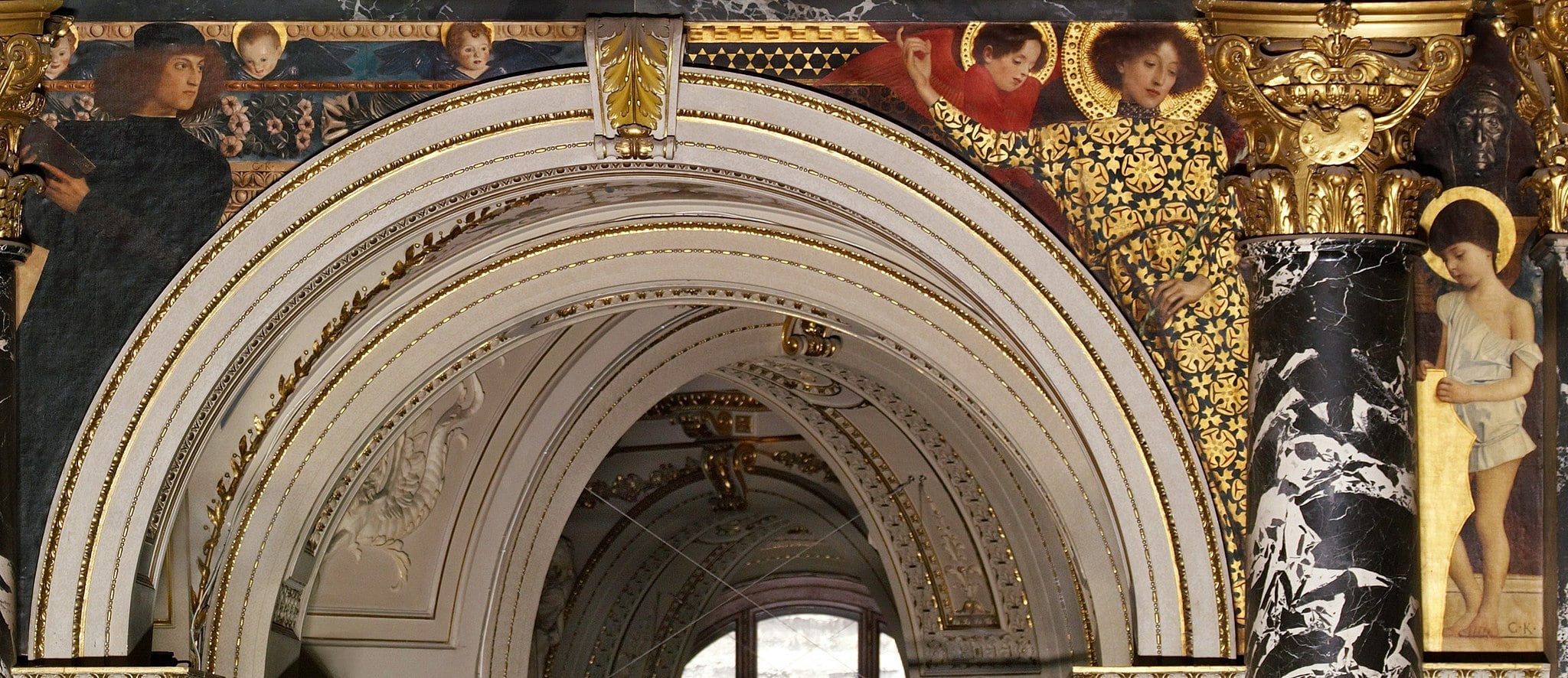
Old Italian Art
Gustav Klimt (1891)
Gustav Klimt’s <strong>Old Italian Art</strong> (1891) crowns the Kunsthistorisches Museum’s grand staircase with a shimmering allegory of trecento–quattrocento culture. A Florentine <strong>reader</strong>, a <strong>haloed</strong> saint-like figure in brocaded gold, putti, and a bust of <strong>Dante</strong> articulate a lineage of learning and piety, all fused to the building’s gilded architecture. Klimt’s patterned textiles and hovering angels already signal his move from Ringstraße historicism toward a <strong>decorative modern</strong> vision <sup>[1]</sup><sup>[2]</sup>.
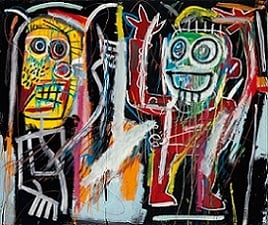
Dustheads
Jean-Michel Basquiat (1982)
Dustheads stages two electrified, mask-like figures lunging out of a saturated black field, their concentric eyes and bared teeth pumping with <strong>manic, nocturnal energy</strong>. The title’s nod to PCP (“angel dust”) fuses <strong>ecstasy and menace</strong>, turning the scene into a charged allegory of altered perception and survival in downtown New York, 1982 <sup>[1]</sup><sup>[6]</sup>.