Opera glasses Symbolism
Tools of looking and social surveillance; signify spectatorship and who controls the gaze.
Common Themes
Artworks Featuring This Symbol
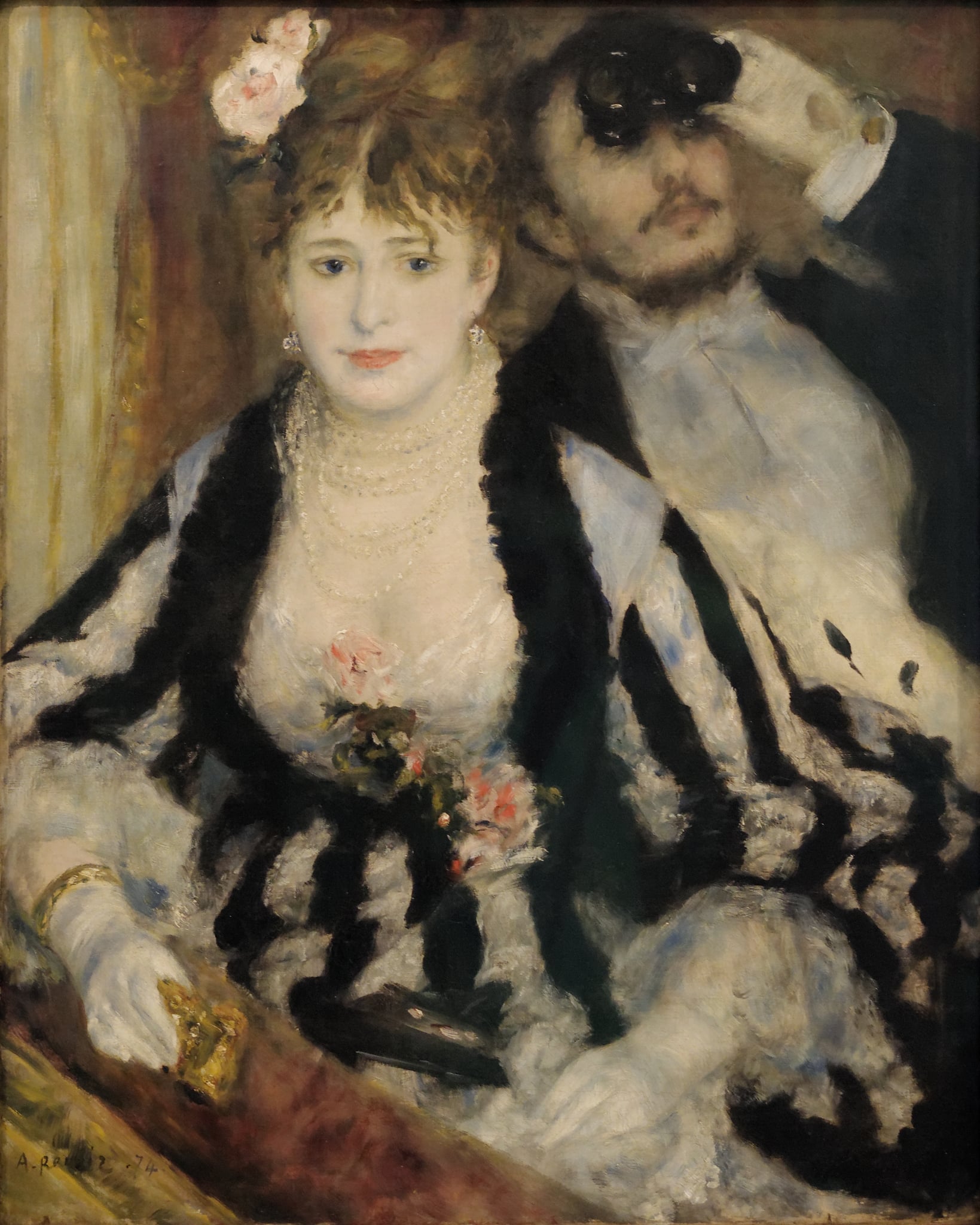
The Loge
Pierre-Auguste Renoir (1874)
Renoir’s The Loge (1874) turns an opera box into a <strong>stage of looking</strong>, where a woman meets our gaze while her companion scans the crowd through binoculars. The painting’s <strong>frame-within-a-frame</strong> and glittering fashion make modern Parisian leisure both alluring and self-conscious, turning spectators into spectacles <sup>[1]</sup><sup>[2]</sup>.
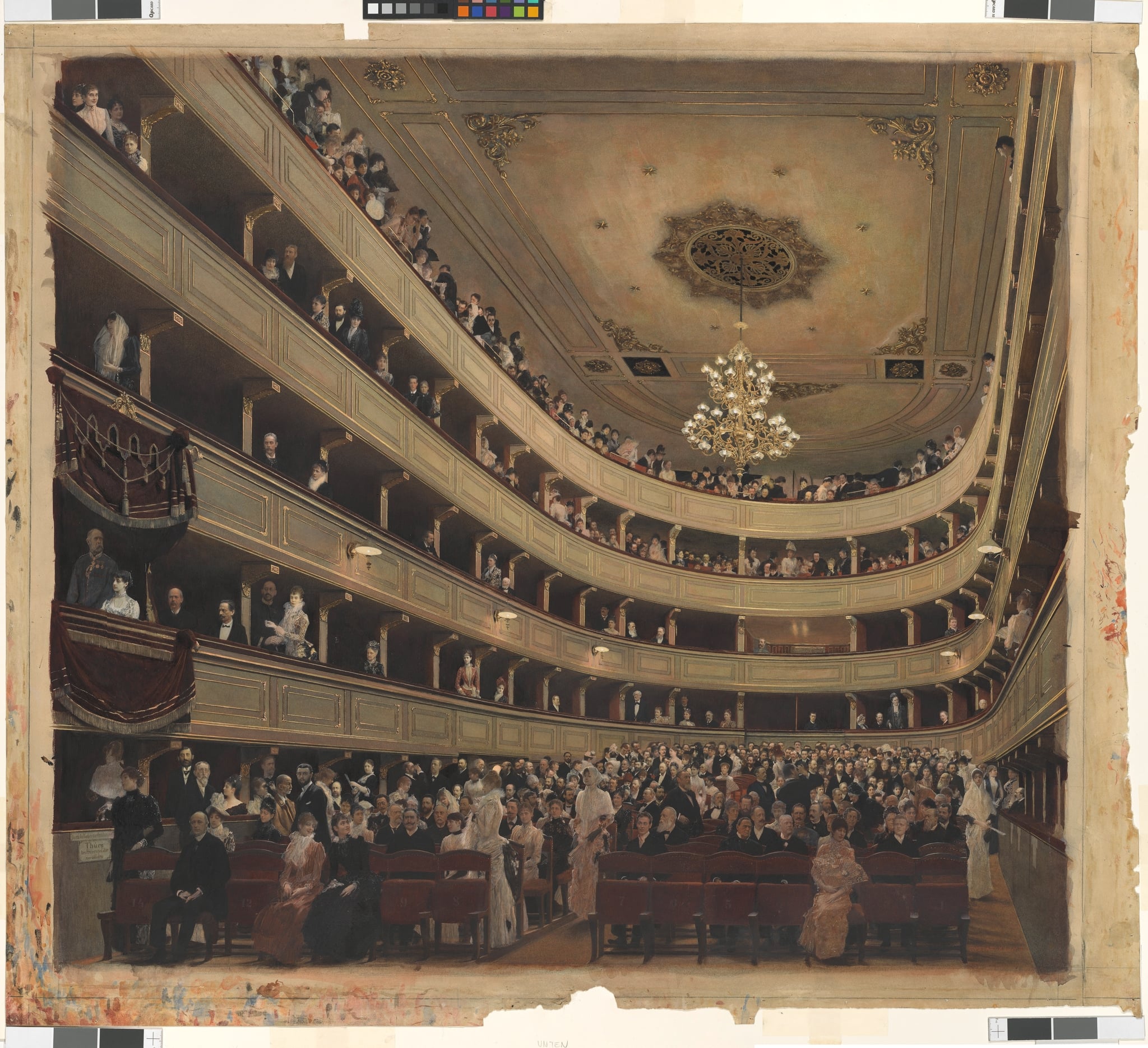
Auditorium of the Old Burgtheater
Gustav Klimt (1888–1889)
<strong>Auditorium of the Old Burgtheater</strong> turns the stage around: the audience becomes the show beneath a glowing chandelier and sweeping tiers. Klimt fuses hundreds of individualized faces into a single, wave‑like body of spectators, lit by gaslight and framed by gilded medallions. The result is a civic mirror—Vienna watching itself—at the very moment its old theater was disappearing.