The Gare Saint-Lazare: Arrival of a Train

by Claude Monet

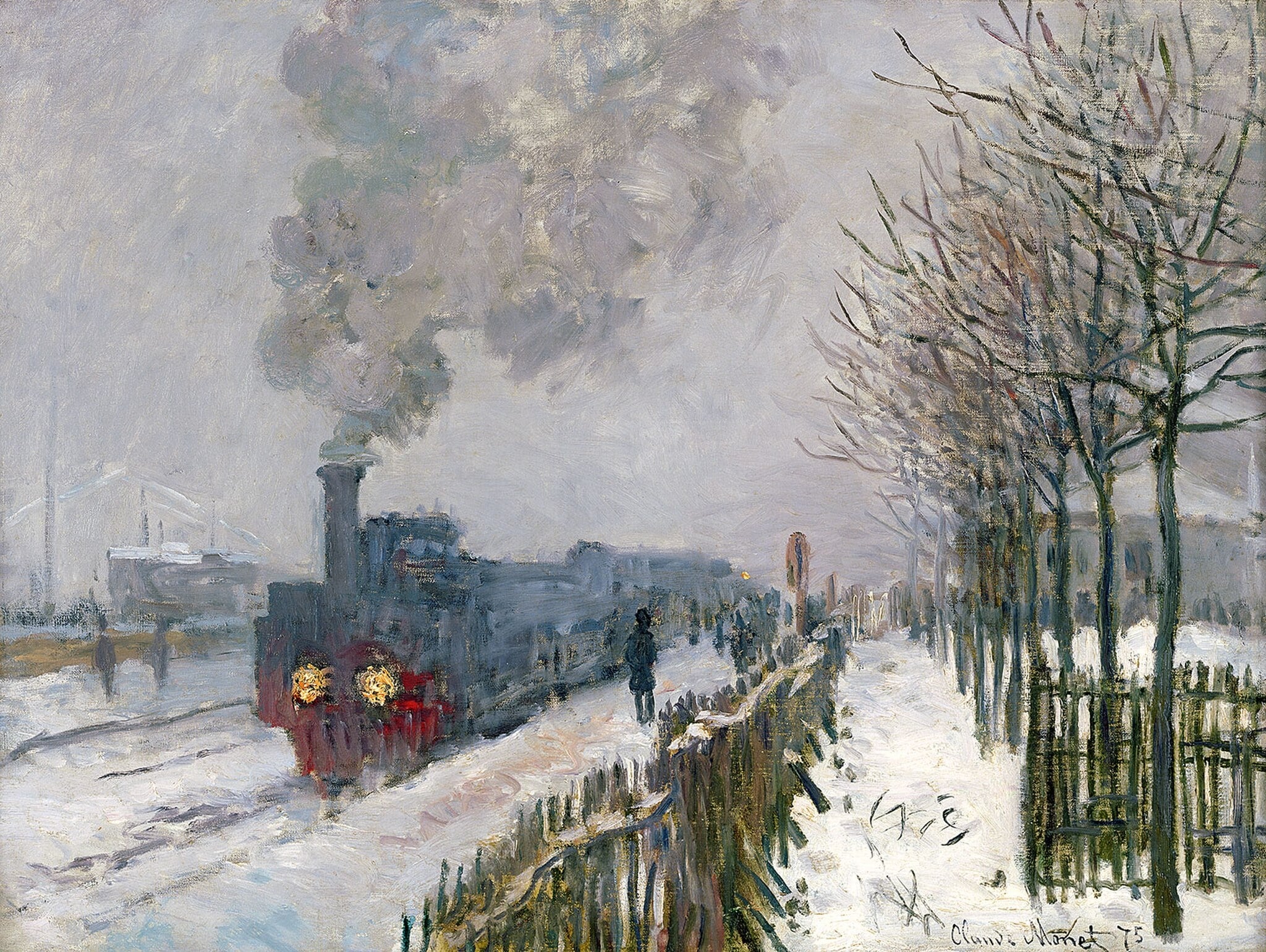
Claude Monet’s The Gare Saint-Lazare: Arrival of a Train plunges viewers into a vapor-filled nave of iron and glass, where billowing steam, hot lamps, and converging rails forge a drama of industrial modernity. The right-hand locomotive, its red buffer beam glowing, materializes out of a blue-gray atmospheric envelope, turning motion and time into visible substance [1][3].

Fast Facts

Year
1877
Medium
Oil on canvas
Dimensions
c. 82 × 101 cm (published variants)
Location
Harvard Art Museums/Fogg Museum, Cambridge, MA
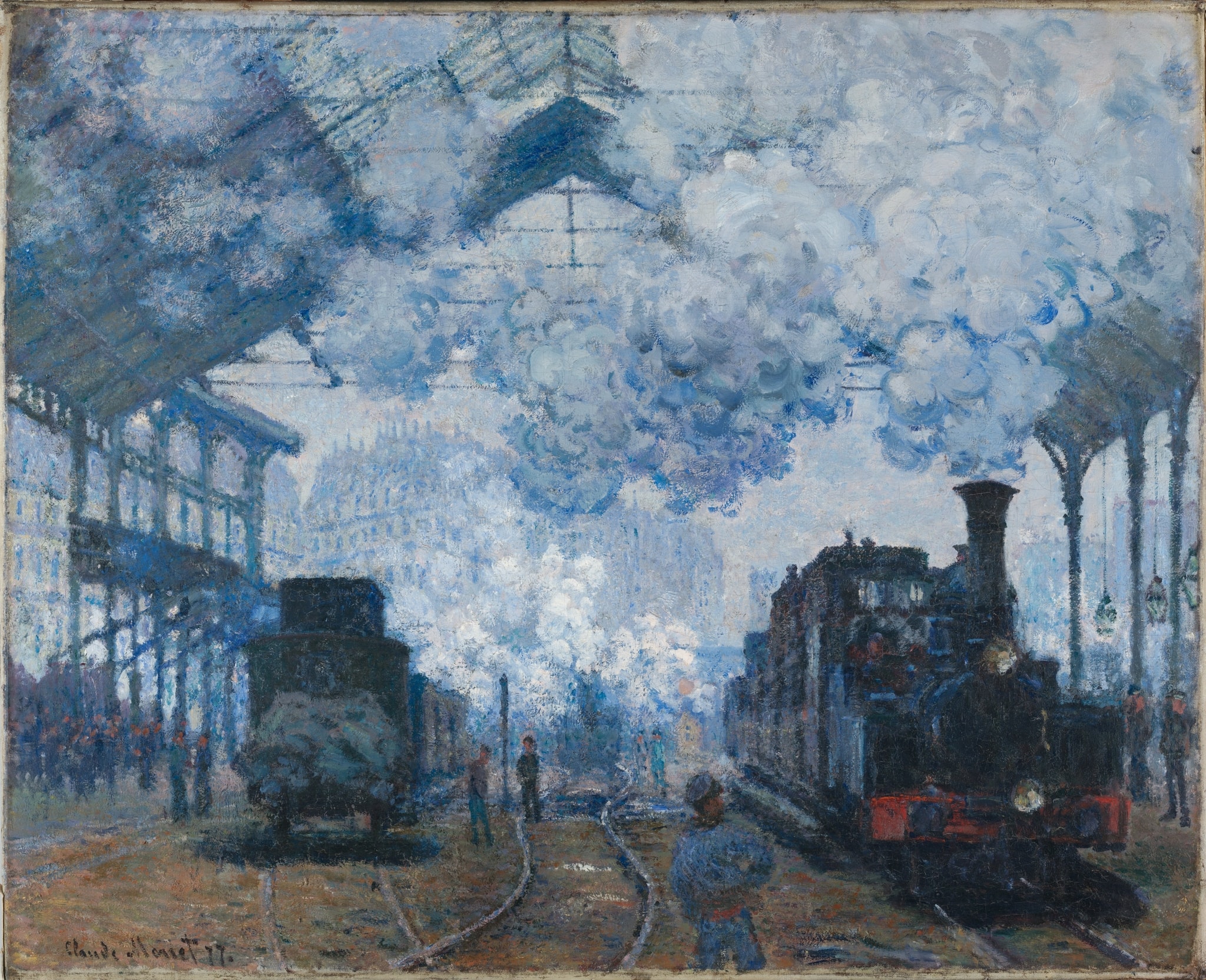
The Gare Saint-Lazare: Arrival of a Train by Claude Monet (1877) featuring Billowing steam plumes, Iron-and-glass train shed, Right-hand locomotive with red buffer and headlamp, Converging rails and switchwork

Click on any numbered symbol to learn more about its meaning

Meaning & Symbolism

Monet constructs a liturgy of modernity by staging two engines beneath the vast canopy, their steam blooming into dense, scalloped plumes that swallow girders and dissolve the distant façades. The shed’s ribs vault overhead like a nave, while hanging lamps and panes of glass register shifting light; inside this man‑made sky, clouds happen under the roof. The right‑hand locomotive, with its red front plate and bright headlamp, anchors the composition as rails split and reconverge at our feet, pulling sightlines forward even as vapor suspends them. Figures on the platforms, reduced to silhouettes, become rhythmic notes rather than protagonists—anonymous actors in a system of departures and arrivals. In this orchestration, steam is not backdrop but argument: it turns velocity into texture, sound into touch, and time into a visible medium 34. This argument is historical as well as pictorial. In 1877, the Saint‑Lazare terminal symbolized Paris’s western gateways and the industrial tempo that organized daily life. Monet worked on site with the company’s permission and exhibited a substantial group of these canvases that April, effectively codifying a serial practice that would later yield Haystacks, Poplars, and Rouen Cathedral 12. The serial logic is embedded here: the blue‑gray palette, the wet shine along the rails, the half‑legible station clock and signals imply repeatable, scheduled instants, each slightly different yet governed by the same timetable. As scholars of time have noted, Impressionism’s vaunted instant is inseparable from the nineteenth century’s standardized timekeeping; in Saint‑Lazare, the artist paints the railway’s coordinated world—clocks, lamps, switches—as an aesthetic of synchronization 5. Thus, the painting’s haze is disciplined, not vague: the iron geometry corrals the vapor, just as industrial systems channel human mobility. By transforming the shed into a secular cathedral—columns as piers, glazing as clerestory, steam as incense—Monet contends that modern faith has migrated to structures of transit and to the spectacle of engineered atmosphere 3. That is why The Gare Saint-Lazare: Arrival of a Train is important: it crystallizes Impressionism’s wager that perception is historical, that seeing in modern Paris means seeing through steam, glass, and speed. It binds progress to uncertainty—the engines blaze forward, but their forms blur at the edges—capturing a city that reveals itself by obscuring itself. In the converging tracks, the pulsing lamps, and the crowd’s smallness against the shed, Monet proposes a new sublime: not nature’s boundlessness, but the sublime of systems—industrial, temporal, urban—made sensible in a single, breathlike instant 235.

Explore Deeper with AI

Ask questions about The Gare Saint-Lazare: Arrival of a Train

Popular questions:

Powered by AI • Get instant insights about this artwork

💬 Ask questions about this artwork!

Interpretations

Time Studies: Industrial Chronometry as Aesthetic

Read through a time-studies lens, the painting turns the station into a visualization of synchronized modernity: the clock, signals, and switching tracks choreograph the crowd and engines into a punctual ballet. Monet’s flickering facture and vaporous “envelope” act like a pictorial chronograph, making durations tactile—each passage of steam thickens, thins, and shears in ways that index the schedule’s cadence. This is not a free-floating haze but a calibrated medium that translates industrial timekeeping into sensation. The image thereby aligns Impressionist instantaneity with standardized time: the repeated departures/arrivals and regulated vectors become the very grammar of seeing. The station is a machine for distributing minutes; Monet’s canvas is the instrument that measures how they feel in the eye and hand 14.

Source: André Dombrowski; Art Institute of Chicago

Architecture and the Sacred: The Secular Cathedral

Monet treats the iron-and-glass shed as a modern basilica, with ribbed trusses as vaults and glazed panels as a clerestory. Inside this nave, clouds occur under a roof; steam functions like incense, consecrating everyday transit as ritual. The inversion is crucial: landscape conventions (sky, weather, cloud) are relocated into architecture, producing a new urban sublime rooted in engineering spectacle rather than nature. Light breaks on panes, lamplight punctuates the aisles, and the engines become processional objects, their lamps akin to beacons. The shed is both container and protagonist, a sanctum where industrial power is aestheticized and communal time is kept and displayed. Monet’s sacralizing of infrastructure reframes modern mobility as a shared rite of vision 23.

Source: National Gallery, London; Musée d’Orsay

Serial Method as Modern Epistemology

Saint-Lazare inaugurates Monet’s serial procedure as a way of knowing: return to the same motif, under different atmospheric and operational states, to test what vision can hold constant and what it must let blur. In this logic, repetition is not redundancy but method. Tracks, shed ribs, and platform edges supply a geometric armature against which steam’s variability can register. The series thus becomes a laboratory for facture—dry scumble versus wet impasto, broken strokes versus pooled blue-gray—and for modern temporality, where each canvas is a scheduled “instance” in a larger timetable of looking. That the artist worked on-site and near the station underscores the methodological commitment to iteration as discovery, not mere depiction 16.

Source: Art Institute of Chicago; Harvard Art Museums

Social Modernity: Crowd, Anonymity, and Work

Monet’s platform figures read as silhouettes—“incidentals” in the parlance of Impressionist modern life—yet their very interchangeability speaks to the station’s social order. The composition suppresses portraits in favor of roles within a system: passenger, porter, engineer, inspector. This anonymization aligns with contemporary images of the Europe district by Manet and Caillebotte, where modern identity is often public, mobile, and regulated. The railway concentrates labor in view (tracks, engines, signals) while obscuring the workers who maintain it—a tension between legible infrastructure and invisible work. Monet’s emphasis on circulation over individuality stages a critique without rhetoric: the crowd appears as the byproduct—and instrument—of coordinated, urban modernity 53.

Source: National Gallery of Art (Wilson-Bareau); Musée d’Orsay

Sensorium of Technology: Steam as Interface

Here, steam is a material interface between machine and eye. It softens iron geometry, diffracts daylight, and converts noise and pressure into visible texture. The result is a technologically mediated atmosphere that simultaneously clarifies and occludes: girders vanish into scalloped plumes just as headlamps puncture the haze. Monet exploits this ambiguity to push facture toward near-abstraction without surrendering legibility; we grasp vectors (rails, vaults) while losing edges to vapor. In doing so, the canvas models a modern perceptual condition: to know the city through engineered air. Steam is not a background effect but the argument that industrial power is felt first as altered sensation 12.

Source: Art Institute of Chicago; National Gallery, London

Career Arc and Networks of Mobility

The station sequence caps Monet’s concentrated engagement with urban modernity before he pivots back to landscape motifs, many of which were themselves enabled by rail travel. Saint-Lazare thus functions as both subject and metonym: a gateway that links Paris to the peripheries where later series (Haystacks, Poplars, Rouen Cathedral) unfold. The paintings’ logistical consciousness—schedules, repeatable viewpoints, controlled access—prefigures the operational discipline required for those later cycles. In this reading, the railway is the infrastructural precondition of Impressionist seriality: it supplies the mobility, timing, and repeatability that the method demands. Monet’s modernism is therefore infrastructural as much as optical 71.

Source: Paul Hayes Tucker (NGA); Art Institute of Chicago

Related Themes

About Claude Monet

Claude Monet (1840–1926) led Impressionism’s pursuit of open-air painting and optical immediacy, especially during his Argenteuil years focused on modern leisure and light. He later developed serial studies of changing conditions, culminating in the Water Lilies cycle [2].
View all works by Claude Monet

More by Claude Monet

Haystacks Series by Claude Monet | Light, Time & Atmosphere by Claude Monet

Haystacks Series by Claude Monet | Light, Time & Atmosphere

Claude Monet

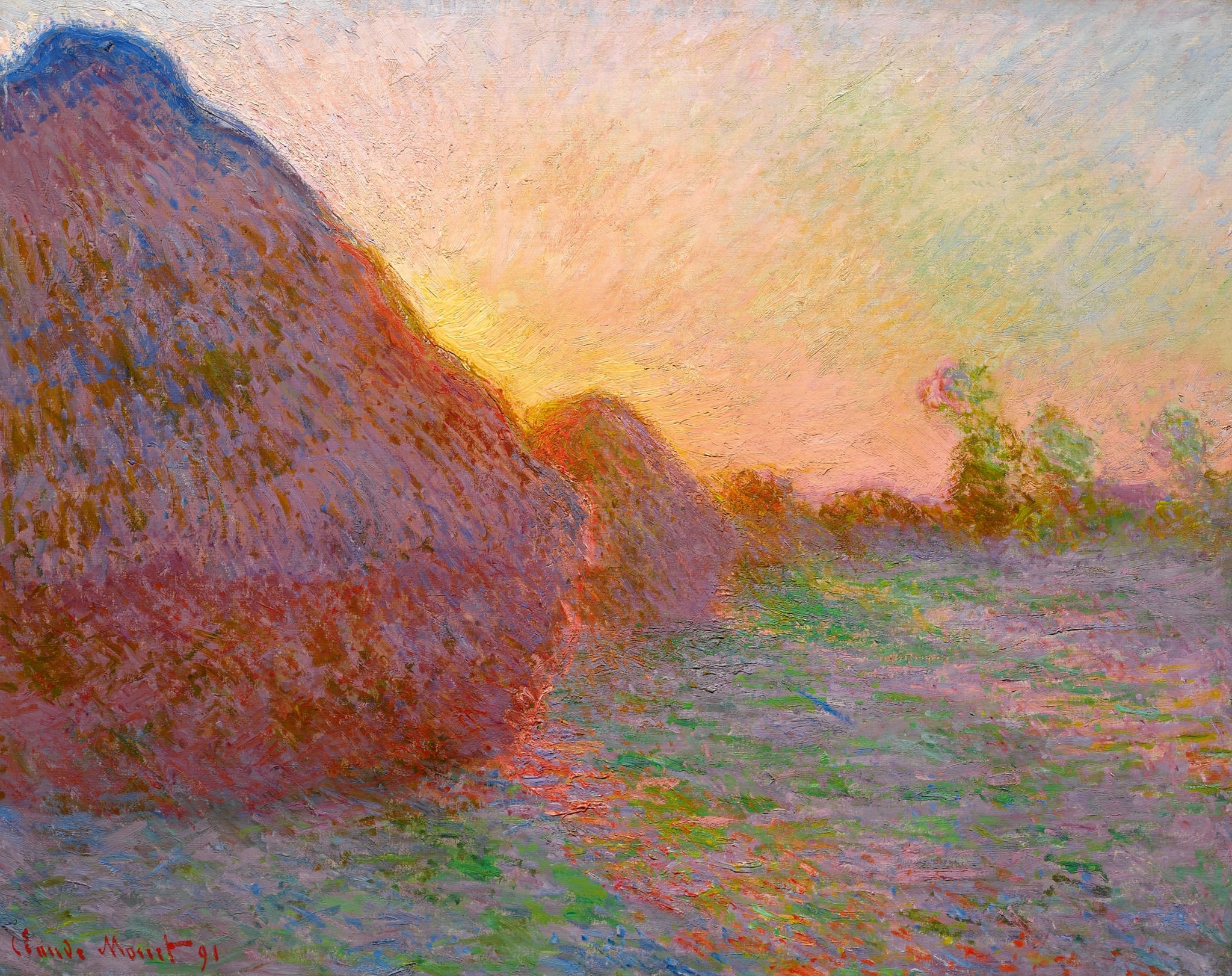
Claude Monet’s <strong>Haystacks Series</strong> transforms a routine rural subject into an inquiry into <strong>light, time, and perception</strong>. In this sunset view, the stacks swell at the left while the sun burns through the gap, making the field shimmer with <strong>apricot, lilac, and blue</strong> vibrations.
The Artist's Garden at Giverny by Claude Monet

The Artist's Garden at Giverny

Claude Monet (1900)

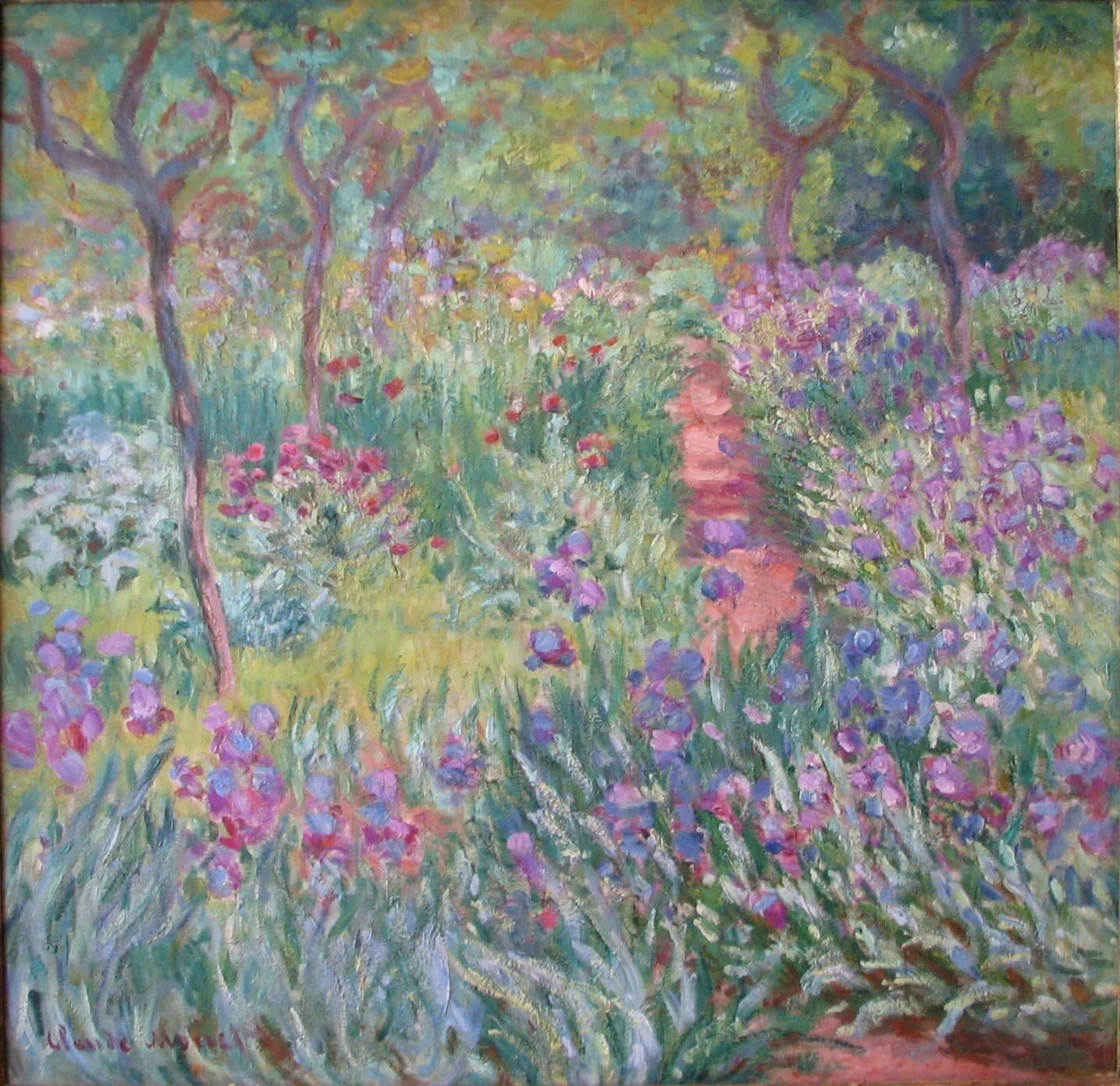
In The Artist's Garden at Giverny, Claude Monet turns his cultivated Clos Normand into a field of living color, where bands of violet <strong>irises</strong> surge toward a narrow, rose‑colored path. Broken, flickering strokes let greens, purples, and pinks mix optically so that light seems to tremble across the scene, while lilac‑toned tree trunks rhythmically guide the gaze inward <sup>[1]</sup><sup>[3]</sup>.
The Water Lily Pond by Claude Monet

The Water Lily Pond

Claude Monet (1899)

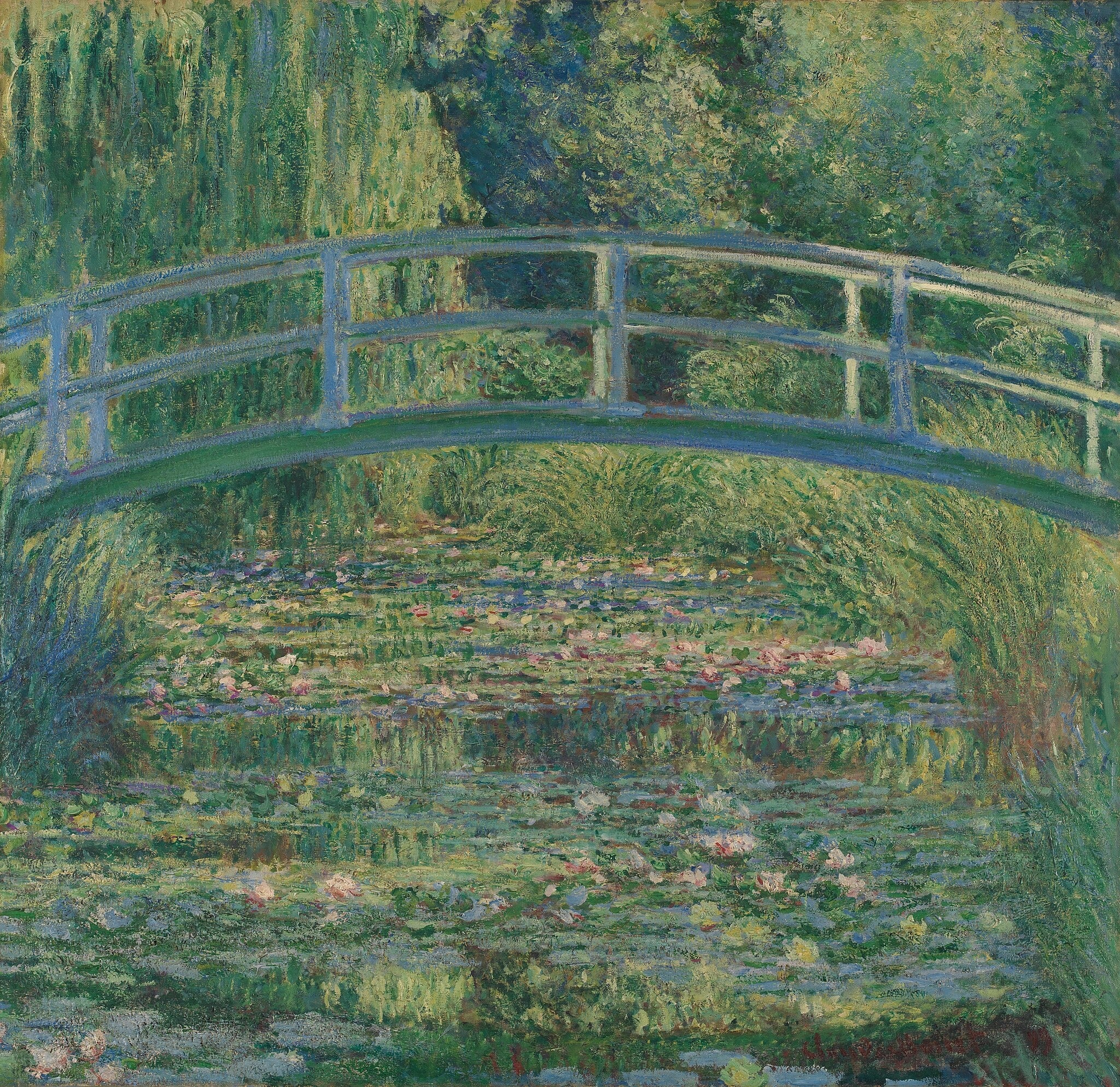
Claude Monet’s The Water Lily Pond transforms a designed garden into a theater of <strong>perception and reflection</strong>. The pale, arched <strong>Japanese bridge</strong> hovers over a surface where lilies, reeds, and mirrored willow fronds dissolve boundaries between water and sky, proposing <strong>seeing itself</strong> as the subject <sup>[1]</sup><sup>[3]</sup>.

Waterloo Bridge, Sunlight Effect by Claude Monet

Waterloo Bridge, Sunlight Effect

Claude Monet (1903 (begun 1900))

Claude Monet’s Waterloo Bridge, Sunlight Effect renders London as a <strong>lilac-blue atmosphere</strong> where form yields to light. The bridge’s stone arches persist as anchors, yet the span dissolves into mist while <strong>flecks of lemon and ember</strong> signal modern traffic crossing a city made weightless <sup>[1]</sup><sup>[2]</sup>. Vertical hints of chimneys haunt the distance, binding industry to beauty as the Thames shimmers with the same notes as the sky <sup>[1]</sup><sup>[3]</sup>.

Morning on the Seine (series) by Claude Monet

Morning on the Seine (series)

Claude Monet (1897)

Claude Monet’s Morning on the Seine (series) turns dawn into an inquiry about <strong>perception</strong> and <strong>time</strong>. In this canvas, the left bank’s shadowed foliage dissolves into lavender mist while a pale radiance opens at right, fusing sky and water into a single, reflective field <sup>[1]</sup><sup>[2]</sup>.

Woman with a Parasol by Claude Monet

Woman with a Parasol

Claude Monet (1875)

Claude Monet’s Woman with a Parasol fixes a breezy hillside instant in high, shifting light, setting a figure beneath a <strong>green parasol</strong> against a vast, vibrating sky. The low vantage and <strong>broken brushwork</strong> merge dress, clouds, and grasses into one atmosphere, while a child at the rise anchors depth and intimacy <sup>[1]</sup>. It is a manifesto of <strong>plein-air</strong> perception—painting the sensation of air in motion rather than the contours of things <sup>[2]</sup>.