French tricolor flag Symbolism
The French tricolor (blue, white, and red) is the most recognizable emblem of the French nation, rooted in Revolutionary ideals of citizenship and the public sphere. In art, it signals civic unity and collective identity, marking spaces and moments as belonging to the body politic. Its appearance often anchors scenes of modern life within a shared national frame.
French tricolor flag in Garden at Sainte-Adresse
In Pont Neuf Paris (1872), Pierre-Auguste Renoir incorporates a fluttering tricolor into a bustling urban panorama to link everyday movement to civic identity. Viewed from a high vantage, the flag punctuates the bridge’s flow of pedestrians and carriages and the rippling Seine, transforming a familiar city view into an image of public belonging and communal grace.
Common Themes
Artworks Featuring This Symbol
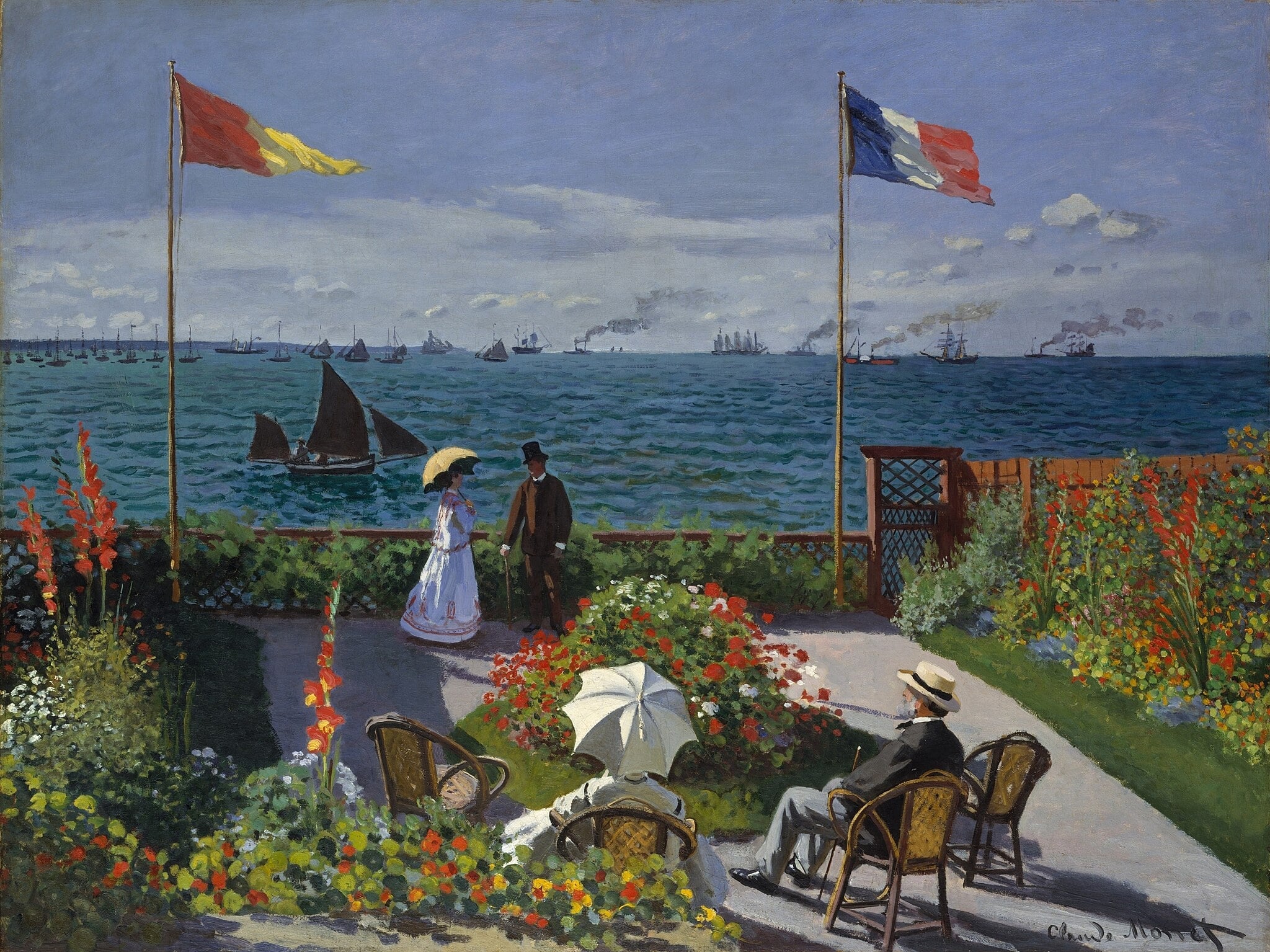
Garden at Sainte-Adresse
Claude Monet (1867)
<strong>Garden at Sainte-Adresse</strong> distills a breezy seaside terrace into a lucid design of color bands and flagpoles, where private leisure meets a busy, modern harbor. Claude Monet binds <strong>bourgeois ease</strong> (wicker chairs, parasol, promenade) to <strong>national and nautical identity</strong> (the French tricolor and a regatta/signal pennant) while sail and steam share the channel. Light and wind animate every element, turning a family terrace into a statement about modern life and its swift transitions <sup>[1]</sup><sup>[3]</sup><sup>[5]</sup>.
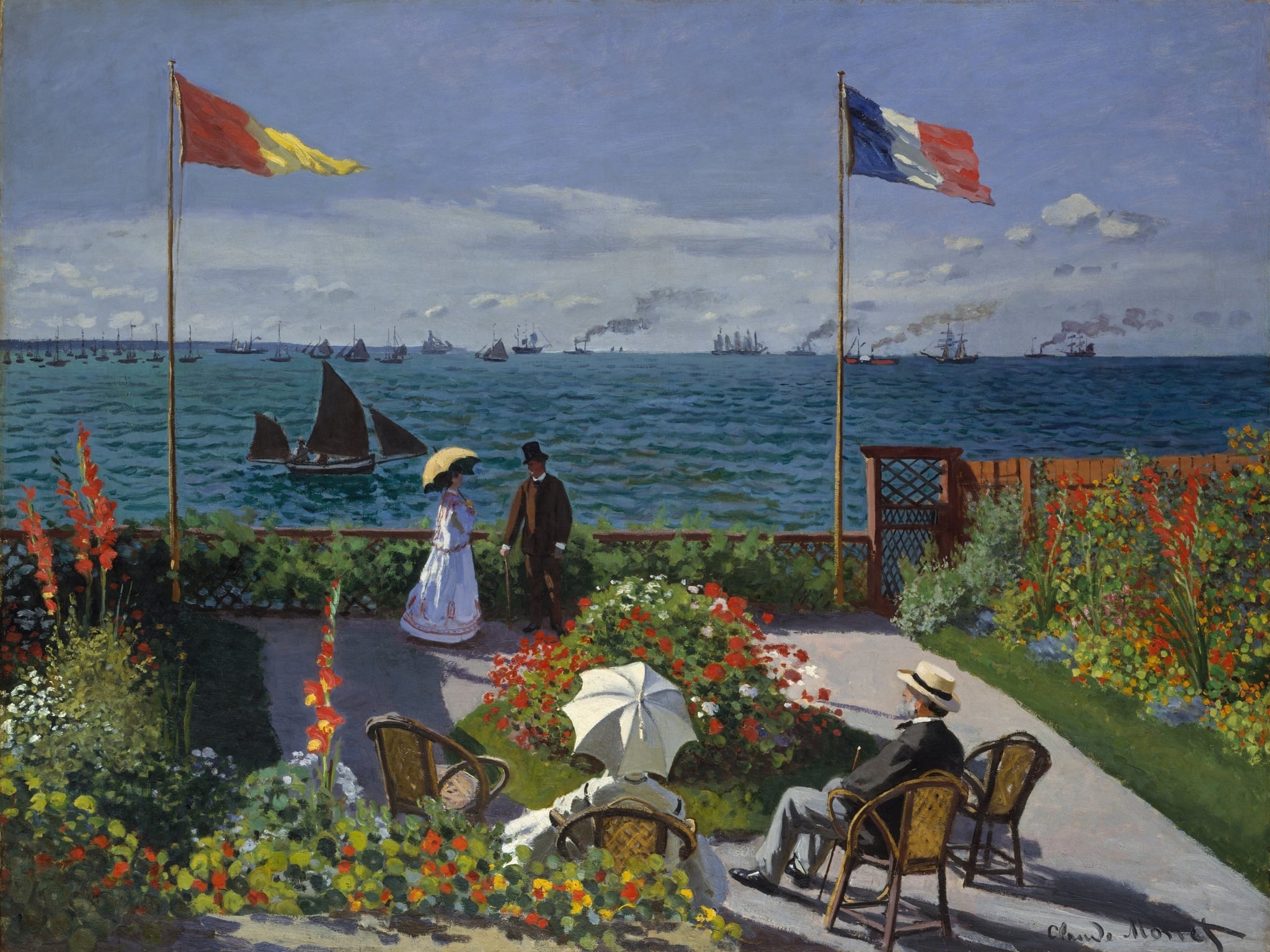
The Terrace at Sainte-Adresse
Claude Monet (1867)
Claude Monet’s The Terrace at Sainte-Adresse stages a sunlit garden against the Channel, where <strong>bourgeois leisure</strong> unfolds between two wind-whipped flags and a horizon shared by <strong>sail and steam</strong>. Bright flowers, wicker chairs, and a white parasol form an ordered foreground, while the busy harbor and snapping tricolor project a confident, modern nation. The banded design—garden, sea, sky—reveals Monet’s early <strong>Japonisme</strong> and his drive to fuse fleeting light with a consciously structured composition <sup>[1]</sup>.
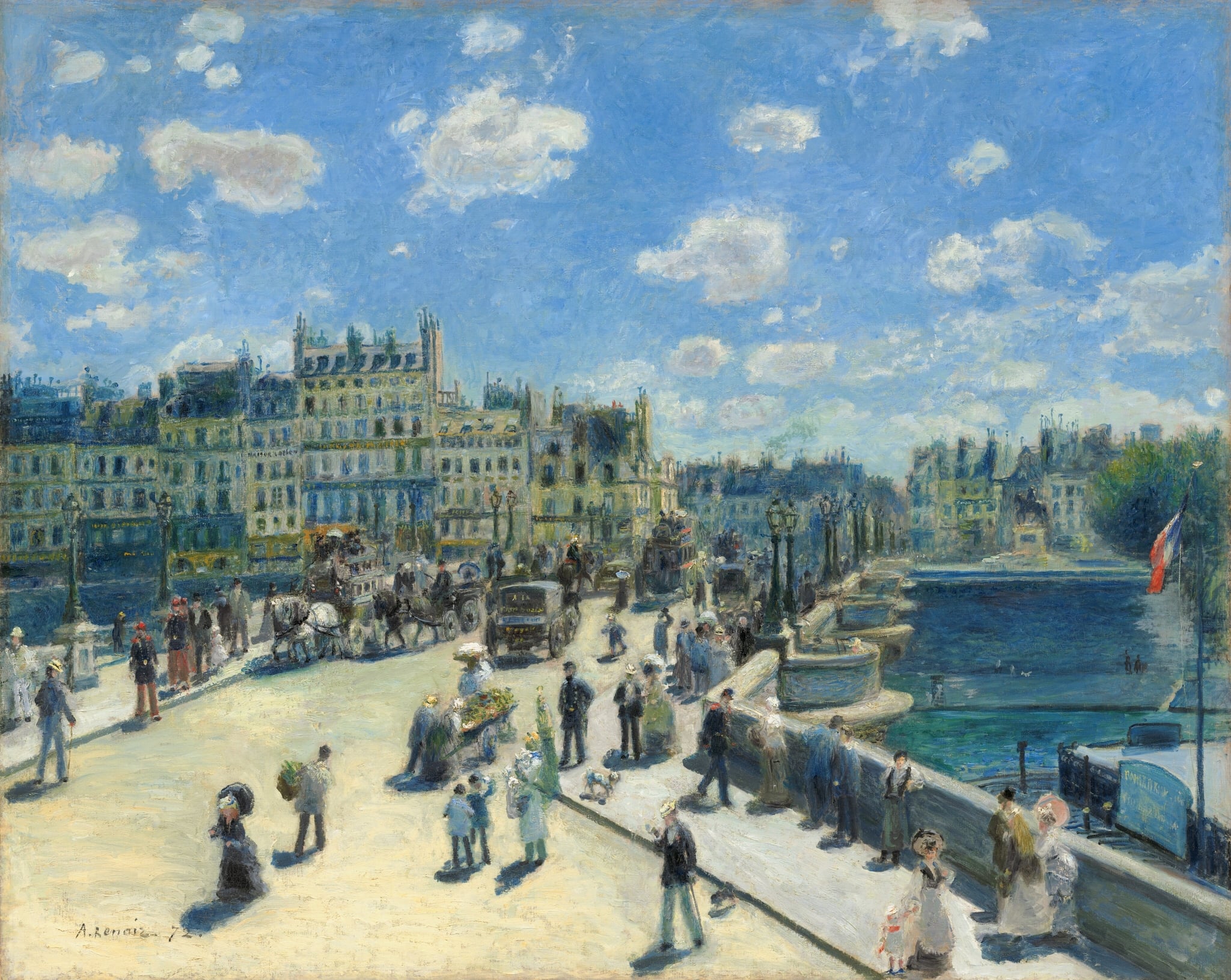
Pont Neuf Paris
Pierre-Auguste Renoir (1872)
In Pont Neuf Paris, Pierre-Auguste Renoir turns the oldest bridge in Paris into a stage where <strong>light</strong> and <strong>movement</strong> bind a city back together. From a high perch, he orchestrates crowds, carriages, gas lamps, the rippling Seine, and a fluttering <strong>tricolor</strong> so that everyday bustle reads as civic grace <sup>[1]</sup>.