Garden at Sainte-Adresse

by Claude Monet

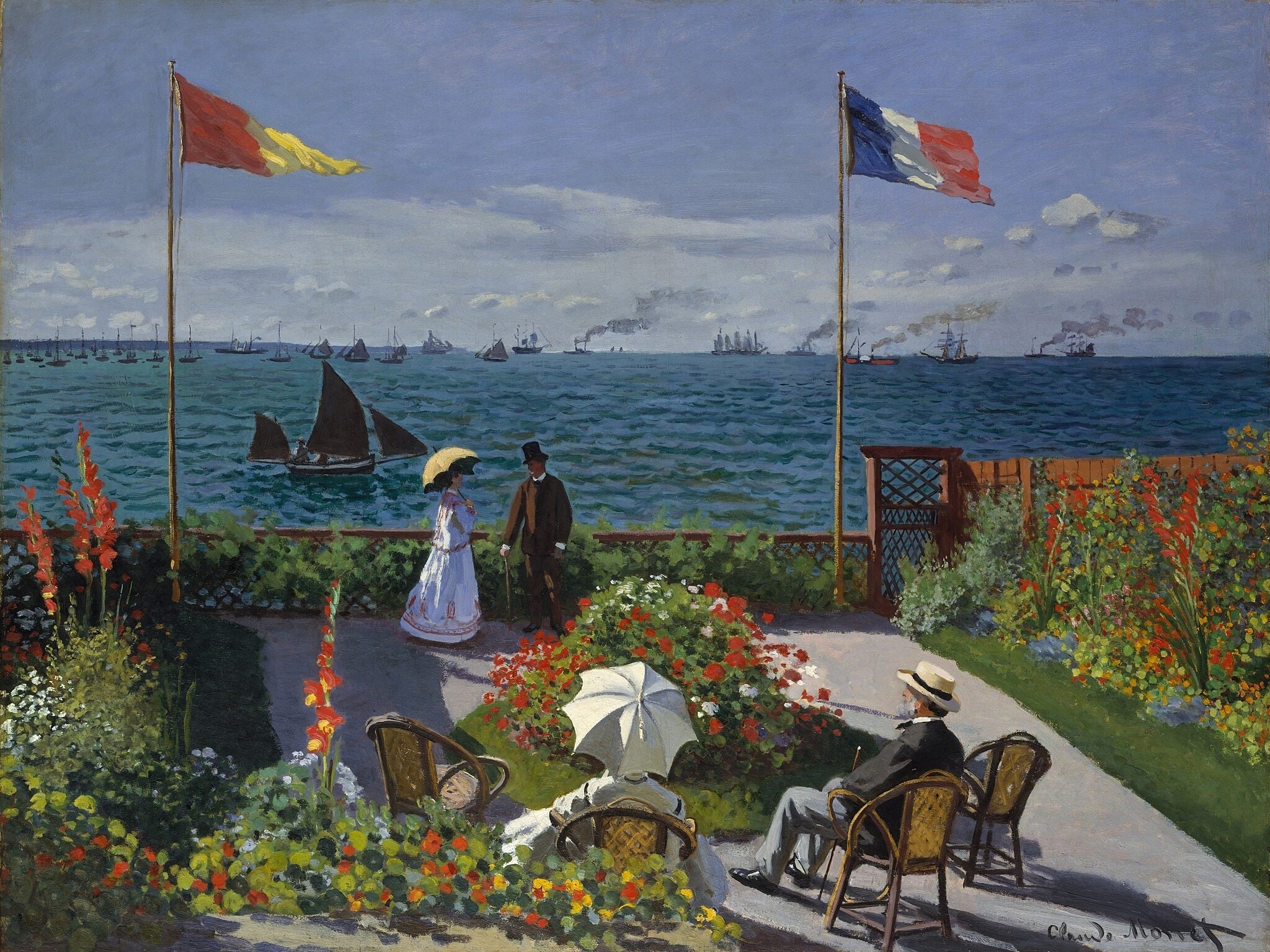
Garden at Sainte-Adresse distills a breezy seaside terrace into a lucid design of color bands and flagpoles, where private leisure meets a busy, modern harbor. Claude Monet binds bourgeois ease (wicker chairs, parasol, promenade) to national and nautical identity (the French tricolor and a regatta/signal pennant) while sail and steam share the channel. Light and wind animate every element, turning a family terrace into a statement about modern life and its swift transitions [1][3][5].
💰

Market Value

$120-170 million

How much is Garden at Sainte-Adresse worth?

Study Print Studio

Create a personal study print

Build a companion study sheet around the part of this painting that speaks to you most. Choose a detail, shape an interpretation, and walk away with something personal and display-worthy.

Fast Facts

Year
1867
Medium
Oil on canvas
Dimensions
98.1 × 129.9 cm
Location
The Metropolitan Museum of Art, New York
See all Claude Monet paintings in New York
Garden at Sainte-Adresse by Claude Monet (1867) featuring French tricolor flag, Red–yellow regatta/signal pennant, Steamships with smokestacks

Click on any numbered symbol to learn more about its meaning

Meaning & Symbolism

Monet organizes the canvas as stacked registers—terrace, hedge, sea, sky—interrupted by the two flagpoles and the railing’s strict horizontals. This gridded flatness, indebted to Japanese prints, lets chromatic chords do narrative work: poppy reds and golden yellows flare in the flowerbeds, then reappear at full scale in the flags, so domestic pleasure resonates with public identity 124. At left, the red‑and‑yellow triangular pennant reads as a regatta or signal flag, a local nautical sign rather than a second nation; at right, the French tricolor anchors the scene in civic space and, by witty analogy, mirrors Monet’s tripartite bands of land, water, and sky 15. Within this framework, figures embody a code of mid‑century leisure—wicker chairs set to face the water, a white parasol cooling the foreground, a strolling couple poised by the balustrade—gestures of possession and ease that Monet knowingly stages with family sitters during a summer when his own finances were precarious and his partner, Camille, awaited their first child in Paris. The painting performs calm while acknowledging contingency; the breeze that fills the flags also roughens the channel and quickens the clouds, keeping the picture’s serenity provisional 1. The harbor tells the second half of the story. Sailboats tack across the middle distance while multiple steamers drive past, their funnels trailing smoke in rhythmic plumes. Monet does not moralize; he juxtaposes sail and steam as coexisting facts, compressing tradition and industry into a single field of vision. That coexistence is the drama: a bourgeois terrace curated for looking meets a seaway engineered for circulation. Light mediates the contact zone—vivid, high‑key hues in the flowers; cool violets and greens in shadow; broken, wind‑chopped strokes on the water—an optical language that makes modernity legible as sensation rather than doctrine 123. The effect is a manifesto in plain sight: modern life is aesthetic, civic, and technological all at once. Even the compositional timing is modern—the flags snap, steam unspools, boats traverse the horizon—so the picture insists on presentness. In 1867, before Impressionism’s formal debut, Monet forges a template: an art of contemporaneity, structured by Japonisme’s clarity and devoted to lived light. The result converts a family terrace in Sainte‑Adresse into a portable public claim that the pleasures of looking, the identities of place, and the engines of progress are inseparable in the France of the Second Empire and its coastal resorts 12345.

Explore Deeper with AI

Ask questions about Garden at Sainte-Adresse

Popular questions:

Powered by AI • Get instant insights about this artwork

💬 Ask questions about this artwork!

Interpretations

Social Optics: Terrace vs. Shore

Read against Monet’s nearby The Beach at Sainte‑Adresse, this terrace becomes a viewing platform that edits out labor. On the beach canvas, fishermen, tides, and working craft dominate; here, a clipped lawn and wicker chairs regulate who looks and how. The pairing exposes a classed optical regime: leisure sees the sea as spectacle; labor sees it as workplace. Steamers in the middle distance stitch the two spheres, but their smoke is absorbed as picturesque incident. Monet isn’t moralizing—he’s mapping how infrastructure and fashion co‑produce a resort economy. The terrace’s elevated rail literally privatizes the horizon, while the harbor’s engineered channel globalizes it. That friction—ownership of the view versus ownership of circulation—structures the painting’s calm surface.

Source: Art Institute of Chicago

Japonisme as Structure, Not Décor

The painting’s authority comes from a print-derived syntax: stacked registers, emphatic verticals, and abrupt spatial “jumps” learned from Japanese color woodcuts. John House noted Monet even joked about a related canvas as his “Chinese painting with flags,” pointing to this transnational grammar. Here, the grid doesn’t just flatten; it modulates attention, letting color chords shuttle motifs from parterre to pennant without deep perspective. Such medium reflexivity reorients landscape from mimetic depth to designed surface, where seeing itself is the subject. In 1867, before the Impressionist group’s debut, Monet converts Japonisme from collectible taste into structural method—an engine for modern vision rather than an exotic garnish.

Source: John House via Michelle Facos; The Metropolitan Museum of Art

Flags as Semiotic System, Not Two Nations

The right flag is the French tricolor, a civic anchor; the left, a red‑yellow triangular pennant, aligns with 19th‑century maritime signaling/regatta practice rather than a national emblem. Read together, they encode a compound identity: nation plus harbor culture. This pairing converts the terrace into a liminal zone where public symbolism (state) meets local procedure (nautical traffic). The chromatic echo—poppy beds answering the flags—folds those codes into domestic décor, making identity legible as color and breeze. Rather than allegory, Monet offers operational signage in action, a live system of communication stitched into leisure and landscape.

Source: The Metropolitan Museum of Art; Flags of the World (vexillology)

Tempo of Modernity: Presentness as Form

Monet composes an image you can time with your body: flags snap mid‑gust, steam draws out in discrete plumes, sails pivot across a calibrated horizon. These are not narrative episodes but temporal cues that insist on the present tense. The high‑key palette and broken strokes translate motion into optical sensation, so modernity appears not as doctrine but as felt speed—a coastal corollary to urban flux. Light becomes the metronome that synchronizes terrace, harbor, and sky, a phenomenological answer to the Second Empire’s accelerated travel and communication networks.

Source: The Metropolitan Museum of Art (Heilbrunn: Impressionism); The Met object entry

Staged Calm: Family, Finance, and Performance

The sitters are likely Monet’s relatives, posed amid prosperous leisure as his partner Camille remained in Paris, pregnant, and his finances frayed. The garden’s order and the figures’ composed gazes operate like stagecraft, projecting stability the painter did not possess. Yet the breeze that agitates flags and water keeps the serenity provisional. This biographical dissonance sharpens the reading: the terrace is an aspirational set where familial belonging, social approval, and artistic ambition are rehearsed. Monet transforms private contingency into a public image of ease, revealing how modern painting could perform calm while acknowledging the weather of uncertainty.

Source: The Metropolitan Museum of Art (curatorial commentary & audio)

Related Themes

About Claude Monet

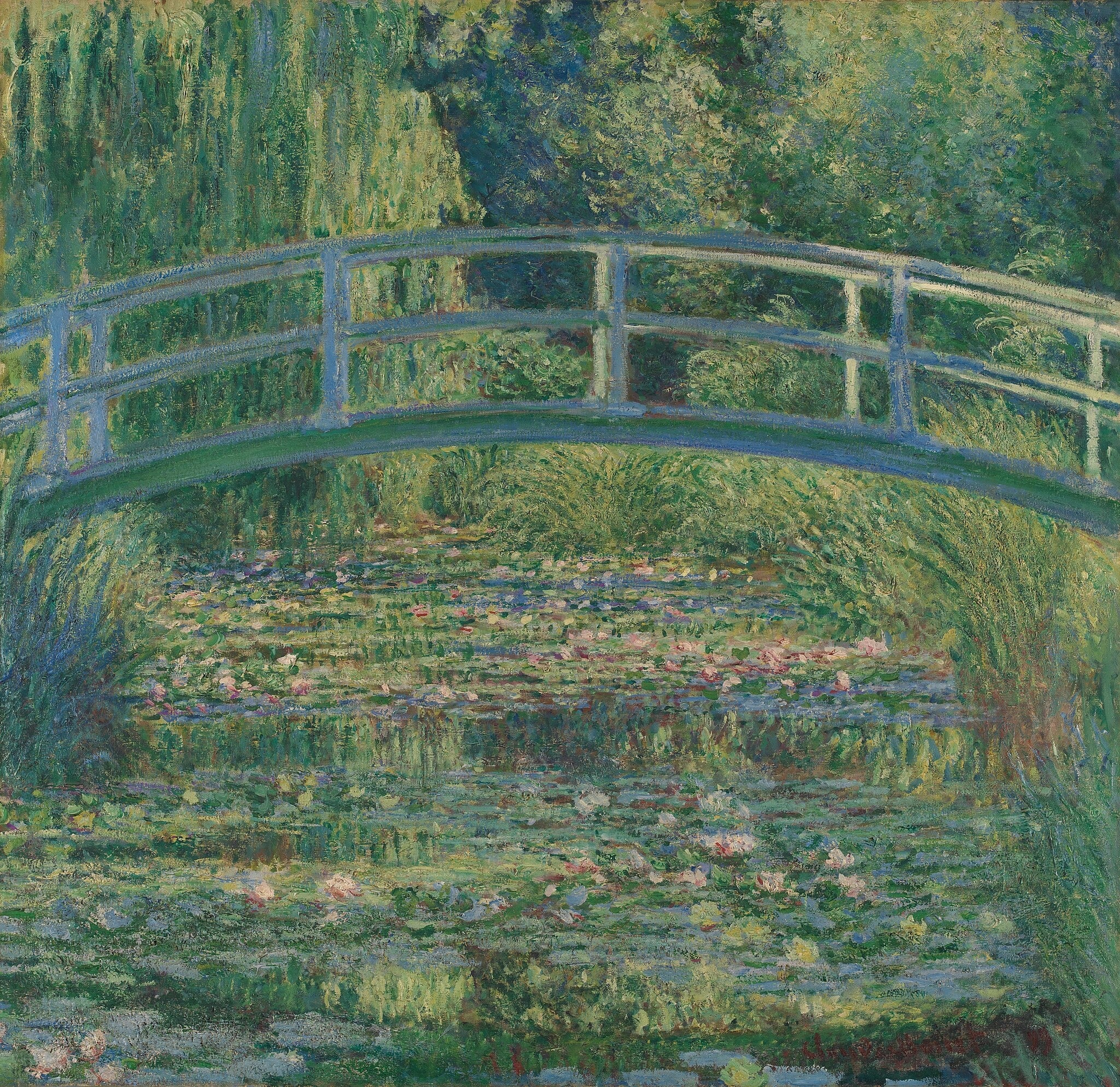
Claude Monet (1840–1926) led Impressionism’s pursuit of open-air painting and optical immediacy, especially during his Argenteuil years focused on modern leisure and light. He later developed serial studies of changing conditions, culminating in the Water Lilies cycle [2].
View all works by Claude Monet

More by Claude Monet

Boating by Claude Monet

Boating

Claude Monet (1887)

Monet’s Boating crystallizes modern leisure as a drama of perception, setting a slim skiff and two pale dresses against a field of dark, mobile water. Bold cropping, a thrusting oar, and the complementary flash of hull and foliage convert a quiet outing into an experiment in <strong>modern vision</strong> and the <strong>materiality of water</strong> <sup>[1]</sup><sup>[2]</sup>.

The Thames below Westminster by Claude Monet

The Thames below Westminster

Claude Monet (about 1871)

Claude Monet’s The Thames below Westminster turns London into <strong>light-made architecture</strong>, where Parliament’s mass dissolves into mist and the river shivers with <strong>industrial motion</strong>. Tugboats, a timber jetty with workers, and the rebuilt Westminster Bridge assert a modern city whose power is felt through atmosphere more than outline <sup>[1]</sup>.

Haystacks Series by Claude Monet | Light, Time & Atmosphere by Claude Monet

Haystacks Series by Claude Monet | Light, Time & Atmosphere

Claude Monet

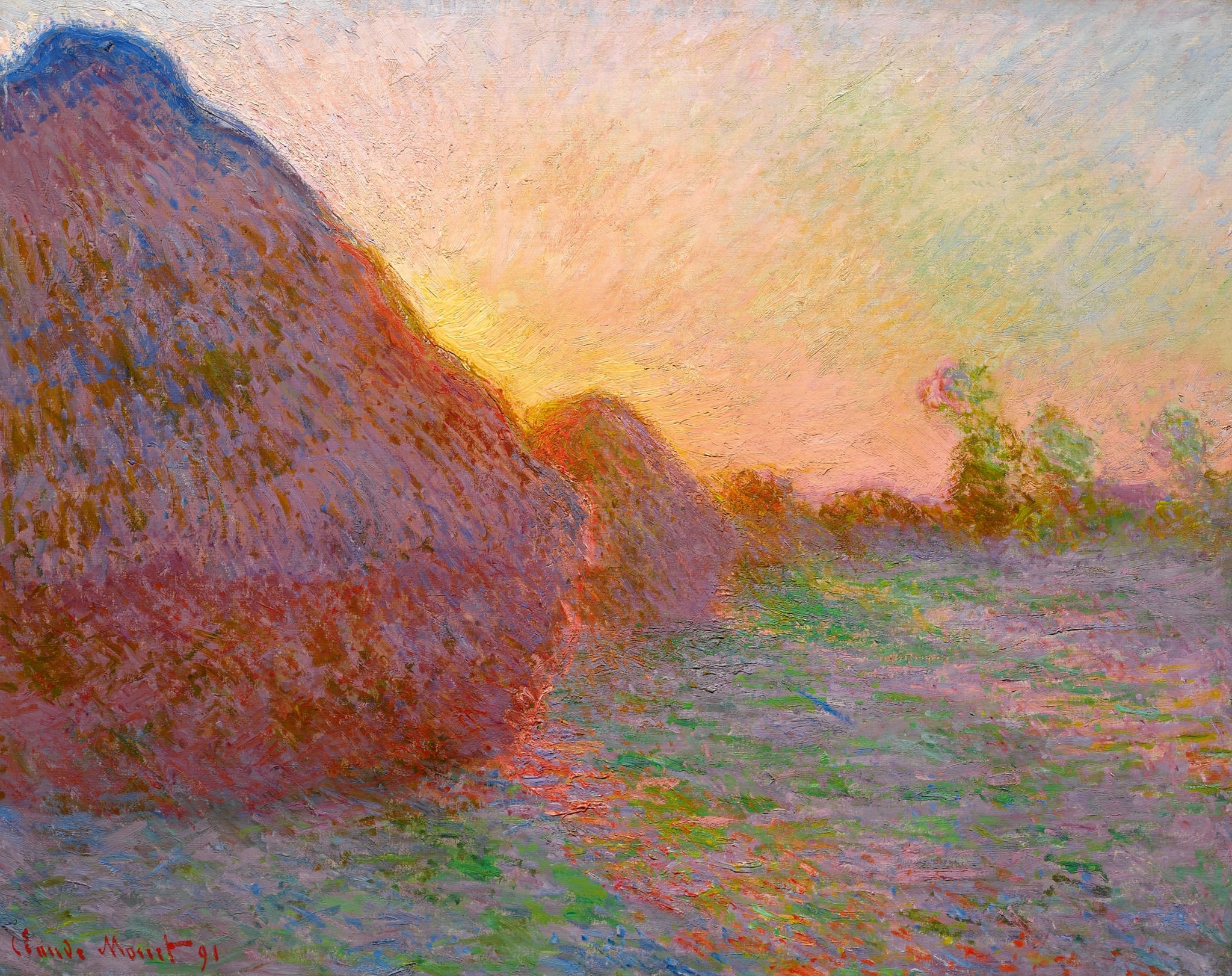
Claude Monet’s <strong>Haystacks Series</strong> transforms a routine rural subject into an inquiry into <strong>light, time, and perception</strong>. In this sunset view, the stacks swell at the left while the sun burns through the gap, making the field shimmer with <strong>apricot, lilac, and blue</strong> vibrations.
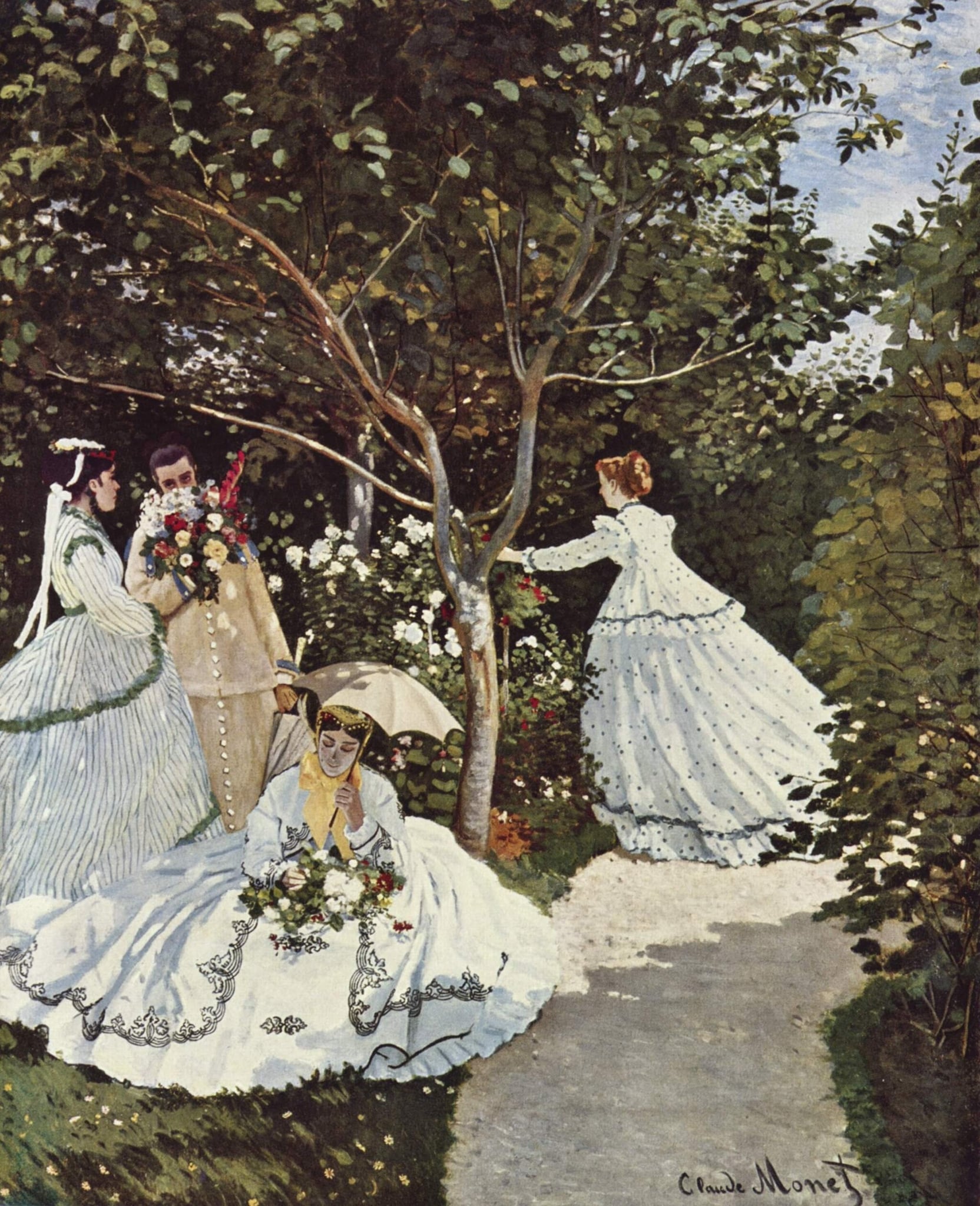
Women in the Garden by Claude Monet

Women in the Garden

Claude Monet (1866–1867)

Claude Monet’s Women in the Garden choreographs four figures in a sunlit bower to test how <strong>white dresses</strong> register <strong>dappled light</strong> and shadow. The path, parasol, and clipped flowers frame a modern ritual of leisure while turning fashion into an instrument of <strong>perception</strong>. The scene reads less as portraiture than as a manifesto for painting the <strong>momentary</strong> outdoors <sup>[1]</sup><sup>[3]</sup>.
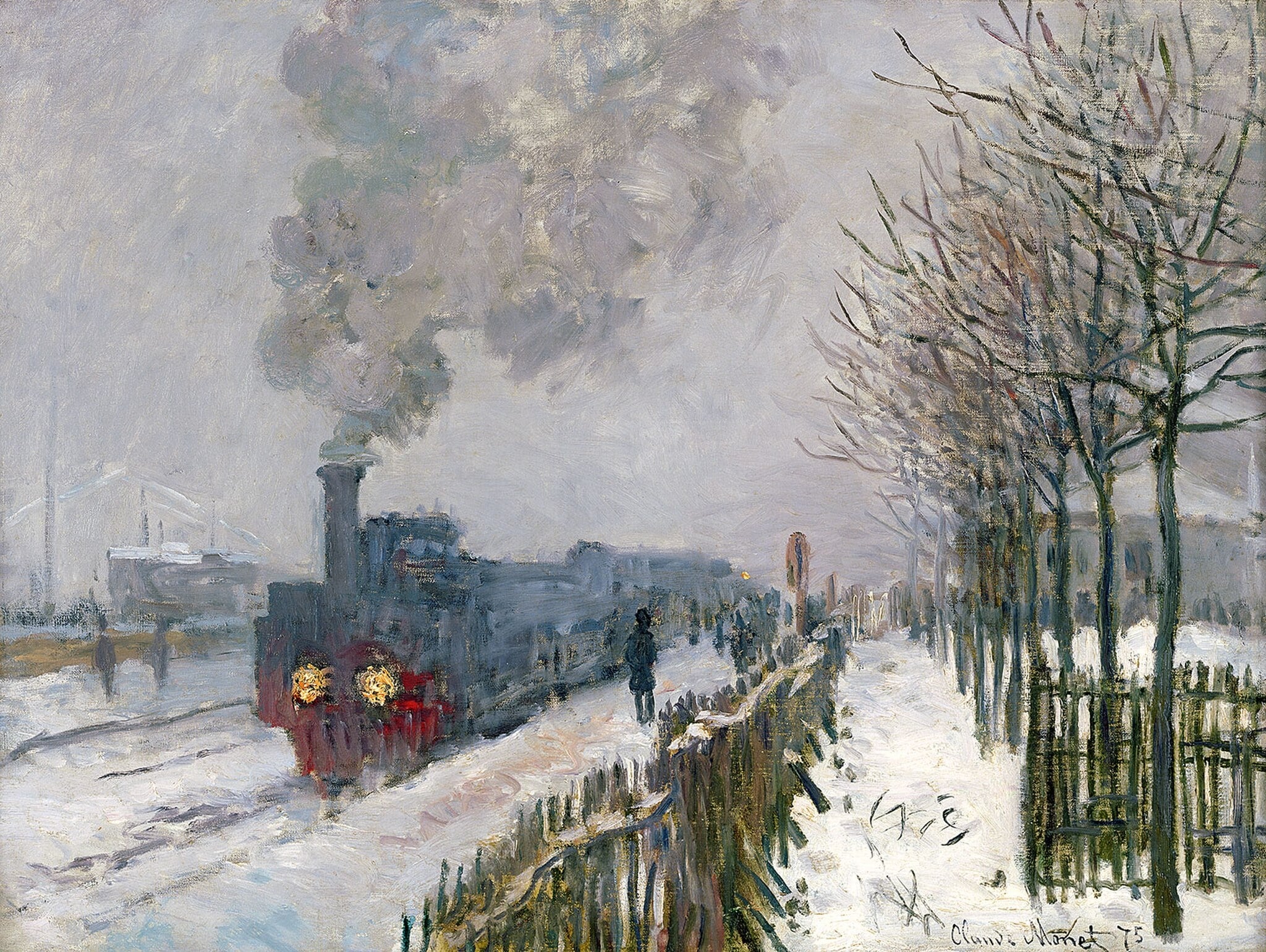
The Train in the Snow (The Locomotive) by Claude Monet

The Train in the Snow (The Locomotive)

Claude Monet (1875)

Claude Monet’s The Train in the Snow (The Locomotive) (1875) turns a suburban winter platform into a study of <strong>modernity absorbed by atmosphere</strong>. The engine’s twin yellow headlights and a smear of red push through a world of greys and violets as steam fuses with the low sky, while the right-hand fence and bare trees drill depth and cadence into the scene <sup>[1]</sup><sup>[4]</sup>. Monet fixes not an object but a <strong>moment of perception</strong>, where industry seems to dematerialize into weather <sup>[1]</sup><sup>[2]</sup>.
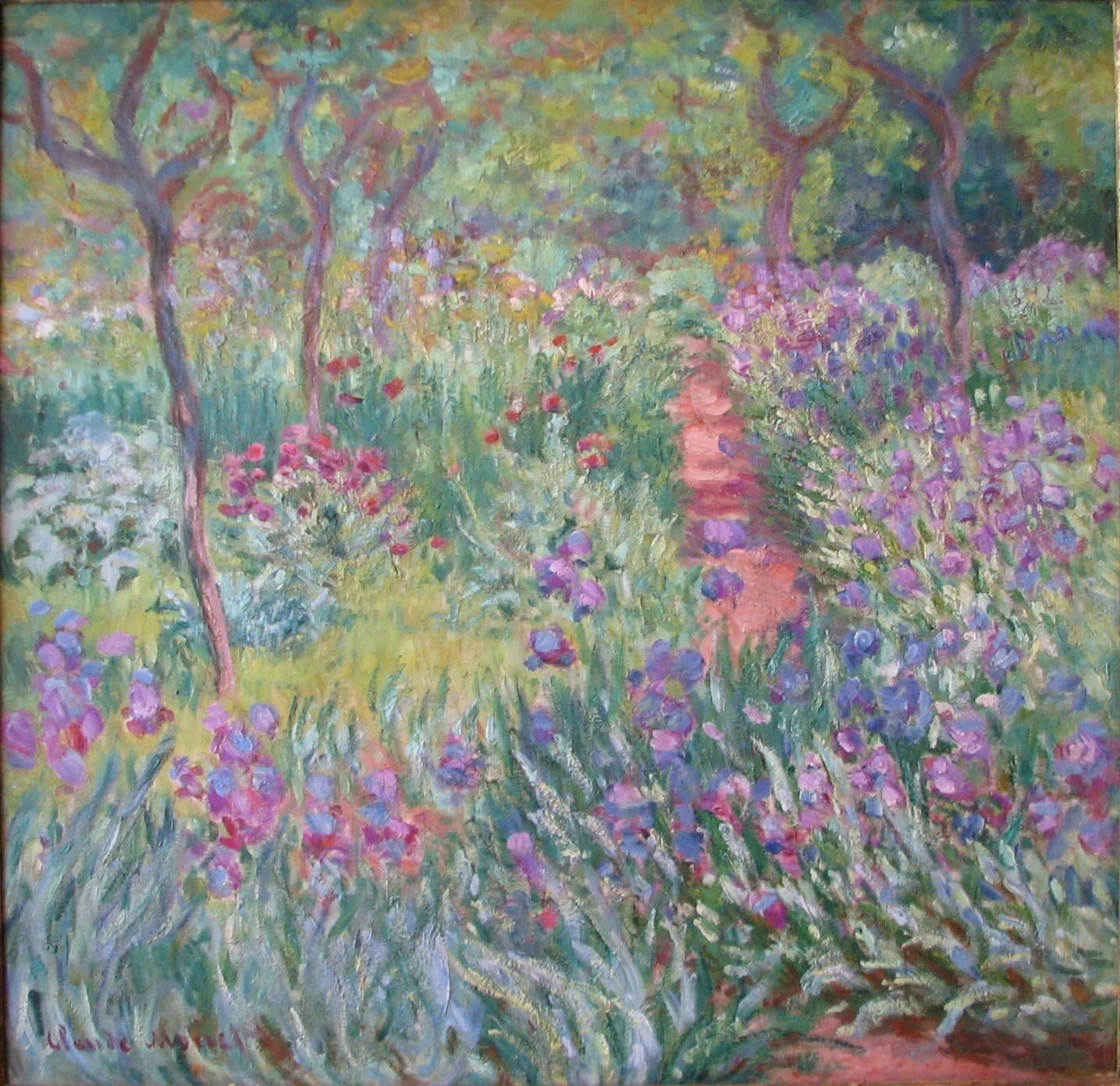
The Artist's Garden at Giverny by Claude Monet

The Artist's Garden at Giverny

Claude Monet (1900)

In The Artist's Garden at Giverny, Claude Monet turns his cultivated Clos Normand into a field of living color, where bands of violet <strong>irises</strong> surge toward a narrow, rose‑colored path. Broken, flickering strokes let greens, purples, and pinks mix optically so that light seems to tremble across the scene, while lilac‑toned tree trunks rhythmically guide the gaze inward <sup>[1]</sup><sup>[3]</sup>.