Death
Death symbolism in Western art ranges from theological promise to existential dread, mobilizing motifs from crucifixes to flayed carcasses and anamorphic skulls to interrogate mortality, violence, and the fragile persistence of meaning.
Member Symbols
Featured Artworks
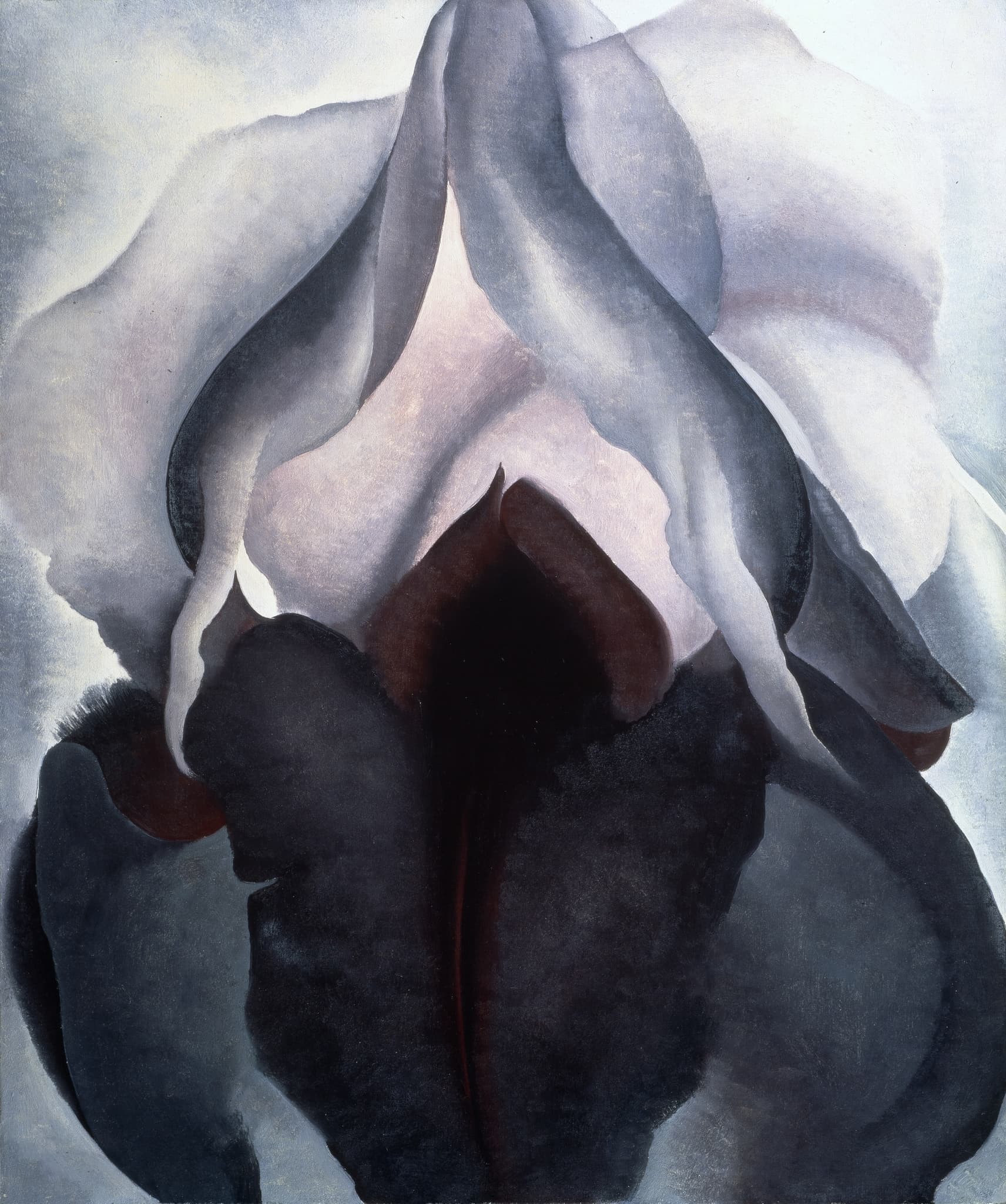
Black Iris
Georgia O’Keeffe (1926)
In Black Iris, Georgia O’Keeffe enlarges a single bloom to monumental scale, transforming it into <strong>luminous gradients</strong> and <strong>architectural folds</strong>. The pale, misted upper petals frame a velvety, wine‑black center, turning a familiar flower into an immersive field of <strong>abstraction and depth</strong> <sup>[1]</sup><sup>[3]</sup>.
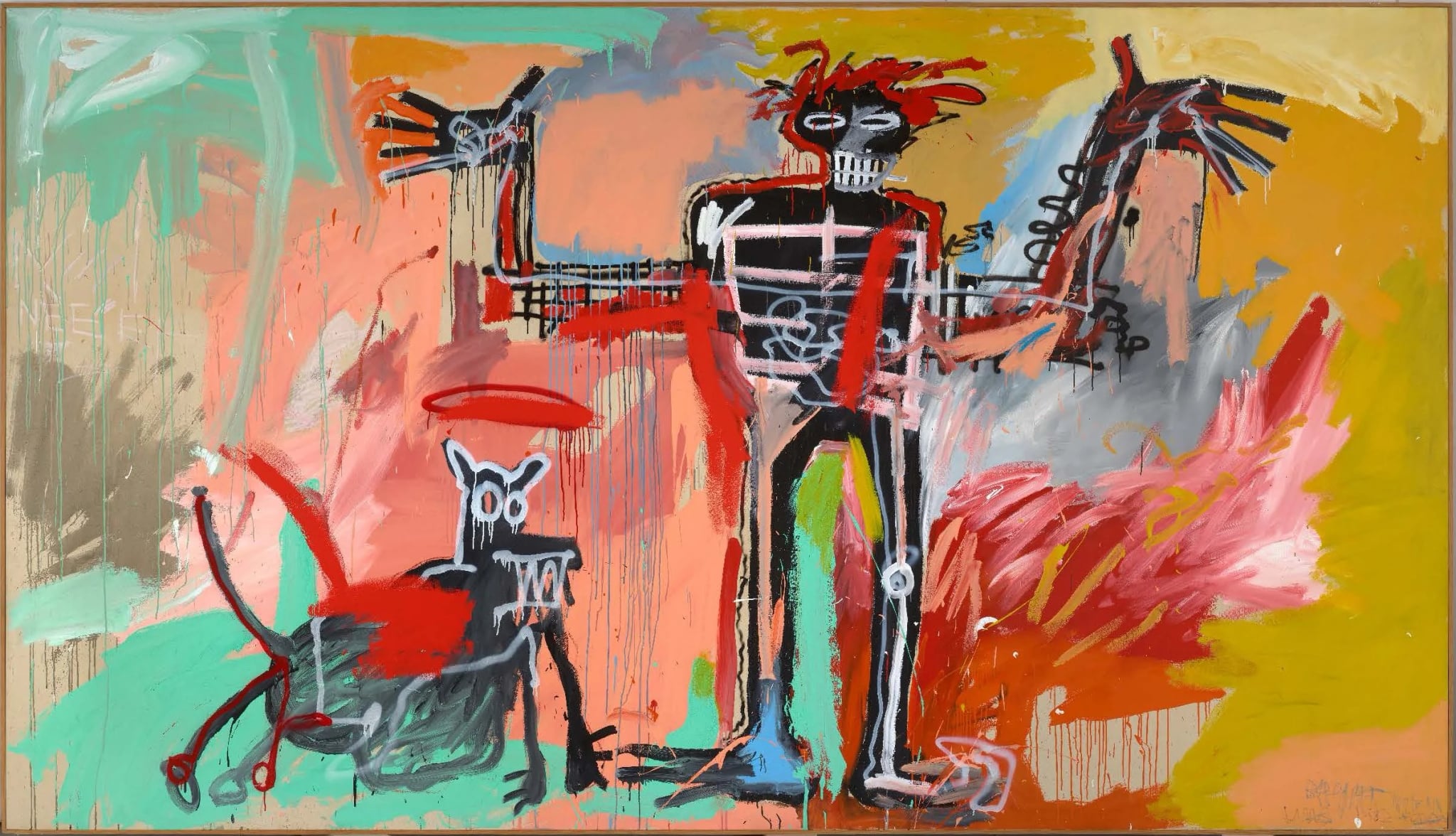
Boy and Dog in a Johnnypump
Jean-Michel Basquiat (1982)
<strong>Boy and Dog in a Johnnypump</strong> (1982) stages a wiry, x‑rayed boy with arms flung wide beside a bristling dog under a red arc that doubles as a halo and the spray of a New York <strong>johnnypump</strong>. Basquiat fuses <strong>childhood play</strong> and <strong>urban peril</strong> in a heat‑drenched field of oranges, yellows, and mints, emblematic of his breakthrough <strong>Neo‑Expressionism</strong> and the 1982 Modena cycle. The painting asserts Black presence and survival with ferocious scale and velocity <sup>[1]</sup><sup>[2]</sup>.
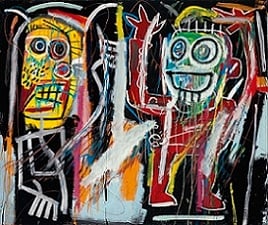
Dustheads
Jean-Michel Basquiat (1982)
Dustheads stages two electrified, mask-like figures lunging out of a saturated black field, their concentric eyes and bared teeth pumping with <strong>manic, nocturnal energy</strong>. The title’s nod to PCP (“angel dust”) fuses <strong>ecstasy and menace</strong>, turning the scene into a charged allegory of altered perception and survival in downtown New York, 1982 <sup>[1]</sup><sup>[6]</sup>.
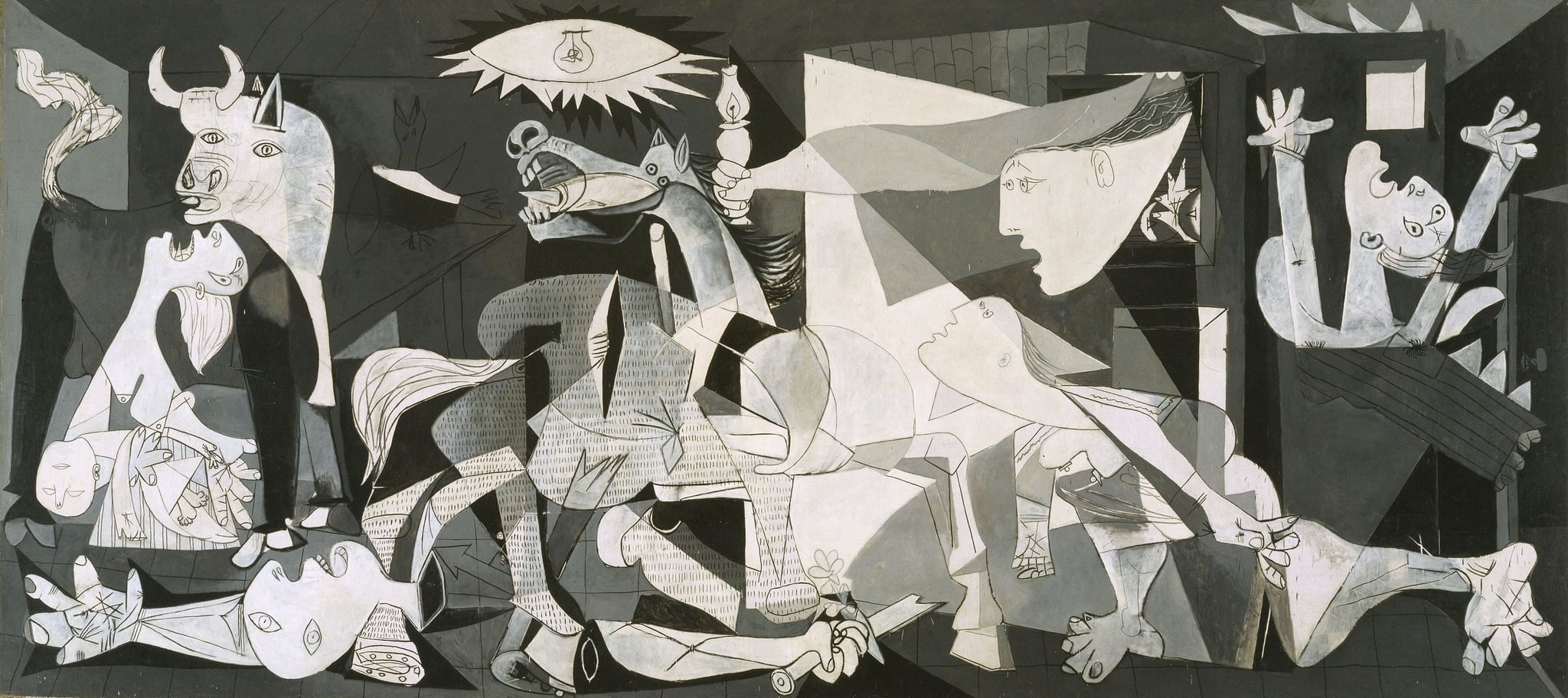
Guernica
Pablo Picasso (1937)
Guernica is a monumental, monochrome indictment of modern war, compressing a town’s annihilation into a frantic tangle of bodies, beasts, and light. Across the canvas, a <strong>shrieking horse</strong>, a <strong>stoic bull</strong>, a <strong>weeping mother with her dead child</strong>, and a <strong>fallen soldier</strong> stage a civic tragedy rather than a heroic battle. The harsh <strong>electric bulb</strong> clashes with a fragile <strong>oil lamp</strong>, turning the scene into a stark drama of terror and witness.
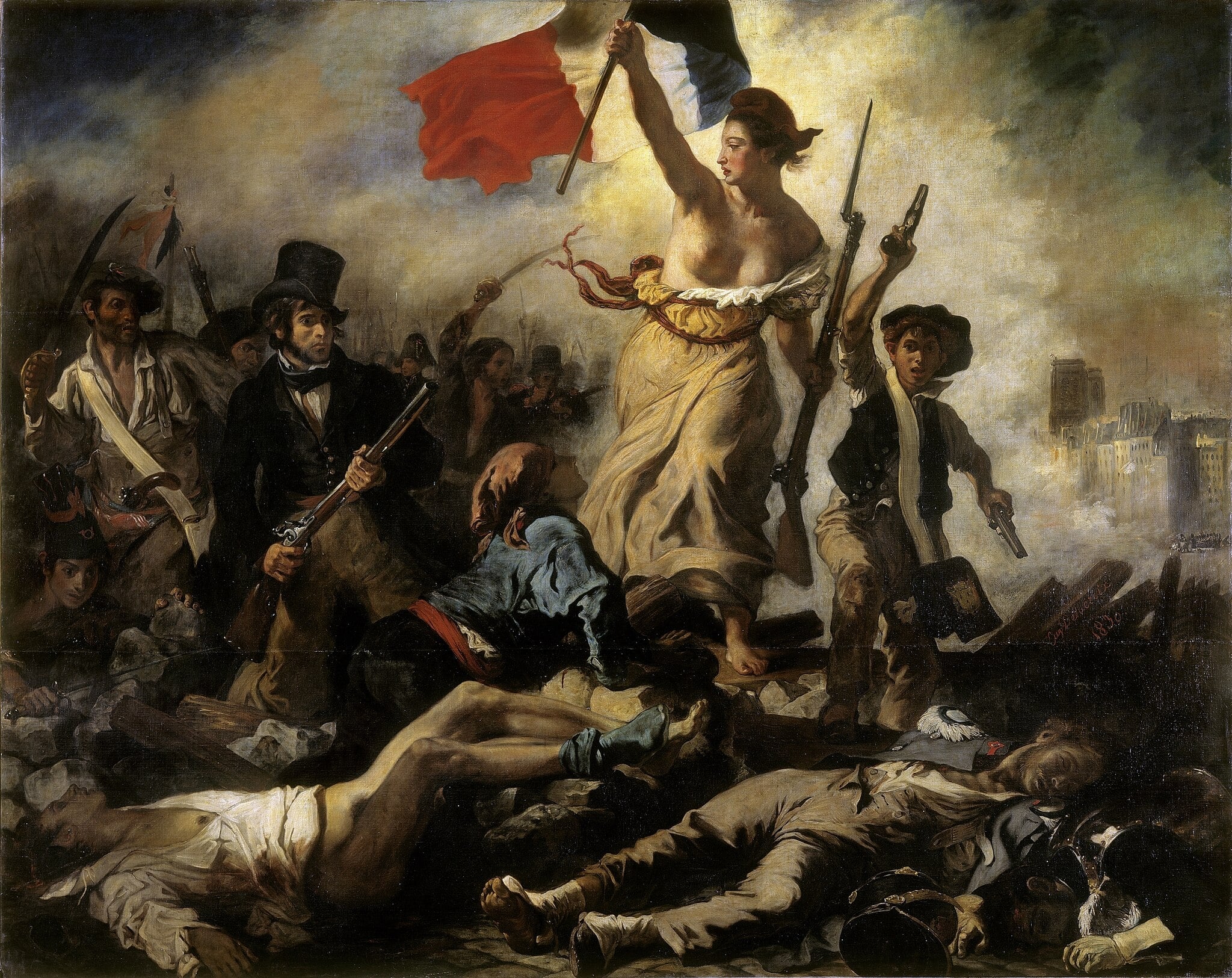
Liberty Leading the People
Eugene Delacroix (1830)
<strong>Liberty Leading the People</strong> turns a real street uprising into a modern myth: a bare‑breasted Liberty in a <strong>Phrygian cap</strong> thrusts the <strong>tricolor</strong> forward as Parisians of different classes surge over corpses and rubble. Delacroix binds allegory to eyewitness detail—Notre‑Dame flickers through smoke, a bourgeois in a top hat shoulders a musket, and a pistol‑waving boy keeps pace—so that freedom appears as both idea and action <sup>[1]</sup><sup>[2]</sup>. After its 2024 cleaning, sharper blues, whites, and reds re‑ignite the painting’s charged color drama <sup>[4]</sup>.
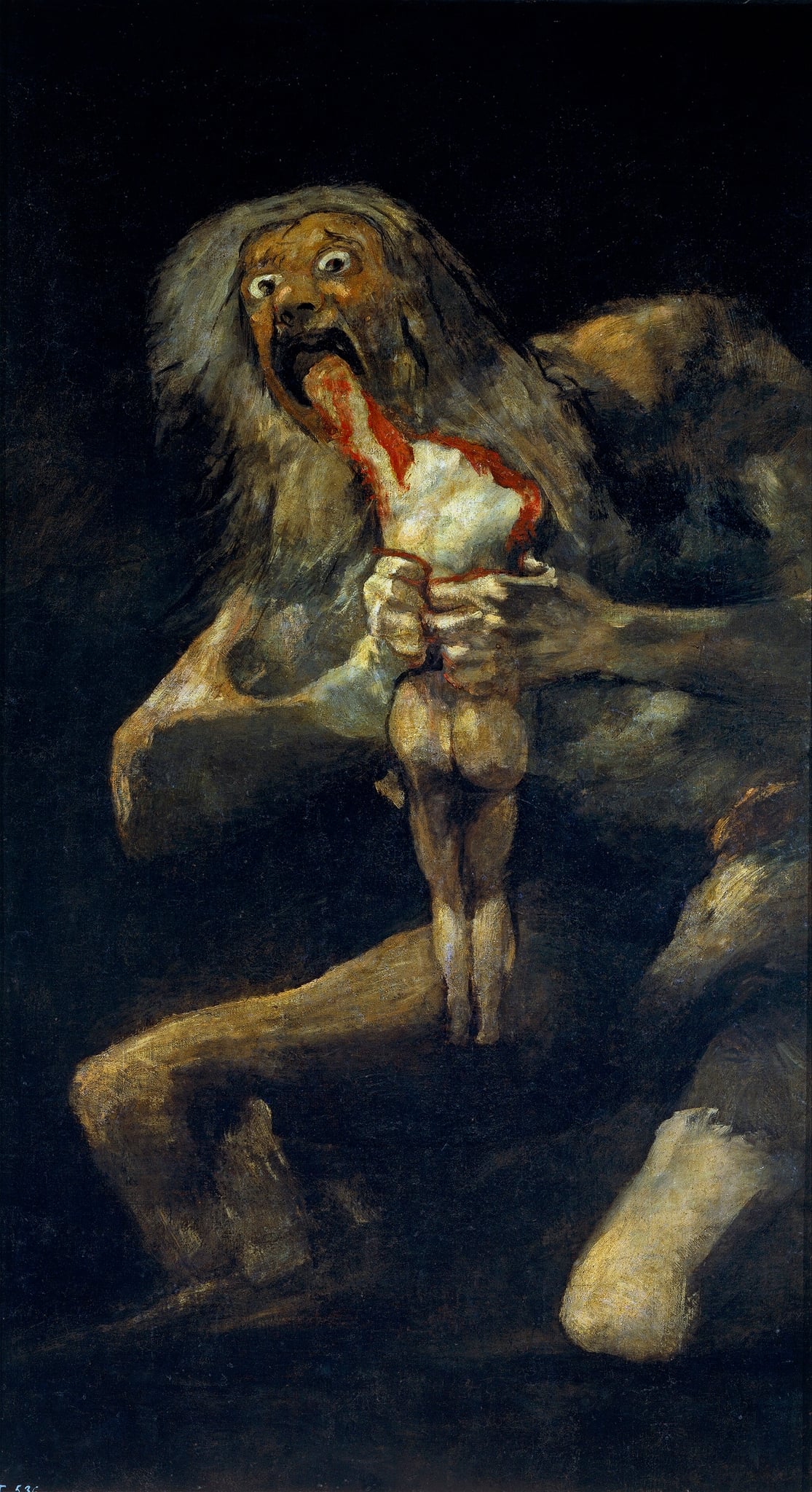
Saturn Devouring His Son
Francisco Goya (1820–1823)
Goya’s Saturn Devouring His Son distills myth into a raw vision of <strong>paranoia, power, and time</strong>: a giant crouches in darkness, eyes blown wide, tearing into a headless body whose blood streaks his hands. Stripped of classical emblems and staged in a near-black void, the scene asserts that fear of dispossession turns paternal authority into <strong>self-consuming violence</strong> <sup>[1]</sup><sup>[4]</sup>.
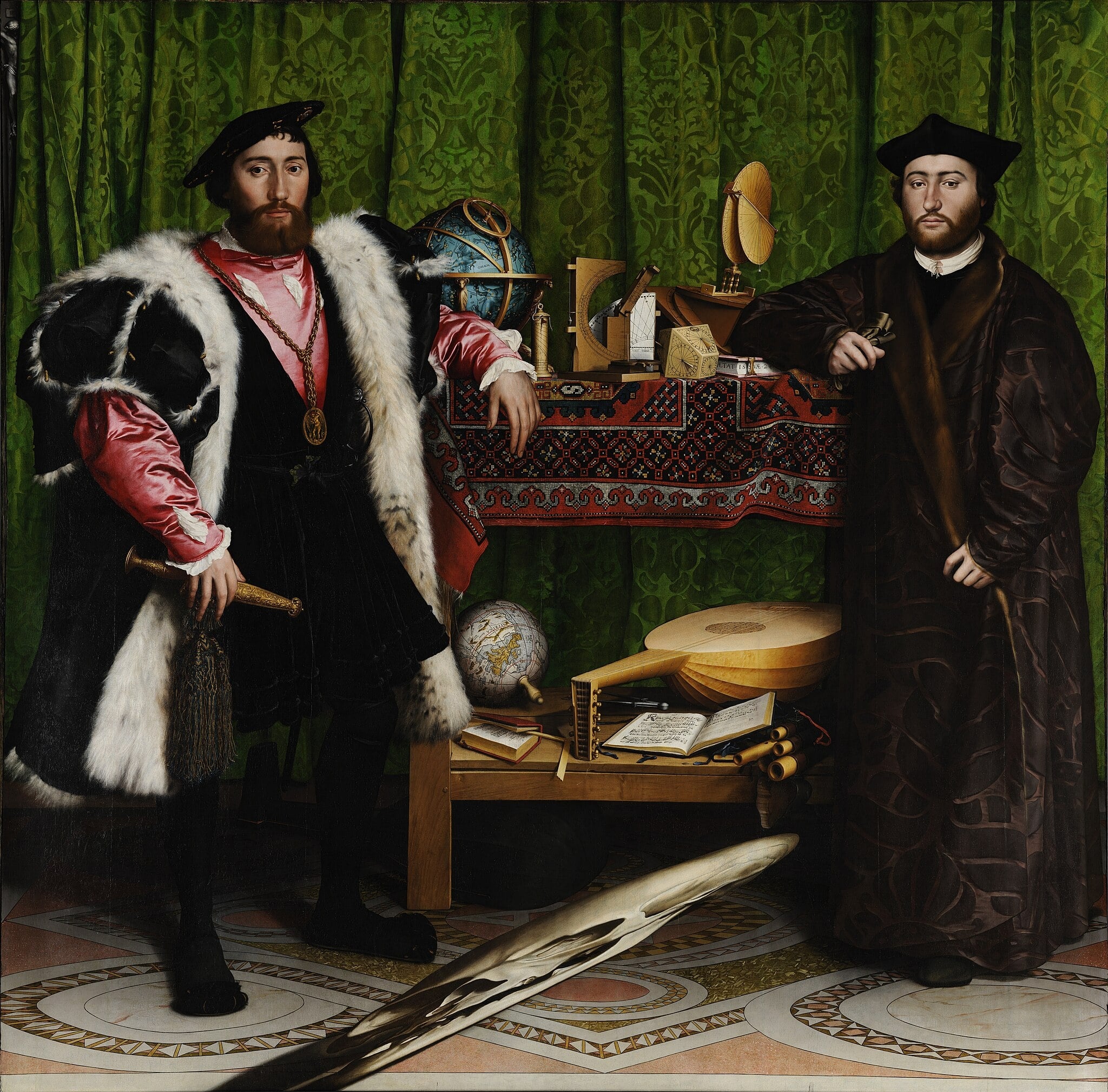
The Ambassadors
Hans Holbein the Younger (1533)
Holbein’s The Ambassadors is a double-portrait staged before a green curtain, where shelves of scientific instruments, books, and musical devices enact <strong>Renaissance learning</strong> while an anamorphic <strong>skull</strong> and a veiled <strong>crucifix</strong> counter it with mortality and salvation <sup>[1]</sup><sup>[2]</sup>. The work balances worldly status—fur, velvet, Oriental carpet—with a sober theology of limits amid the <strong>Reformation’s discord</strong> <sup>[1]</sup><sup>[2]</sup>.
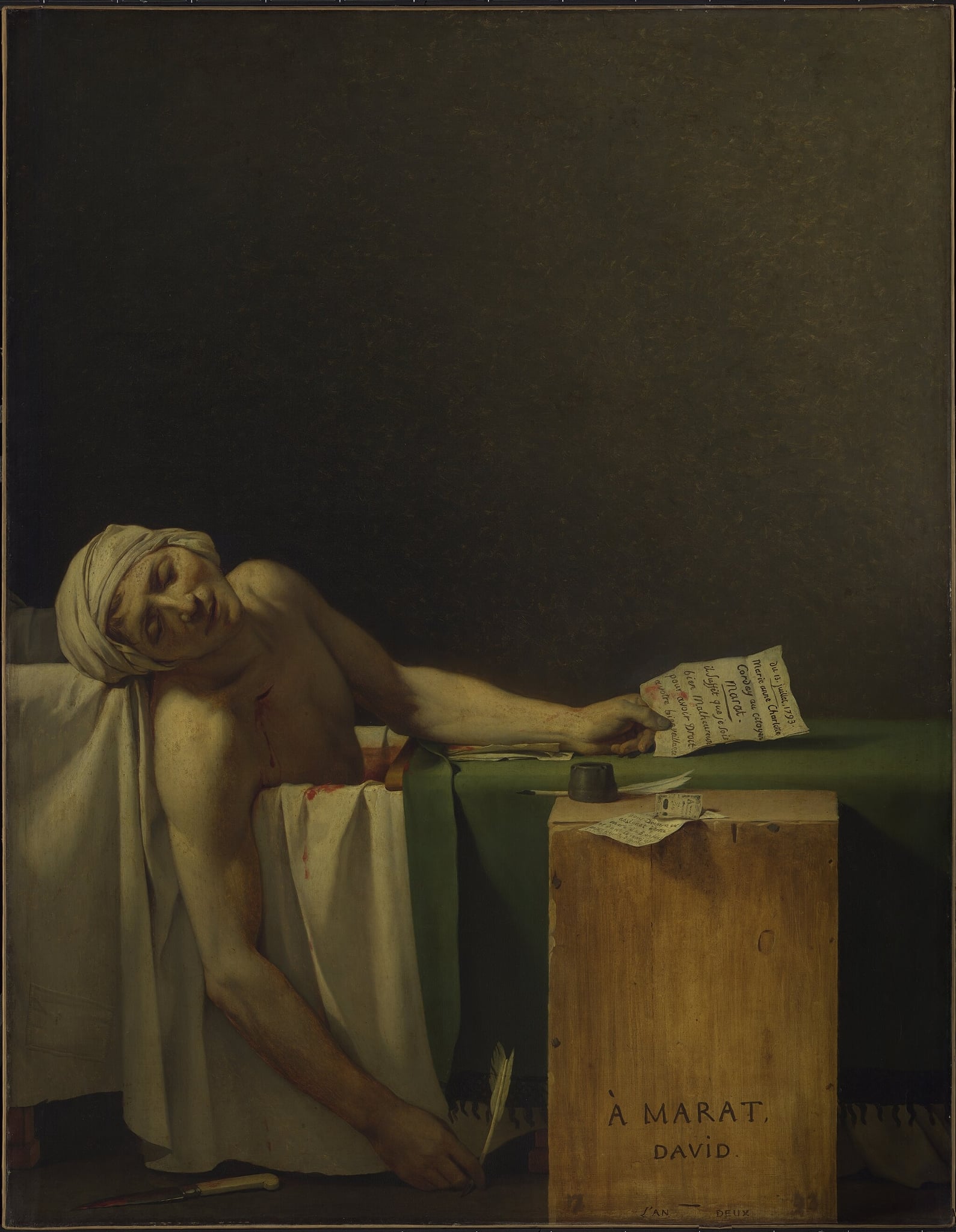
The Death of Marat
Jacques-Louis David (1793)
<strong>The Death of Marat</strong> turns a private murder into a <strong>secular martyrdom</strong>: Marat’s idealized body slumps in a bath, a pleading letter in his hand, a quill slipping from the other beside a bloodied knife and inkwell. Against a vast dark void, David’s calm light and austere geometry elevate humble objects—the green baize plank and the crate inscribed “À MARAT, DAVID, L’AN DEUX”—into civic emblems <sup>[1]</sup><sup>[2]</sup><sup>[3]</sup>.
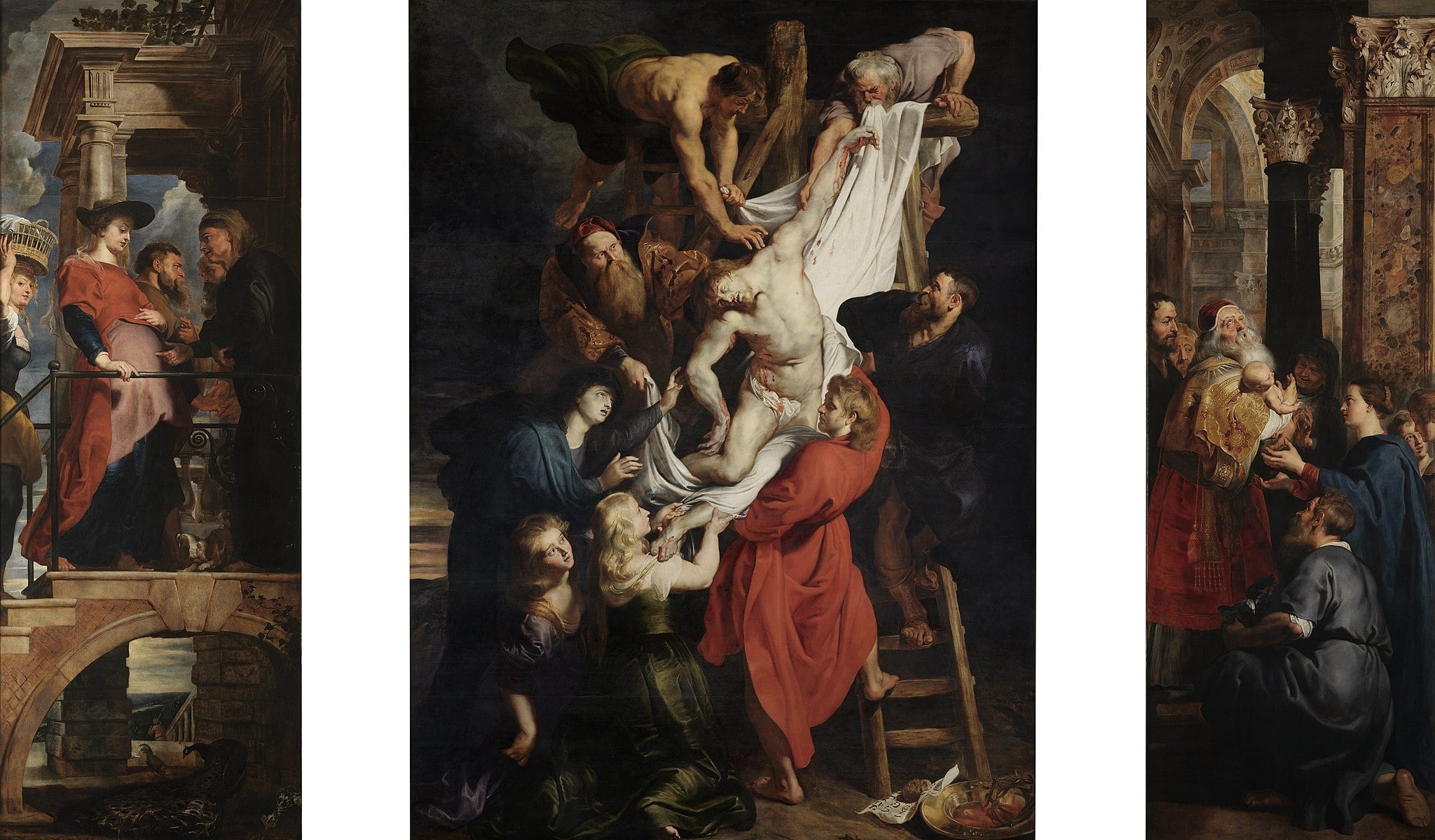
The Descent from the Cross
Peter Paul Rubens (1611–1614)
At night beneath a black sky, The Descent from the Cross stages a solemn transfer of Christ’s body along a luminous <strong>white shroud</strong> that cuts diagonally across the scene. The flanking wings—<strong>The Visitation</strong> and <strong>The Presentation in the Temple</strong>—frame the central tragedy with beginnings and revelation, turning the triptych into a single arc from Incarnation to Redemption. Rubens fuses <strong>Baroque chiaroscuro</strong> with tender, communal gestures to make grief a shared act of devotion.
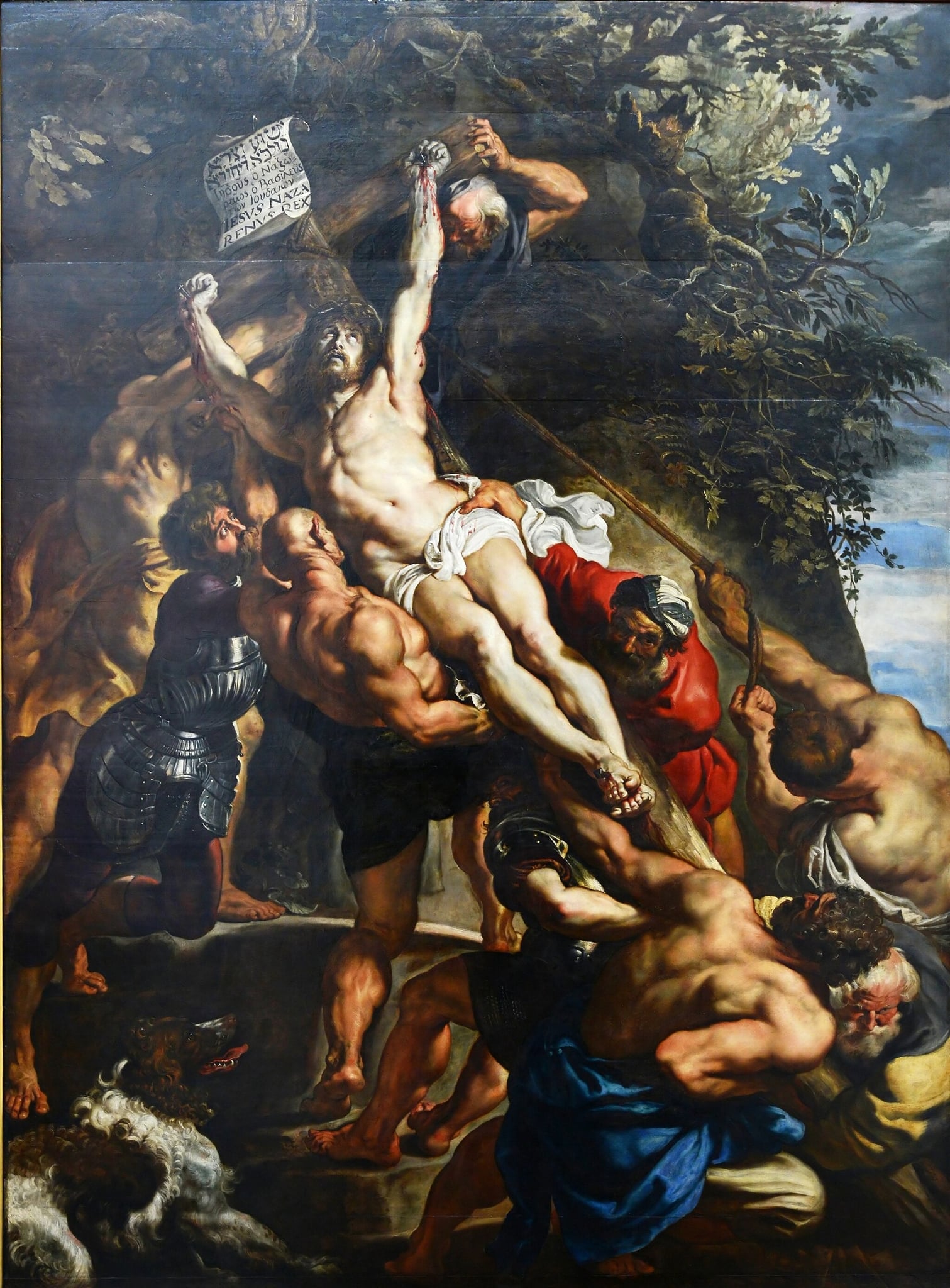
The Elevation of the Cross
Peter Paul Rubens (1609–1610)
A single, surging diagonal drives The Elevation of the Cross as straining executioners heave the timber while Christ’s pale body becomes the calm, radiant fulcrum. Rubens fuses muscular anatomy, flashing armor, taut ropes, and storm-dark landscape into a Baroque crescendo where <strong>divine light</strong> confronts <strong>human violence</strong> <sup>[1]</sup><sup>[3]</sup>.
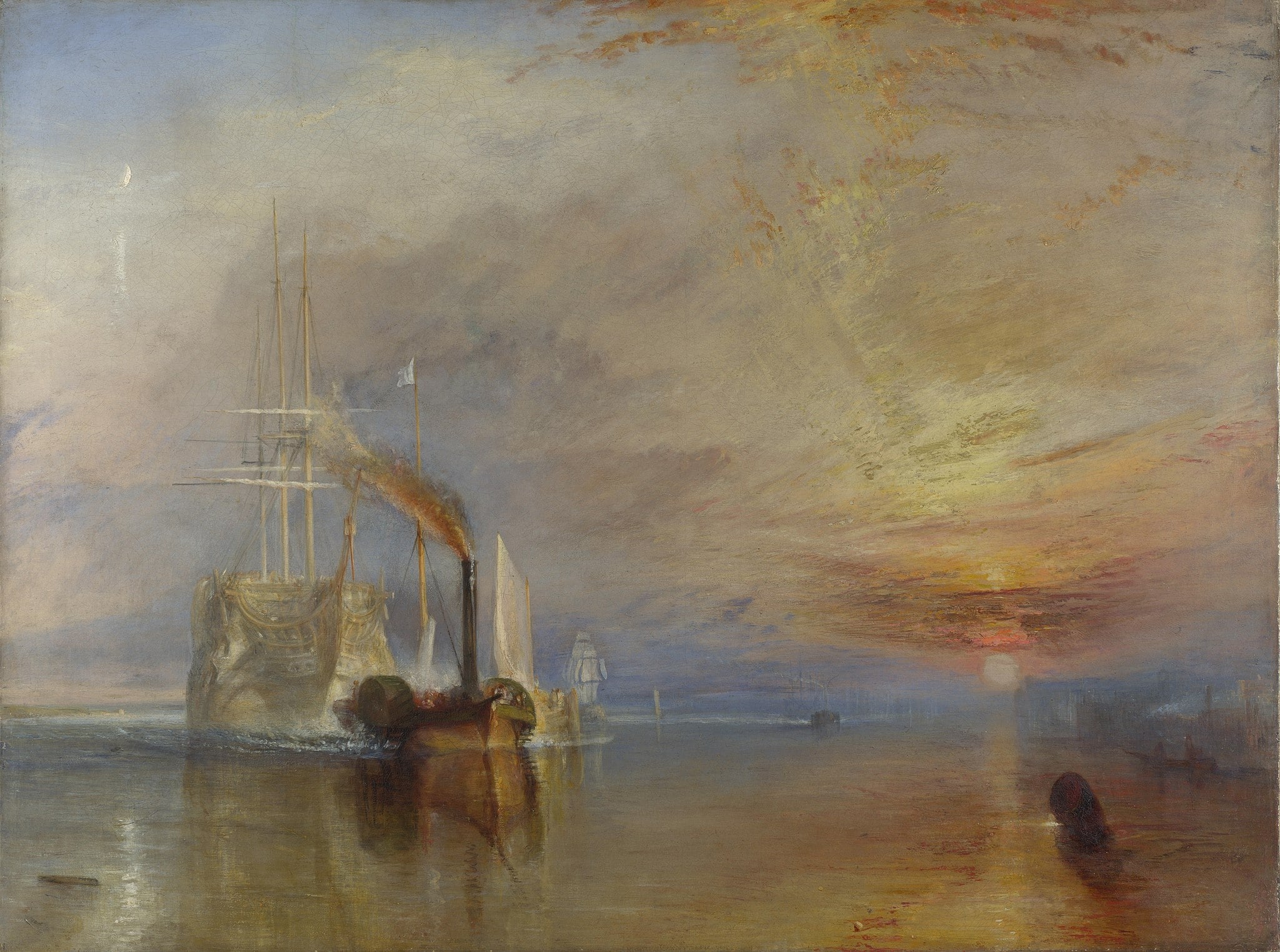
The Fighting Temeraire
J. M. W. Turner (1839)
In The Fighting Temeraire, J. M. W. Turner sets a <strong>ghostly man‑of‑war</strong> against a <strong>sooty steam tug</strong> under a blazing, emblematic sunset. The pale ship’s towering masts and slack rigging read like memory, while the tug’s black smoke cuts through the rigging where a flag once flew, signaling <strong>power passing from sail to steam</strong> <sup>[1]</sup><sup>[2]</sup>. A crescent moon and a humble buoy punctuate a river turned to molten gold, marking both ending and beginning <sup>[3]</sup><sup>[4]</sup>.
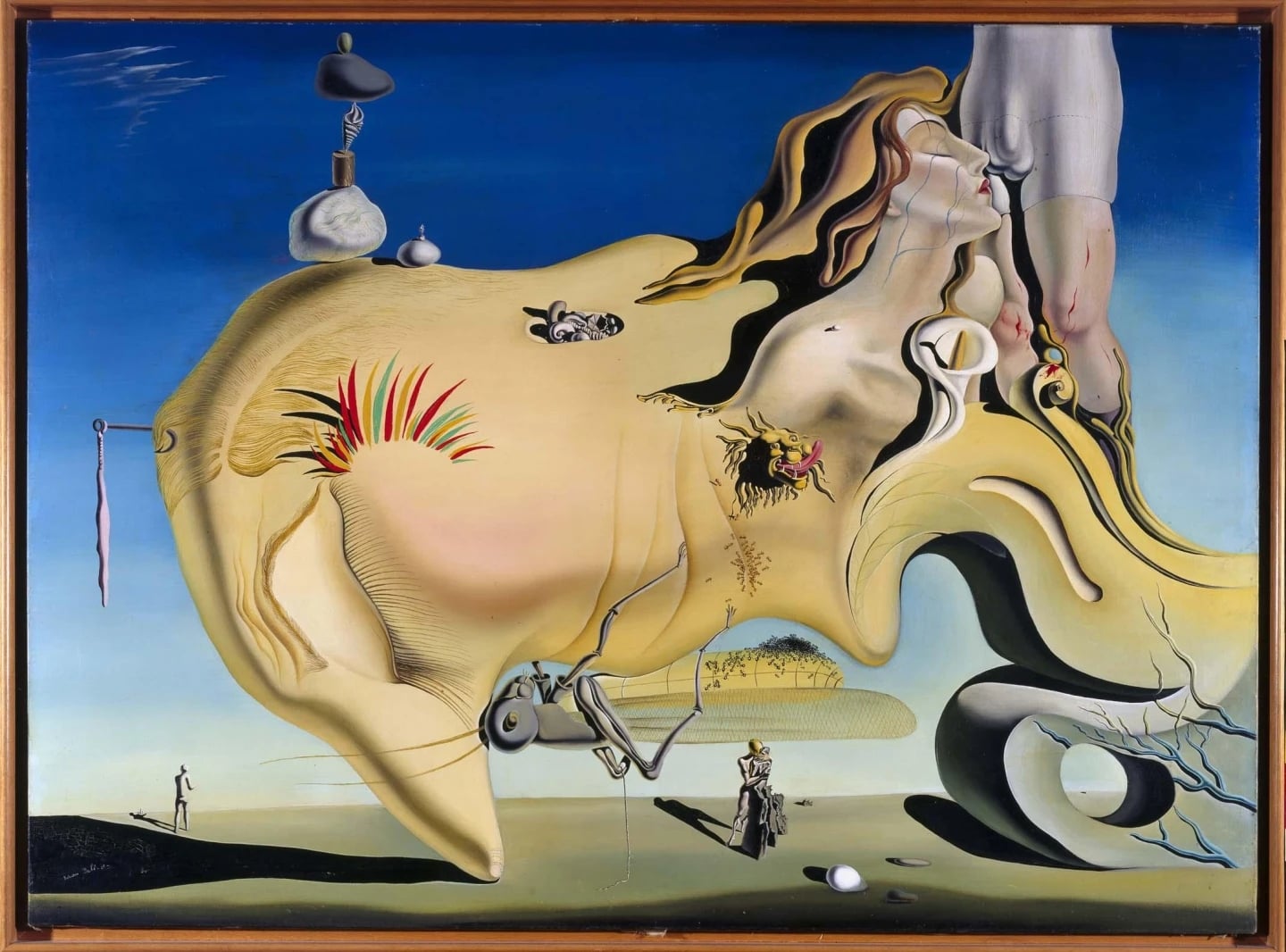
The Great Masturbator
Salvador Dali (1929)
The Great Masturbator condenses Dalí’s newly ignited desire and crippling dread into a single, biomorphic head set against a crystalline Catalan sky. Ants, a gaping grasshopper, a lion’s tongue, a bleeding knee, crutches, stones, and an egg collide to script a confession where <strong>eros</strong> and <strong>decay</strong> are inseparable <sup>[1]</sup><sup>[3]</sup><sup>[4]</sup>. Its precision staging turns autobiography into a <strong>surreal map of compulsion</strong> at the moment Gala enters his life <sup>[1]</sup>.
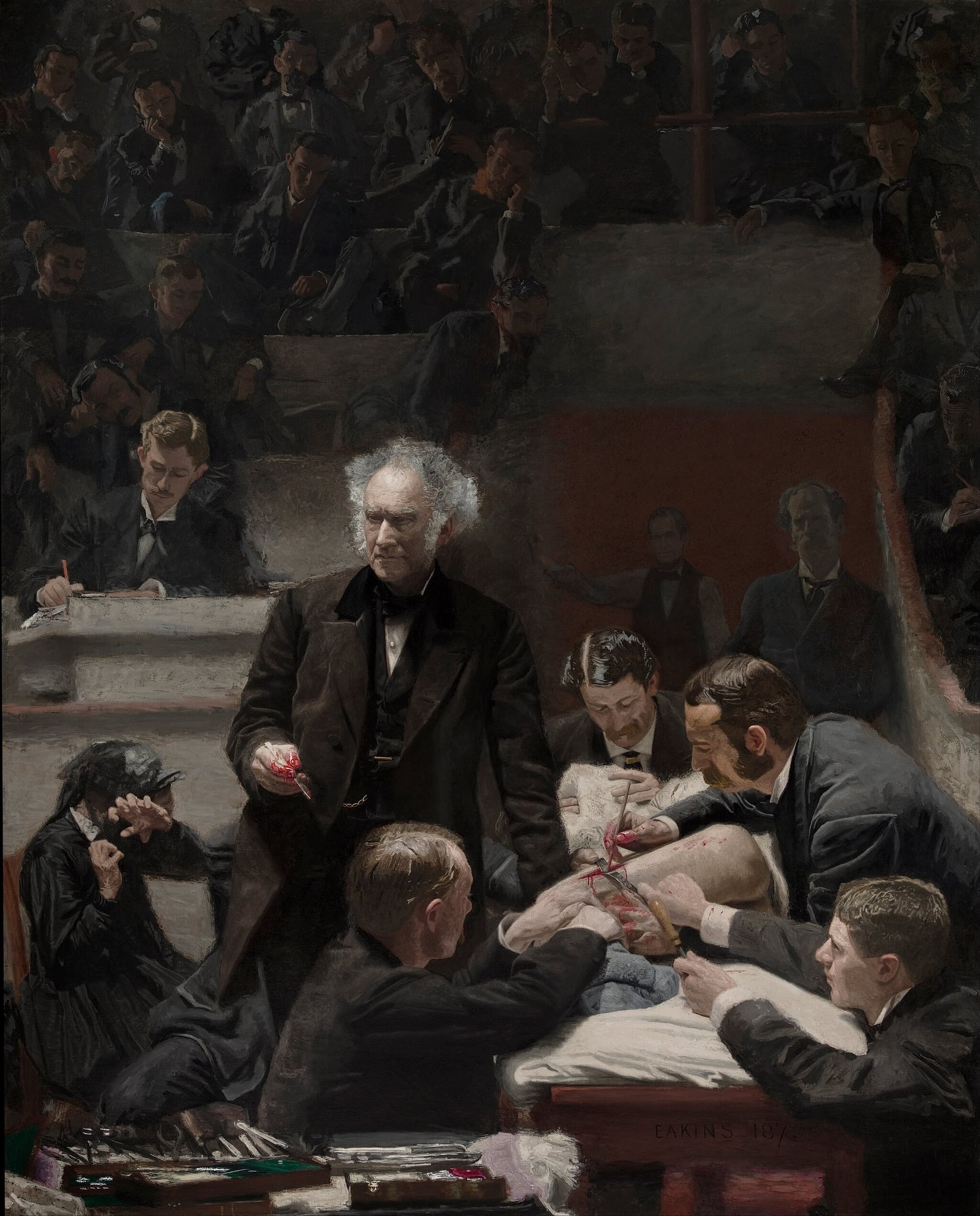
The Gross Clinic
Thomas Eakins (1875)
Thomas Eakins’s The Gross Clinic turns a surgical lesson into civic drama, casting a blaze of light on the surgeon’s white hair and bloodied fingers while students fade into shadow. With the veiled woman recoiling at left and a clerk calmly recording at right, the painting frames <strong>science as spectacle</strong> and <strong>witness as ethics</strong> <sup>[1]</sup><sup>[2]</sup>.
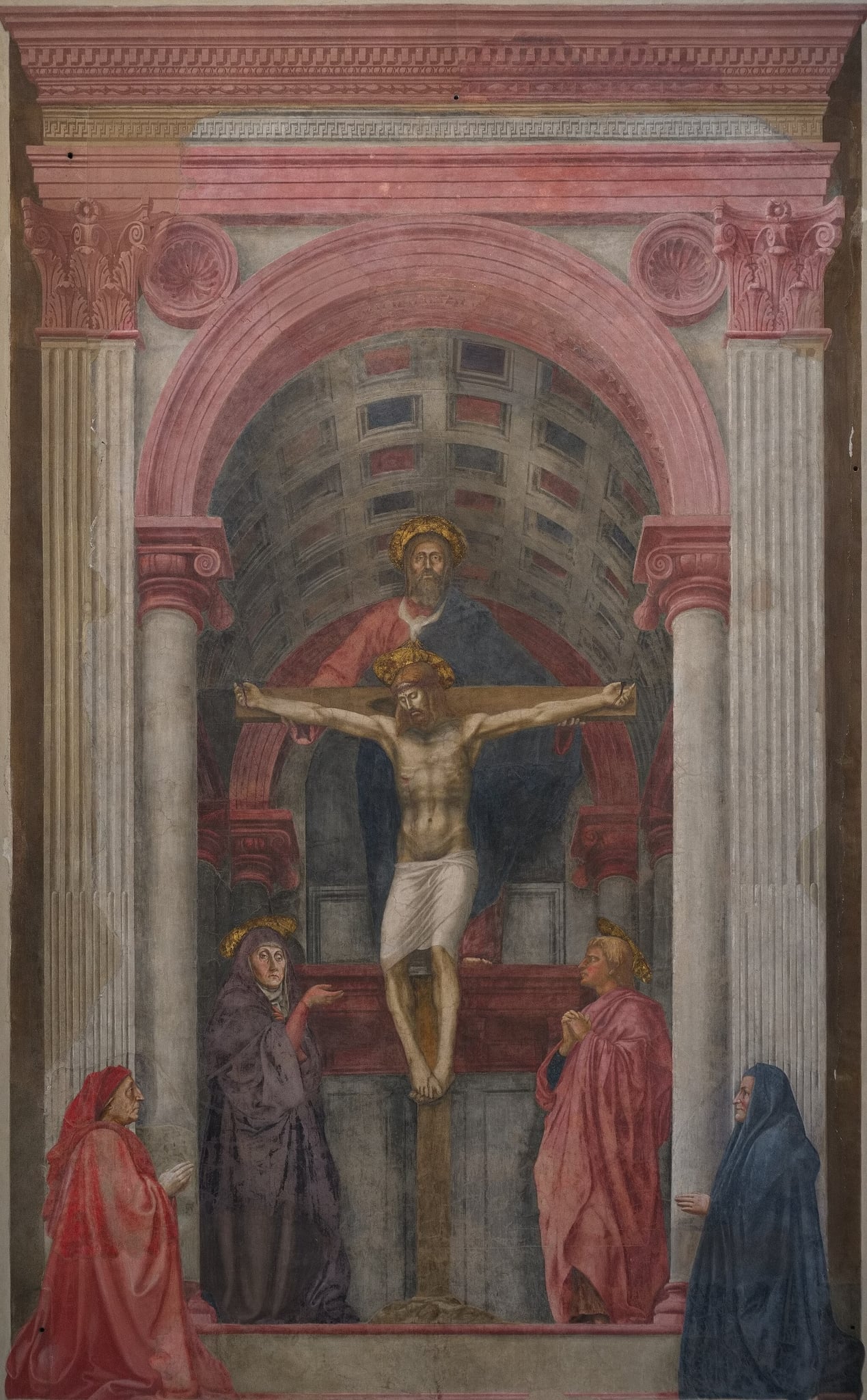
The Holy Trinity
Masaccio (c. 1425–1427)
Masaccio’s The Holy Trinity stages salvation as a rigorously ordered reality: a "Throne of Mercy" Trinity set inside a mathematically precise, coffered barrel vault. With <strong>one‑point perspective</strong>, the fictive chapel opens to the nave, placing kneeling donors at our eye level while Mary presents Christ and John prays in grief <sup>[1]</sup><sup>[2]</sup>.
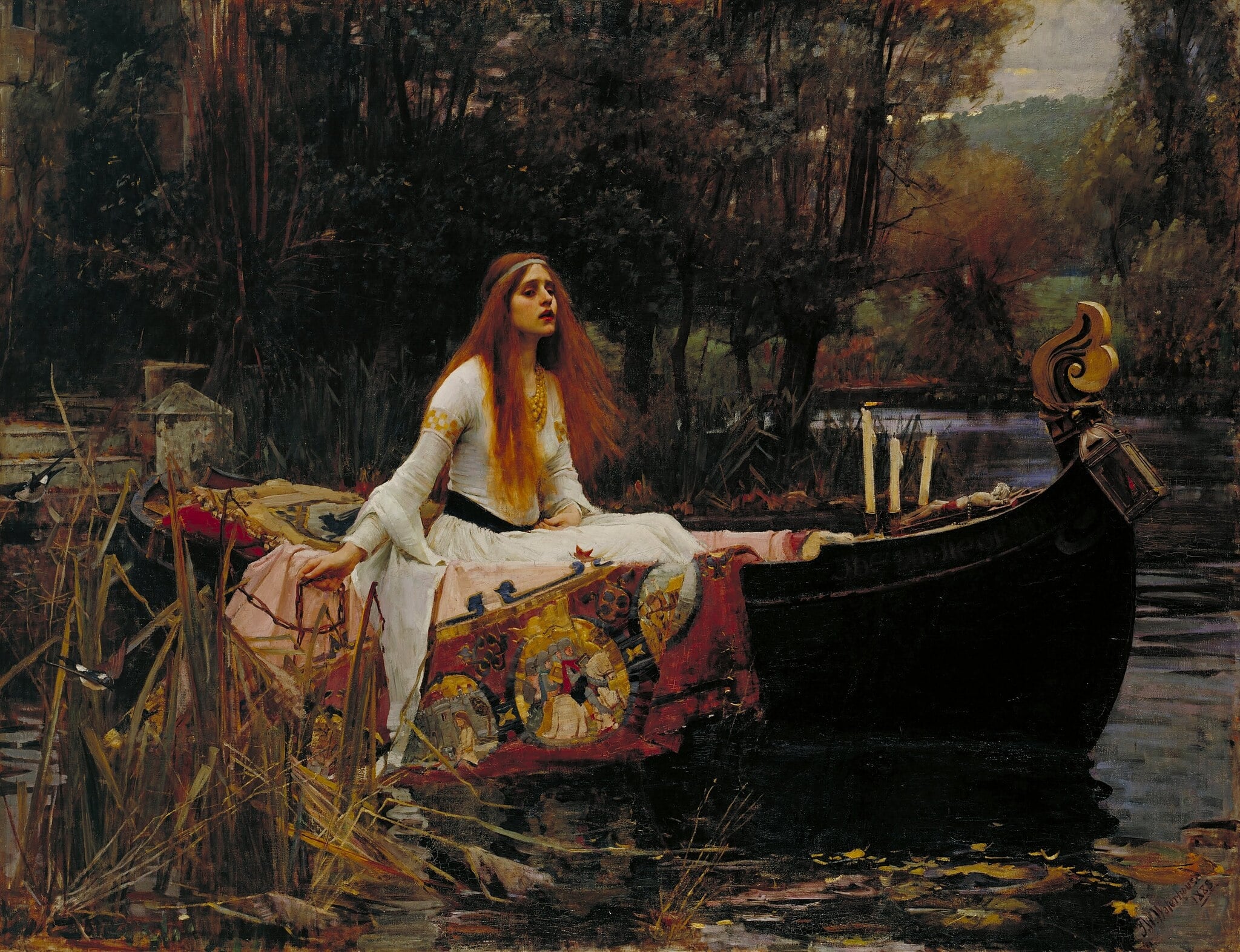
The Lady of Shallot
John William Waterhouse (1888)
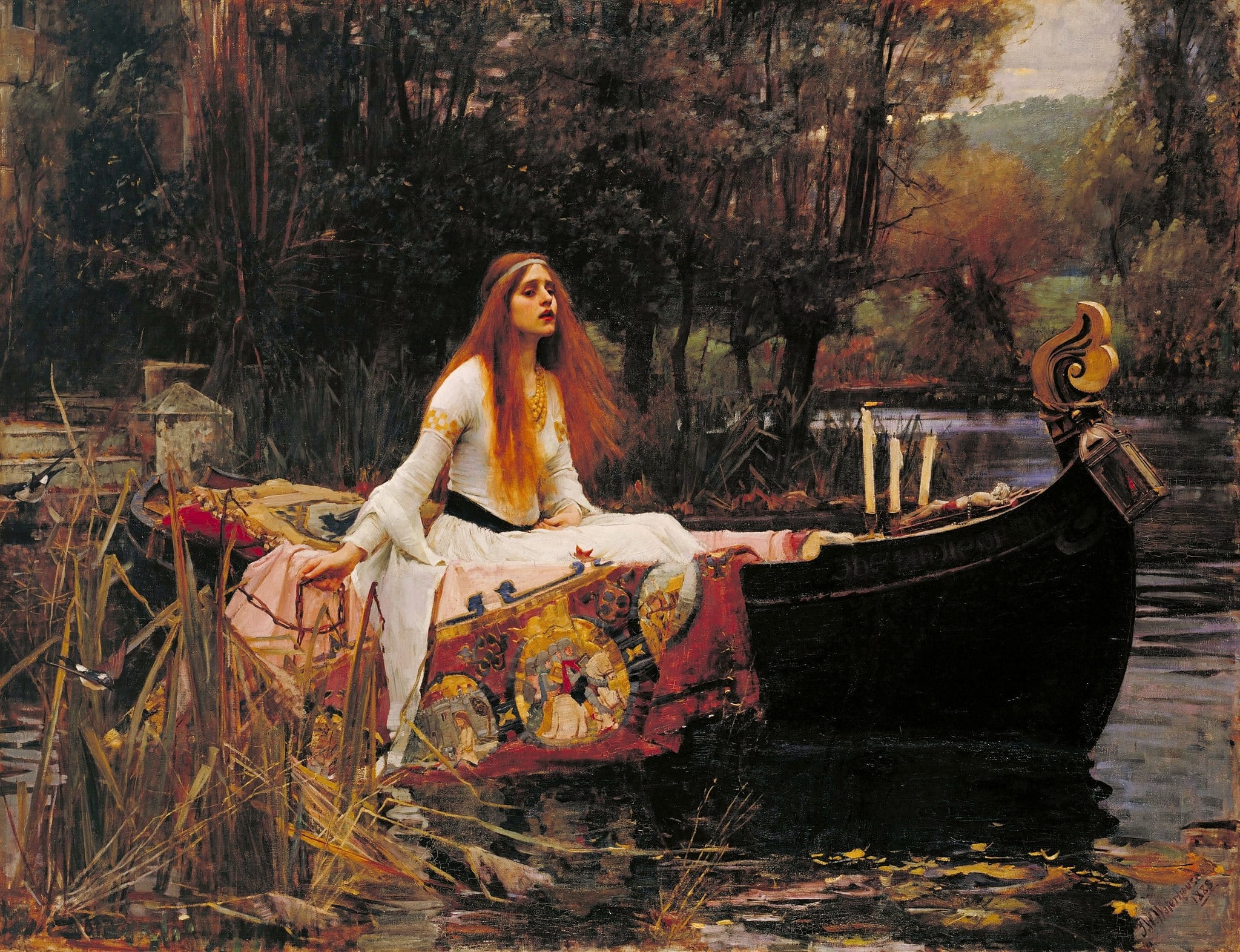
John William Waterhouse’s The Lady of Shallot (1888) fixes on the instant the cursed heroine releases her chain and sets her black, coffinlike boat adrift. The extinguished candles, the small crucifix, and the tapestry trailing into the water stage a <strong>funerary voyage</strong> toward Camelot and a choice of <strong>experience over enclosure</strong> <sup>[1]</sup><sup>[2]</sup>.
The Lady of Shalott
John William Waterhouse (1888)
John William Waterhouse’s The Lady of Shalott fixes the tragic instant when the cursed Lady chooses to loose her mooring and drift toward Camelot. The released <strong>chain</strong>, the guttering <strong>candles</strong>, and the tapestry spilling over the boat narrate a passage from sheltered artifice to fatal reality. Waterhouse fuses late <strong>Pre-Raphaelite</strong> symbolism with elegiac atmosphere to stage beauty caught between <strong>agency</strong> and <strong>doom</strong> <sup>[1]</sup><sup>[2]</sup><sup>[3]</sup>.
The Scream
Edvard Munch (1893)
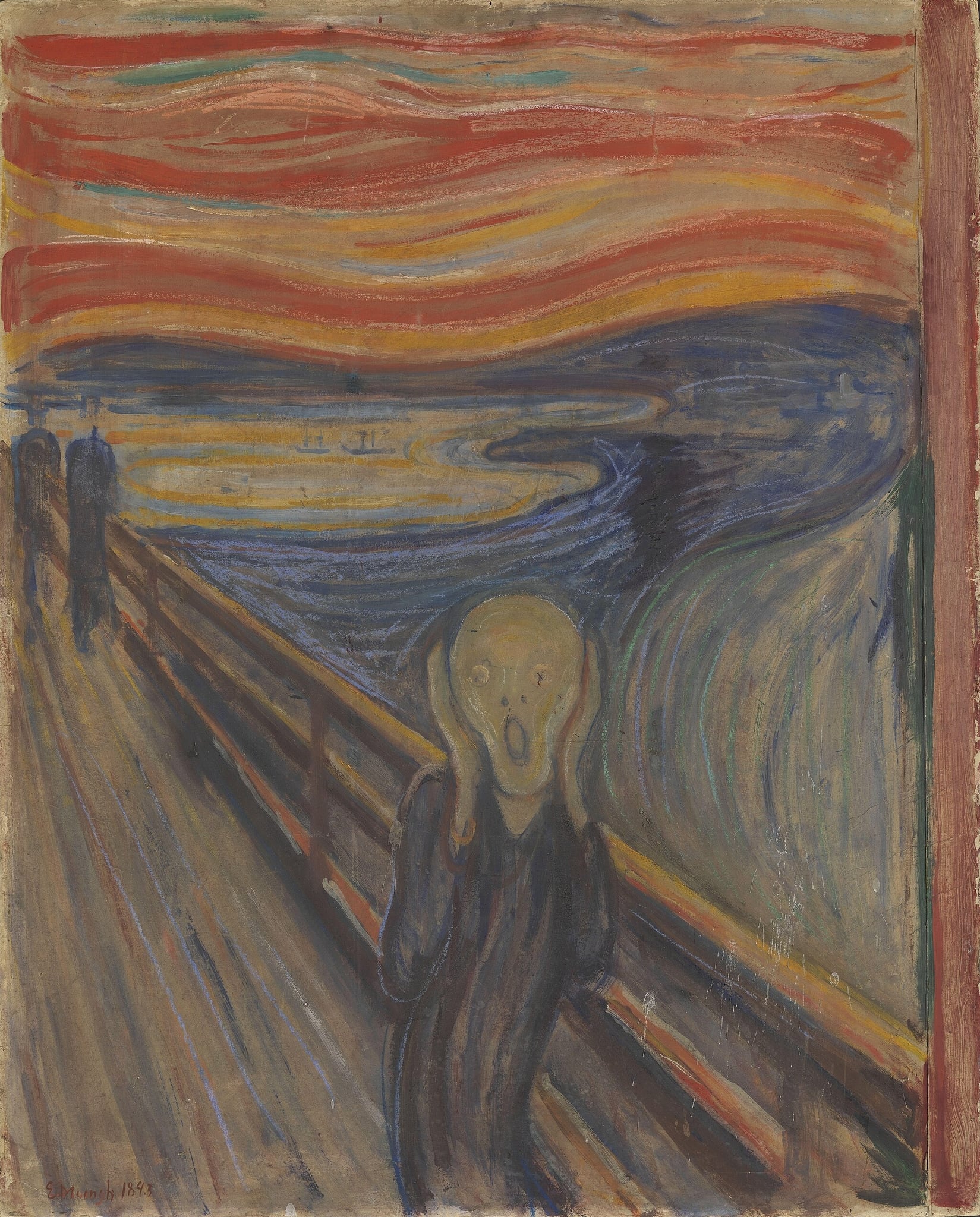
Edvard Munch’s The Scream condenses modern dread into an image where the self and the world collapse: an androgynous, skull-like figure grips its head as a <strong>blood-red sky</strong> and <strong>vibrating shoreline</strong> pulse around it. The rigid, receding bridge rails counter the turbulence, staging a clash between <strong>inner panic</strong> and <strong>outer reality</strong> <sup>[1]</sup><sup>[2]</sup>.
The Sea of Ice
Caspar David Friedrich (1823–1824)
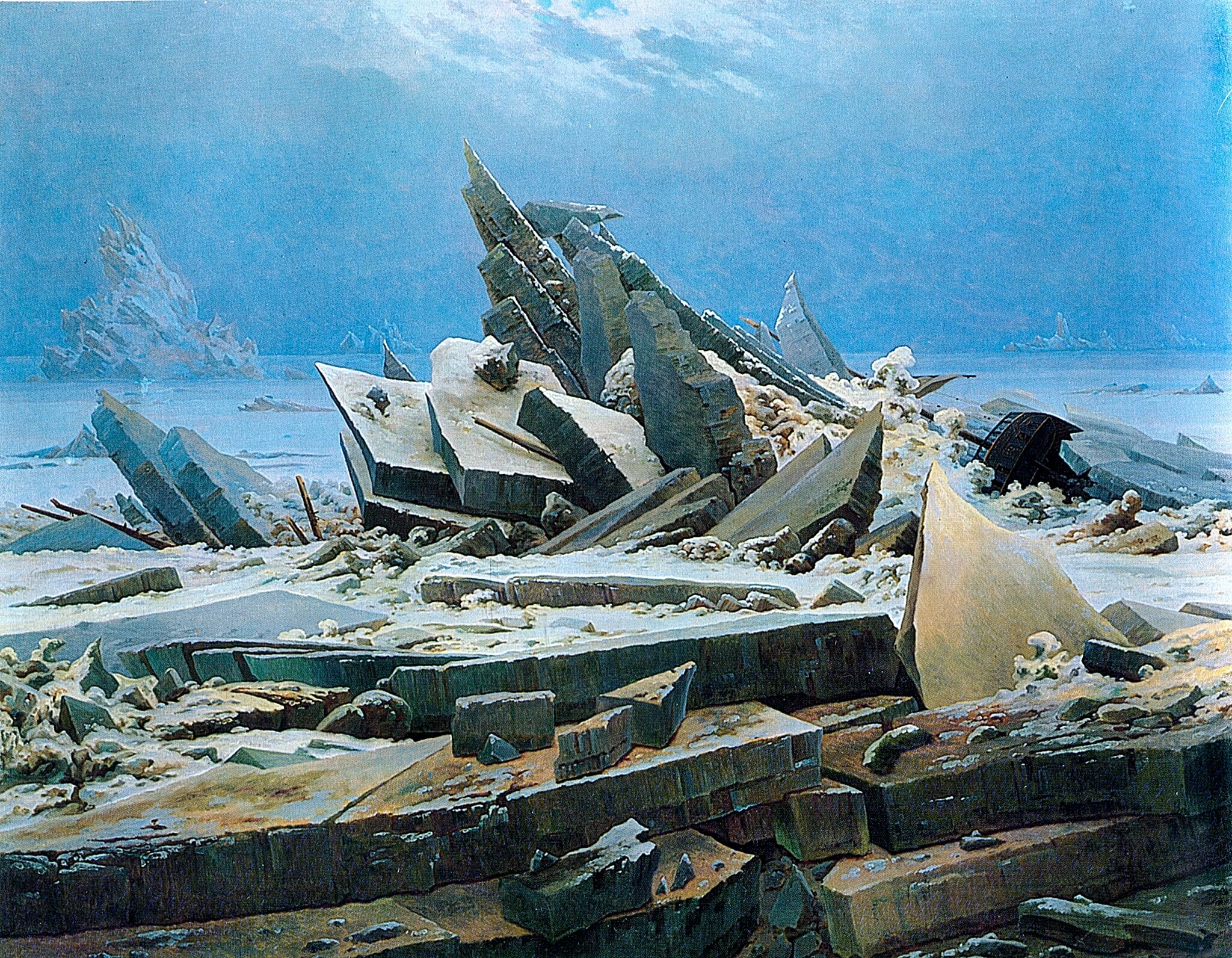
Caspar David Friedrich’s The Sea of Ice turns nature into a <strong>frozen architecture</strong> that crushes a ship and, with it, human pretension. The painting stages the <strong>Romantic sublime</strong> as both awe and negation, replacing heroic conquest with the stark finality of ice and silence <sup>[1]</sup><sup>[3]</sup>.
The Third of May 1808
Francisco Goya (1814)
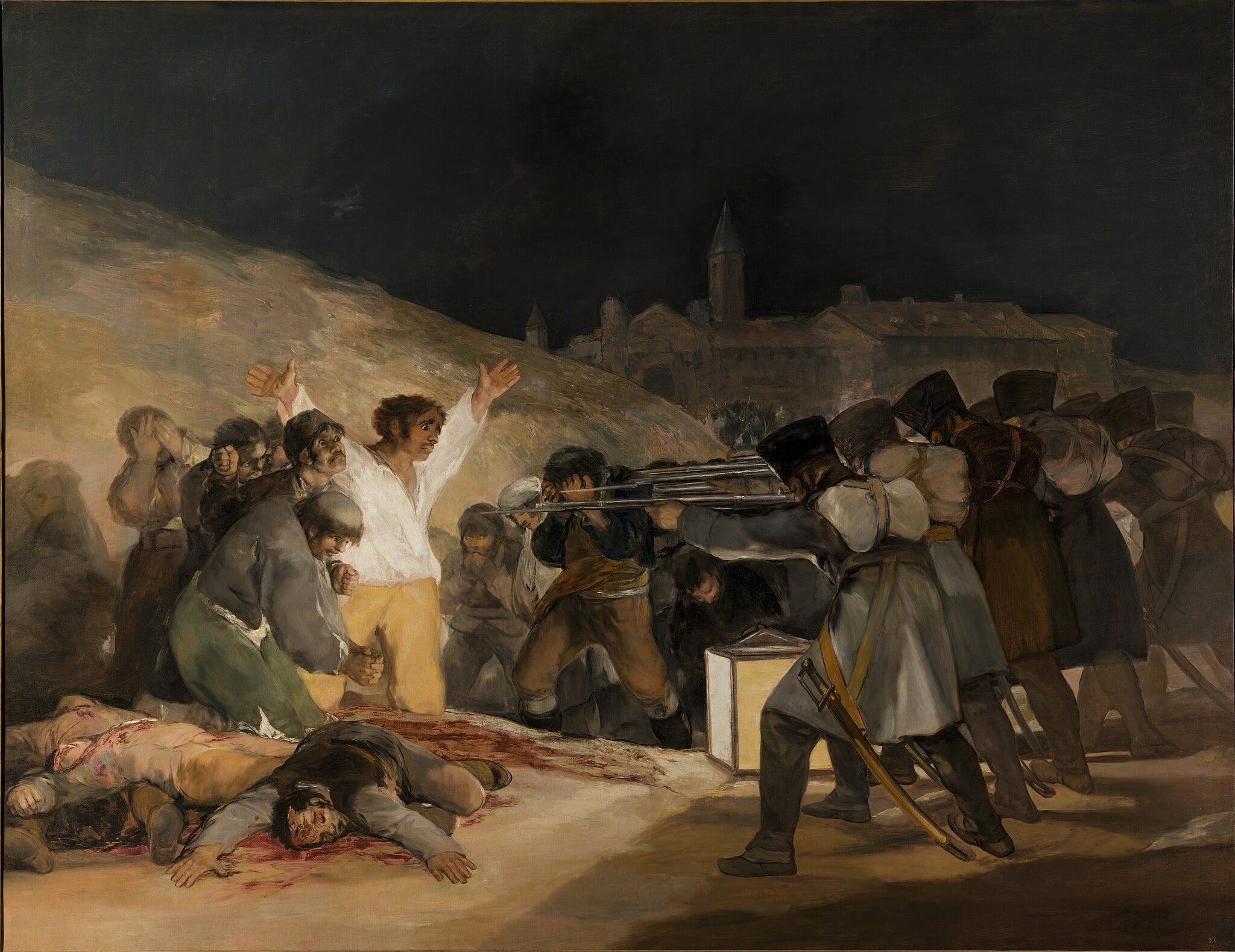
Francisco Goya’s The Third of May 1808 turns a specific reprisal after Madrid’s uprising into a universal indictment of <strong>state violence</strong>. A lantern’s harsh glare isolates a civilian who raises his arms in a <strong>cruciform</strong> gesture as a faceless firing squad executes prisoners, transforming reportage into <strong>modern anti-war testimony</strong> <sup>[1]</sup><sup>[2]</sup>.
The Two Fridas
Frida Kahlo (1939)
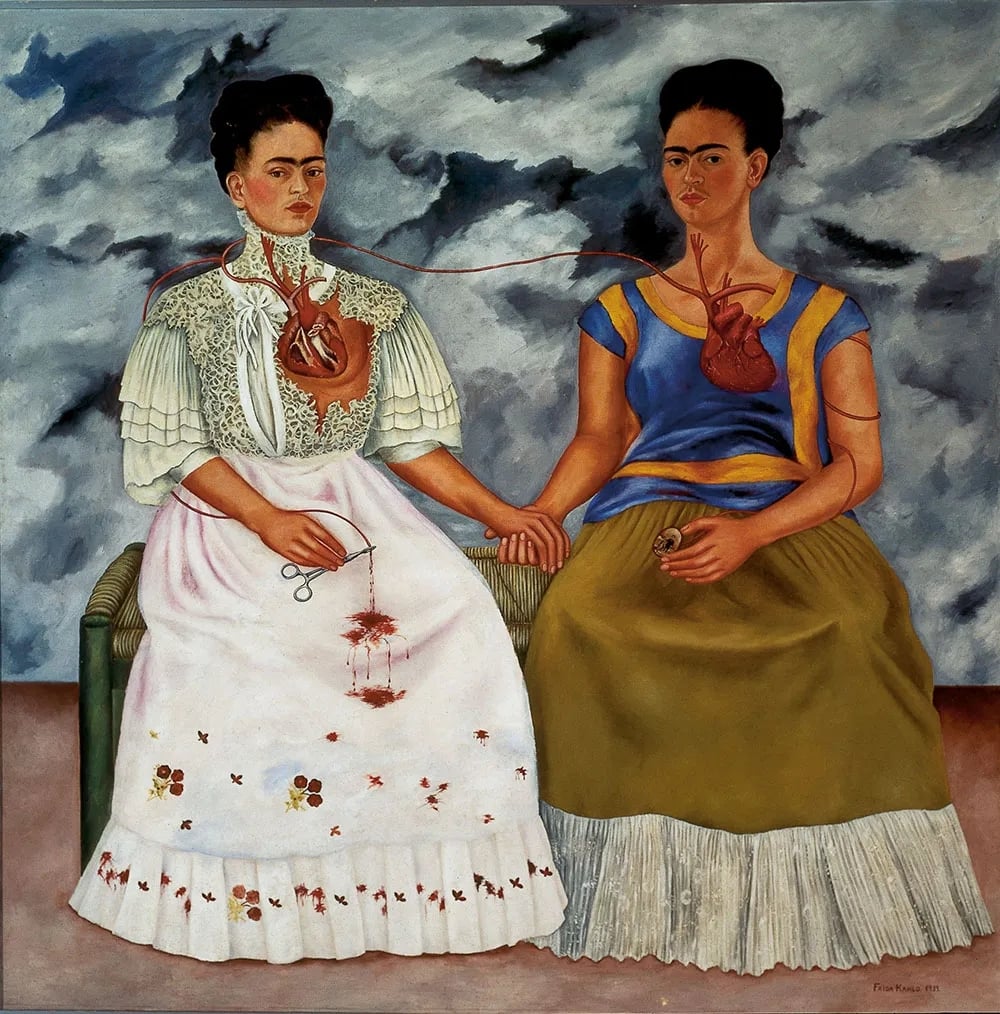
The Two Fridas presents a doubled self seated under a storm-charged sky, their opened chests revealing two hearts joined by a single artery. One Frida in a European dress clamps the vessel with a surgical <strong>hemostat</strong> as blood stains her skirt, while the other in a <strong>Tehuana</strong> dress steadies a locket and the shared pulse. The canvas turns private injury into a public image of <strong>dual identity</strong> and endurance <sup>[1]</sup><sup>[2]</sup>.
Related Themes
Related Symbolism Categories
Urban
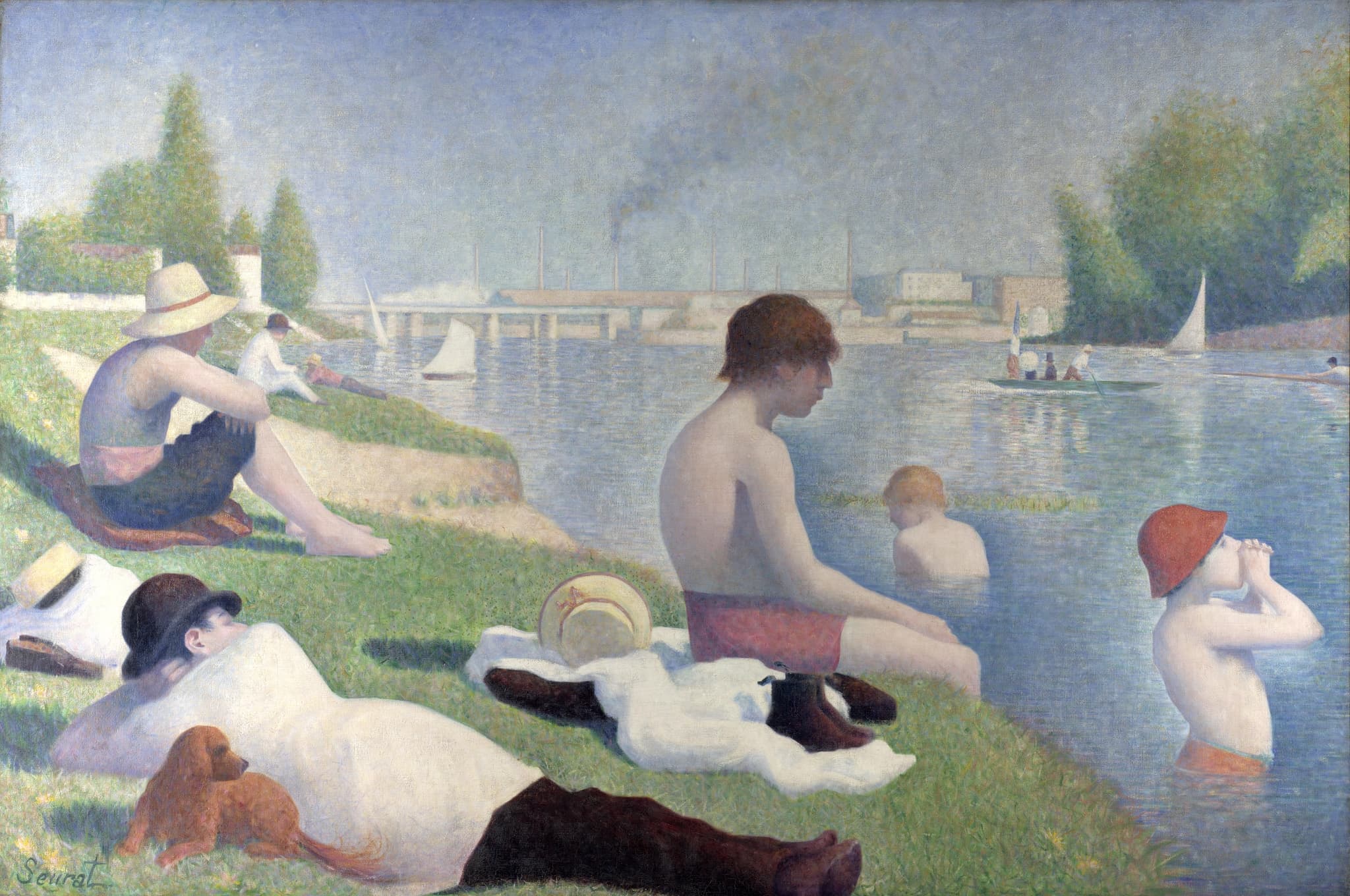
Urban symbolism in modern painting transforms streets, stations, and squares into coded fields where infrastructure, light, and crowd dynamics visualize the social logics of the nineteenth- and early twentieth‑century city.
Light
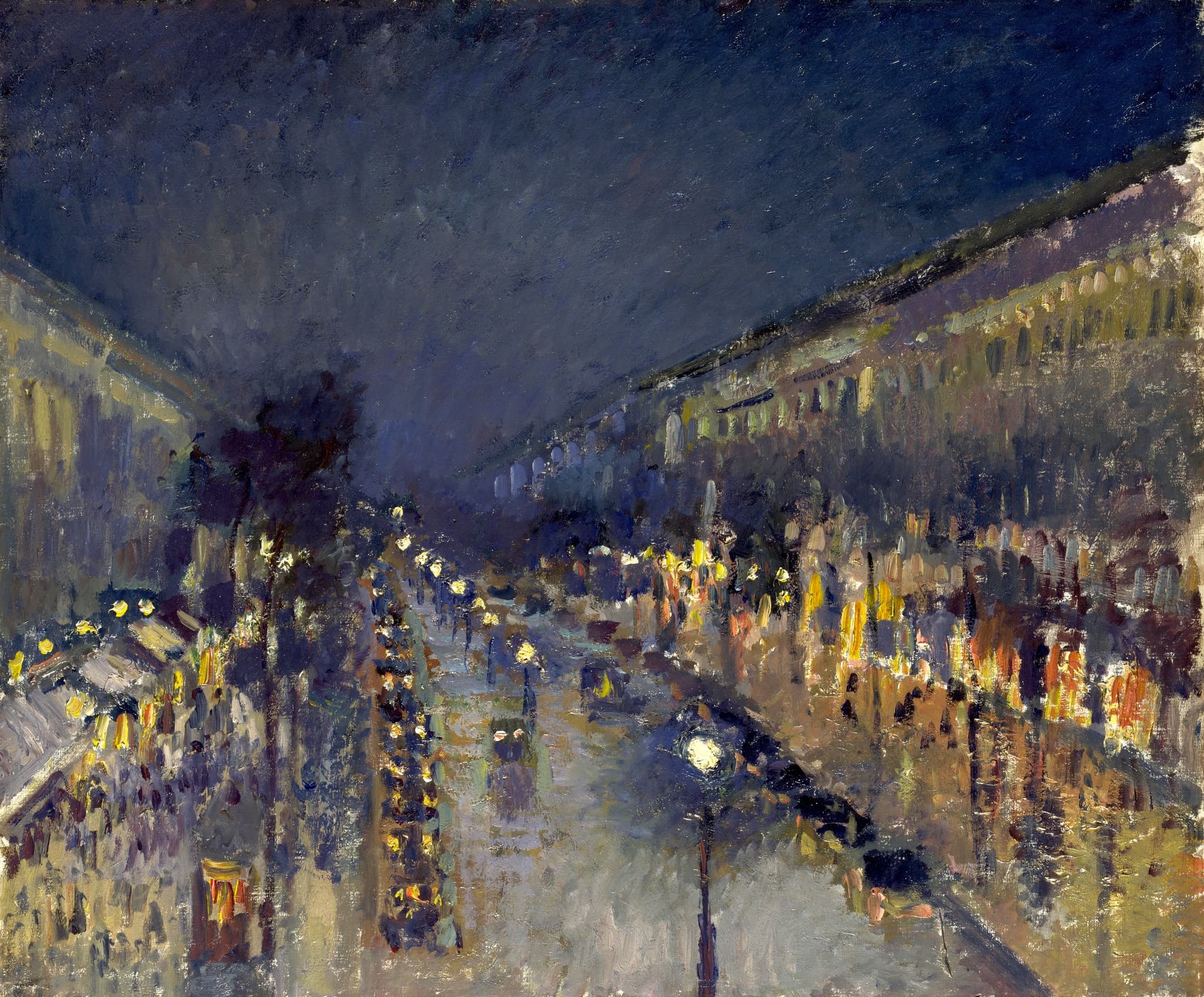
The light symbolism category traces how artists transform illumination itself—from divine beam to industrial glare and atmospheric haze—into a primary bearer of meaning, mediating between revelation, modernity, and the phenomenology of perception.
Religion
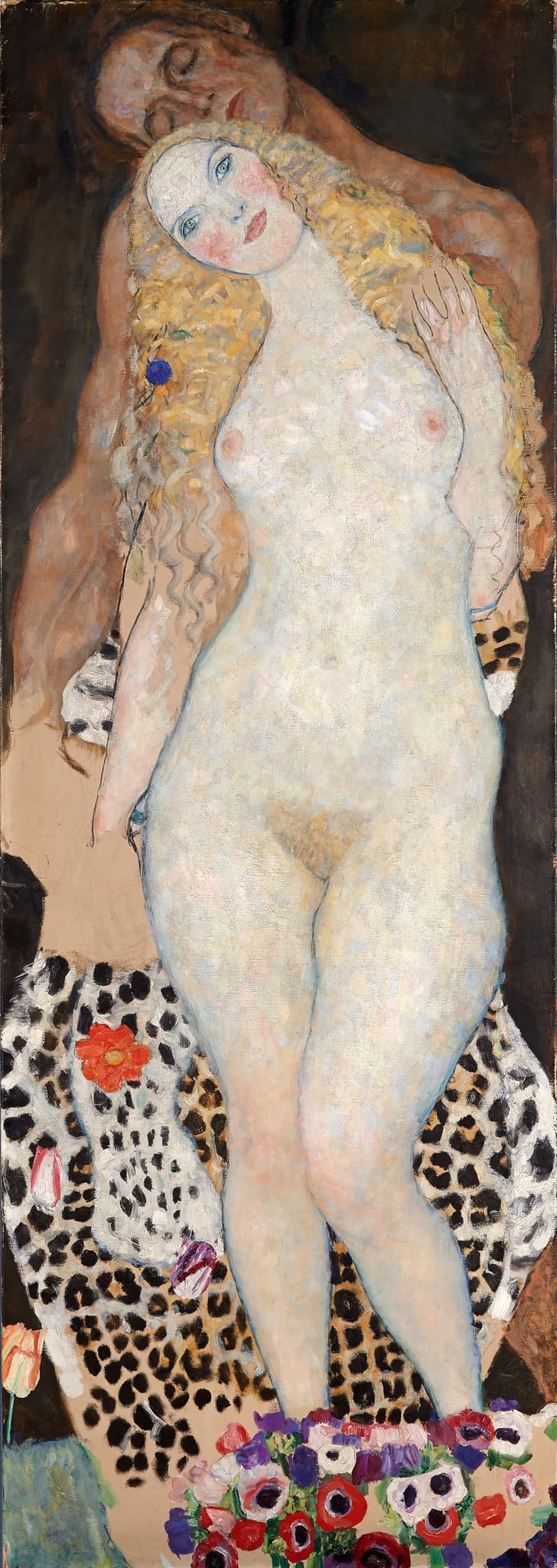
Religious symbolism in Western art evolves from doctrinal sign to reflexive visual language, as artists mobilize recurring motifs—gesture, light, crowning, sacrificial instruments—to negotiate the relation of human history to divine agency.
Within Western art, the visual language of death has served less to state a single doctrine than to negotiate a series of tensions: between annihilation and redemption, political violence and civic renewal, bodily ruin and psychic endurance. From early Christian passion imagery to modernist meditations on trauma and futurity, artists deploy symbols of death not merely as narrative details but as semiotic pressure points—sites where the image acknowledges its own limits before the fact of mortality.
The anamorphic skull in Hans Holbein’s The Ambassadors (1533) crystallizes this double function. As a distorted smear cutting across a scrupulously rendered tableau of instruments, books, and fabrics, the skull is simultaneously present and illegible. Its meaning is inseparable from the viewer’s movement: only from an oblique angle does it resolve into a recognizable cranium. Iconographically, it updates the medieval memento mori for a Renaissance preoccupation with optics and measurement. Positioned against celestial and terrestrial globes, torquetum, dials, hymnbook, and arithmetic text, the skull punctures the ambassadors’ array of knowledge with an image of the body’s non-negotiable terminus. Semiotic instability becomes the point: the very apparatus of perspective that organizes worldly vision is turned back upon the beholder as a reminder that all human systems are bounded by death.
Christian crucifixion imagery in this corpus refines the problem differently, aligning death with sacrifice and collective meaning. Rubens’s The Elevation of the Cross (1609–1610) and The Descent from the Cross (1611–1614) stage Christ’s death not as a single instant but as a process of being raised and lowered, lifted into execution and received into care. In the Elevation, straining executioners and taut ropes form a surging diagonal, while Christ’s body, luminous and composed, becomes the calm fulcrum between earthly compulsion and divine will. The crown of thorns and INRI tablet function as concentrated emblems of mocked kingship and juridical power, but Rubens’s lighting ensures that their meaning is legible only in relation to the radiant corpse they frame. In the Descent, the crown and nails reappear as low still-life elements beneath the dazzling white shroud, transmuted into Arma Christi that guide devotion. Semiologically, these Passion instruments index the historical event of execution while, within liturgical practice, pointing beyond it to Eucharistic presence. Death is thus recoded as a necessary passage in a larger soteriological arc.
Jacques-Louis David’s The Death of Marat (1793) appropriates this cruciform and Passion-based language for secular politics. The bloodied knife lying beside the inkwell and fallen quill functions like a post-Enlightenment Arma Christi: a compact sign that opposes assassination to rational discourse. The dark void behind the bathtub echoes the devotional no-space of many Baroque altarpieces, yet the sole “halo” is the cool light falling on Marat’s slack body and on the crate inscribed “À MARAT, DAVID, L’AN DEUX.” Here, the martyr is textual and civic; the billet in his hand, the assignat, and the new revolutionary calendar replace gospel with pamphlet and liturgy with propaganda. Iconographically, David retains the choreographed stillness and repose of Christological lamentation, but the crucifix has been evacuated. Where Rubens’s Passion symbols mediate between mortal suffering and promised redemption, David’s bloodied knife locks the viewer into historical time, insisting that political rupture, once enacted, cannot be reversed.
Goya’s Saturn Devouring His Son (1820–1823) pushes this immanence to an extreme. Dispensing with mythological attributes, Goya concentrates meaning in the torn neck and bloodied mouth of the victim. The arterial streaks on Saturn’s hands and the raw cavity where a head should be identify the act as irreversible consumption rather than allegorical allusion. The titan’s aged, decaying body and stringy hair—here already registering corporeal breakdown—transform classical father-time into a decrepit, paranoid sovereign. Death is no longer an endpoint external to the god; it is his own mode of being, a self-consuming temporality. Semiologically, the absence of contextual cues—no battlefield, no domestic interior—forces the viewer to read exposed flesh as argument. The painting becomes a thesis: resistance to mortality, whether political or temporal, culminates in greater violence and ultimately serves the very power it fears.
Picasso’s Guernica (1937) reconfigures death from mythic or individual tragedy into collective catastrophe. The corpses and blood pools are stylized rather than anatomically explicit, yet their placement—fallen soldier with broken sword and tiny flower, the mother with dead child, fragmented bodies across the ground plane—establishes a civic lamentation. The broken sword beside the minute sprouting flower yields a complex sign: armed resistance is shattered, yet a fragile, almost absurd, sign of endurance persists. Unlike Goya’s solitary devourer, Picasso arrays death as a dispersed condition, a field that engulfs animals, architecture, and human figures alike. The composition’s fractured planes and compressed interiors visualize how modern technological war obliterates boundaries between front and home, combatant and civilian. Semiotics here lies in juxtaposition: the electric bulb’s harsh eye, the oil lamp’s vulnerable flame, the gaping horse, and the scattered corpses articulate a world where illumination itself is complicit in destruction.
If these works anchor death in bodies and overt violence, Georgia O’Keeffe’s Black Iris (1926) relocates mortality to the level of contemplation. The abyssal center—the flower’s dark throat—draws the eye inward past luminous petals into an indeterminate recess. This “Abyssal Center” carries none of the explicit gore of Goya or David, yet semiotically it performs a similar operation: it confronts viewers with a limit to seeing, a locus where vision is compelled but knowledge withheld. In magnifying the iris beyond natural scale and cancelling contextual cues, O’Keeffe suspends the bloom between botanical specificity and abstract depth. The velvety blacks and wine reds of the center imply not narrative death but the existential unknown, a void that underlies organic magnificence. The symbol thus displaces the skull’s didactic warning with a more ambivalent invitation—to linger at the brink of unrepresentability rather than recoil from decay.
Jean-Michel Basquiat’s paintings introduce yet another register: death as an immanent condition of urban life and racialized vulnerability. In Boy and Dog in a Johnnypump (1982), the boy’s cruciform, arms-flung pose and exposed ribs/x-ray torso bind exuberant self-assertion to mortality. The figure’s blackened body and gridded chest recall both an anatomical diagram and a target; the pose reads at once as imploring and triumphant. Here, exposed anatomy becomes a contemporary memento mori, insisting that beneath bravado and gestural scale lies a threatened body. The small flower at the fallen soldier’s hand in Guernica finds a distant echo in the jagged, sparking fingers and mint-and-pink streak at the boy’s feet: fragile signs of endurance set against systemic precarity.
Dustheads (1982) pursues this logic psychically. The electrified figures, with their skull-like, mask faces and concentric, over-widened eyes, approach the androgynous, skull-faced figure as a symbol of universalized crisis. While not literal skeletons, their bared teeth and hollowed eyes occupy the iconographic territory of the skull, yet now mobilized to depict chemical and social derangement rather than theological warning. The black ground, streaked with vertical flashes of color, suggests an urban night that both swallows and irradiates the bodies. Basquiat’s frequent halos—here hovering amid turbulence—echo the crowns and cruciform emblems of earlier martyr imagery, but shorn of stable doctrine. Sanctification attaches to the marginalized and addicted, yet no narrative of redemption is guaranteed; death is ambient, statistical, and ongoing rather than staged as a singular climactic event.
Across these works, recurrent motifs—skulls, cruciform poses, exposed flesh, dark voids, and blood—shift their semantic charge as theological frameworks give way to political and existential ones. Holbein’s anamorphic skull and Rubens’s Passion instruments presuppose a cosmos in which mortality is ultimately enfolded into a providential order. By the time of Goya and Picasso, death appears as a function of historical violence and psychic terror, only contingently touched by transcendence. O’Keeffe interiorizes the encounter into an abstracted abyss of looking, while Basquiat distributes death across bodies marked by race, addiction, and urban neglect, fusing martyrdom with street iconography. The evolution is not linear replacement so much as recombination: each period retools inherited symbols of death to address newly urgent questions about power, subjectivity, and the possibility—sometimes the impossibility—of meaning at the edge of extinction.