Eyes of Horus Symbolism
Protective, restorative amulets signifying vigilance and healing.
Common Themes
Artworks Featuring This Symbol
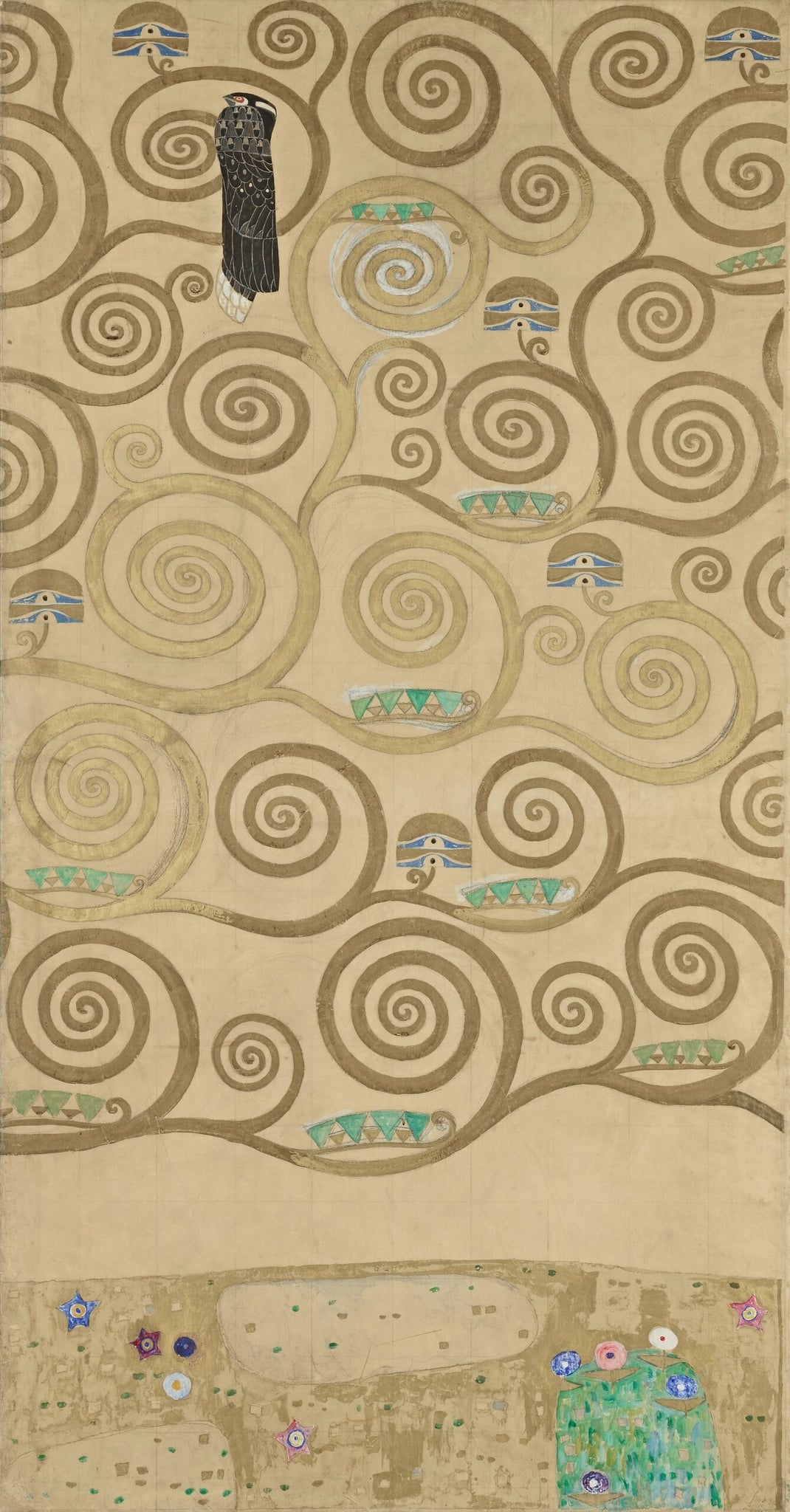
Part of the Tree of Life (Part 5)
Gustav Klimt (1910–1911)
In Part of the Tree of Life (Part 5), Gustav Klimt renders a cosmos of spiraling branches studded with <strong>Eyes of Horus</strong>, turquoise tesserae, and a solitary dark <strong>bird</strong>. The panel condenses themes of vigilance, renewal, and mortality into a decorative grammar that served as a full-scale working <strong>cartoon</strong> for the Stoclet dining-room mosaics—a key Secessionist <strong>Gesamtkunstwerk</strong> <sup>[1]</sup><sup>[2]</sup>.
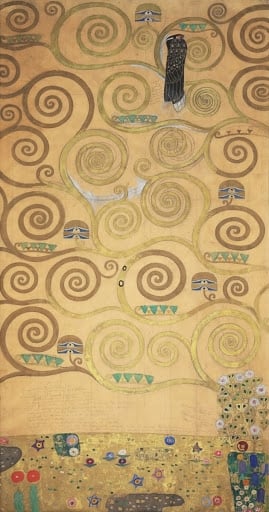
Part of the Tree of Life (Part 3)
Gustav Klimt (1910–1911)
Gustav Klimt’s Part of the Tree of Life (Part 3) is a full‑scale cartoon for the Stoclet Frieze, where a gold ground hosts spiraling branches studded with <strong>Eyes of Horus</strong> and jewel‑like emblems. A perched <strong>Horus falcon</strong> and a carpet of stylized flowers fuse myth, ornament, and cyclical vitality into a single, curling design <sup>[1]</sup><sup>[2]</sup>.