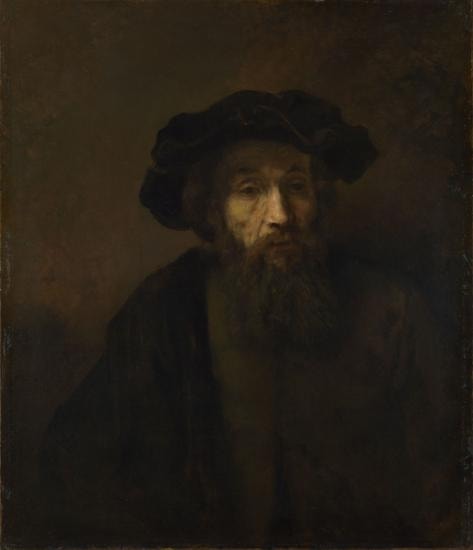
A Bearded Man in a Cap

by Rembrandt van Rijn

A Bearded Man in a Cap is a late‑1650s tronie by Rembrandt van Rijn, a meditative study where raking light grazes a timeworn face emerging from darkness. With a broad, soft cap and square‑cut beard, the figure embodies aged contemplation rather than social identity, rendered through Rembrandt’s late chiaroscuro and tactile brushwork [1].

Study Print Studio

Create a personal study print

Build a companion study sheet around the part of this painting that speaks to you most. Choose a detail, shape an interpretation, and walk away with something personal and display-worthy.

Fast Facts

Year
late 1650s (probably 1657)
Medium
Oil on canvas
Dimensions
78 × 66.7 cm
Location
National Gallery, London
See all Rembrandt van Rijn paintings in London
A Bearded Man in a Cap by Rembrandt van Rijn (late 1650s (probably 1657)) featuring Broad soft cap, Square-divided beard, Partial illumination (chiaroscuro beam), Averted, downcast gaze and softened mouth

Click on any numbered symbol to learn more about its meaning

Meaning & Symbolism

Rembrandt constructs a quiet drama by isolating the head against a near‑black field and letting a narrow beam of light travel from the sitter’s temple across the cheek toward the slack mouth. That beam stops before the far side of the face, so cognition seems to flicker at the threshold of shadow—a visual grammar of partial illumination. The broad, ruffled cap—known from Rembrandt’s studio props—does not assign social rank; it historicizes the figure and removes him from contemporary Amsterdam, signaling a timeless, learned persona without attributes like books or pens 1. The square‑divided beard, rendered with thicker, broken strokes, reads as material age, an index of endurance that contrasts with the supple, thinly glazed skin around the wet eyes. In Rembrandt’s late manner, these material oppositions—glaze versus impasto, absorbent shadow versus struck highlight—replace overt symbols; paint itself becomes the vehicle of character. The result is a tronie that conveys contemplation without narrative, akin in mood to related mid‑1650s heads of philosophers and apostles, where the same model often appears as a vessel for reflection rather than identity 23. This inward turn is underscored by the composition’s restraint. The shoulders slump into the dark robe; the mouth softens; the gaze drifts just away from us. Nothing interrupts the field—no table edge, no window frame—so the figure floats in a dusk that feels temporal as much as spatial. Such reduction is characteristic of Rembrandt’s late palette of browns and ochres, which the National Gallery links to the period’s simplified settings and concentrated head studies 1. Contemporary technical research supports the expressive role of medium: Rembrandt’s oil‑rich layers, alternating transparent passages with textured impastos, heighten the sensation of skin catching and losing light, amplifying psychological presence without descriptive clutter 45. Within this framework, the ebbing light can be read—cautiously—as a moral metaphor for life’s brevity and for knowledge obtained through shadow, a vanitas inflection achieved without props 12. The painting’s later prestige, echoed in Thomas Gainsborough’s 18th‑century copy, confirms how viewers recognized in it not a portrait of someone but a model of perception itself: how a human mind meets the world when illumination is scarce and hard‑won 6. In A Bearded Man in a Cap, Rembrandt condenses decades of looking into a single exchange between light and worn skin, making the act of painting indistinguishable from the act of thinking.

Explore Deeper with AI

Ask questions about A Bearded Man in a Cap

Popular questions:

Powered by AI • Get instant insights about this artwork

💬 Ask questions about this artwork!

Interpretations

Vanitas Without Emblems

Although free of skulls, candles, or withering blooms, the picture sustains a quiet vanitas inflection through light’s attenuation and the body’s textures. The side beam that fails to traverse the face becomes a discreet memento of limits—of vision, time, and knowledge gained at the edge of darkness. Read against Rembrandt’s contemporaneous heads of apostles and philosophers, where mortality and wisdom often intertwine, the painting suggests ethical reflection via optics: mortality is felt as the loss and catch of light over aging skin. Museums caution against programmatic claims, but the metaphor is legible in the late style’s reduction and palette 12.

Source: National Gallery, London; National Gallery of Art, Washington

Technical Profile as Meaning

In Rembrandt’s late practice, facture carries psychology. He alternates oil‑rich, transparent glazes with crusted impastos to orchestrate absorption and reflection: the cheek’s thin films drink light while the beard’s bristling strokes scatter it. This controlled heterogeneity—supported by National Gallery technical studies of his binding media and limited resin use—undercuts smooth finish in favor of palpable surface events that read as age, tactility, and thought. The dark ground and restricted browns/ochres establish a low dynamic range, so tiny highlights become narratively charged, a material corollary to flickering attention. Technique thus isn’t decoration; it is the picture’s epistemology—how we know this head is thinking is how the paint behaves on it 145.

Source: National Gallery Technical Bulletin (Mills & White; White & Kirby)

Tronie, Not Portrait: The Work of Costume

The cap is not a badge of profession but a studio prop that historicizes the sitter into a timeless, learned type. The National Gallery rejects the 19th‑century “rabbi” label, noting the object’s function as a tronie—an expressive head—rather than a likeness with social credentials. In this mode, dress and lighting operate as rhetoric: the broad, ruffled cap removes the man from contemporary Amsterdam and suspends him in a scholarly elsewhere, while the near‑black field denies narrative context. What might once have indexed identity becomes a mask of contemplation, a tool for studying physiognomy, light, and mood over biography 1.

Source: National Gallery, London

Comparative Iconography: The Contemplative Type

The model’s features recur across Rembrandt’s mid‑1650s corpus—Apostle Paul and related “Philosopher” heads—where attributes (books, sword) sometimes clarify roles. Here those markers fall away, yet the mood and chiaroscuro align with that cluster of images probing wisdom and inwardness. The NGA’s catalogues frame these as sustained experiments in representing thought: eyelids lowered, gaze averted, cognition staged by raking light and textured skin. A Bearded Man in a Cap sits within this typology as its most reduced variant—contemplation distilled to head and light—demonstrating Rembrandt’s capacity to transfer narrative gravitas into pure physiognomic theater 23.

Source: National Gallery of Art, Washington

Reception & Emulation: Gainsborough’s Lesson

Thomas Gainsborough’s 18th‑century copy spotlights what later painters sought in Rembrandt: not iconography, but touch and tone. By translating the tronie into his own idiom, Gainsborough acknowledges the work as a school in handling—how to make skin flicker between shadow and strike. The copy’s existence charts the painting’s prestige and the broader Enlightenment taste for Rembrandt’s “natural” chiaroscuro as a vehicle for sentiment and character. Appropriation here is homage: a British master learning from a Dutch one how painterly means can imply mind, long after the sitter’s identity ceased to matter 16.

Source: Royal Collection Trust

Related Themes

About Rembrandt van Rijn

Rembrandt van Rijn (1606–1669) was a leading Dutch Golden Age painter and printmaker whose Amsterdam years (from 1631) produced virtuosic portraits and ambitious history paintings. In the early 1630s he favored polished finishes, saturated color, and theatrical staging—qualities on display in this 1633 canvas. Although prolific, this is his only known painted seascape [2][4].
View all works by Rembrandt van Rijn

More by Rembrandt van Rijn
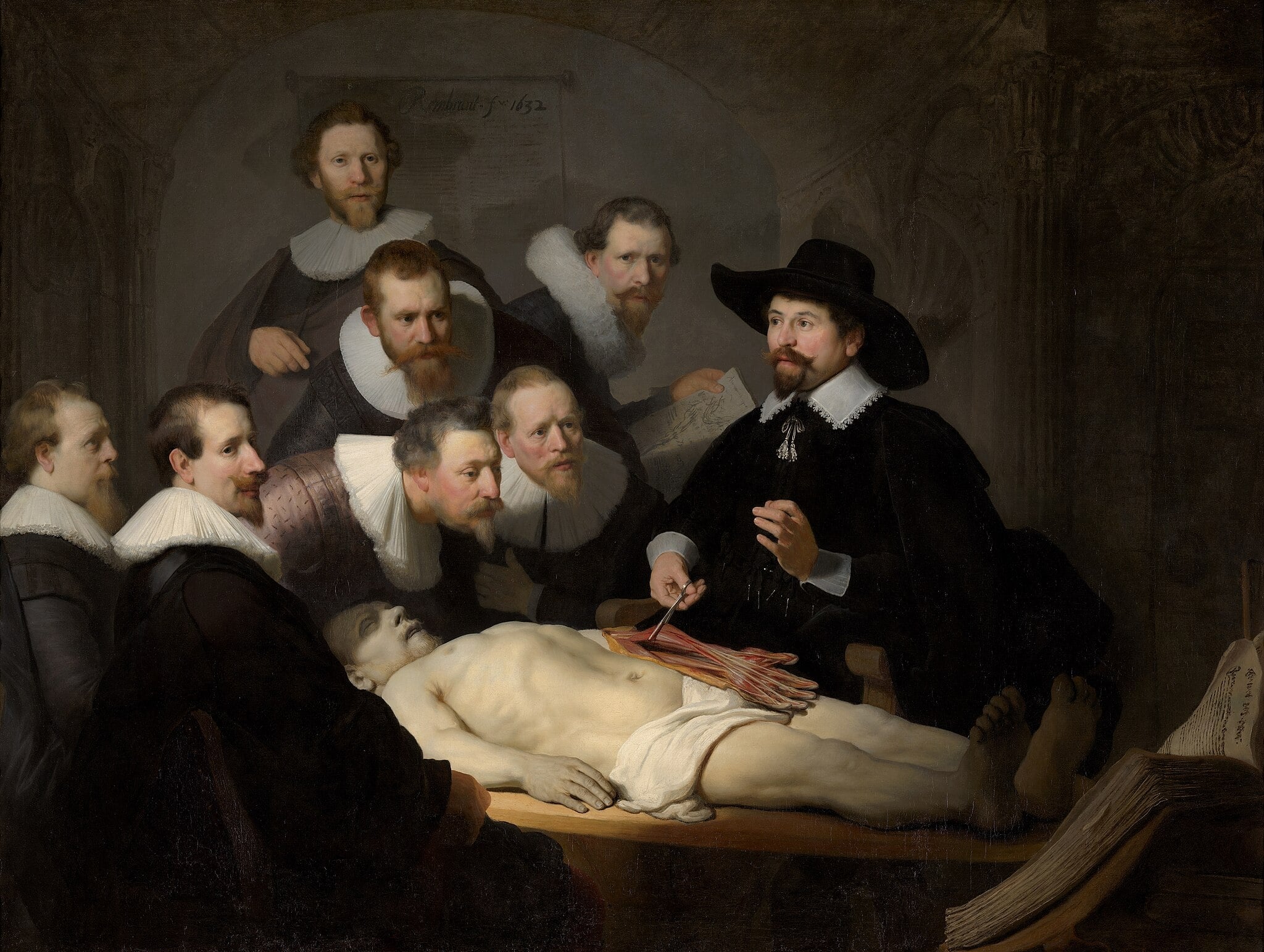
The Anatomy Lesson of Dr. Nicolaes Tulp by Rembrandt van Rijn

The Anatomy Lesson of Dr. Nicolaes Tulp

Rembrandt van Rijn (1632)

Rembrandt van Rijn turns a civic commission into a drama of <strong>knowledge made visible</strong>. A cone of light binds the ruff‑collared surgeons, the pale cadaver, and Dr. Tulp’s forceps as he raises the <strong>forearm tendons</strong> to explain the hand. Book and body face each other across the table, staging the tension—and alliance—between <strong>textual authority</strong> and <strong>empirical observation</strong> <sup>[1]</sup><sup>[2]</sup>.
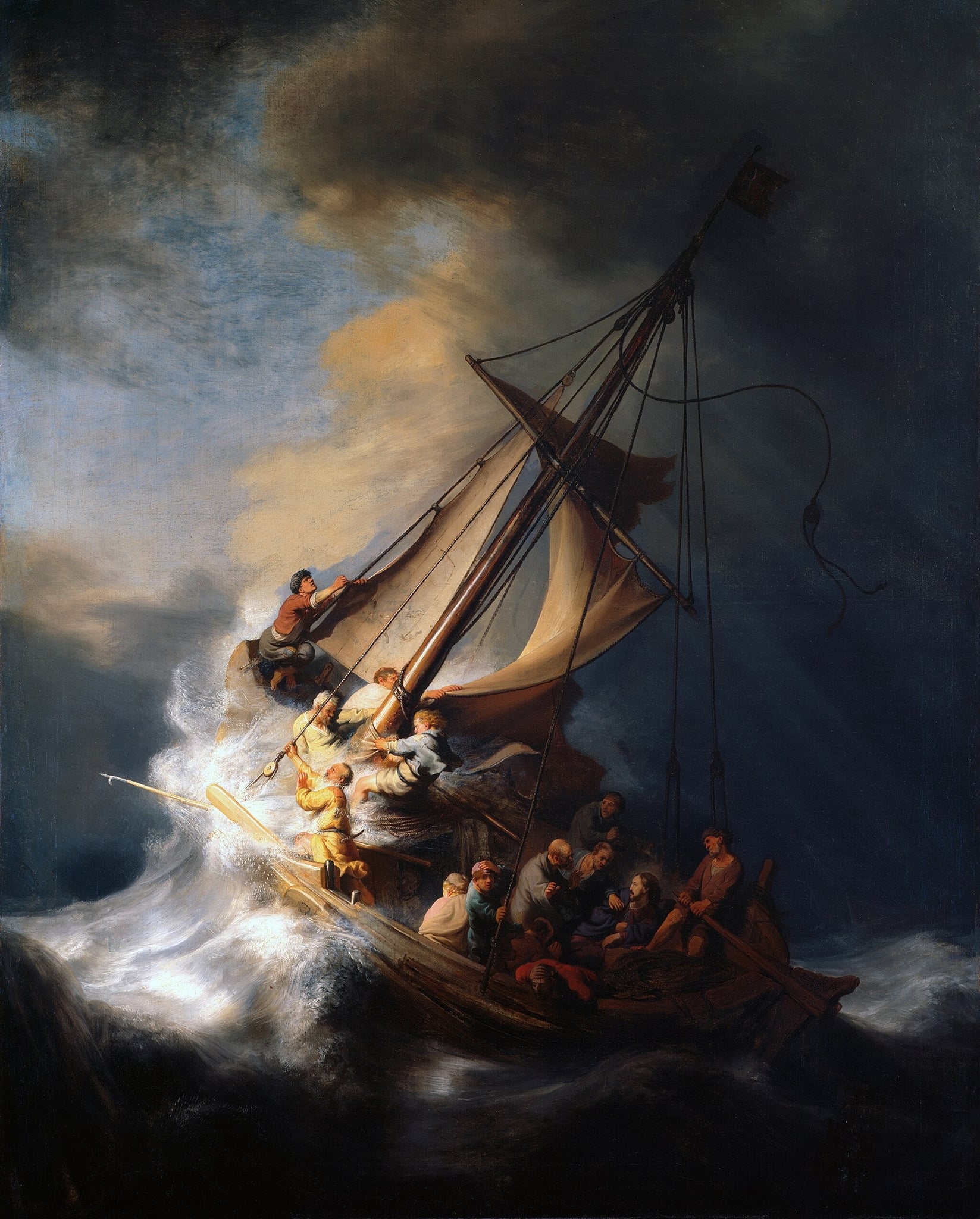
The Storm on the Sea of Galilee by Rembrandt van Rijn

The Storm on the Sea of Galilee

Rembrandt van Rijn (1633)

Rembrandt van Rijn’s The Storm on the Sea of Galilee stages a clash of <strong>human panic</strong> and <strong>divine composure</strong> at the instant before the miracle. A torn mainsail whips across a steeply tilted boat as terrified disciples scramble, while a <strong>serenely lit Christ</strong> anchors a pocket of calm—an image of faith holding within chaos <sup>[1]</sup><sup>[3]</sup>. It is Rembrandt’s only painted seascape, intensifying its dramatic singularity in his oeuvre <sup>[2]</sup>.
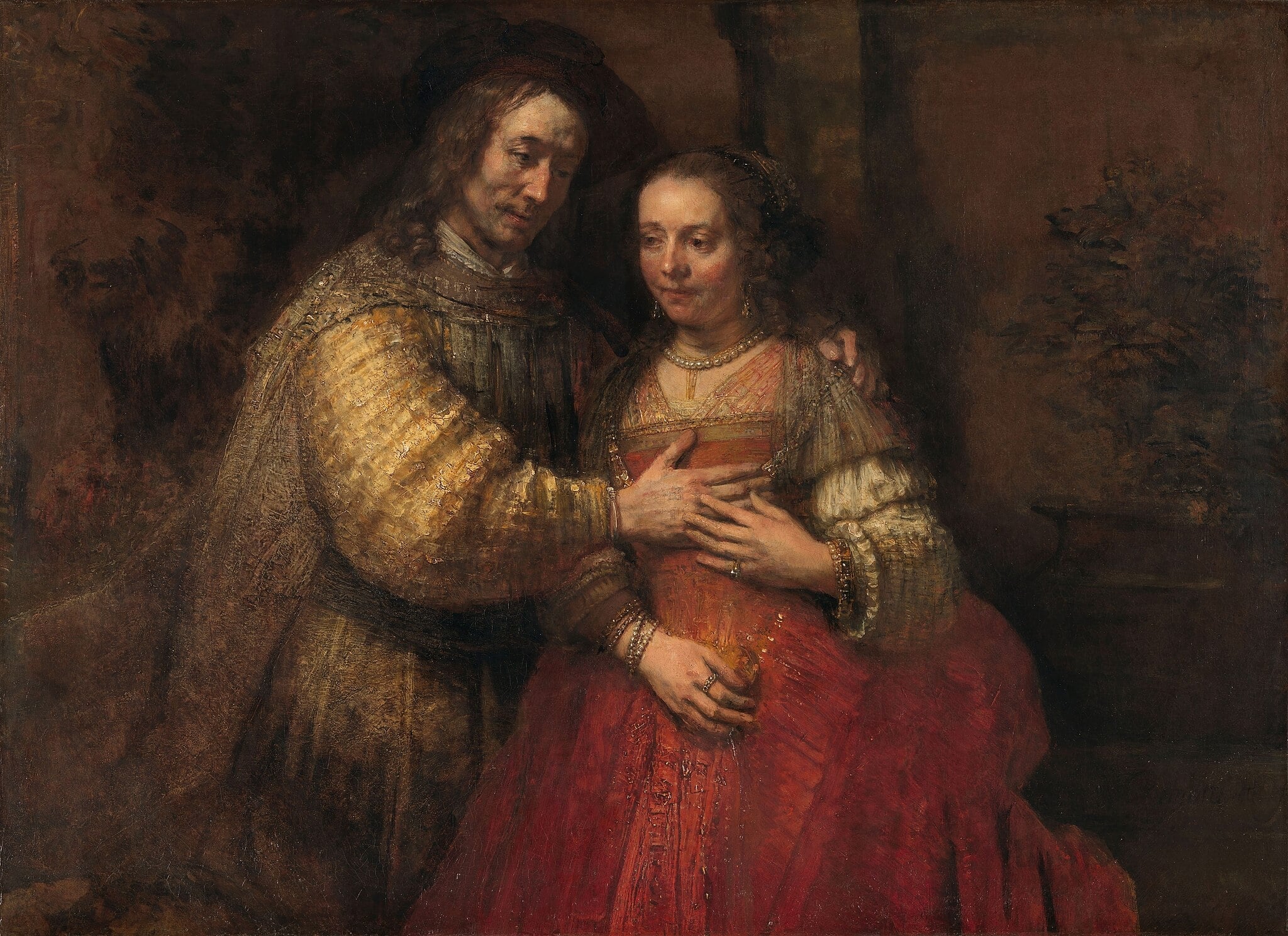
The Jewish Bride by Rembrandt van Rijn

The Jewish Bride

Rembrandt van Rijn (c. 1665–1669)

The Jewish Bride by Rembrandt van Rijn stages an intimate covenant: two figures, read today as <strong>Isaac and Rebecca</strong>, seal their union through touch rather than spectacle. Light concentrates on faces and hands, while the man’s glittering <strong>gold sleeve</strong> and the woman’s <strong>coral-red gown</strong> turn paint itself into a metaphor for fidelity and tenderness <sup>[1]</sup><sup>[3]</sup>. This late masterpiece embodies Rembrandt’s <strong>material eloquence</strong>—impasto as feeling—within a hushed, dark setting <sup>[1]</sup><sup>[2]</sup>.
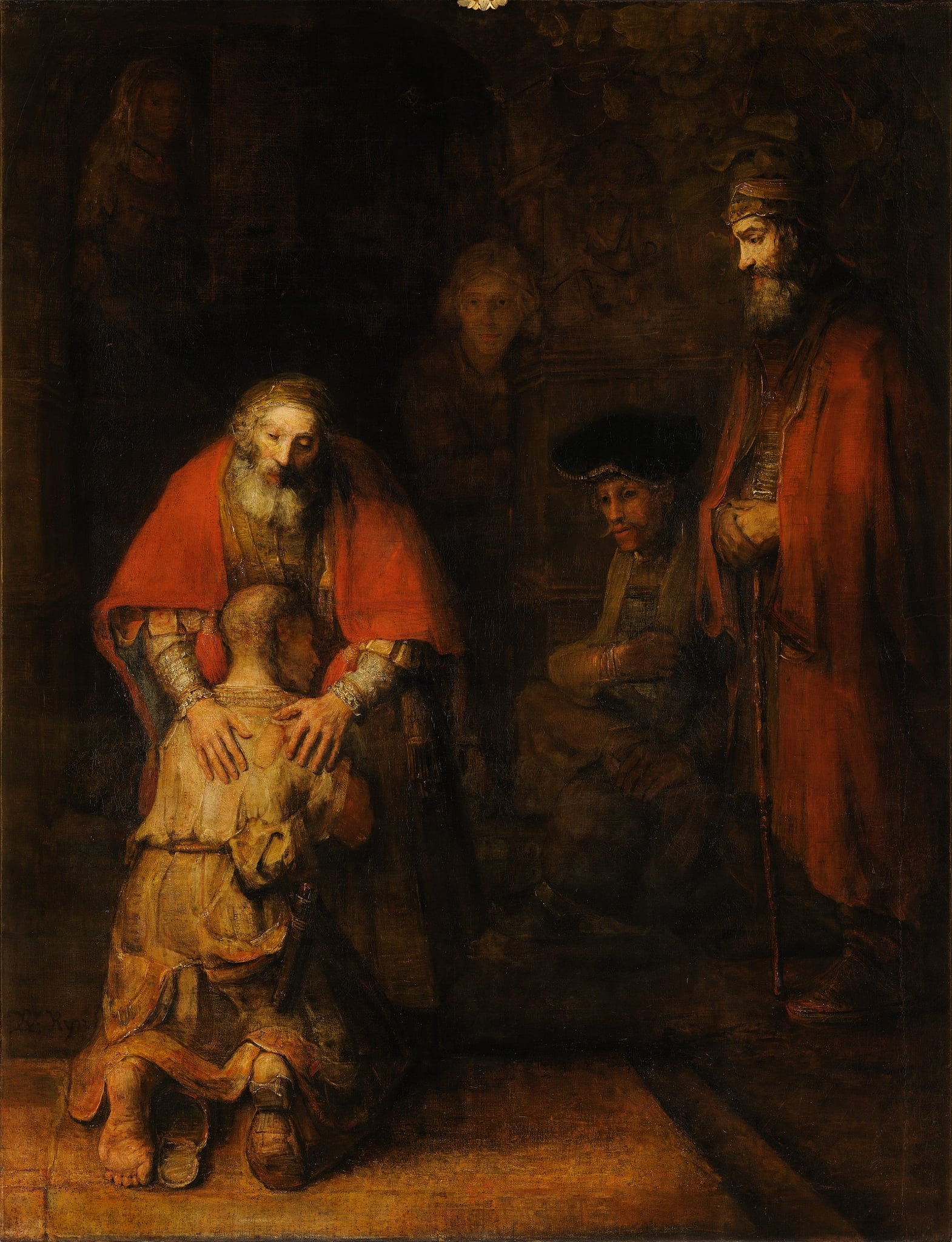
The Return of the Prodigal Son by Rembrandt van Rijn

The Return of the Prodigal Son

Rembrandt van Rijn (c. 1661–1669 (probably completed by 1669))

Rembrandt van Rijn’s The Return of the Prodigal Son is a late-life meditation on <strong>mercy</strong>, <strong>homecoming</strong>, and <strong>restored dignity</strong>. In a hush of dusk-like light, a ragged son kneels into his father’s <strong>embrace</strong>, while an upright elder brother holds back in shadow. The image concentrates meaning in illuminated <strong>faces, hands, and feet</strong>, turning a parable into a timeless human reckoning. <sup>[1]</sup><sup>[2]</sup>
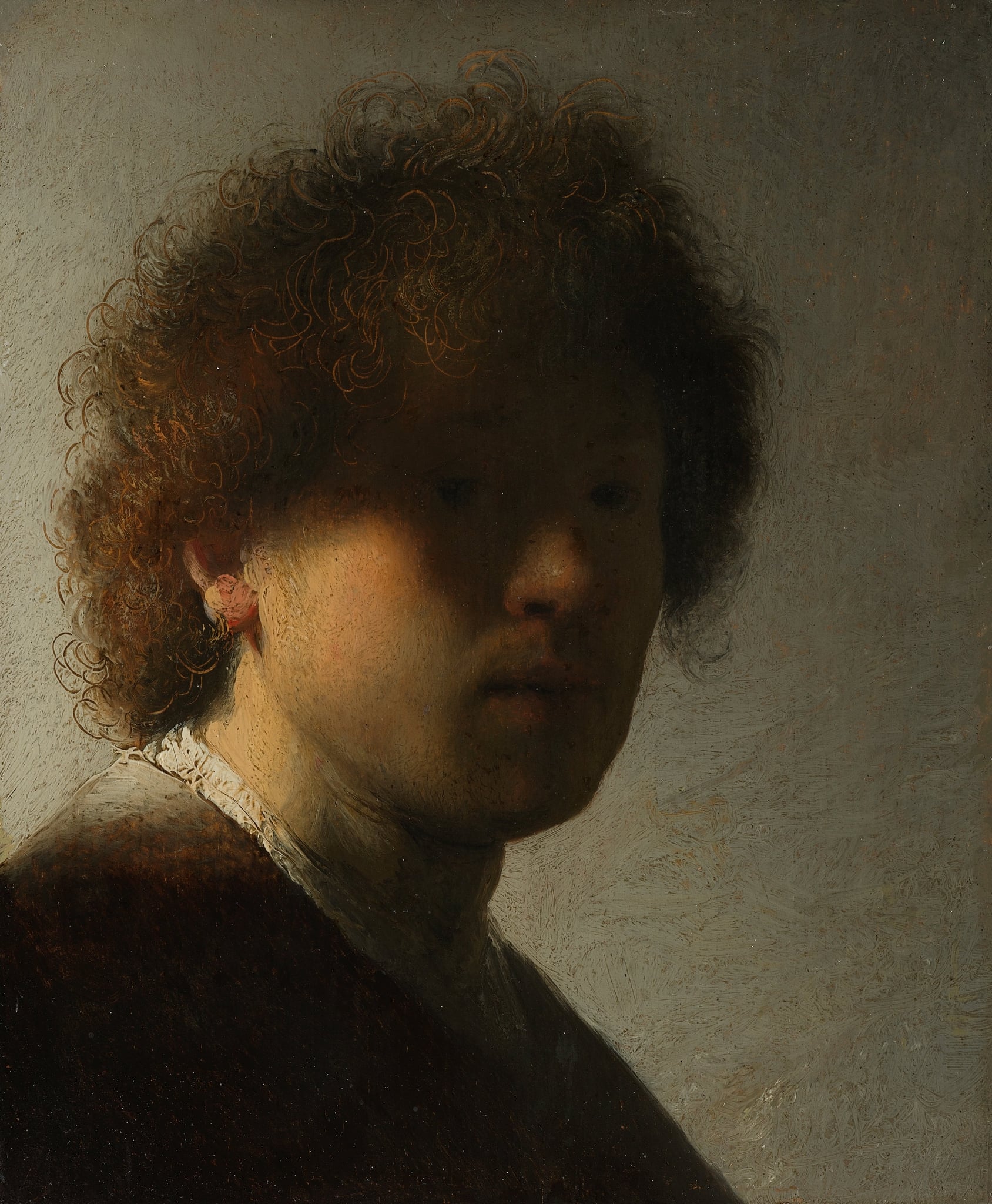
Self-portrait (with tousled hair) by Rembrandt van Rijn

Self-portrait (with tousled hair)

Rembrandt van Rijn (c. 1628)

A young Rembrandt van Rijn tests how <strong>light both reveals and withholds</strong> by letting his face emerge from darkness while his <strong>scratched, backlit curls</strong> flare like a rough halo. The small oak panel makes <strong>process itself the subject</strong>, turning hair, stubble, and a raking highlight into a statement of identity-in-formation <sup>[1]</sup><sup>[5]</sup>.
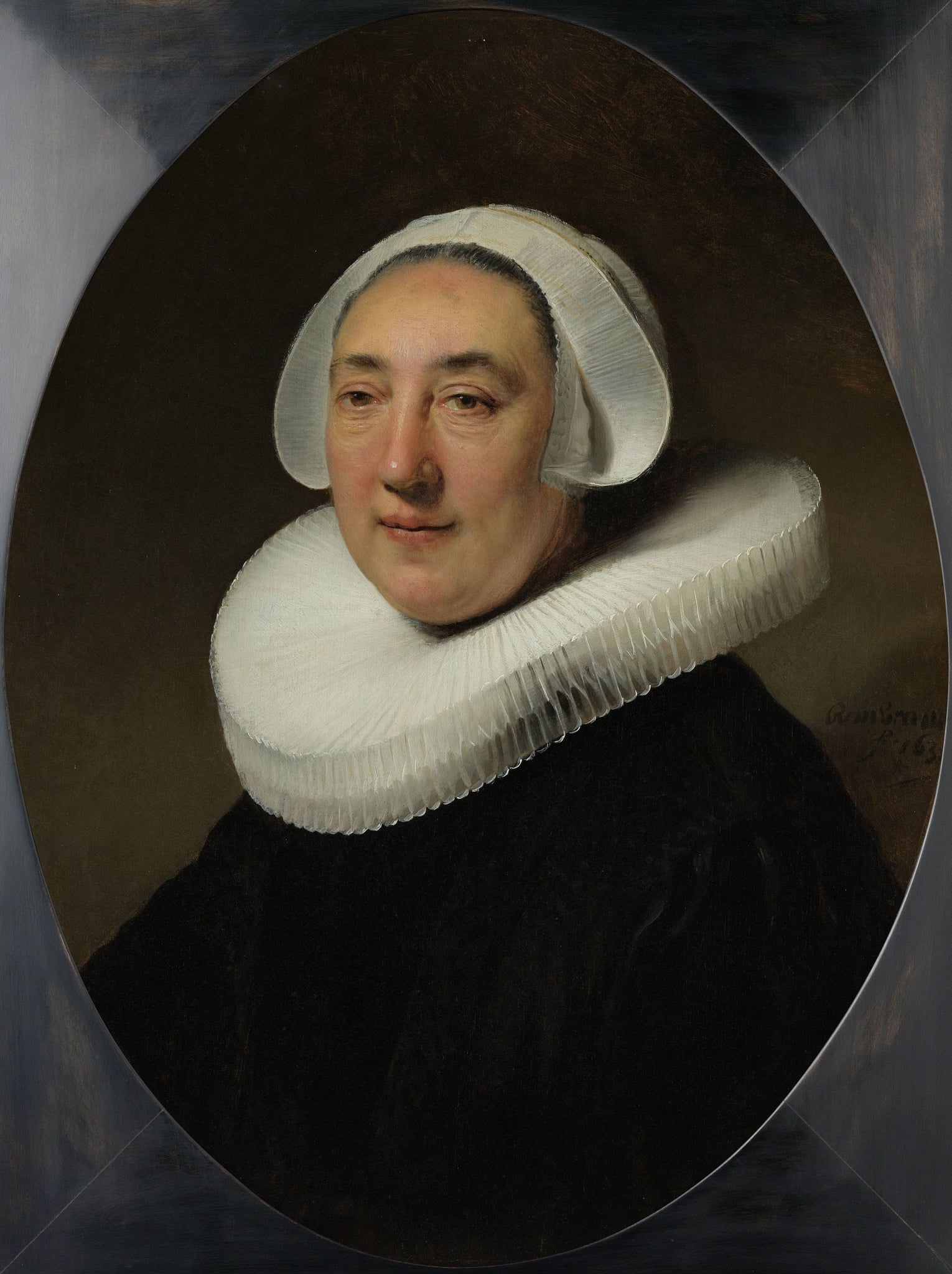
Portrait of Haesje Jacobsdr van Cleyburg by Rembrandt van Rijn

Portrait of Haesje Jacobsdr van Cleyburg

Rembrandt van Rijn (1634)

Rembrandt’s 1634 Portrait of Haesje Jacobsdr van Cleyburg stages a Dutch burgher within a feigned <strong>oval</strong> opening, illuminated by selective <strong>chiaroscuro</strong> that models warm skin against brilliant <strong>millstone ruff</strong> and sober black dress. The painting balances <strong>modesty and status</strong>, making virtue visible while quietly declaring prosperity through immaculate linen and craft <sup>[1]</sup><sup>[4]</sup>.