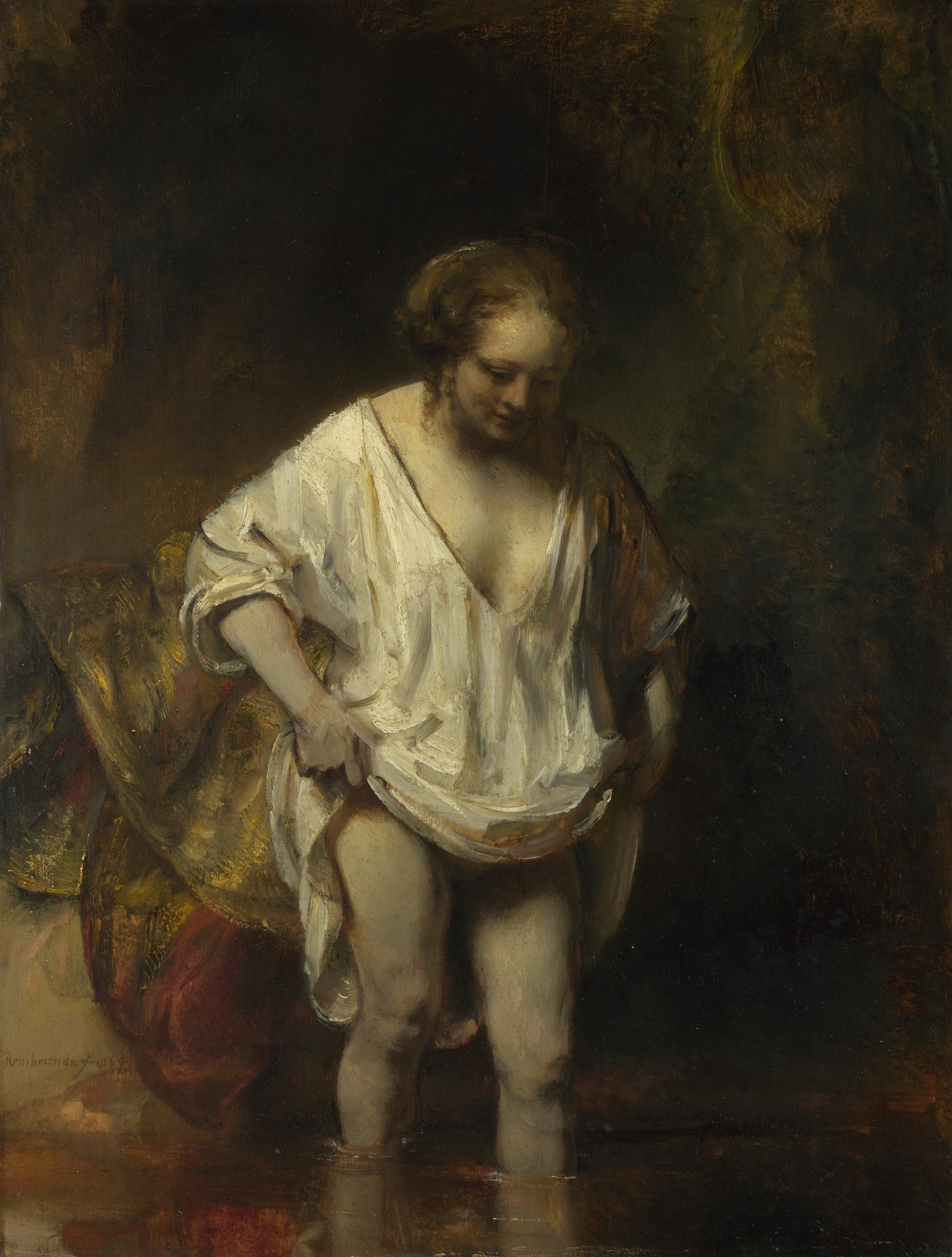
A Woman bathing in a Stream (Hendrickje Stoffels?)

by Rembrandt van Rijn

Rembrandt van Rijn’s A Woman bathing in a Stream (Hendrickje Stoffels?) stages a private act as a public meditation on vulnerability, renewal, and empathetic seeing. The woman gathers her white shift as it clings to her, steps into the water, and glows under a warm, directional light against a shadowed bank. The image turns everyday intimacy into a monumental, morally inflected moment of presence [1][2].

Study Print Studio

Create a personal study print

Build a companion study sheet around the part of this painting that speaks to you most. Choose a detail, shape an interpretation, and walk away with something personal and display-worthy.

Fast Facts

Year
1654
Medium
Oil on oak panel
Dimensions
61.8 × 47 cm
Location
National Gallery, London
See all Rembrandt van Rijn paintings in London
A Woman bathing in a Stream (Hendrickje Stoffels?) by Rembrandt van Rijn (1654) featuring White shift (linen chemise), Water, Reflection, Chiaroscuro light

Click on any numbered symbol to learn more about its meaning

Meaning & Symbolism

Rembrandt builds the picture’s drama out of concrete, seen things: the woman’s head tilts downward, her eyes averted; both hands gather the white shift at the hips so the hem lifts just as her calves break the water. Light isolates this simple action, striking the linen until it reads as a luminous plane, while the world around her—brown, olive, and earthen—recedes into ambiguity. The reddish-golden drapery massed on the bank reads as a vestige of “history painting” costume, yet it functions here as a foil: a rough, tactile wedge that confirms the ordinary truth of the moment rather than anchoring a specific narrative. The water itself is shallow and still enough to hold a broken reflection at her feet, a visual hinge that connects body to image and, by extension, sight to thought. In this conjunction of damp cloth, hesitant step, and reflected form, Rembrandt converts a private act into a meditation on self-awareness and grace. The composition’s ethical charge resides in the chiaroscuro: the figure advances from shadow into light, not as theatrical spotlight but as a moral atmosphere—an imaging of inner life through the handling of paint 12. That moral atmosphere is inseparable from the panel’s personal and historical frame. In 1654, Rembrandt’s companion Hendrickje Stoffels was summoned and censured by Amsterdam’s Reformed Church for “fornication”; the National Gallery notes that the painting’s date invites, without insisting on, a connection to her ordeal. If the model is Hendrickje, the work becomes a quiet act of solidarity: not an admonitory Bathsheba or a mythic nymph but a living woman on the edge of water, neither sanctified nor shamed, granted dignity through painterly attention 13. Yet even without identification, the painting asserts that intimacy can bear historical and spiritual weight. Scholars have linked the bathing motif to purification and penitence, and Michael Zell has shown how Rembrandt uses the figure’s reflection and the vigorous, impastoed handling of the shift to stage a poetics of looking—desire tempered by empathy, artistry framed as a “labor of love” rather than a didactic lesson 2. The image courts the aura of “history painting” without binding itself to a textual source: the stance adapts a Renaissance prototype (via Caraglio after Raphael), but Rembrandt naturalizes it into a tentative forward step, the body felt rather than idealized 2. Why A Woman bathing in a Stream (Hendrickje Stoffels?) is important follows from this synthesis of touch, light, and ambiguity. Rembrandt demonstrates how painting can dignify ordinary experience while sustaining interpretive openness: water can read as cleansing, testing, or simple sensation; the shift can signify modesty or exposure; the reflection can register self-knowledge or painterly reflexivity. In each case, meaning is anchored by what we can literally see in the image—the clinging linen, the bowed head, the reddish cloth on the bank, the dark that lets the body’s light bloom. Against the financial pressures and moral surveillance of mid‑1650s Amsterdam, the panel affirms a humane, anti-spectacular vision that made Rembrandt a lodestar of the Dutch Golden Age: an art of looking that finds moral force in the quiet dignity of a single figure in shallow water 14.

Explore Deeper with AI

Ask questions about A Woman bathing in a Stream (Hendrickje Stoffels?)

Popular questions:

Powered by AI • Get instant insights about this artwork

💬 Ask questions about this artwork!

Interpretations

Medium Reflexivity: Painting as a ‘Labor of Love’

Rather than present a canonical myth, Rembrandt thematizes looking itself. The shallow pool’s broken reflection folds the body back into vision, making the viewer conscious of mediation, while the impastoed, light-struck white shift asserts paint as touch. Michael Zell argues that these choices recast erotic looking as a tempered, empathetic practice—a studio poetics that figures art-making as a “labor of love,” not moralizing display 2. The tight range of values and the pooling of browns around a luminous linen plane enact a dialectic of disclosure and withholding, aligning desire with the work of seeing slowly. In this reading, the picture is “about” how painting turns nearness into knowledge and restraint, its modest scale and matter-of-fact motif staging an ethics of attention.

Source: Michael Zell, Journal of Historians of Netherlandish Art

Gendered Risk and Social Discipline

If the model is Hendrickje Stoffels, the painting answers the church’s 1654 charge of “hoererij” with a counter-image of unsensational intimacy. The figure’s averted eyes and gathered shift register self-possession rather than shame, while Rembrandt’s attentive chiaroscuro confers moral presence without recourse to punitive narrative. The National Gallery frames this as a plausible, if unprovable, homage to Hendrickje’s “strength and loyalty,” situating private tenderness against public censure 1. The Amsterdam church records confirm the reprimand that same year, sharpening how the panel transforms surveillance into solidarity—an image that neither denies sexuality nor submits it to admonition, but renders it legible through care, light, and touch 3.

Source: National Gallery, London; Amsterdam City Archives

Penitence Without Program: Devotional Ambiguity

Scholars have mapped the bathing motif onto purification and penitence, with Herman Colenbrander linking the scene’s watery threshold to Psalm 69’s cry from engulfing depths. Yet the picture withholds iconographic anchors—no attendants, no letter, no David—so the spiritual valence arises from phenomenology more than narrative 2. The hesitant step and still water imply trial and relief, but Rembrandt leaves the register open: bodily refreshment, ritual cleansing, or introspective pause. This devotional indeterminacy is consequential: it allows history-like gravity without didactic closure, aligning spiritual experience with the contingencies of light, moisture, and flesh, rather than with emblematic props or textual citation 2.

Source: Michael Zell (synthesizing Colenbrander), JHNA

From Raphael to the Kitchen Floor: Transforming the Prototype

Eric Jan Sluijter traces the pose to Caraglio’s engraving after Raphael’s Roxanne—courtly, idealized, and performative. Rembrandt naturalizes that schema: the contrapposto softens into a forward shuffle; the sumptuous court fabric becomes a reddish-golden drapery pushed aside; the setting contracts to a dim bank and a shallow stream 2. This is not quotation for prestige but translation—from antique decorum to tactile immediacy. By channeling a Renaissance lineage through Baltic oak and loaded brush, Rembrandt asserts authorship in the how rather than the what of representation, privileging touch, weight, and light over linear contour and ideal anatomy. The result is a living presence that remembers Raphael while refusing his distance 2.

Source: Eric Jan Sluijter (via Michael Zell), JHNA

History Painting Without a Story

Corpus traditions classify the panel as a small “history painting,” yet its power lies in anti-spectacular restraint. The lone figure, absent narrative tokens, borrows history painting’s gravitas—the moral tenor of chiaroscuro, the staged drapery—while refusing textual specificity 12. This strategic category blur lets Rembrandt claim the genre’s ethical stakes (virtue, trial, self-scrutiny) for an ostensibly everyday act. In doing so, he retools the hierarchy of genres from within: the eloquence is carried by facture, atmosphere, and a single human gesture rather than by plot. It is a history of inner life, not of events—a wager that the ordinary can bear public, even canonical, weight 12.

Source: National Gallery, London; Michael Zell, JHNA

Related Themes

About Rembrandt van Rijn

Rembrandt van Rijn (1606–1669) was a leading Dutch Golden Age painter and printmaker whose Amsterdam years (from 1631) produced virtuosic portraits and ambitious history paintings. In the early 1630s he favored polished finishes, saturated color, and theatrical staging—qualities on display in this 1633 canvas. Although prolific, this is his only known painted seascape [2][4].
View all works by Rembrandt van Rijn

More by Rembrandt van Rijn
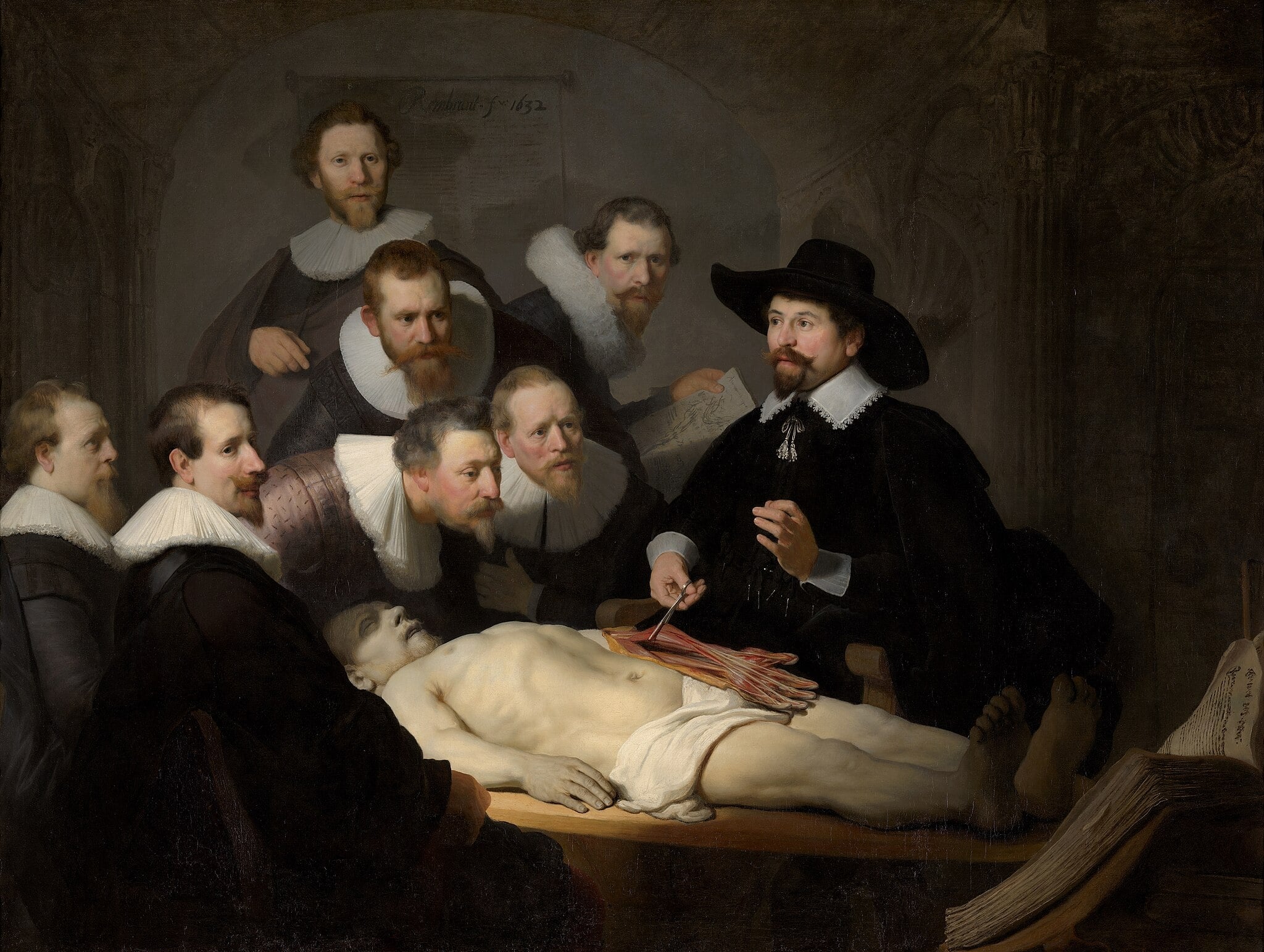
The Anatomy Lesson of Dr. Nicolaes Tulp by Rembrandt van Rijn

The Anatomy Lesson of Dr. Nicolaes Tulp

Rembrandt van Rijn (1632)

Rembrandt van Rijn turns a civic commission into a drama of <strong>knowledge made visible</strong>. A cone of light binds the ruff‑collared surgeons, the pale cadaver, and Dr. Tulp’s forceps as he raises the <strong>forearm tendons</strong> to explain the hand. Book and body face each other across the table, staging the tension—and alliance—between <strong>textual authority</strong> and <strong>empirical observation</strong> <sup>[1]</sup><sup>[2]</sup>.
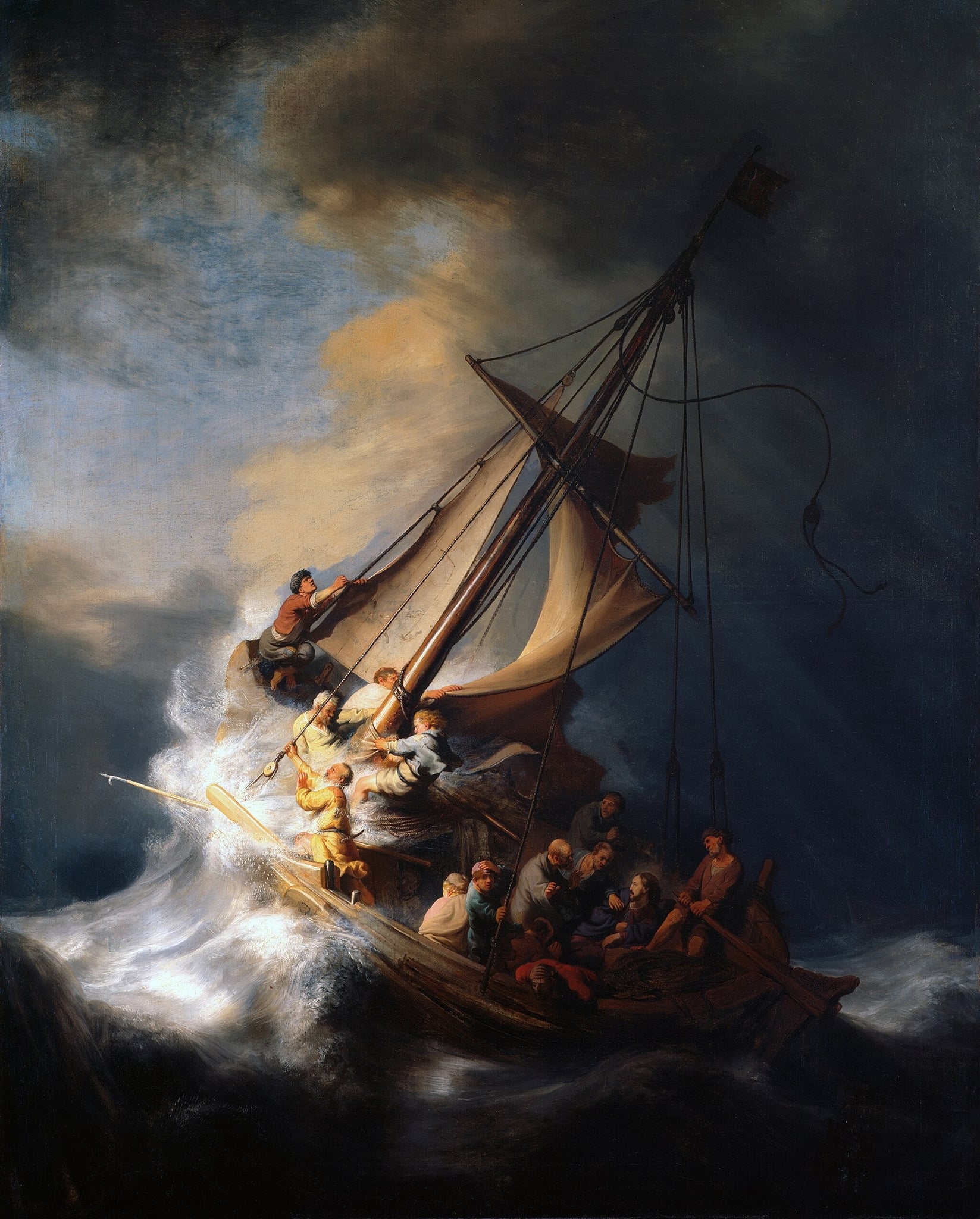
The Storm on the Sea of Galilee by Rembrandt van Rijn

The Storm on the Sea of Galilee

Rembrandt van Rijn (1633)

Rembrandt van Rijn’s The Storm on the Sea of Galilee stages a clash of <strong>human panic</strong> and <strong>divine composure</strong> at the instant before the miracle. A torn mainsail whips across a steeply tilted boat as terrified disciples scramble, while a <strong>serenely lit Christ</strong> anchors a pocket of calm—an image of faith holding within chaos <sup>[1]</sup><sup>[3]</sup>. It is Rembrandt’s only painted seascape, intensifying its dramatic singularity in his oeuvre <sup>[2]</sup>.
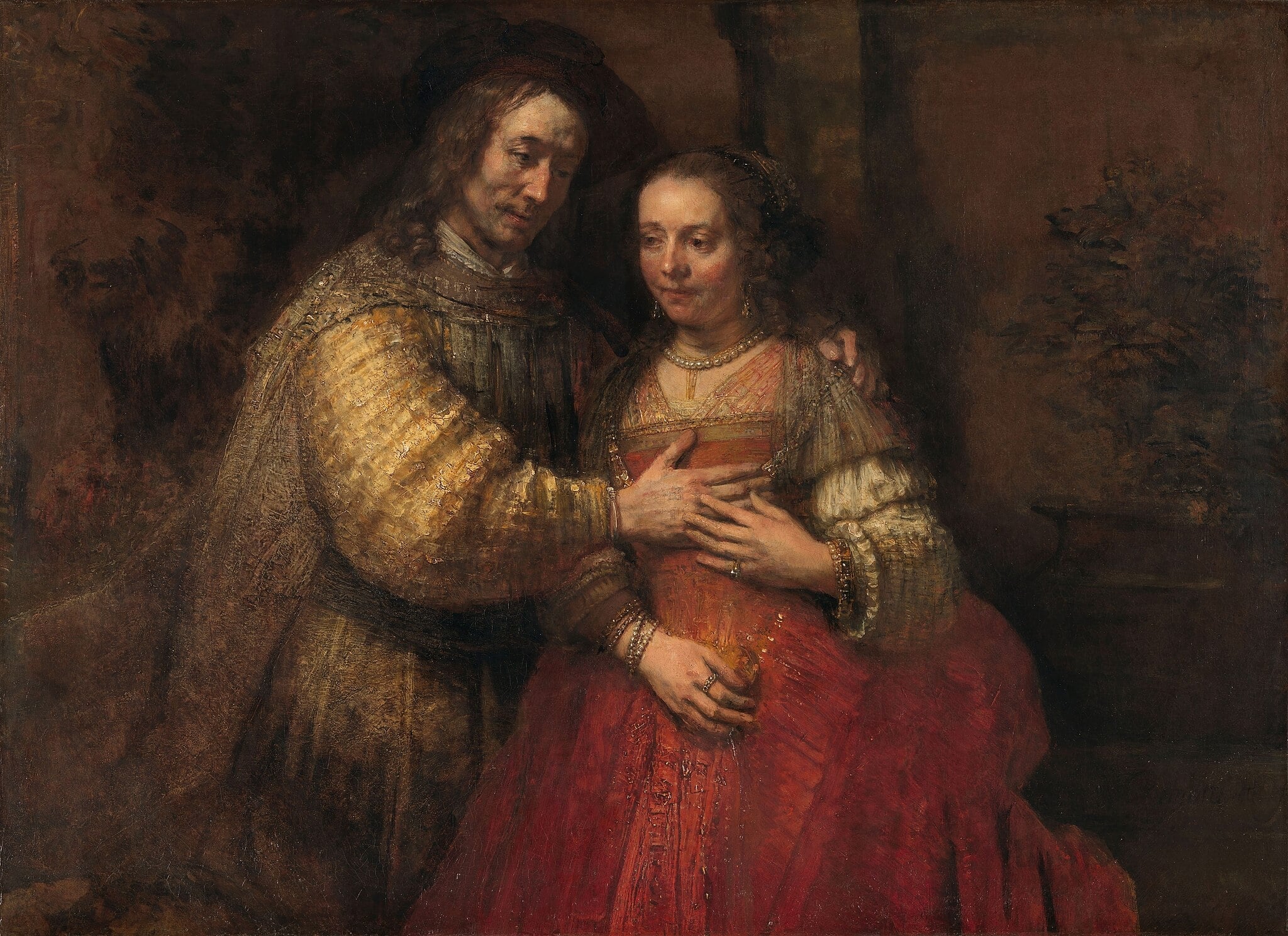
The Jewish Bride by Rembrandt van Rijn

The Jewish Bride

Rembrandt van Rijn (c. 1665–1669)

The Jewish Bride by Rembrandt van Rijn stages an intimate covenant: two figures, read today as <strong>Isaac and Rebecca</strong>, seal their union through touch rather than spectacle. Light concentrates on faces and hands, while the man’s glittering <strong>gold sleeve</strong> and the woman’s <strong>coral-red gown</strong> turn paint itself into a metaphor for fidelity and tenderness <sup>[1]</sup><sup>[3]</sup>. This late masterpiece embodies Rembrandt’s <strong>material eloquence</strong>—impasto as feeling—within a hushed, dark setting <sup>[1]</sup><sup>[2]</sup>.
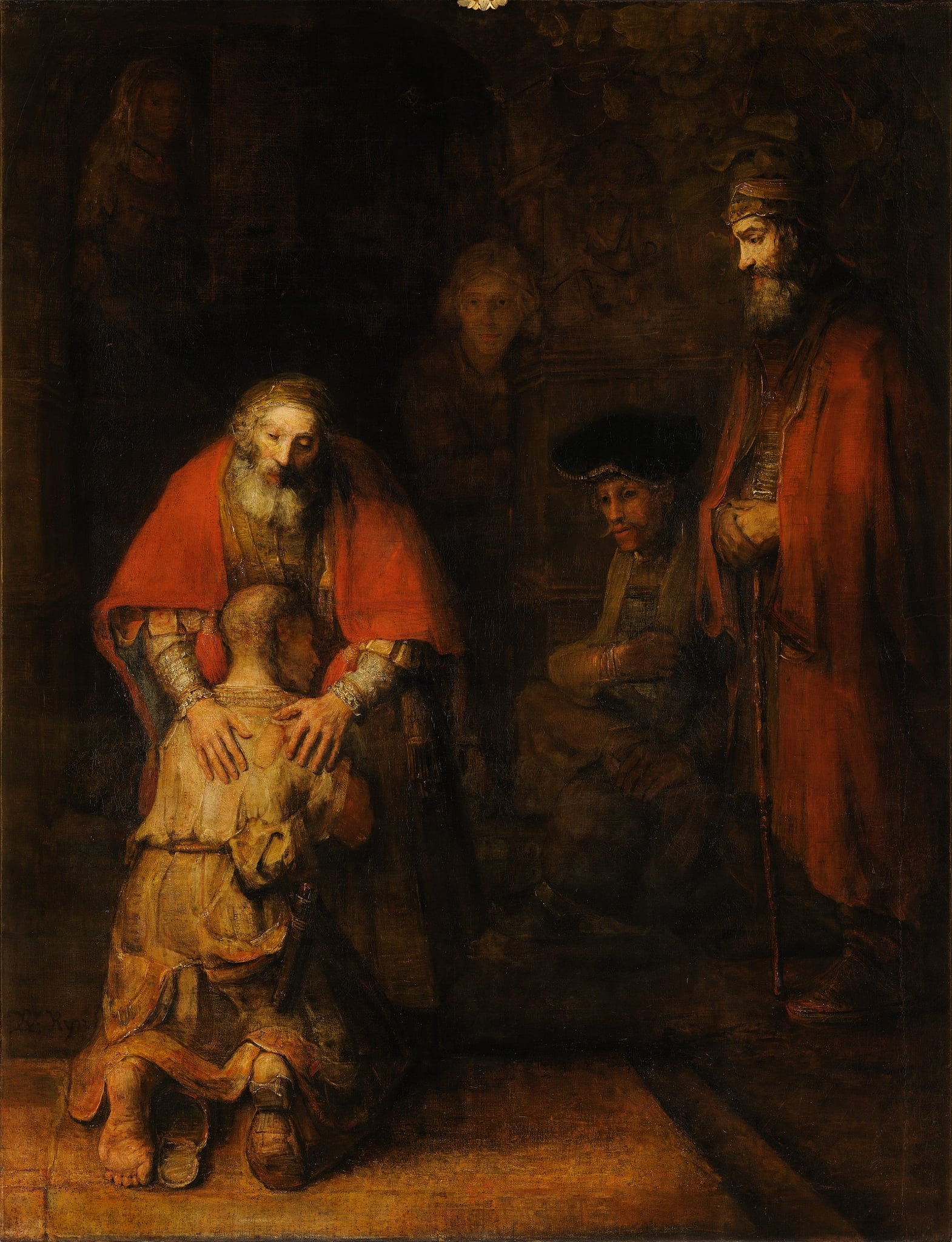
The Return of the Prodigal Son by Rembrandt van Rijn

The Return of the Prodigal Son

Rembrandt van Rijn (c. 1661–1669 (probably completed by 1669))

Rembrandt van Rijn’s The Return of the Prodigal Son is a late-life meditation on <strong>mercy</strong>, <strong>homecoming</strong>, and <strong>restored dignity</strong>. In a hush of dusk-like light, a ragged son kneels into his father’s <strong>embrace</strong>, while an upright elder brother holds back in shadow. The image concentrates meaning in illuminated <strong>faces, hands, and feet</strong>, turning a parable into a timeless human reckoning. <sup>[1]</sup><sup>[2]</sup>
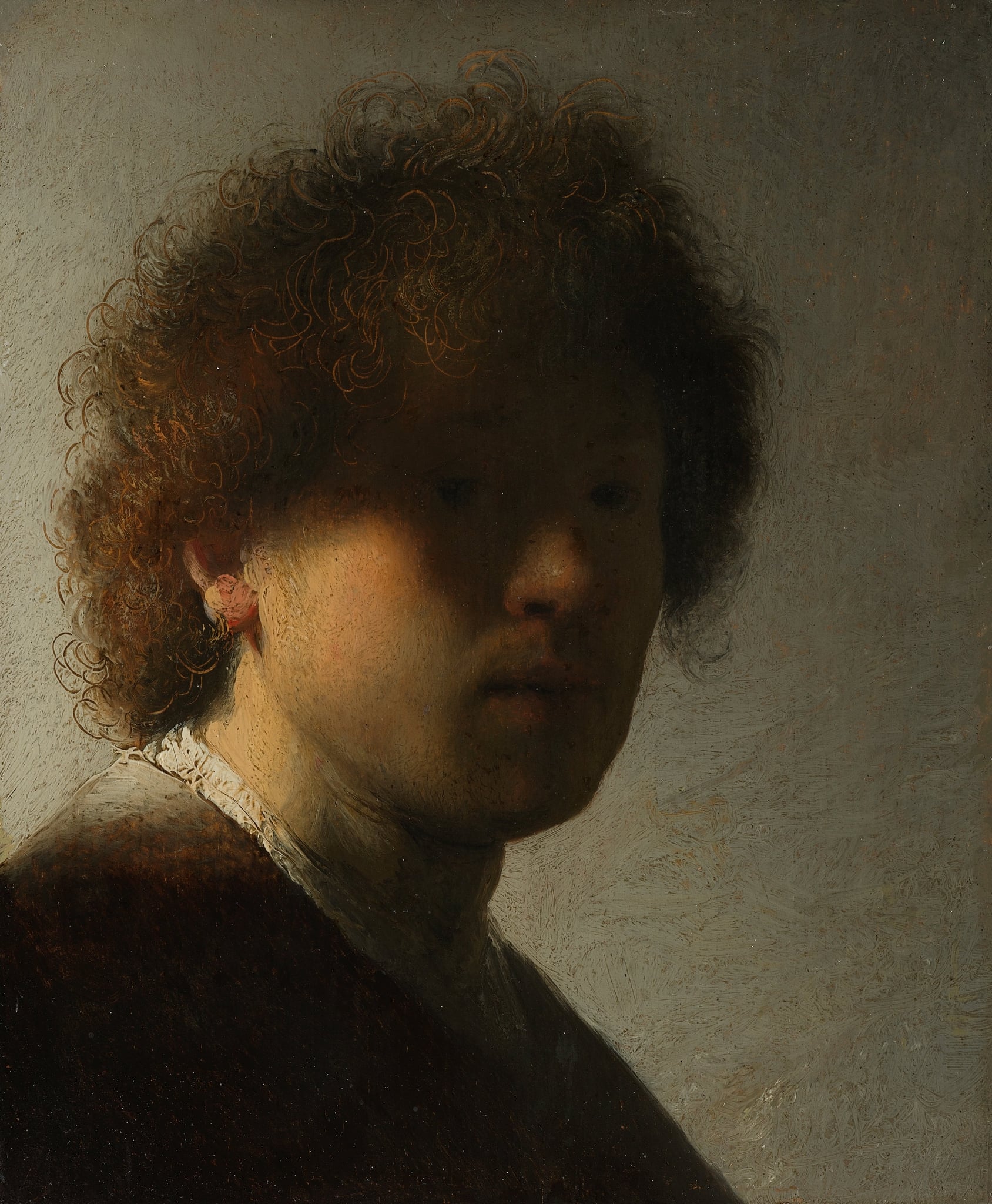
Self-portrait (with tousled hair) by Rembrandt van Rijn

Self-portrait (with tousled hair)

Rembrandt van Rijn (c. 1628)

A young Rembrandt van Rijn tests how <strong>light both reveals and withholds</strong> by letting his face emerge from darkness while his <strong>scratched, backlit curls</strong> flare like a rough halo. The small oak panel makes <strong>process itself the subject</strong>, turning hair, stubble, and a raking highlight into a statement of identity-in-formation <sup>[1]</sup><sup>[5]</sup>.
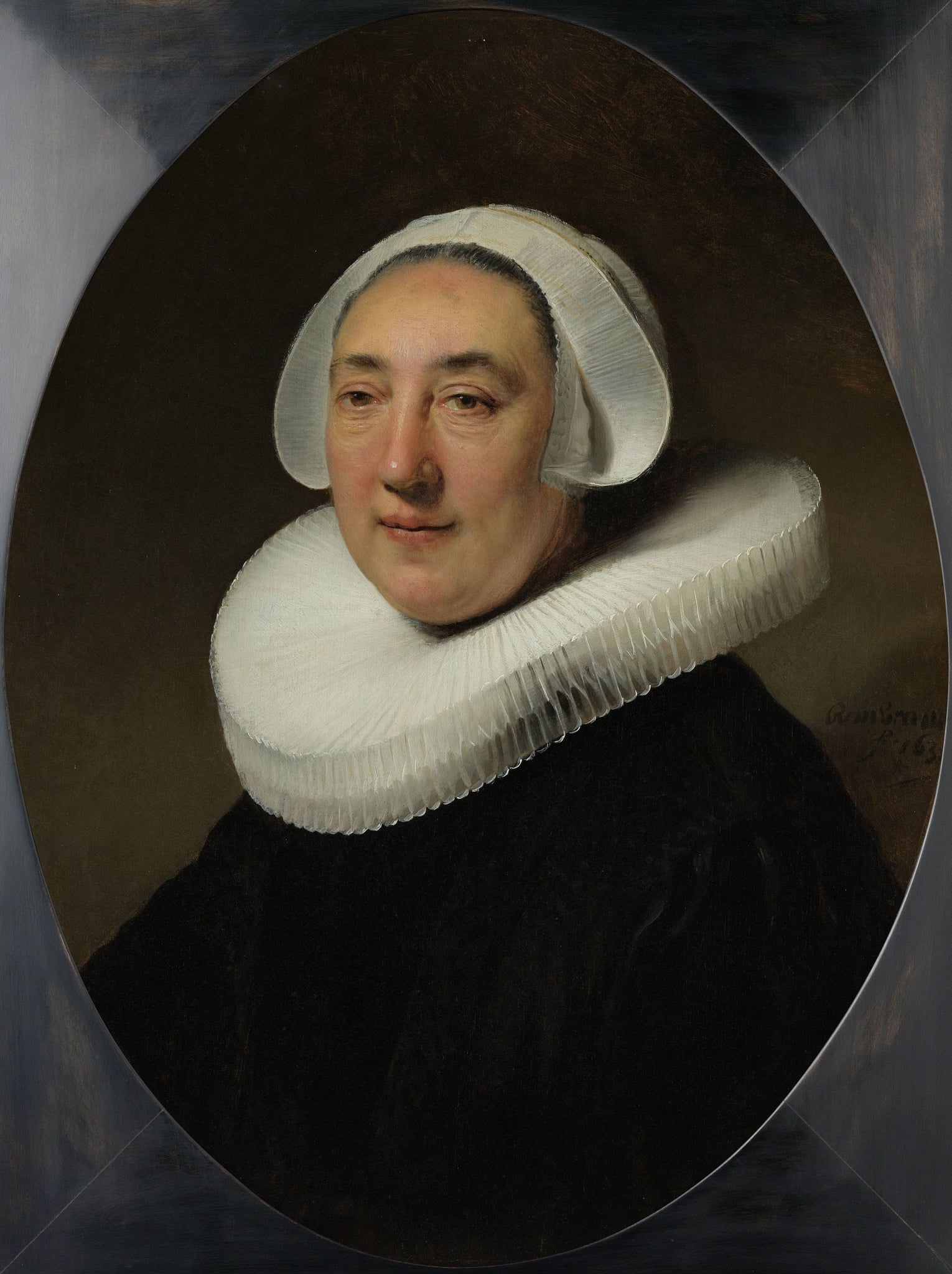
Portrait of Haesje Jacobsdr van Cleyburg by Rembrandt van Rijn

Portrait of Haesje Jacobsdr van Cleyburg

Rembrandt van Rijn (1634)

Rembrandt’s 1634 Portrait of Haesje Jacobsdr van Cleyburg stages a Dutch burgher within a feigned <strong>oval</strong> opening, illuminated by selective <strong>chiaroscuro</strong> that models warm skin against brilliant <strong>millstone ruff</strong> and sober black dress. The painting balances <strong>modesty and status</strong>, making virtue visible while quietly declaring prosperity through immaculate linen and craft <sup>[1]</sup><sup>[4]</sup>.