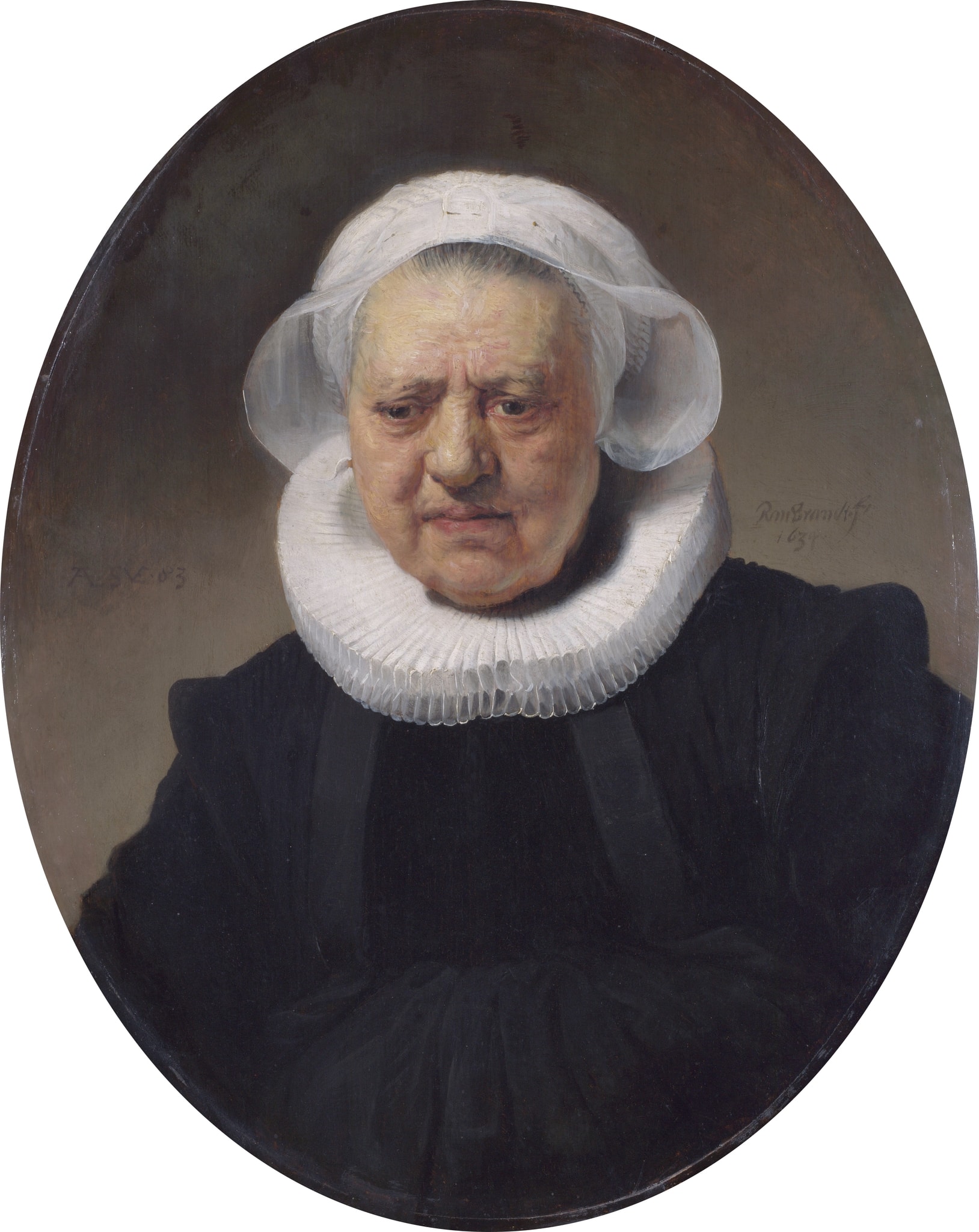
Portrait of Aechje Claesdr.

by Rembrandt van Rijn

Rembrandt van Rijn’s Portrait of Aechje Claesdr. (1634) distills age, dignity, and moral clarity into an intimate oval. A black gown and a luminous white ruff and cap concentrate light on her face, where Rembrandt’s tactile strokes honor the truth of age without caricature [1].

Study Print Studio

Create a personal study print

Build a companion study sheet around the part of this painting that speaks to you most. Choose a detail, shape an interpretation, and walk away with something personal and display-worthy.

Fast Facts

Year
1634
Medium
Oil on oak panel
Dimensions
71.1 × 55.9 cm
Location
National Gallery, London
See all Rembrandt van Rijn paintings in London
Portrait of Aechje Claesdr. by Rembrandt van Rijn (1634) featuring Starched white ruff, White coif and forehead cloth (with tiny gold pins), Black gown/overgarment, Concentrated light on the aged face

Click on any numbered symbol to learn more about its meaning

Meaning & Symbolism

Rembrandt builds moral meaning from material facts. The oval format, tight to the shoulders, compresses space so that the sitter’s downcast eyes and gently pursed lips become the whole subject; the surrounding brown ground and the deep black of her graingat-like overgarment extinguish distraction. Light gathers where it counts—on the forehead, the bridge of the nose, the upper lip, and the pleats of the white ruff—so that brightness reads as ethical emphasis as much as description 12. The ruff functions like a quiet halo of everyday virtue, its crisp, radial pleats framing the mind behind the features; Dutch viewers would have recognized both the technical finesse of such linenwork and its association with cleanliness and order 2. Above it, transparent layers of the coif and forehead cloth veil the hair, making modesty visibly legible; three tiny gold pins punctuate the white field, the lone concession to luxury within a program of restraint 13. In this scheme, black is not absence but disciplined presence—a costly dye worn without ostentation, signaling seriousness while letting the lighted whites and the lived face speak 1. Rembrandt’s paint handling carries the argument further. Short, curved strokes and stipples animate the creases at the eyes and mouth; warm, thin glazes settle into the furrows of the cheeks, and thicker, cool touches sparkle across the ruff. These decisions convert physiognomy into ethics: the textures of age read as experience borne with composure, not mere memento mori. The signature, date, and inscription of her age—eighty‑three—declare candor as a virtue, aligning the sitter with a culture that prized truthful likeness and moral probity 1. That truth is also communal. Aechje Claesdr., widow of the Rotterdam brewer Jan Pesser and associated with the Remonstrant milieu, appears in attire deliberately conservative for 1634, a choice that makes conviction visible without polemic 1. The portrait’s gravity is therefore not somberness but quiet authority: the slight compression of the lips and the downward gaze suggest measured thought, while the oval’s nearness feels conversational, as if we stand within her orbit. In a decade when Rembrandt’s portrait style was becoming more animated, the lively facture here fuses Baroque chiaroscuro with a Northern ethic of self‑command, demonstrating how light and touch can render character rather than costume the true subject 145.

Explore Deeper with AI

Ask questions about Portrait of Aechje Claesdr.

Popular questions:

Powered by AI • Get instant insights about this artwork

💬 Ask questions about this artwork!

Interpretations

Historical Context: Confessional Dissent as Visual Code

Aechje Claesdr. belonged to Rotterdam’s Remonstrant milieu, a dissenting Protestant community suppressed after 1619. In 1634, Rembrandt likely entered the Pesser circle via the Remonstrant leader Johannes Wtenbogaert, linking this likeness to a network where conviction was practiced quietly 17. The sitter’s deliberately conservative costume reads as a confessional signal: modesty, cleanliness, and restraint were not only ethical but also politico-religious markers of belonging. The portrait thus performs affiliation without polemic—its sobriety acting as a public language of private belief. Read against the family commission of Aechje, her son Dirck, and daughter‑in‑law Haesje, the picture consolidates kinship, business standing, and dissenting identity in a single, compact oval: a visual strategy for perseverance within a regulated civic sphere 17.

Source: National Gallery, London; Rembrandt in Southern California

Material-Technique: How Oak, Glaze, and Impasto Make Character

Painted on oak, the portrait exploits material contrasts: thin, warm glazes sink into cheek furrows while the ruff’s whites are worked with higher body, catching light as tactile points of emphasis. Short, curving strokes and stipples vivify eyelids and lips, refusing cosmetic smoothness in favor of optical truth 1. Technical studies of Rembrandt’s 1630s practice note this calibrated layering—fat over lean, varied thickness, and controlled impasto—as a means to animate surfaces and model form with chiaroscuro, here driving a moralized realism that equates facture with forthrightness 1. The result is not bravura for its own sake but a disciplined orchestration where medium becomes message: the textures of paint stand in for the textures of a life ethically lived.

Source: National Gallery, London (object record and Technical Bulletin references)

Costume Economy: Black as Quiet Luxury

Seventeenth‑century Dutch black required expensive dyes and careful finishing; worn plain, it signaled seriousness with means. Aechje’s graingat and apron align her with a culture that prized sober display, while the three tiny gold pins are micro‑luxuries punctuating an otherwise chastened field 14. The ruff’s immaculate pleats—recognized by contemporaries as feats of laundering and starching—advertise household order and spending power without embroidery or lace excess 2. In this economy of signs, black is not negation but controlled presence, a calibrated blend of wealth, respectability, and religious restraint. Rembrandt leverages that code, letting light on white linen and the lived face become the true spectacle, a choreography of values rather than fashions 124.

Source: National Gallery, London; TRC Leiden; Rijksmuseum/‘Quiet Luxury’ publication excerpt

Gendered Labor: The Ethics of Linen

The coif and forehead cloth, meticulously layered and secured by modest pins, stage female virtue through textile discipline—covering hair for chastity while displaying the invisible labor of washing, starching, and pleating 13. The apron amplifies this domestic ethic: an emblem of work that protects garments and connotes custodianship of the household. Dutch viewers read such linens as proofs of order and cleanliness, virtues entwined with piety in Reformed culture 2. Rembrandt’s spotlight on these whites turns maintenance into radiance, reframing gendered, everyday work as moral architecture around the face. The portrait thereby elevates the aesthetics of care—pressing, pinning, pleating—into a theology of attentiveness legible at a glance 123.

Source: National Gallery, London; TRC Leiden; The Metropolitan Museum of Art

Reception History: A Nineteenth‑Century Invention of ‘Psychological’ Rembrandt

When shown in London in 1835, the portrait was hailed among the exhibition’s “most striking” works; Anna Jameson praised the moisture of the eyes and lifelike presence as hallmarks of greatness 6. Such responses helped codify a Victorian Rembrandt: the master of inwardness and sincerity. That reception history matters because it shaped what later audiences saw—ethical gravity read through skin and glance—long before modern technical analysis confirmed the lively facture we now prize 16. The painting thus sits at the crossroads of connoisseurship and criticism: nineteenth‑century taste amplified its psychological charge, preparing the ground for today’s emphasis on surface, touch, and truthfulness as intertwined categories.

Source: Oxford Brookes University (RADAR thesis, documented period responses)

Format and Network: The Oval as Social Technology

The tight oval compresses air, bringing us into a conversational distance that suits private devotion and familial remembrance alike. In 1634, Rembrandt likely produced coordinated likenesses of Aechje, Dirck Pesser, and Haesje van Cleyburgh; the format’s intimacy and portability made it apt for circulating identity across kin and business networks 17. Within this frame, Baroque chiaroscuro meets Northern restraint: the dark surround isolates the thinking head, while the white ruff acts as a quiet halo that disciplines both light and gaze 18. The oval is not just a shape but a social instrument—tethering viewer and sitter within a bounded, ethical space where attention itself becomes a form of regard.

Source: National Gallery, London; Rembrandt in Southern California; Smarthistory

Related Themes

About Rembrandt van Rijn

Rembrandt van Rijn (1606–1669) was a leading Dutch Golden Age painter and printmaker whose Amsterdam years (from 1631) produced virtuosic portraits and ambitious history paintings. In the early 1630s he favored polished finishes, saturated color, and theatrical staging—qualities on display in this 1633 canvas. Although prolific, this is his only known painted seascape [2][4].
View all works by Rembrandt van Rijn

More by Rembrandt van Rijn
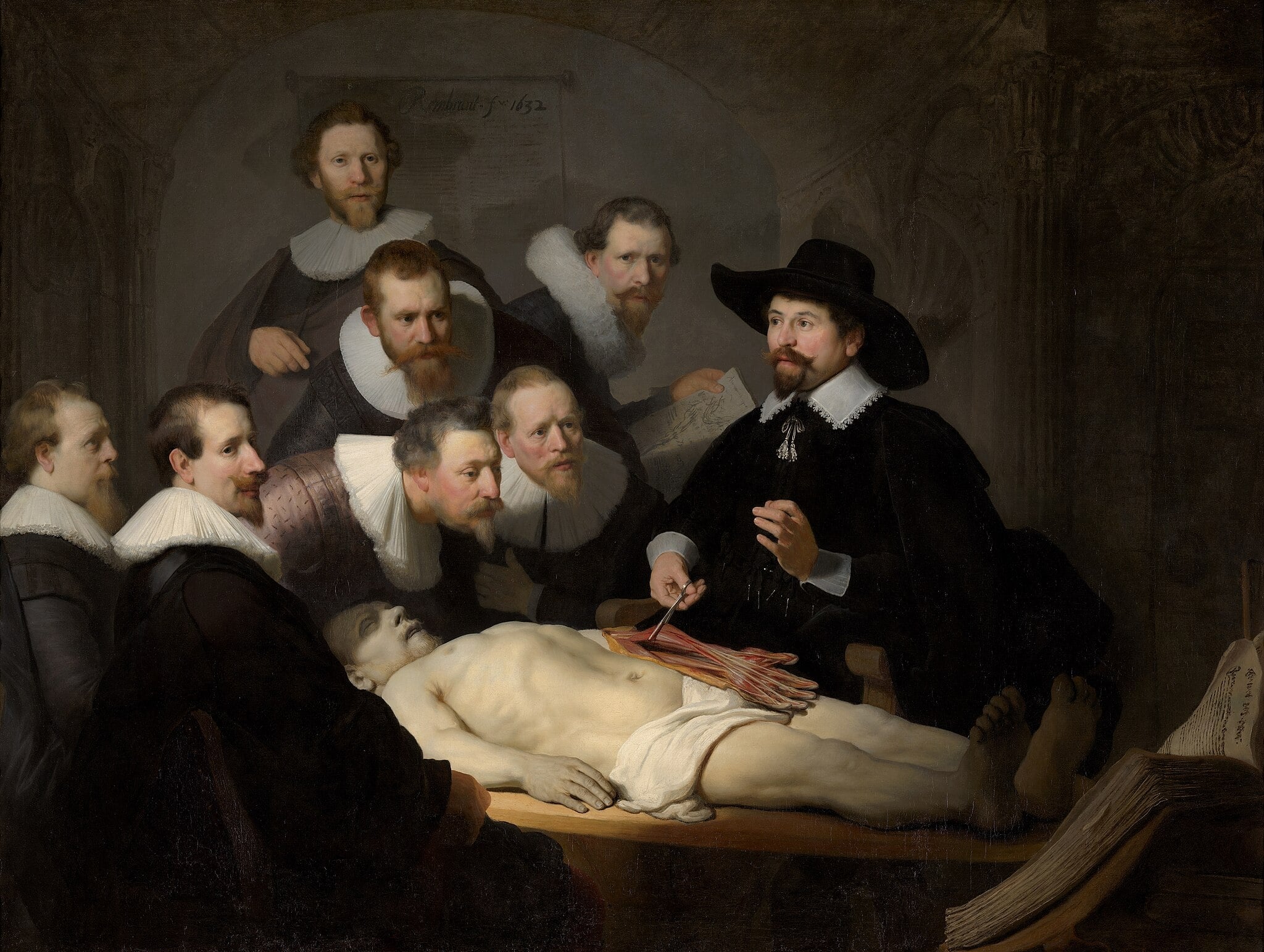
The Anatomy Lesson of Dr. Nicolaes Tulp by Rembrandt van Rijn

The Anatomy Lesson of Dr. Nicolaes Tulp

Rembrandt van Rijn (1632)

Rembrandt van Rijn turns a civic commission into a drama of <strong>knowledge made visible</strong>. A cone of light binds the ruff‑collared surgeons, the pale cadaver, and Dr. Tulp’s forceps as he raises the <strong>forearm tendons</strong> to explain the hand. Book and body face each other across the table, staging the tension—and alliance—between <strong>textual authority</strong> and <strong>empirical observation</strong> <sup>[1]</sup><sup>[2]</sup>.
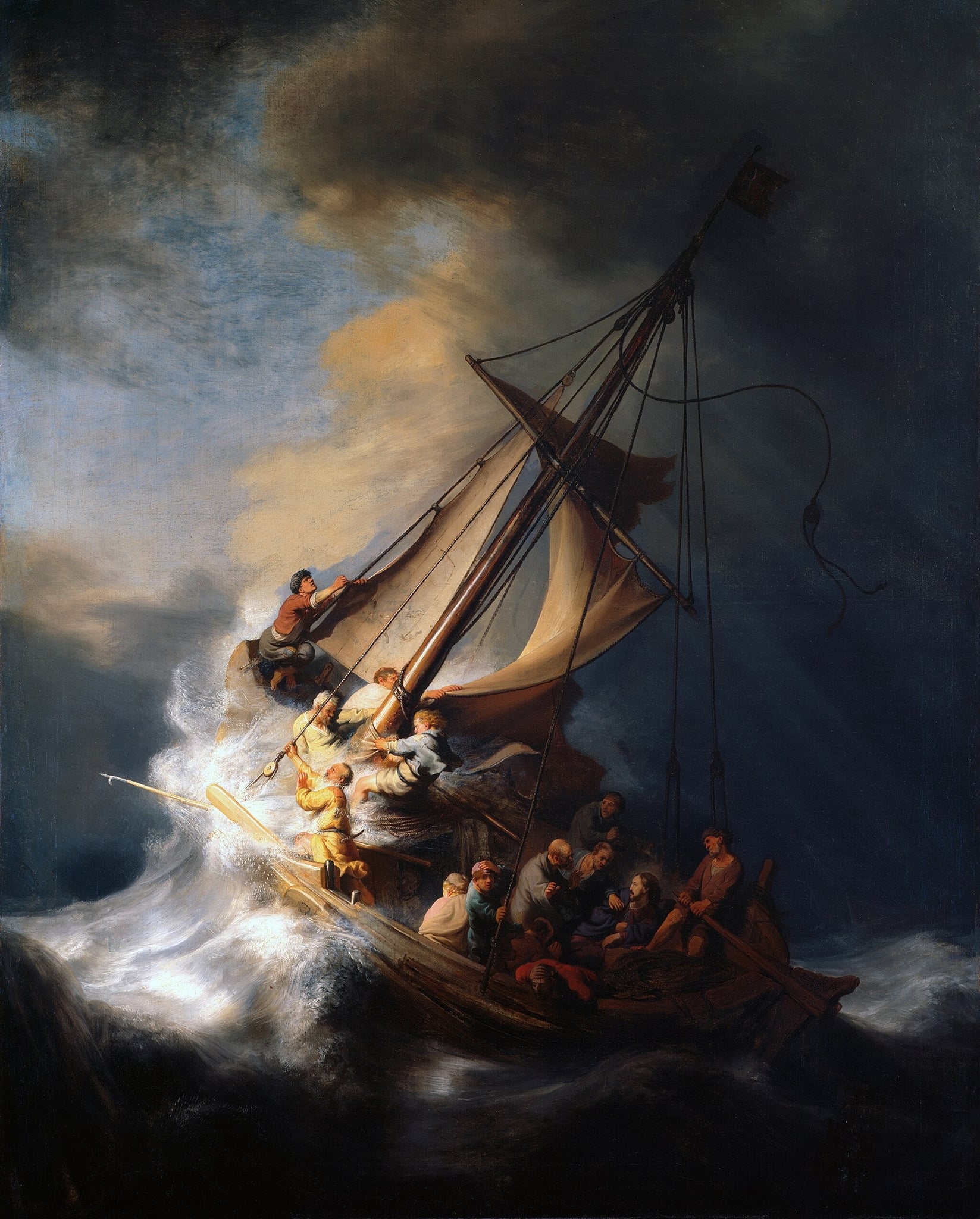
The Storm on the Sea of Galilee by Rembrandt van Rijn

The Storm on the Sea of Galilee

Rembrandt van Rijn (1633)

Rembrandt van Rijn’s The Storm on the Sea of Galilee stages a clash of <strong>human panic</strong> and <strong>divine composure</strong> at the instant before the miracle. A torn mainsail whips across a steeply tilted boat as terrified disciples scramble, while a <strong>serenely lit Christ</strong> anchors a pocket of calm—an image of faith holding within chaos <sup>[1]</sup><sup>[3]</sup>. It is Rembrandt’s only painted seascape, intensifying its dramatic singularity in his oeuvre <sup>[2]</sup>.
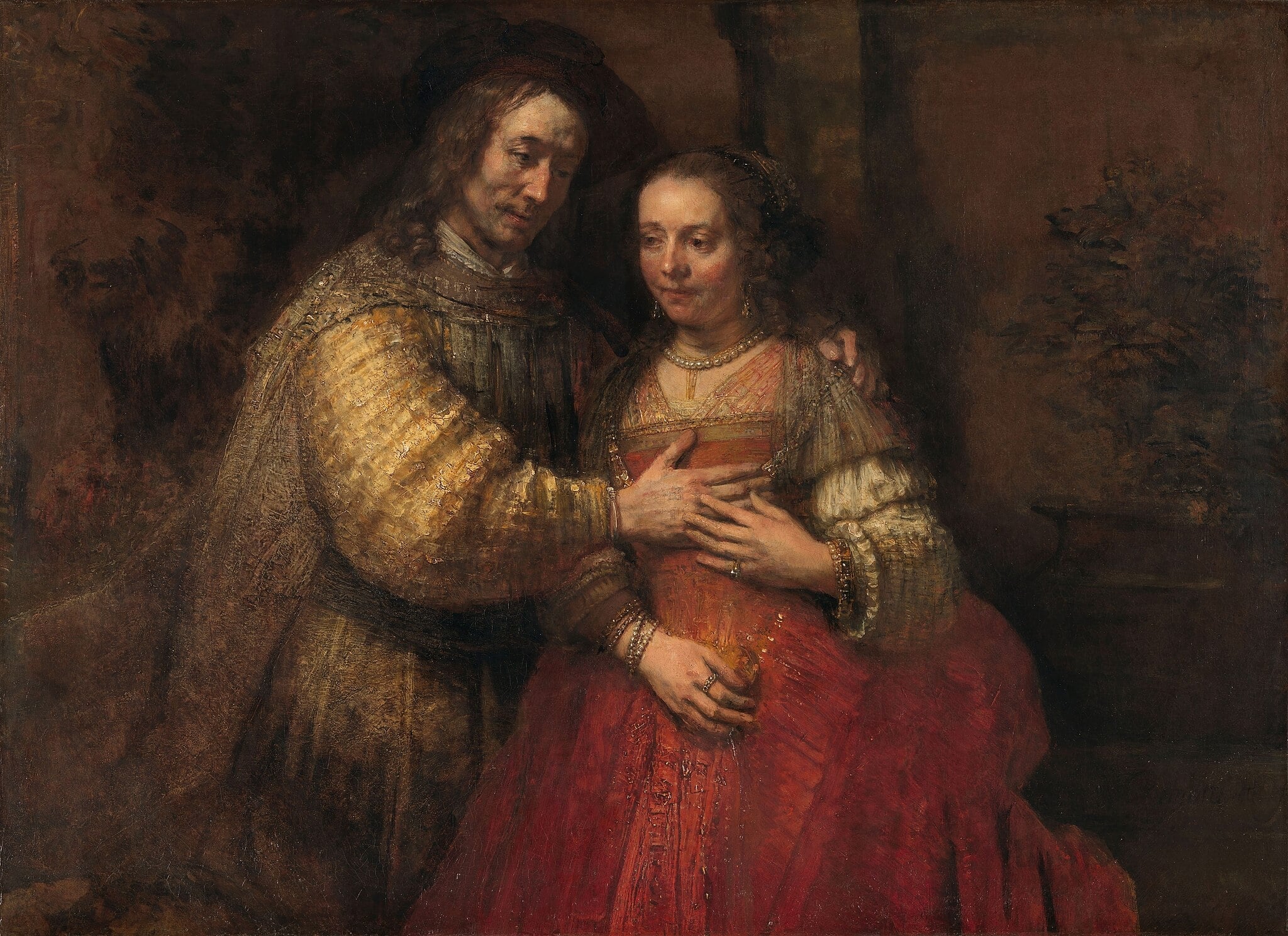
The Jewish Bride by Rembrandt van Rijn

The Jewish Bride

Rembrandt van Rijn (c. 1665–1669)

The Jewish Bride by Rembrandt van Rijn stages an intimate covenant: two figures, read today as <strong>Isaac and Rebecca</strong>, seal their union through touch rather than spectacle. Light concentrates on faces and hands, while the man’s glittering <strong>gold sleeve</strong> and the woman’s <strong>coral-red gown</strong> turn paint itself into a metaphor for fidelity and tenderness <sup>[1]</sup><sup>[3]</sup>. This late masterpiece embodies Rembrandt’s <strong>material eloquence</strong>—impasto as feeling—within a hushed, dark setting <sup>[1]</sup><sup>[2]</sup>.
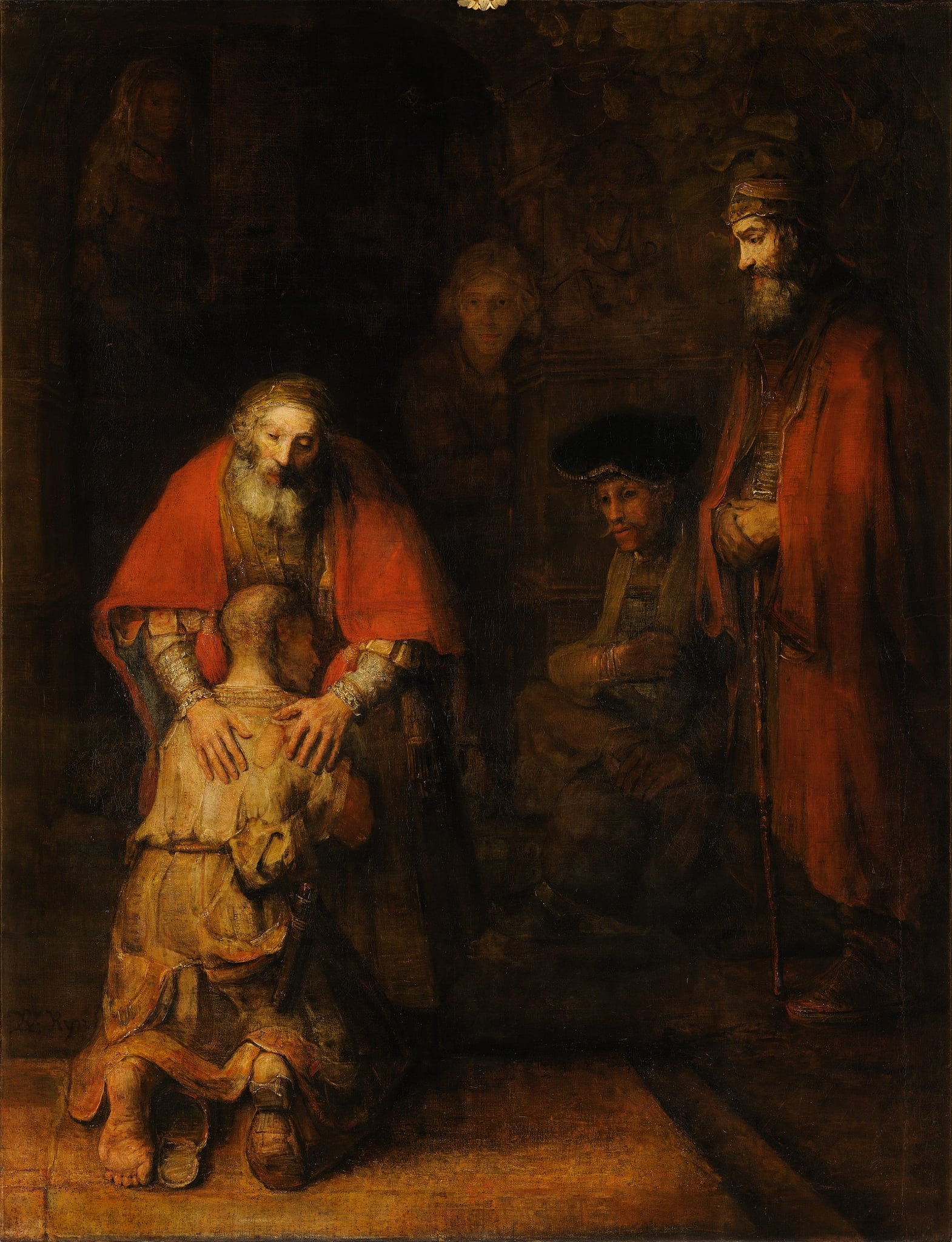
The Return of the Prodigal Son by Rembrandt van Rijn

The Return of the Prodigal Son

Rembrandt van Rijn (c. 1661–1669 (probably completed by 1669))

Rembrandt van Rijn’s The Return of the Prodigal Son is a late-life meditation on <strong>mercy</strong>, <strong>homecoming</strong>, and <strong>restored dignity</strong>. In a hush of dusk-like light, a ragged son kneels into his father’s <strong>embrace</strong>, while an upright elder brother holds back in shadow. The image concentrates meaning in illuminated <strong>faces, hands, and feet</strong>, turning a parable into a timeless human reckoning. <sup>[1]</sup><sup>[2]</sup>
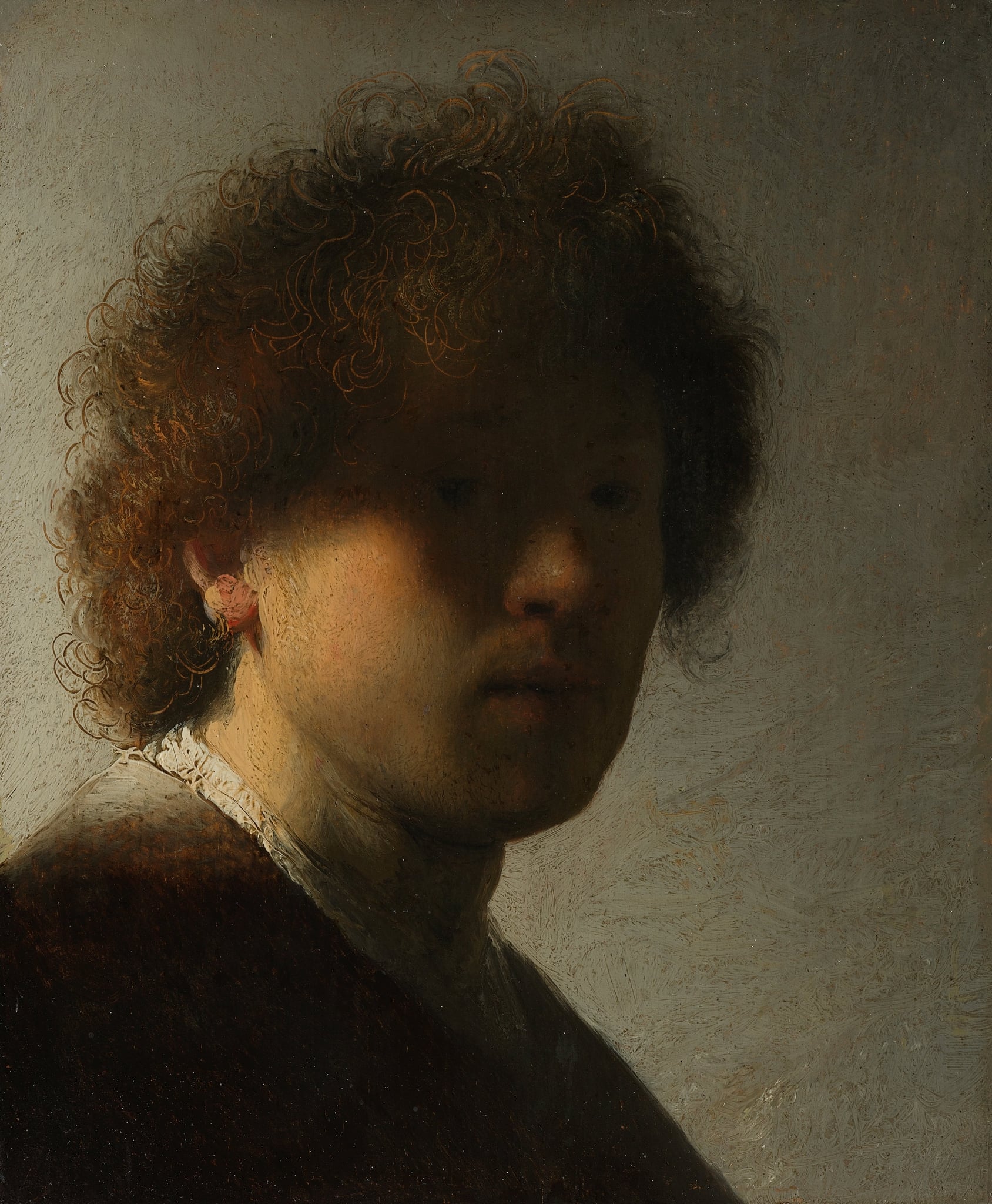
Self-portrait (with tousled hair) by Rembrandt van Rijn

Self-portrait (with tousled hair)

Rembrandt van Rijn (c. 1628)

A young Rembrandt van Rijn tests how <strong>light both reveals and withholds</strong> by letting his face emerge from darkness while his <strong>scratched, backlit curls</strong> flare like a rough halo. The small oak panel makes <strong>process itself the subject</strong>, turning hair, stubble, and a raking highlight into a statement of identity-in-formation <sup>[1]</sup><sup>[5]</sup>.
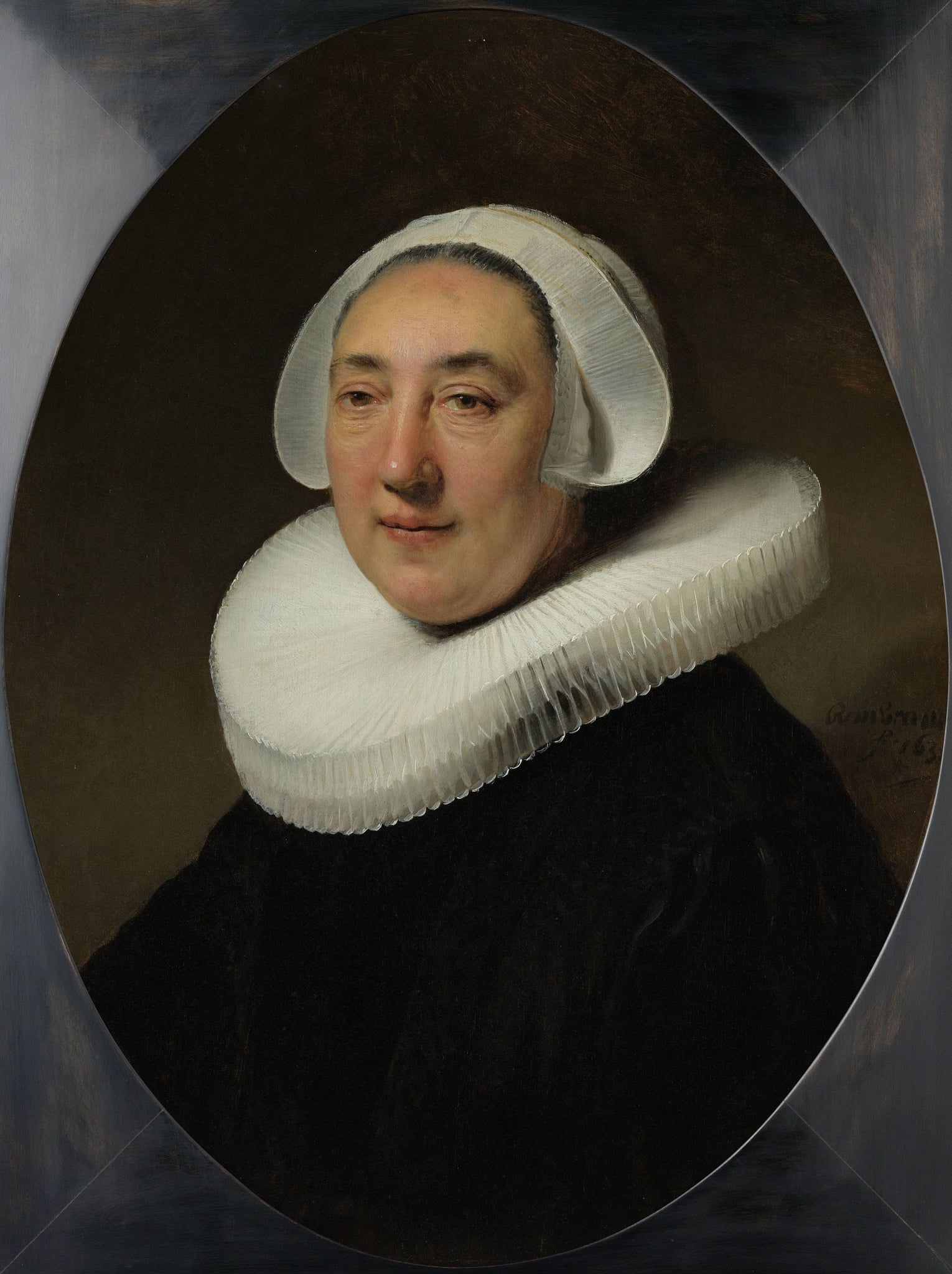
Portrait of Haesje Jacobsdr van Cleyburg by Rembrandt van Rijn

Portrait of Haesje Jacobsdr van Cleyburg

Rembrandt van Rijn (1634)

Rembrandt’s 1634 Portrait of Haesje Jacobsdr van Cleyburg stages a Dutch burgher within a feigned <strong>oval</strong> opening, illuminated by selective <strong>chiaroscuro</strong> that models warm skin against brilliant <strong>millstone ruff</strong> and sober black dress. The painting balances <strong>modesty and status</strong>, making virtue visible while quietly declaring prosperity through immaculate linen and craft <sup>[1]</sup><sup>[4]</sup>.