Most Expensive Andy Warhol Paintings
Few artists command the market with the enduring force of Andy Warhol, whose most coveted canvases fuse celebrity, commerce, and mortality into blue-chip icons. At the apex sits Marilyn Diptych, a museum-grade touchstone that anchors estimates in the $300–500 million range, followed closely by the canonical Campbell’s Soup Cans at $250–400 million—works whose seriality and mass-media immediacy define Pop’s DNA. Portraiture supercharged by myth fuels demand: Turquoise Marilyn at $180–240 million and the uniquely scaled Eight Elvises at $150–210 million illustrate how rarity, scale, and indelible imagery amplify value. Warhol’s darker meditations also carry exceptional weight: Silver Car Crash (Double Disaster) at $120–180 million and Race Riot at $100–150 million draw collectors seeking conceptual gravitas alongside spectacle. Market confidence extends to the star-power repetitions of Triple Elvis [Ferus Type] at $110–150 million and Four Marlons at $90–110 million, while the late, monumental Sixty Last Suppers at $70–95 million underscores Warhol’s sustained relevance. Together, these price points reflect a market that prizes cultural resonance, proven institutional visibility, and the scarce, era-defining canvases that only Warhol could produce.
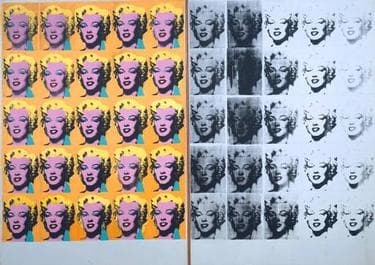
$300-500 million
At $300–500 million, it would eclipse Warhol’s $195 million auction record, reflecting its 1962 date, monumental diptych scale, and unrivaled canonical status within Pop Art.
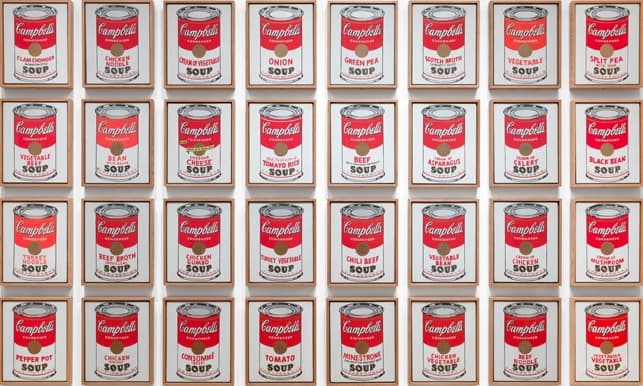
$250-400 million
Held by MoMA, the unique 32‑canvas set would command roughly $250–400 million on the open market, exceeding Warhol’s $195 million record due to unmatched art‑historical primacy and scarcity.
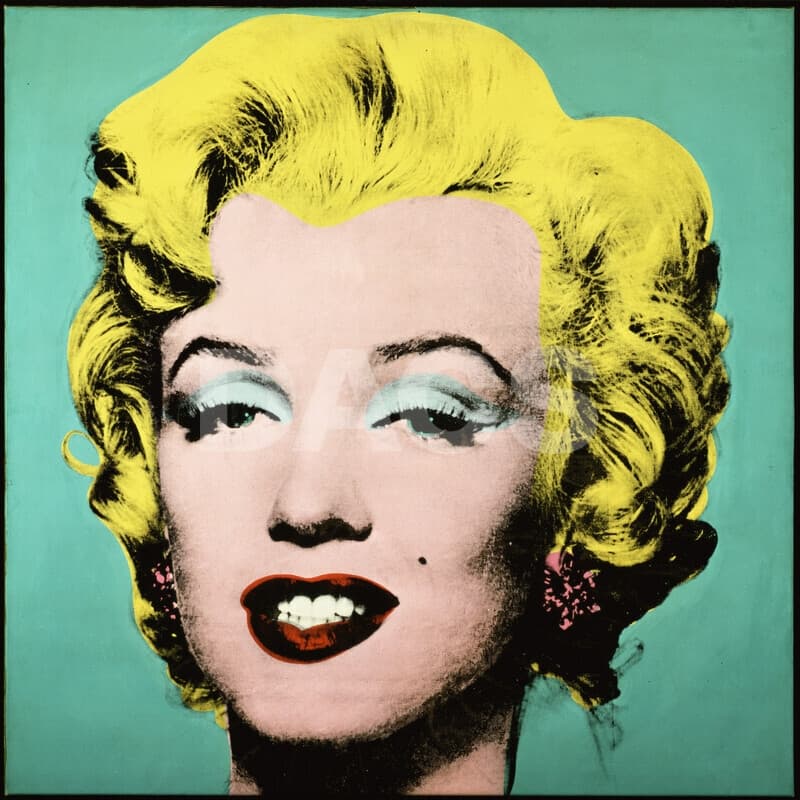
$180–240 million
Anchored by 2022’s $195.04m Shot Sage Blue Marilyn and its distinction as the only un‑shot 40‑inch 1964 Marilyn, it tracks $180–240m, after an ~$80m sale in 2007.
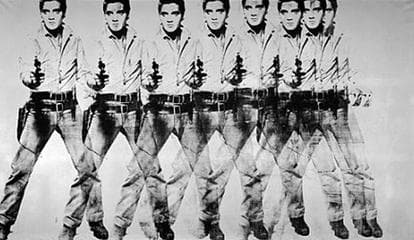
$150-210 million
A widely reported ~$100 million private sale in 2008 (≈$154m today) underpins the unique 1963 canvas’s current $150–210 million valuation among Warhol’s top Elvis trophies.
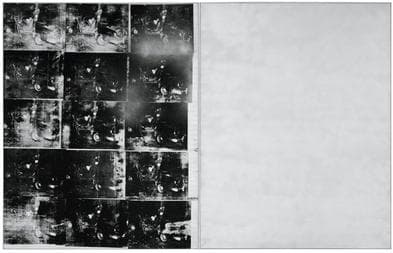
$120–180 million
Its $105.445 million auction in 2013 remains the key Disaster benchmark and supports today’s $120–180 million valuation, alongside a related 1963 Car Crash selling for $85.35 million in 2022.
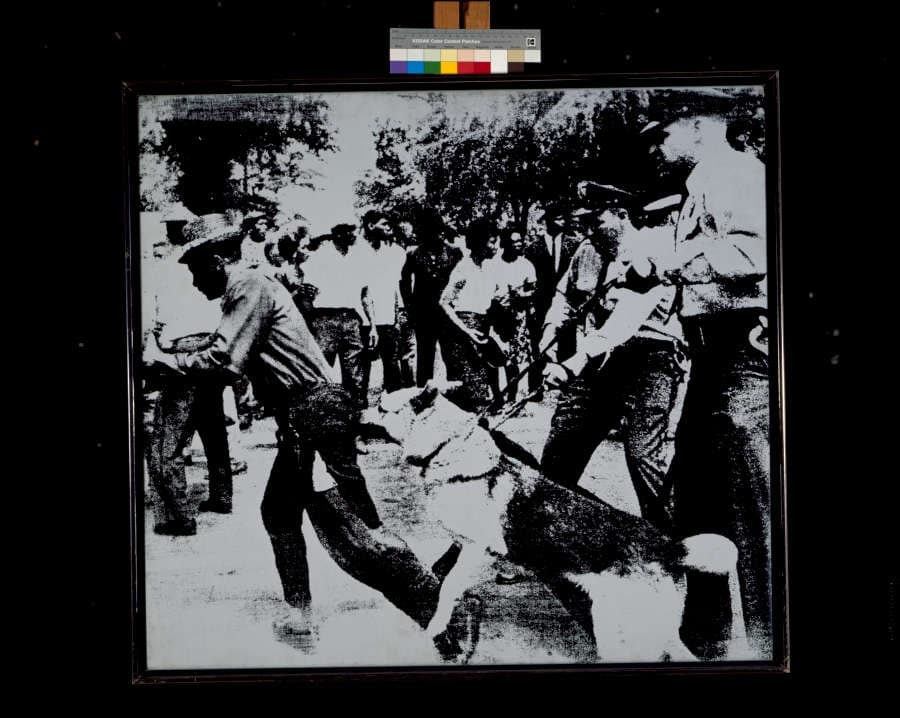
$100-150 million
A prime four‑panel canvas sold for $62.885 million in 2014; subsequent Death and Disaster comparables now place top examples at $100–150 million—distinct from the inexpensive 1964 editioned screenprint.
![Triple Elvis [Ferus Type]](/_next/image?url=https%3A%2F%2Fstorage.googleapis.com%2Fsite-images-programmatic%2Fpaintings%2F1771915343451-6gzg8m.jpg&w=3840&q=75&dpl=dpl_ASiQPiqukSad84i91Tcm2dUShHhL)
$110-150 million
Christie’s 2014 sale at $81.9 million (≈$113m today) and current nine‑figure demand for A‑grade 1962–64 Warhols support a $110–150 million value for a top‑condition Triple Elvis.
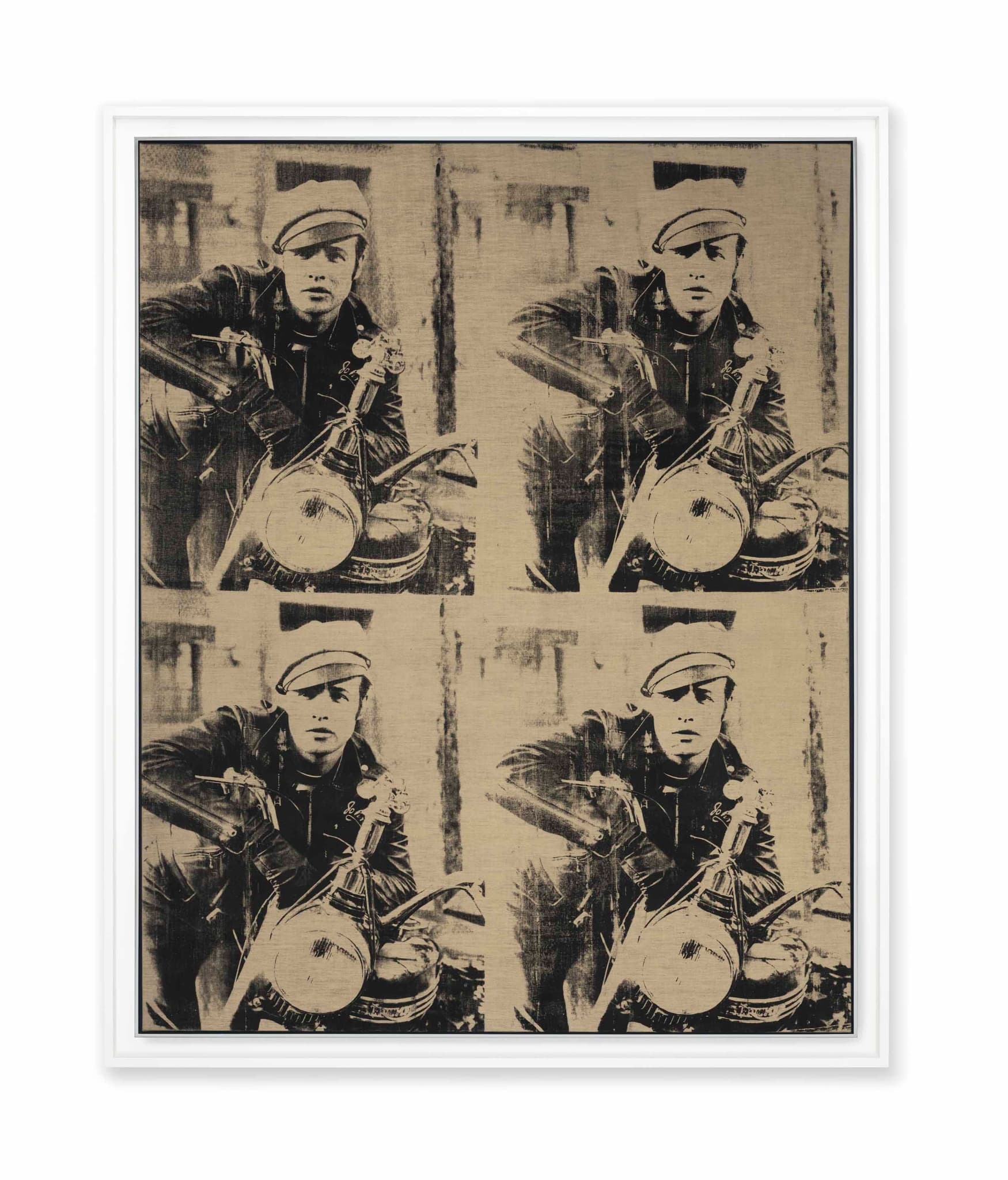
$90-110 million
Following its $69.605 million sale in 2014, the near‑seven‑foot, multi‑image Brando canvas now calibrates at $90–110 million—just below Marilyns/Disasters and broadly in line with top Elvis works.

$70-95 million
After fetching $60,875,000 in 2017, this monumental Last Supper capstone is valued at $70–95 million today—below the most iconic 1960s images yet above nearly all other late‑period Warhols.
What Drives Value in Andy Warhol's Work
Icon hierarchy: Marilyns and Soup Cans at the apex
Warhol pricing concentrates on a small canon of subjects most synonymous with him. Marilyns lead (Shot Sage Blue Marilyn $195.0m; Marilyn Diptych projected $300–500m), with the unique MoMA Soup Cans as the definitive Pop breakthrough. Next tier includes Elvis (Eight Elvises ~$100m in 2008; Triple Elvis $81.9m) and prime Disasters (Silver Car Crash $105.4m; White Disaster $85.35m). Brando and Race Riot follow, strong but typically below Marilyn/Elvis at like-for-like scale.
Breakthrough years (1962–64) and silver-ground screens
Work from 1962–64, when Warhol perfected silkscreen, commands consistent premiums. Canonical examples—Marilyn Diptych (1962), Campbell’s Soup Cans (1962), silver-ground Elvises (1963), and Death & Disaster pictures (1963)—anchor nine-figure outcomes (Silver Car Crash $105.4m; White Disaster $85.35m). The 40-inch 1964 Marilyns set the artist’s record. Later masterpieces (e.g., Sixty Last Suppers, 1986–87) can reach trophy tiers via scale and concept but generally price below equivalently iconic early 1960s subjects.
Seriality, image count, and monumentality drive premiums
In Warhol, more is more when repetition delivers immersive scale. Fifty-image Marilyn Diptych, the unique eight-fold Eight Elvises, and the 19-times White Car Crash exemplify how high image counts and multi-panel formats outperform single-image counterparts. Triple Elvises outprice Doubles; multi-panel Race Riots trade at nine-figure potential versus single panels. Monumental serial grids like Sixty Last Suppers (60 repeats, 32-foot width) translate repetition into trophy-level desirability.
One-off configurations, completeness, and process-specific condition
Uniqueness inside serial production is a key Warhol premium. The only intact, hand‑painted 32‑canvas Soup Cans set; the unique single‑canvas Eight Elvises; and the singular diptych structure of Silver Car Crash all outperform more common variants. Process quirks matter: the 40-inch Turquoise Marilyn is prized as the only example not pierced in the Factory “shot,” and buyers scrutinize silver grounds, screen registration, and saturation—condition factors that materially swing outcomes for Race Riot and other 1960s screens.
Market Context
Andy Warhol remains a blue‑chip bellwether with unusually deep, global liquidity across paintings and a robust prints market that on‑ramps new collectors. His auction record is $195,040,000 for Shot Sage Blue Marilyn (1964) at Christie’s in 2022; subsequent marquee results—e.g., White Disaster (White Car Crash 19 Times) at $85.4 million and strong Flowers and Jackie canvases—confirm resilience for best‑in‑class 1962–64 icons. Demand is diversified across U.S., Europe, and APAC, with institutions and leading private collections—often brand‑adjacent—prioritizing museum‑grade works with top provenance. Market conditions tightened in 2024 with fewer nine‑figure trophies, but confidence improved in 2025 as capital concentrated on singular masterpieces (underscored by the 2025 Klimt record). Guarantees and private sales are standard at the apex. Trajectory: selective but strong—scarce, early Warhols continue to anchor evening auctions and attract deep competition.