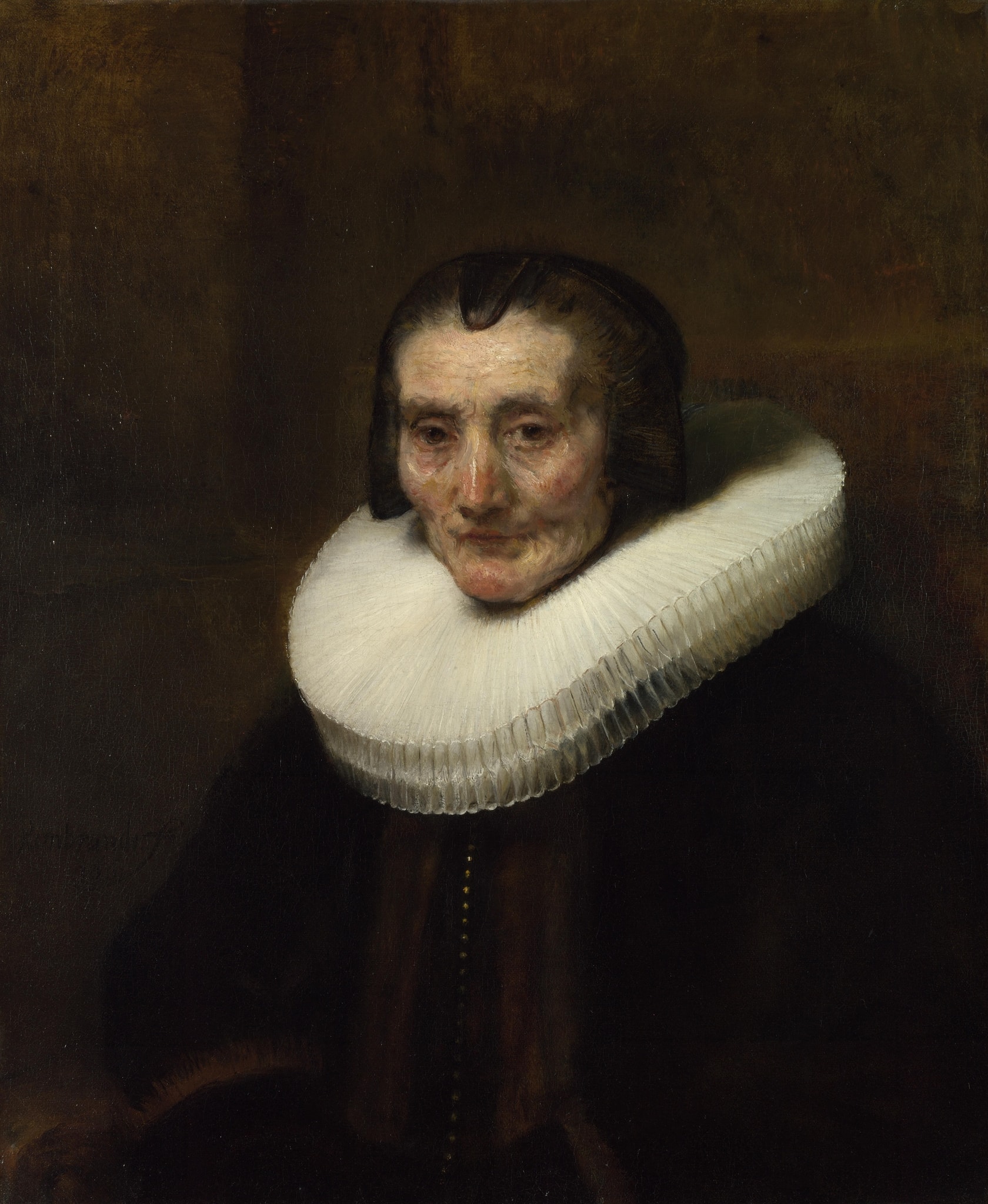
Portrait of Margaretha de Geer, Wife of Jacob Trip

by Rembrandt van Rijn

Rembrandt van Rijn’s Portrait of Margaretha de Geer, Wife of Jacob Trip crystallizes late‑style chiaroscuro and a fearless study of age and dignity. The incandescent millstone ruff gathers and emits light against a brown void, while the dark gown and measured posture project wealth disciplined by piety [1].

Study Print Studio

Create a personal study print

Build a companion study sheet around the part of this painting that speaks to you most. Choose a detail, shape an interpretation, and walk away with something personal and display-worthy.

Fast Facts

Year
about 1661
Medium
Oil on canvas
Dimensions
130.5 × 97.5 cm
Location
The National Gallery, London
See all Rembrandt van Rijn paintings in London
Portrait of Margaretha de Geer, Wife of Jacob Trip by Rembrandt van Rijn (about 1661) featuring Millstone ruff (white linen collar), Black gown, Modest black cap/hood, Row of small buttons

Click on any numbered symbol to learn more about its meaning

Meaning & Symbolism

Rembrandt composes an encounter rather than a likeness. The sitter emerges from a warm, absorbent brown that cancels distractions; the light isolates the creased eyelids, softened cheeks, and sealed mouth, turning age into testimony rather than spectacle. The snow‑bright millstone ruff—already unfashionable by the 1660s—becomes the engine of illumination, its pleats catching paint and light so forcefully that the collar appears to power the picture’s glow 1. Read against contemporary Dutch codes of dress, the austere black with immaculate white linen signals high status governed by propriety; the grandeur is technical and moral, not decorative 3. The left hand, thrust forward to grip the chair arm, is decisive: technical imaging shows Rembrandt first placed it in her lap, then moved it outward to give the figure agency and readiness, almost as if she is about to rise toward us 1. That single revision converts a seated matron into a presence that meets the viewer’s space and judgment. In her right hand rests a pale cloth—an accessory the National Gallery reads as possibly a mourning handkerchief added around the time of Jacob Trip’s death—quietly tying private loss to public bearing 1. Context intensifies this ethic. The pendant portraits were almost certainly conceived for the Trippenhuis, a double mansion whose façade famously flaunted cannon forms and peace branches—an eloquent public program linking arms commerce to the rhetoric of civic peace 4. Within that charged setting, Margaretha’s frontal steadiness reads as the dynasty’s conscience. The National Gallery contrasts her vivid, layered modeling with the sparer handling of Jacob’s portrait: where Jacob turns and darkens, she is worked and lit, a curatorial claim that the pair narrates decline and endurance 12. Critics have gone further: T. J. Clark sees in her unflinching frontality one of Rembrandt’s most fearless confrontations with mortality 5. The point is not sentiment but truthfulness—age registered through loose, tactile strokes that neither flatter nor accuse. The brown surround functions like a moral frame; light examines rather than flatters, and the painting insists that virtue can be splendid without display. Even the anachronistic ruff, described by the Gallery as resilient and almost architectural, becomes a metaphor for inner stamina persisting beyond fashion 1. Form and meaning lock together. The thick‑thin orchestration of paint—impasto flashes along the linen, translucent glazes across the flesh, and broad, economical passages in the black gown—directs attention toward what matters: a face tested by time, stabilized by discipline, and animated by a latent will signaled in the forward hand. In this sense, the meaning of the portrait is programmatic: Rembrandt takes an image of wealth and refashions it into a judicious ideal of Protestant civic virtue, a model of power secured by patience and self‑command rather than ornament 13. Why the work is important is precisely this fusion of psychological candor and public rhetoric, delivered with late‑style audacity. The painting does not ask us to admire possessions; it compels us to recognize character under scrutiny—a standard to which the viewer, as much as the sitter, is quietly held.

Explore Deeper with AI

Ask questions about Portrait of Margaretha de Geer, Wife of Jacob Trip

Popular questions:

Powered by AI • Get instant insights about this artwork

💬 Ask questions about this artwork!

Interpretations

Formal Analysis

Rembrandt engineers attention with a late‑style orchestration of surfaces: taut impasto ridges electrify the linen while translucent glazes muffle the flesh, so the eye oscillates between incisive light and breathing shadow. X‑radiography confirms an audacious mid‑course correction—the left hand first lay in her lap, then was pulled forward to grip the chair—transforming a passive pose into projected presence. This revision isn’t anecdotal; it rebalances the composition’s vectors so the ruff’s radial light meets the hand’s thrust, a dialogue of optics and gesture. Economical handling in the black gown—broad, absorbent passages—acts as a visual damper, canceling ornament to heighten physiognomy. Materially, the painting is a study in how facture becomes rhetoric: paint not as imitation, but as an ethical instrument that regulates what matters in view 12.

Source: National Gallery, London; National Gallery Technical Bulletin

Costume History

The “millstone ruff” was some forty years out of fashion by 1661; to wear it at this date was not naïveté but programmatic austerity. In the Dutch portrait code, sumptuous black with immaculate white linen signaled wealth under strict control—conspicuous expenditure transmuted into virtue. Marieke de Winkel’s research clarifies how such sober dress functioned as a social language: the finer the linen and the starch, the greater the investment, yet the effect read as modesty and rectitude, not display. Rembrandt capitalizes on this semiotics, letting the ruff’s crisp geometry act as a luminous architecture around the face, so propriety becomes optics. Anachronism here is meaningful: the sitter’s adherence to old‑regime piety reads as resilience within a mercantile elite in flux 13.

Source: National Gallery, London; Marieke de Winkel

Political Economy & Patronage

Conceived for the Trippenhuis—a palace whose façade flaunted cannon forms and peace branches—the portrait enters a charged public program linking arms profit to civic tranquility. Within such rhetoric, Margaretha’s frontal steadiness operates as the dynasty’s moral alibi: restraint, cleanliness of linen, and severe black promise ethical governance of violent wealth. The pendant contrast reinforces this: Jacob turns and darkens; Margaretha faces, worked and lit—an internal narrative of decline and endurance calibrated to the family’s succession. Read against Amsterdam’s fiscal‑military economy, the picture is not neutral likeness but ideological portraiture, where light, costume, and pose sanitize the origins of fortune and align them with the language of peace and Protestant rectitude 15.

Source: National Gallery, London; From Isolation to Coherence (Trippenhuis case study)

Psychological Interpretation

T. J. Clark sees this image as among Rembrandt’s most fearless confrontations with mortality, a claim borne out by the sitter’s unwavering frontality and the non‑rhetorical treatment of aged skin. Yet the psychology here avoids pathos: the sealed mouth and narrowed gaze imply self‑command rather than confession. The forward hand complicates the read—readiness rather than resignation—suggesting a will that persists beyond fashion and perhaps beyond the spouse’s death. The brown surround acts like a testing chamber where light examines, not flatters; what we witness is character under pressure, calibrated through the smallest material cues (wet‑in‑wet halations at the eye rims, dry scumble across the ruff’s edges). Mortality is acknowledged, but agency is retained 14.

Source: T. J. Clark (London Review of Books); National Gallery, London

Originality & Replication

The National Gallery also holds a smaller “Margaretha” now catalogued as Probably by Rembrandt (NG5282), with a disputed signature. Its presence reframes the autograph canvas (NG1675) within a seventeenth‑century ecology of workshop practice, patron demand, and replication. Rather than threatening originality, this duplication highlights how Rembrandt’s late portraits anchor authorship in touch: the autograph’s layered, searching facture—those rough‑cast ruff highlights, the rethought hand—indexes a mind revising in paint, not merely repeating a pattern. The secondary version, smoother and more standardized, underscores what is unique in the prime: risk, correction, and density of decision. In short, questions of attribution become questions of process visibility—where originality lies in the trace of thinking, not the motif alone 16.

Source: National Gallery, London

Related Themes

About Rembrandt van Rijn

Rembrandt van Rijn (1606–1669) was a leading Dutch Golden Age painter and printmaker whose Amsterdam years (from 1631) produced virtuosic portraits and ambitious history paintings. In the early 1630s he favored polished finishes, saturated color, and theatrical staging—qualities on display in this 1633 canvas. Although prolific, this is his only known painted seascape [2][4].
View all works by Rembrandt van Rijn

More by Rembrandt van Rijn
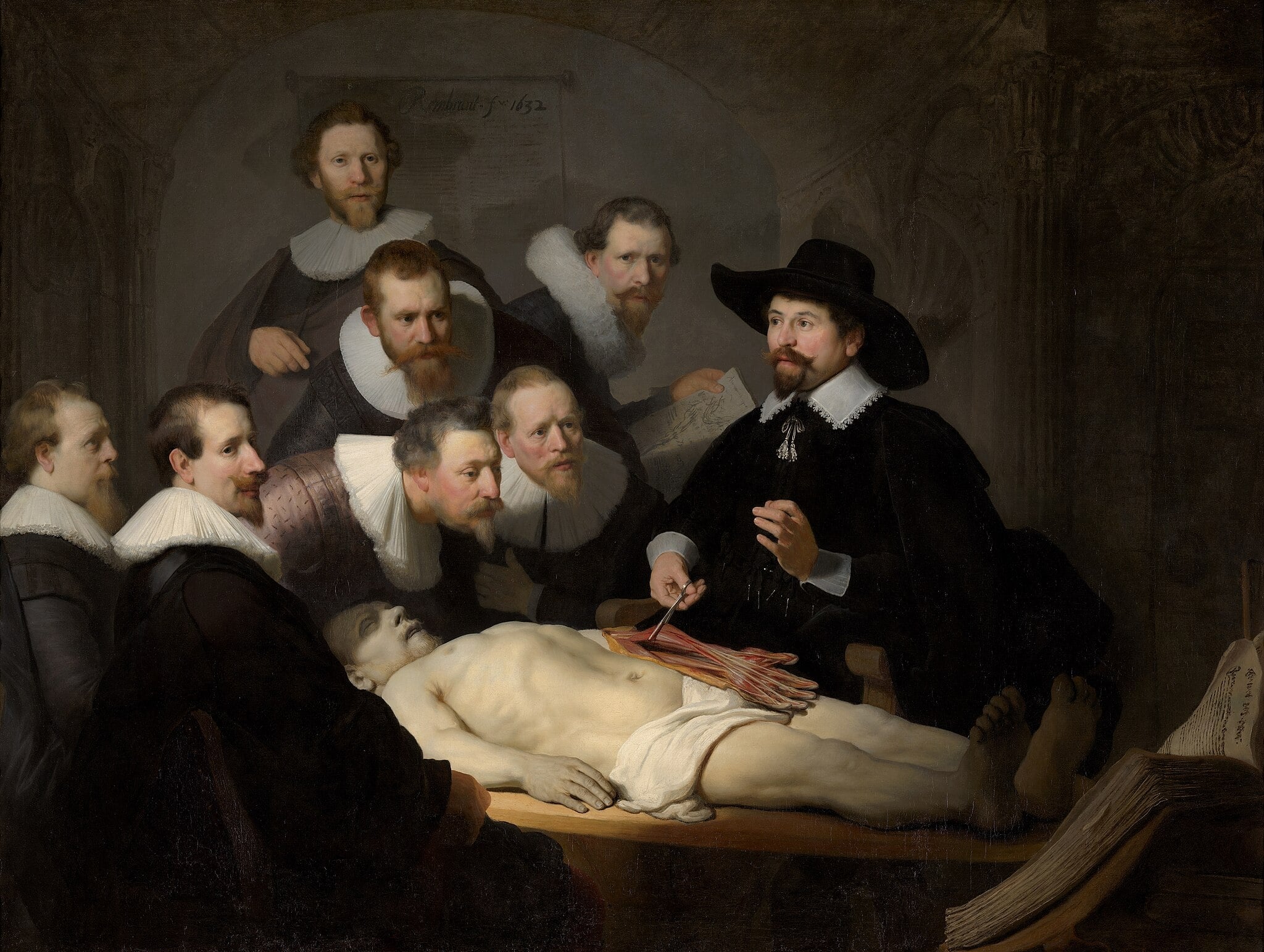
The Anatomy Lesson of Dr. Nicolaes Tulp by Rembrandt van Rijn

The Anatomy Lesson of Dr. Nicolaes Tulp

Rembrandt van Rijn (1632)

Rembrandt van Rijn turns a civic commission into a drama of <strong>knowledge made visible</strong>. A cone of light binds the ruff‑collared surgeons, the pale cadaver, and Dr. Tulp’s forceps as he raises the <strong>forearm tendons</strong> to explain the hand. Book and body face each other across the table, staging the tension—and alliance—between <strong>textual authority</strong> and <strong>empirical observation</strong> <sup>[1]</sup><sup>[2]</sup>.
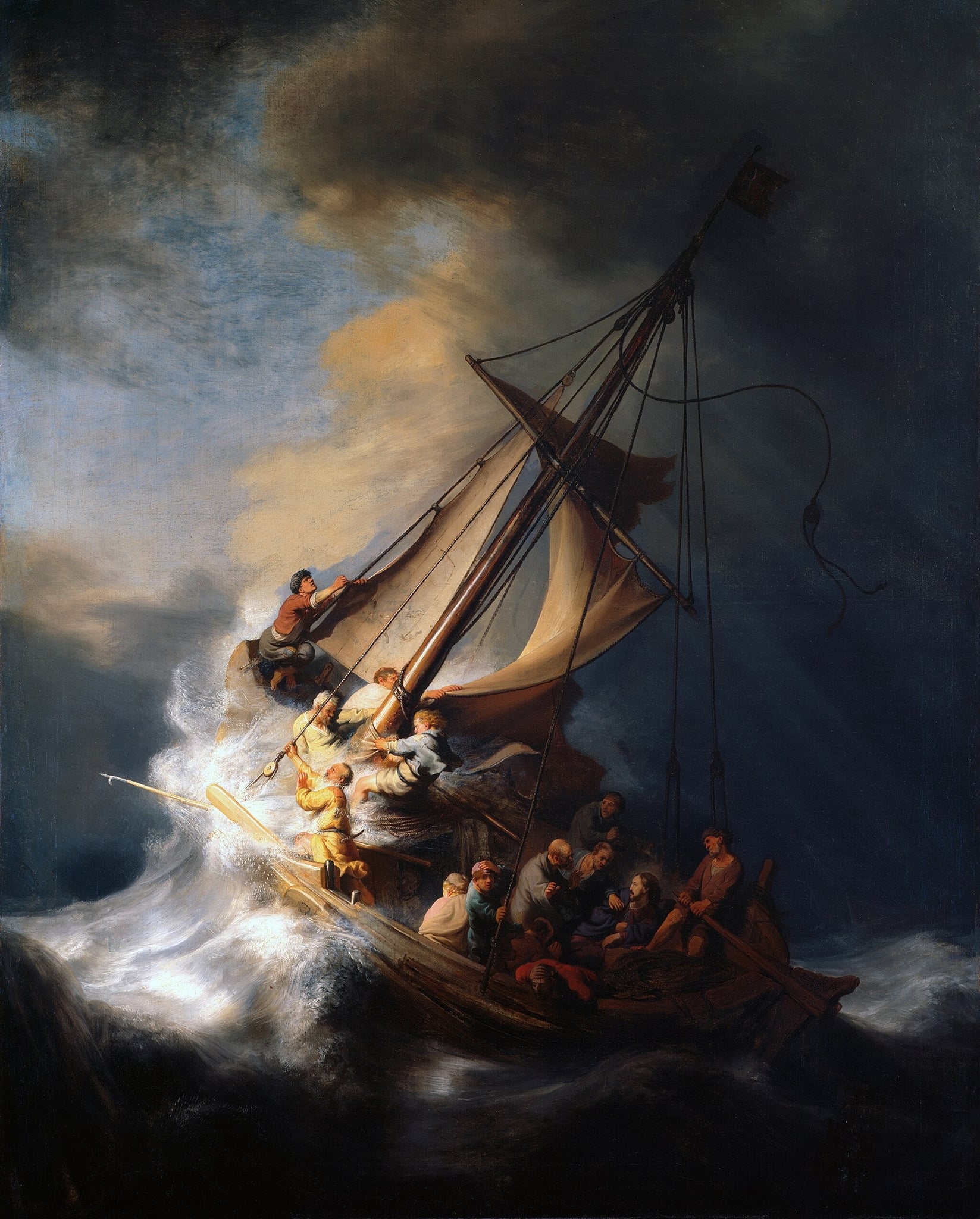
The Storm on the Sea of Galilee by Rembrandt van Rijn

The Storm on the Sea of Galilee

Rembrandt van Rijn (1633)

Rembrandt van Rijn’s The Storm on the Sea of Galilee stages a clash of <strong>human panic</strong> and <strong>divine composure</strong> at the instant before the miracle. A torn mainsail whips across a steeply tilted boat as terrified disciples scramble, while a <strong>serenely lit Christ</strong> anchors a pocket of calm—an image of faith holding within chaos <sup>[1]</sup><sup>[3]</sup>. It is Rembrandt’s only painted seascape, intensifying its dramatic singularity in his oeuvre <sup>[2]</sup>.
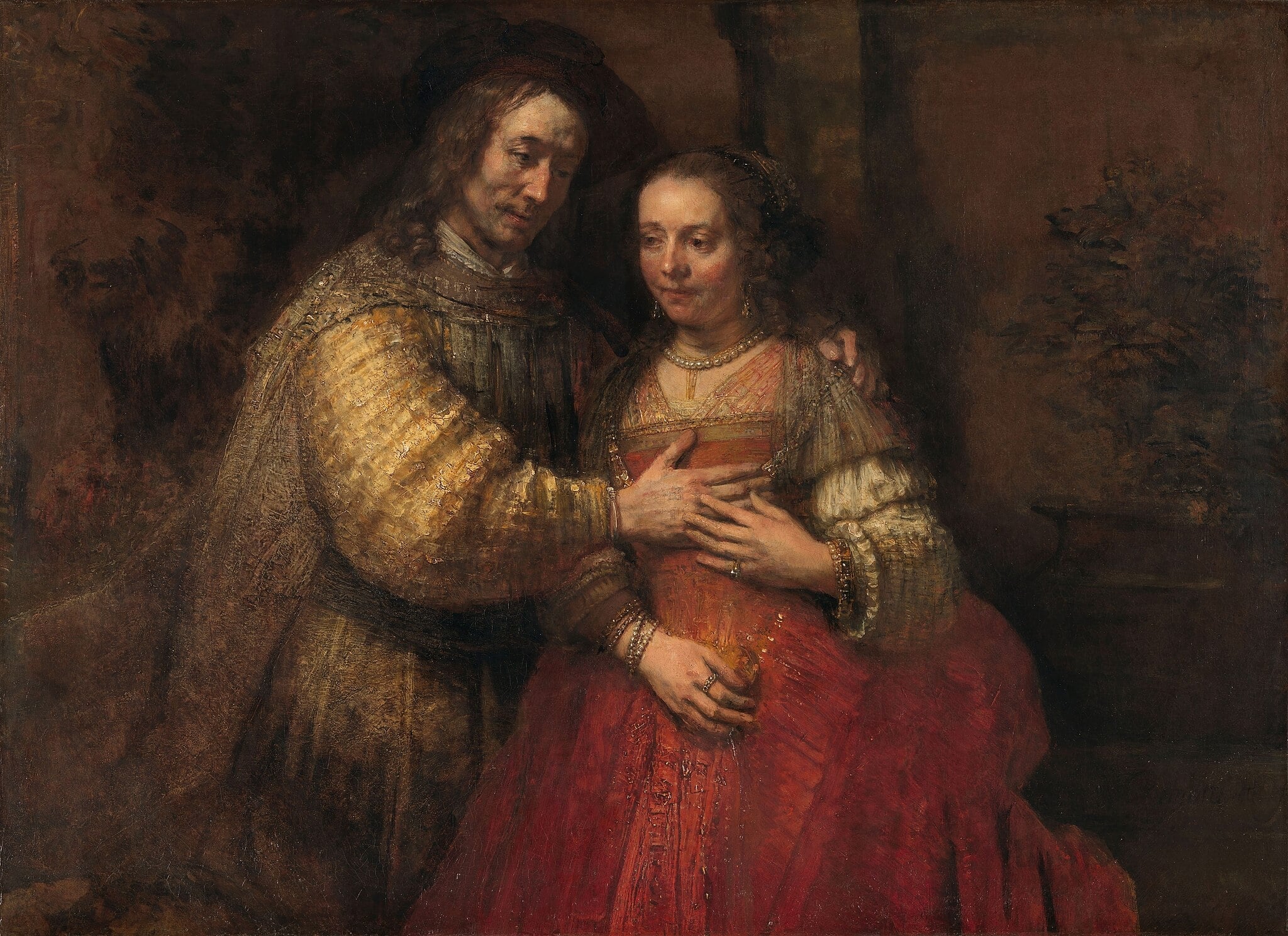
The Jewish Bride by Rembrandt van Rijn

The Jewish Bride

Rembrandt van Rijn (c. 1665–1669)

The Jewish Bride by Rembrandt van Rijn stages an intimate covenant: two figures, read today as <strong>Isaac and Rebecca</strong>, seal their union through touch rather than spectacle. Light concentrates on faces and hands, while the man’s glittering <strong>gold sleeve</strong> and the woman’s <strong>coral-red gown</strong> turn paint itself into a metaphor for fidelity and tenderness <sup>[1]</sup><sup>[3]</sup>. This late masterpiece embodies Rembrandt’s <strong>material eloquence</strong>—impasto as feeling—within a hushed, dark setting <sup>[1]</sup><sup>[2]</sup>.
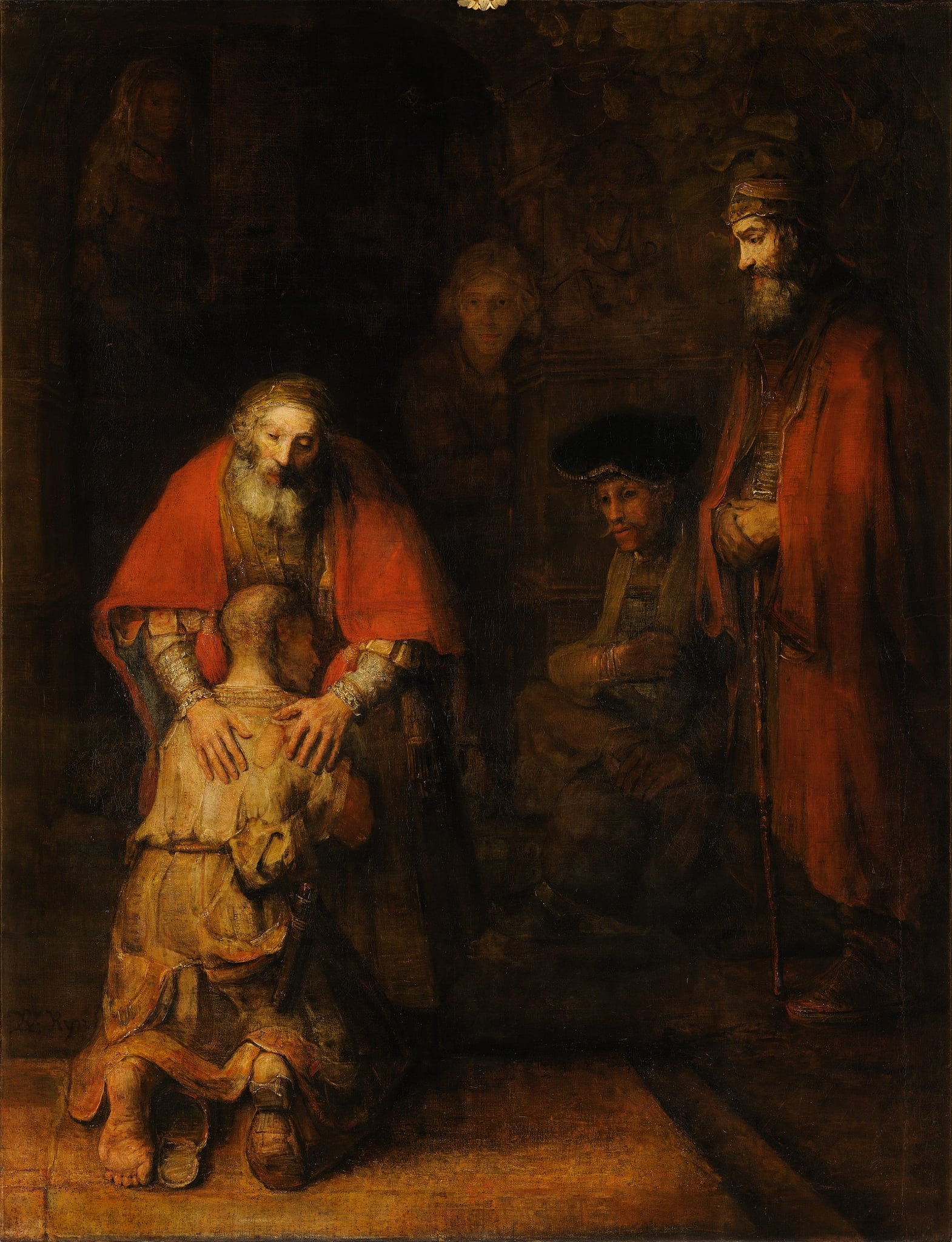
The Return of the Prodigal Son by Rembrandt van Rijn

The Return of the Prodigal Son

Rembrandt van Rijn (c. 1661–1669 (probably completed by 1669))

Rembrandt van Rijn’s The Return of the Prodigal Son is a late-life meditation on <strong>mercy</strong>, <strong>homecoming</strong>, and <strong>restored dignity</strong>. In a hush of dusk-like light, a ragged son kneels into his father’s <strong>embrace</strong>, while an upright elder brother holds back in shadow. The image concentrates meaning in illuminated <strong>faces, hands, and feet</strong>, turning a parable into a timeless human reckoning. <sup>[1]</sup><sup>[2]</sup>
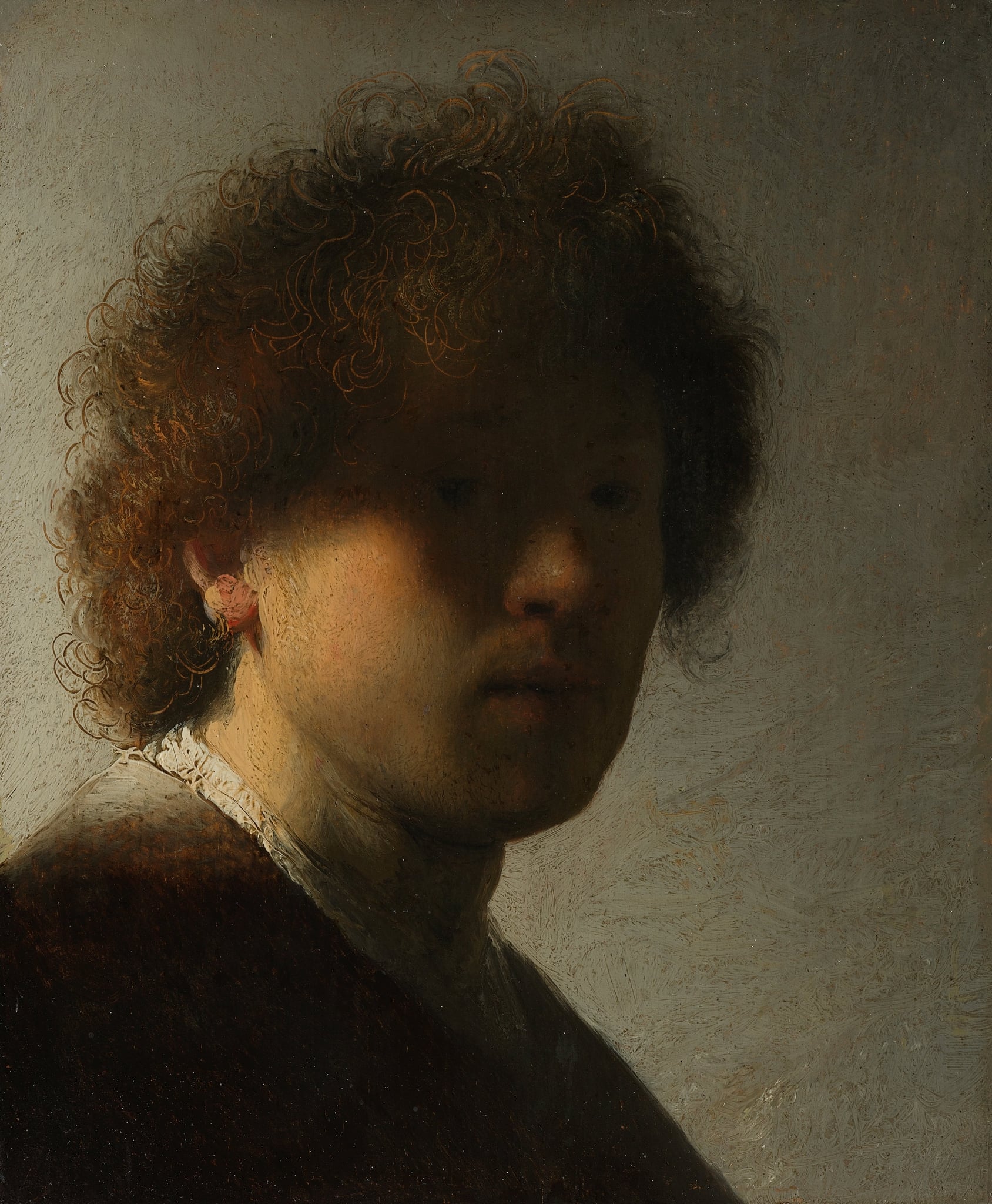
Self-portrait (with tousled hair) by Rembrandt van Rijn

Self-portrait (with tousled hair)

Rembrandt van Rijn (c. 1628)

A young Rembrandt van Rijn tests how <strong>light both reveals and withholds</strong> by letting his face emerge from darkness while his <strong>scratched, backlit curls</strong> flare like a rough halo. The small oak panel makes <strong>process itself the subject</strong>, turning hair, stubble, and a raking highlight into a statement of identity-in-formation <sup>[1]</sup><sup>[5]</sup>.
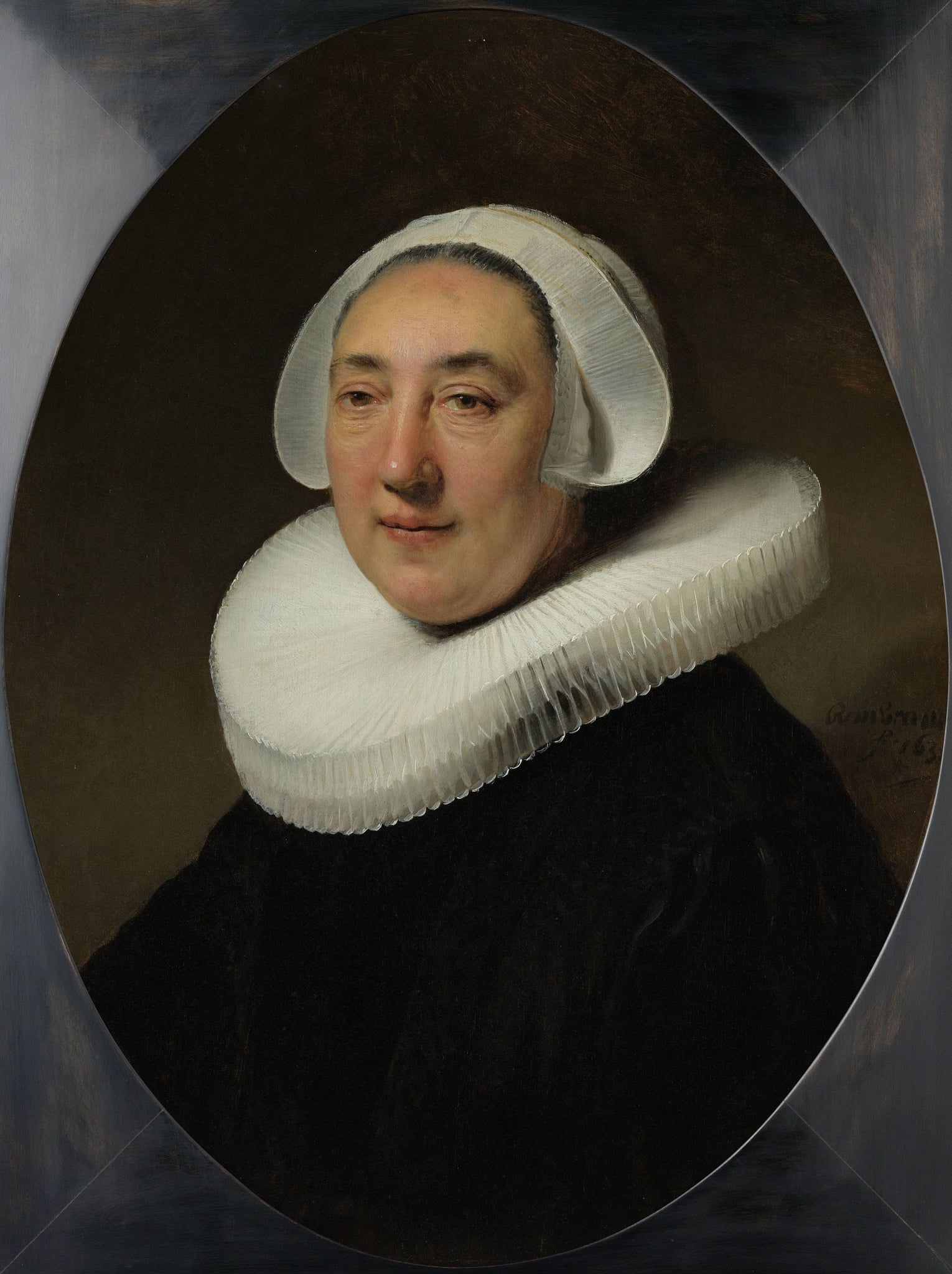
Portrait of Haesje Jacobsdr van Cleyburg by Rembrandt van Rijn

Portrait of Haesje Jacobsdr van Cleyburg

Rembrandt van Rijn (1634)

Rembrandt’s 1634 Portrait of Haesje Jacobsdr van Cleyburg stages a Dutch burgher within a feigned <strong>oval</strong> opening, illuminated by selective <strong>chiaroscuro</strong> that models warm skin against brilliant <strong>millstone ruff</strong> and sober black dress. The painting balances <strong>modesty and status</strong>, making virtue visible while quietly declaring prosperity through immaculate linen and craft <sup>[1]</sup><sup>[4]</sup>.