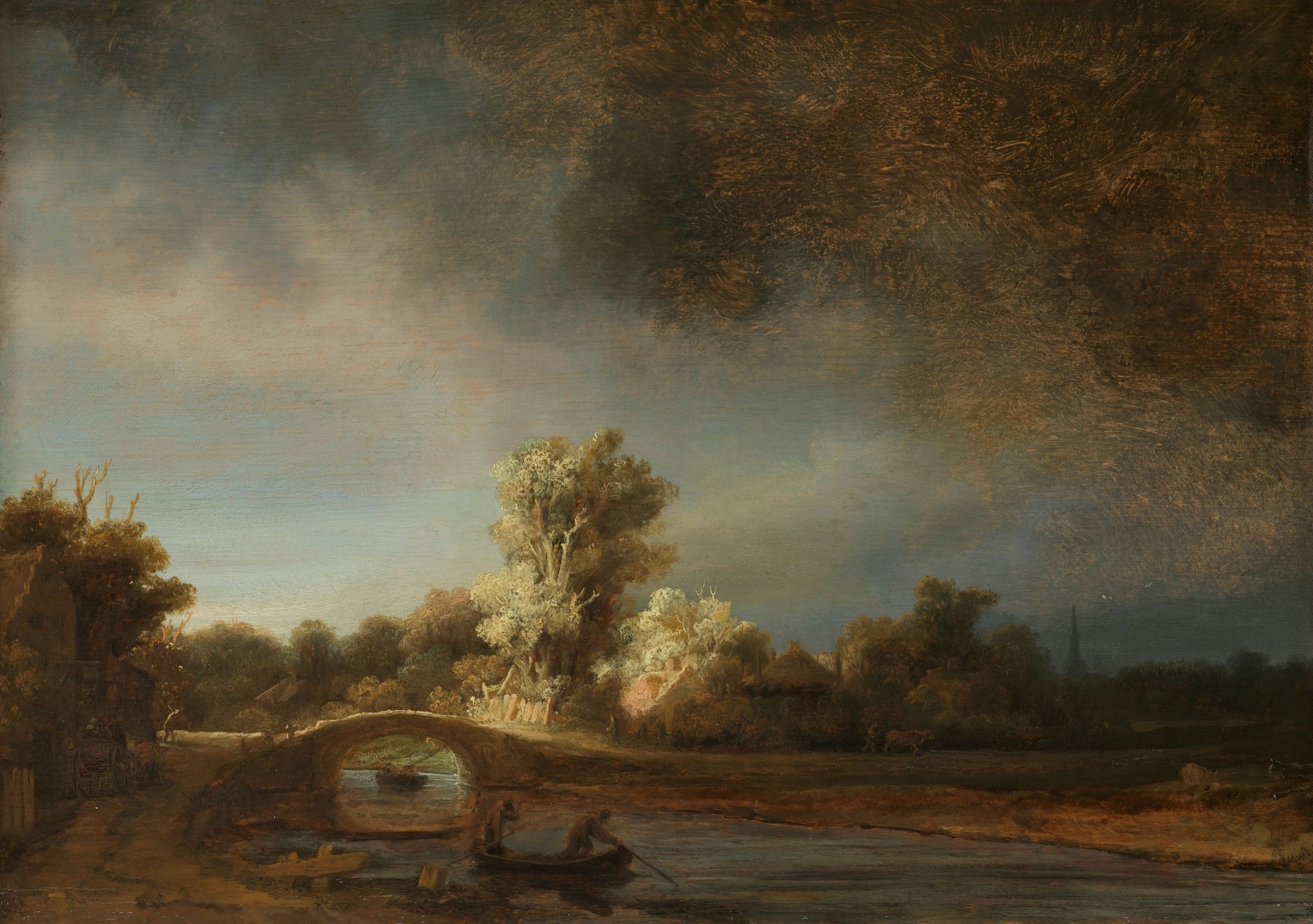
Landscape with a Stone Bridge

by Rembrandt van Rijn

Under a storm-laden sky, a sudden shaft of light isolates the low stone bridge and a cluster of silvery trees, while tiny boats, a rutted track, a cottage, grazing animals, and a far church spire register human presence. Rembrandt van Rijn turns an everyday crossing into a scene of passage and providence, where transience moves beneath the endurance of stone and sky [1][2].
💰

Market Value

$140-190 million

How much is Landscape with a Stone Bridge worth?

Study Print Studio

Create a personal study print

Build a companion study sheet around the part of this painting that speaks to you most. Choose a detail, shape an interpretation, and walk away with something personal and display-worthy.

Fast Facts

Year
late 1630s (c. 1637–1638)
Medium
Oil on oak panel
Dimensions
29.5 × 42.5 cm
Location
Rijksmuseum, Amsterdam
See all Rembrandt van Rijn paintings in Amsterdam
Landscape with a Stone Bridge by Rembrandt van Rijn (late 1630s (c. 1637–1638)) featuring Stone bridge, Sunbeam/illumination, Storm-laden sky, Boats and rowers

Click on any numbered symbol to learn more about its meaning

Meaning & Symbolism

Rembrandt builds the drama by staging a wide, low horizon beneath a sky that is visibly worked and turbulent—the brown ground and scumbled strokes remain active in the cloud mass, making the storm feel imminent and mobile 6. Into that unrest he cuts a concentrated sunbeam that strikes the rounded back of the bridge and the pale, shimmering foliage to its right, turning them into a lit isthmus between darkness and day 1. At the left edge, the path and cottage recede into half‑shadow; in the water below, two figures row a skiff while another boat slips under the arch, compressed by the stone like time funneling through a narrow hour. The staffage is slight, yet pointed: travelers, animals grazing low on the bank, and a faint church spire on the far horizon establish a continuum of daily life, orientation, and belief. Across the surface, Rembrandt’s chiaroscuro is not ornamental; it concentrates meaning. The bridge is the picture’s fulcrum because light singles it out as an event—passage made visible—while the storm presses forward as a reminder that passage is provisional 125. Read within seventeenth‑century discourse on weather and affect, the sun‑through‑storm motif invites reflection rather than a single code. Dutch art often mobilized skies to provoke awe or moral thought; Rembrandt taps that current but keeps the image experiential, allowing viewers to feel the suddenness of light that reveals without decoding 45. Scholars have linked his bridge‑and‑tempest pairings to emblematic traditions of Fortune and life’s instability—what Antoni Ziemba terms landscapes “as symbol”—where sturdier structures (stone bridge, church spire) counterbalance the vulnerability of travelers and passing boats 2. The panel’s sibling, Landscape with Arched Bridge in Berlin, confirms that Rembrandt deliberately explored this motif in the late 1630s, varying the same size and format to test how illumination and weather carry meaning 3. That context clarifies why Landscape with a Stone Bridge is important: it belongs to the artist’s small, focused corpus of painted landscapes, in which he retools the language of the Dutch countryside to stage ethical and spiritual attentiveness without programmatic allegory 134. The painting thus stands as a meditation on movement under fate—a world where a beam of light briefly articulates the route between shelter and exposure, between the mutable current of human travel and the obstinate endurance of stone.

Explore Deeper with AI

Ask questions about Landscape with a Stone Bridge

Popular questions:

Powered by AI • Get instant insights about this artwork

💬 Ask questions about this artwork!

Interpretations

Formal Analysis: Weather as a Painted Procedure

Rembrandt builds meteorology out of method: a warm, visible ground and scumbled cloud layers leave the sky optically “worked,” so that turbulence is not merely depicted but enacted in the facture. Against this churn, the bridge’s back catches a concentrated sunbeam in high-value strokes, forming a hinge of illumination that locks land, water, and air into a single event. On small oak panel, this compression of scale intensifies the beam’s impact, while selective impasto in foliage creates a flicker that reads as wind‑ruffled leaves. The result is a painting where technique produces climate—light and storm are effects of brushwork as much as of nature—making the viewer register weather first as a sensation, then as meaning 16.

Source: Rijksmuseum; Vereniging Rembrandt

Symbolic Reading: Fortune’s Storm and the Ethics of Passage

Within early modern emblematic habits, bridges, boats, and tempests often index Fortune’s inconstancy. Ziemba situates Rembrandt’s landscape in that current: the enduring stone bridge and distant spire counterpoise fragile travelers and low craft, staging a world where passage is provisional and providence may or may not intervene. Yet Rembrandt resists closed allegory. Instead, the image “reveals without decoding,” letting emblematic overtones—journey, hazard, shelter—surface through experiential light and weather rather than inscribed mottoes. The painting thus functions as a symbolic field that keeps ethical attention awake while denying a single code, a stance consistent with Dutch Protestant caution about images and with Rembrandt’s broader pursuit of moral resonance through lived nature 12.

Source: Antoni Ziemba, Artibus et Historiae

Comparative Lens: The Berlin ‘Arched Bridge’ and Serial Experiment

The painting gains clarity when read beside its sibling panel in Berlin, reattributed to Rembrandt in 2022. Identical in size and close in date, the pair shows the artist iterating a motif—bridge under volatile sky—to test how small shifts in illumination, cloud mass, and staffage recalibrate meaning. The Berlin study confirms that this Amsterdam panel belongs to a deliberate, short‑lived campaign in the late 1630s, now buttressed by technical comparison and dendrochronological proximity. Rather than a one‑off symbol, the bridge is a variable: a stage for different balances of storm and beam, of passage and peril. The duo argues for Rembrandt’s method as serial inquiry—each panel a controlled experiment in ethical atmosphere 37.

Source: Gemäldegalerie, Staatliche Museen zu Berlin; PACT 13 (Klein) dendro study

Affective Meteorology: Awe without Program

Seventeenth‑century Dutch art leveraged skies to elicit affect—awe, anxiety, reflection—often with moral undertones. Getty scholarship situates such weather dramaturgy within a culture attuned to atmospheric spectacle, while NGA cautions against over‑coding these effects. Rembrandt’s sun‑through‑storm motif fits this discourse: the beam’s suddenness produces a felt interval between danger and reprieve, an experiential sublime that invites viewers to think without prescribing what to think. In this register, the painting is less an emblem to decode than a carefully staged weather‑encounter whose meanings arise in the viewer’s oscillation between threat and clarity 45.

Source: Getty Research Institute; National Gallery of Art

Social Topography: Work, Water, and Rural Infrastructure

The staffage—rowers in a skiff, a boat sliding under the arch, animals grazing, a rutted track—anchors the scene in the working rhythms of the Dutch countryside. Waterways and bridges are not mere scenery but infrastructure binding commerce, parishes (the church spire), and farms into a circulatory network. In this light, the illuminated bridge is also civic: a node of connection whose visibility turns movement into public life. Rembrandt’s restraint—no pageantry, minimal figures—aligns with Dutch landscape’s investment in the ordinary as carrier of meaning, where labor and transit embody a collective tempo that weather can jeopardize but not erase 15.

Source: Rijksmuseum; National Gallery of Art

Related Themes

About Rembrandt van Rijn

Rembrandt van Rijn (1606–1669) was a leading Dutch Golden Age painter and printmaker whose Amsterdam years (from 1631) produced virtuosic portraits and ambitious history paintings. In the early 1630s he favored polished finishes, saturated color, and theatrical staging—qualities on display in this 1633 canvas. Although prolific, this is his only known painted seascape [2][4].
View all works by Rembrandt van Rijn

More by Rembrandt van Rijn
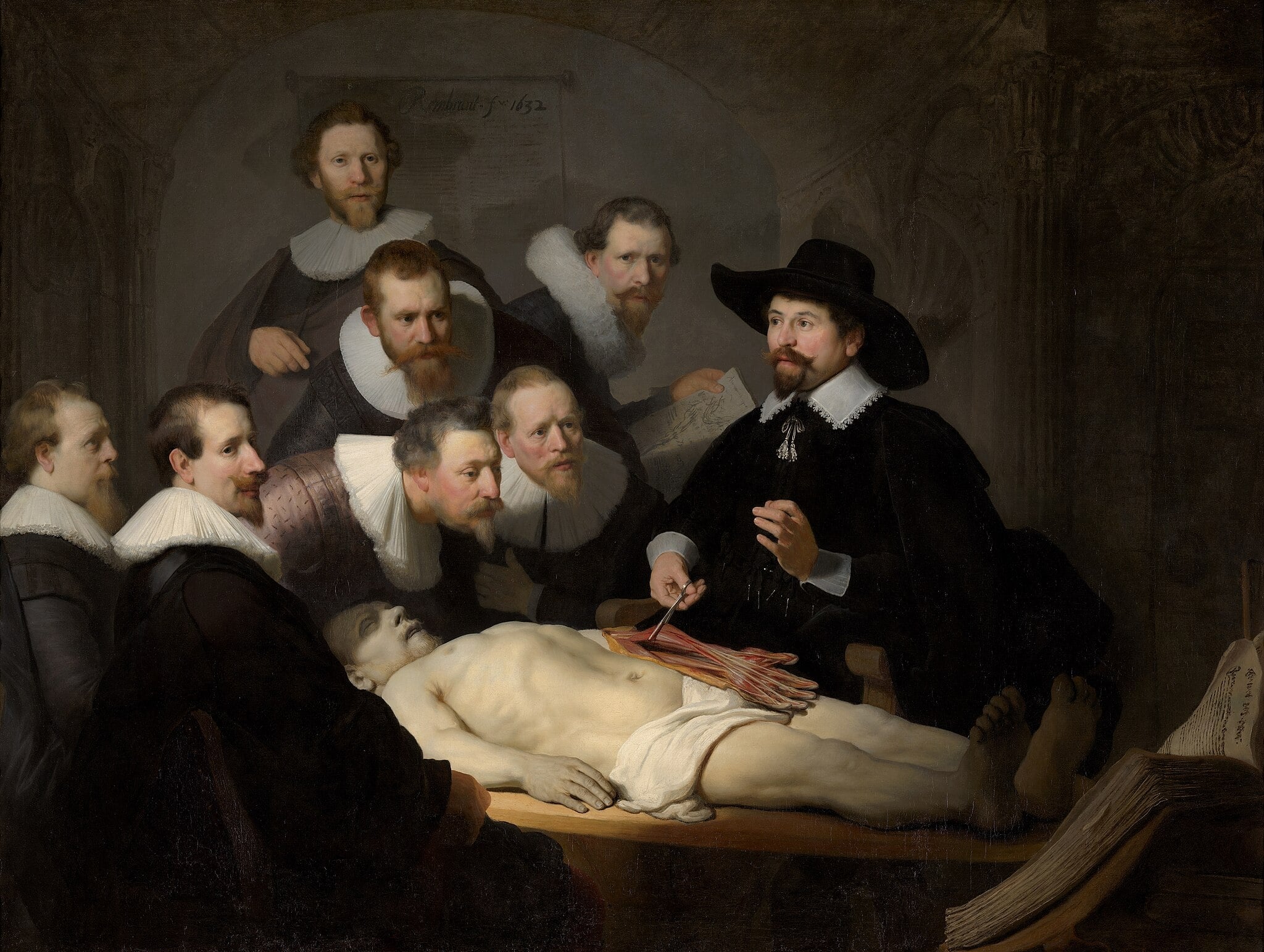
The Anatomy Lesson of Dr. Nicolaes Tulp by Rembrandt van Rijn

The Anatomy Lesson of Dr. Nicolaes Tulp

Rembrandt van Rijn (1632)

Rembrandt van Rijn turns a civic commission into a drama of <strong>knowledge made visible</strong>. A cone of light binds the ruff‑collared surgeons, the pale cadaver, and Dr. Tulp’s forceps as he raises the <strong>forearm tendons</strong> to explain the hand. Book and body face each other across the table, staging the tension—and alliance—between <strong>textual authority</strong> and <strong>empirical observation</strong> <sup>[1]</sup><sup>[2]</sup>.
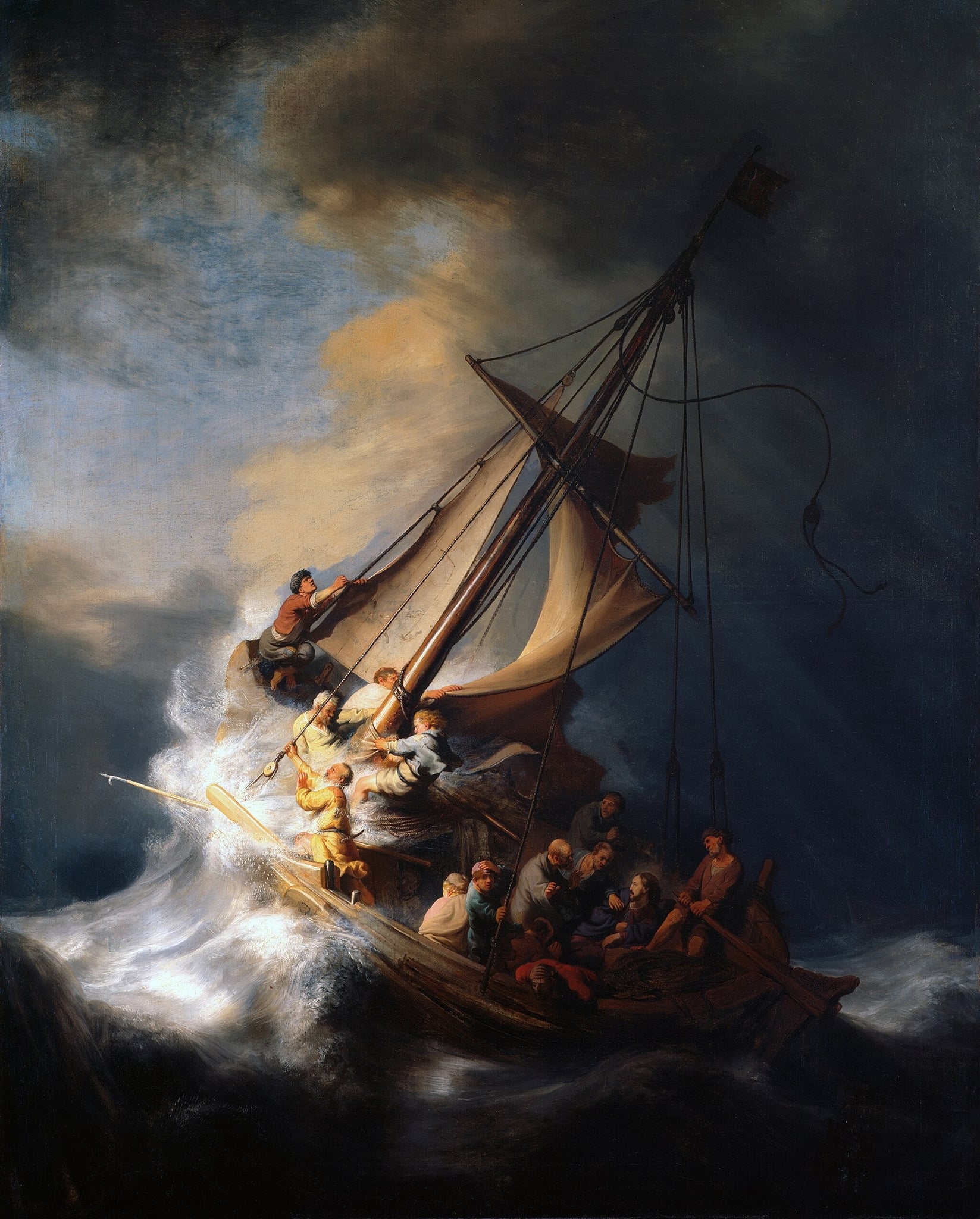
The Storm on the Sea of Galilee by Rembrandt van Rijn

The Storm on the Sea of Galilee

Rembrandt van Rijn (1633)

Rembrandt van Rijn’s The Storm on the Sea of Galilee stages a clash of <strong>human panic</strong> and <strong>divine composure</strong> at the instant before the miracle. A torn mainsail whips across a steeply tilted boat as terrified disciples scramble, while a <strong>serenely lit Christ</strong> anchors a pocket of calm—an image of faith holding within chaos <sup>[1]</sup><sup>[3]</sup>. It is Rembrandt’s only painted seascape, intensifying its dramatic singularity in his oeuvre <sup>[2]</sup>.
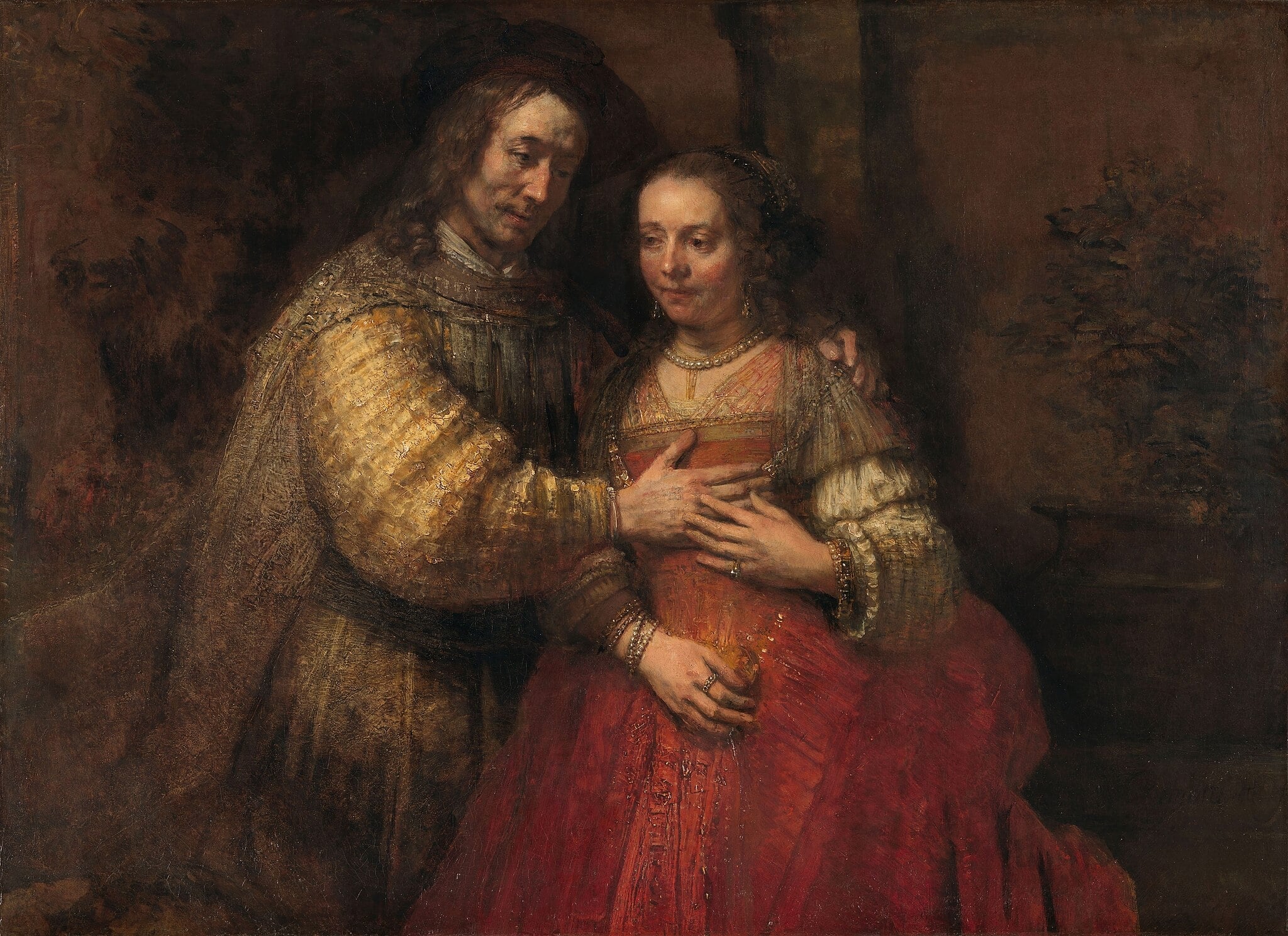
The Jewish Bride by Rembrandt van Rijn

The Jewish Bride

Rembrandt van Rijn (c. 1665–1669)

The Jewish Bride by Rembrandt van Rijn stages an intimate covenant: two figures, read today as <strong>Isaac and Rebecca</strong>, seal their union through touch rather than spectacle. Light concentrates on faces and hands, while the man’s glittering <strong>gold sleeve</strong> and the woman’s <strong>coral-red gown</strong> turn paint itself into a metaphor for fidelity and tenderness <sup>[1]</sup><sup>[3]</sup>. This late masterpiece embodies Rembrandt’s <strong>material eloquence</strong>—impasto as feeling—within a hushed, dark setting <sup>[1]</sup><sup>[2]</sup>.
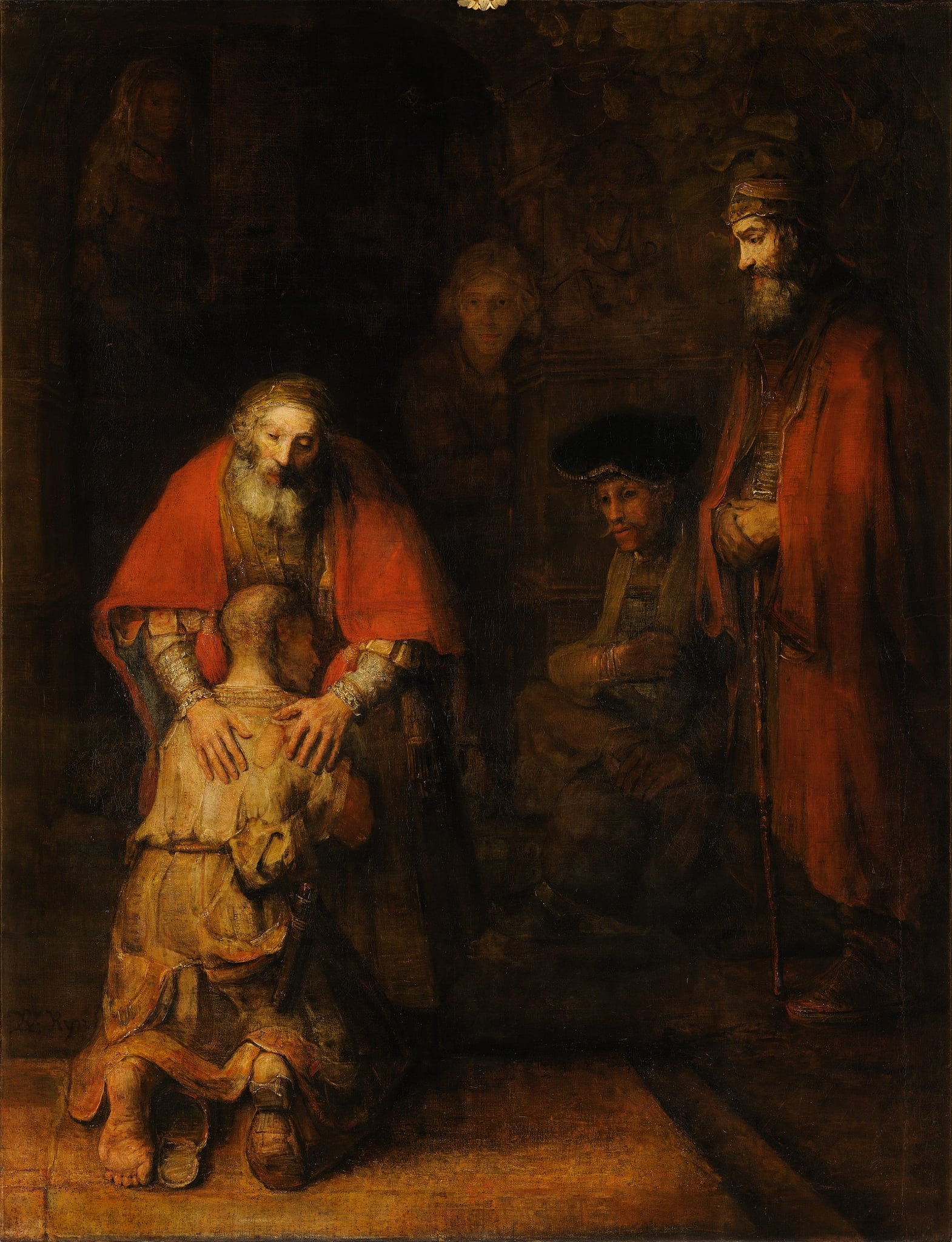
The Return of the Prodigal Son by Rembrandt van Rijn

The Return of the Prodigal Son

Rembrandt van Rijn (c. 1661–1669 (probably completed by 1669))

Rembrandt van Rijn’s The Return of the Prodigal Son is a late-life meditation on <strong>mercy</strong>, <strong>homecoming</strong>, and <strong>restored dignity</strong>. In a hush of dusk-like light, a ragged son kneels into his father’s <strong>embrace</strong>, while an upright elder brother holds back in shadow. The image concentrates meaning in illuminated <strong>faces, hands, and feet</strong>, turning a parable into a timeless human reckoning. <sup>[1]</sup><sup>[2]</sup>
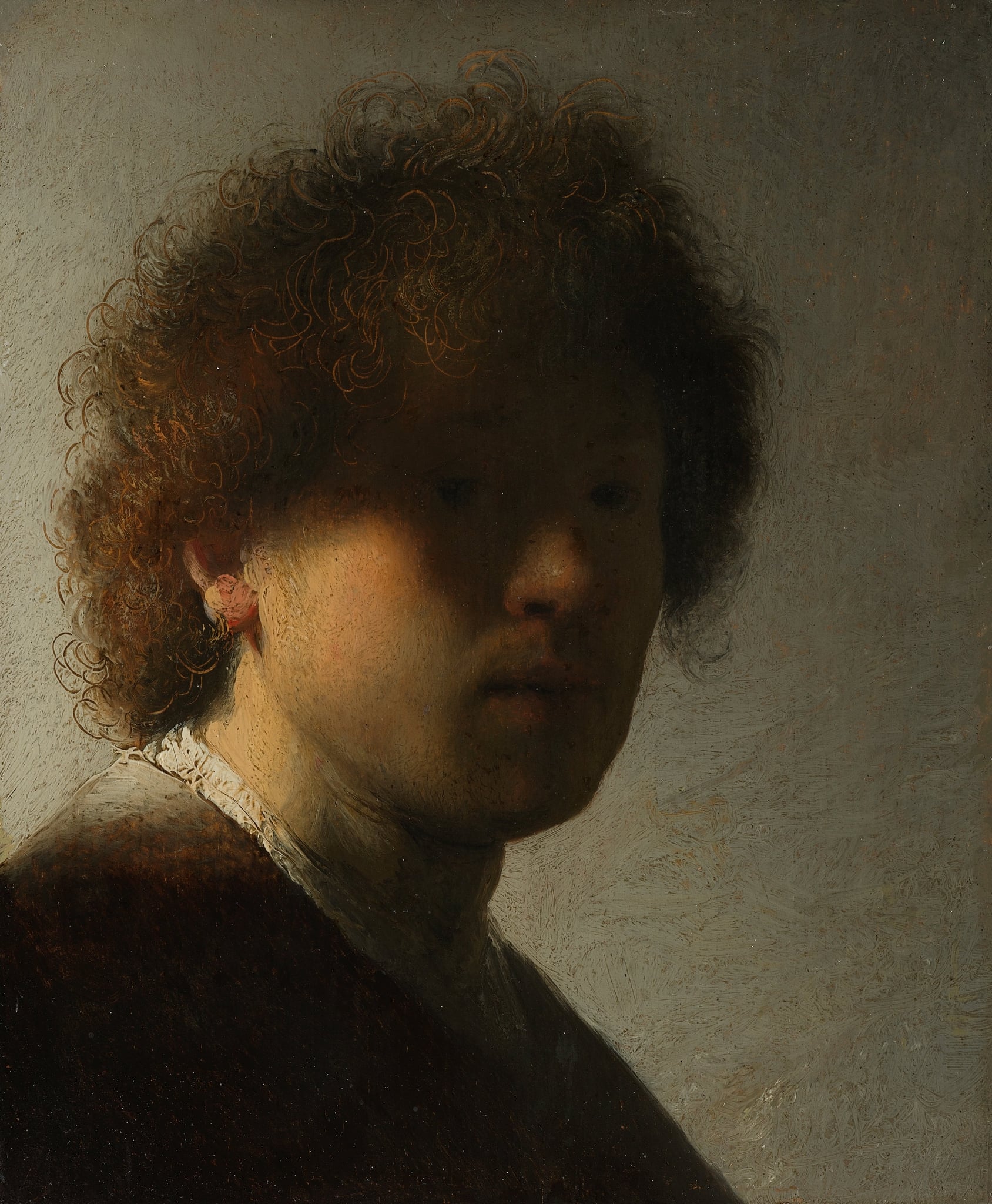
Self-portrait (with tousled hair) by Rembrandt van Rijn

Self-portrait (with tousled hair)

Rembrandt van Rijn (c. 1628)

A young Rembrandt van Rijn tests how <strong>light both reveals and withholds</strong> by letting his face emerge from darkness while his <strong>scratched, backlit curls</strong> flare like a rough halo. The small oak panel makes <strong>process itself the subject</strong>, turning hair, stubble, and a raking highlight into a statement of identity-in-formation <sup>[1]</sup><sup>[5]</sup>.
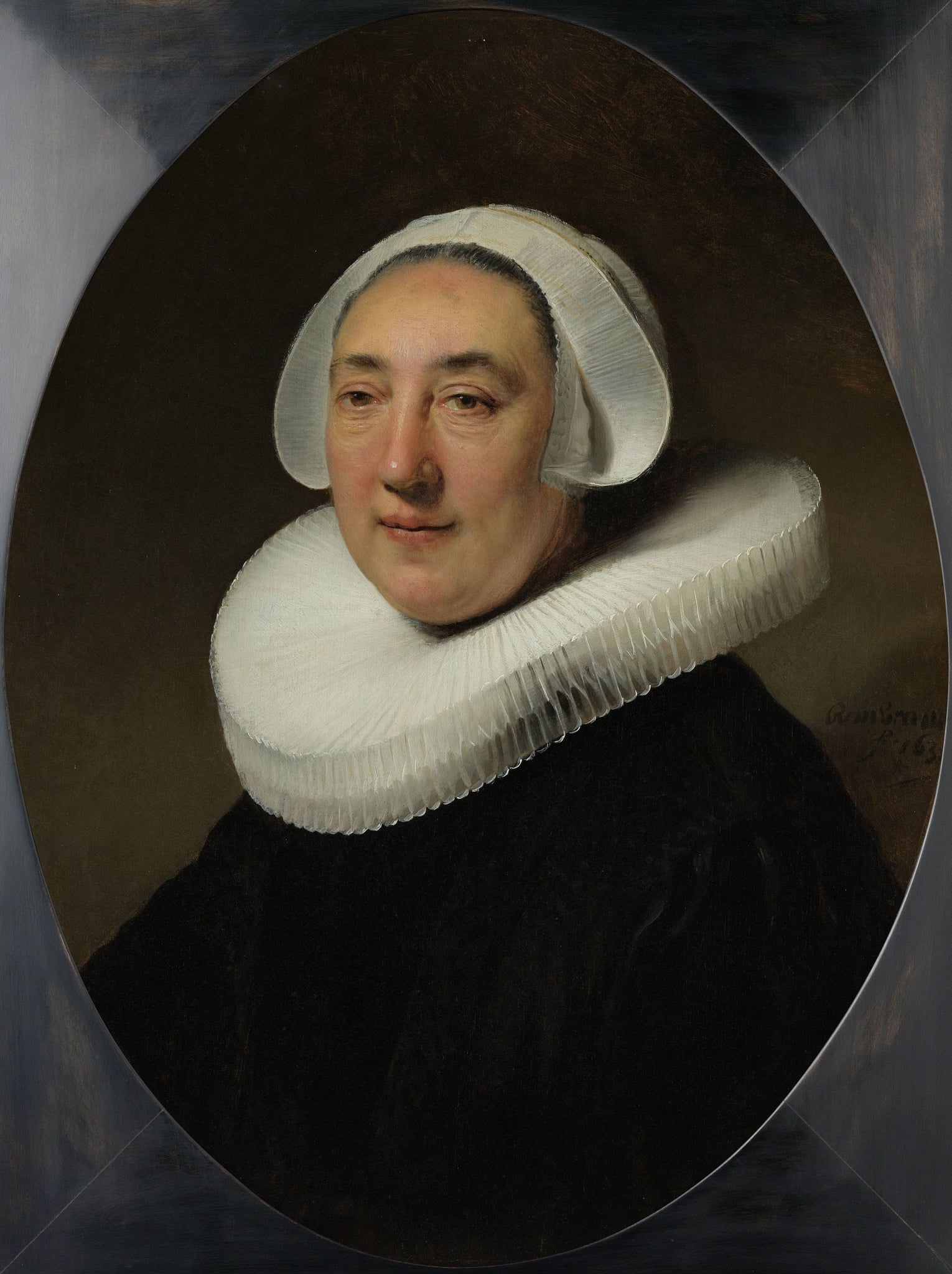
Portrait of Haesje Jacobsdr van Cleyburg by Rembrandt van Rijn

Portrait of Haesje Jacobsdr van Cleyburg

Rembrandt van Rijn (1634)

Rembrandt’s 1634 Portrait of Haesje Jacobsdr van Cleyburg stages a Dutch burgher within a feigned <strong>oval</strong> opening, illuminated by selective <strong>chiaroscuro</strong> that models warm skin against brilliant <strong>millstone ruff</strong> and sober black dress. The painting balances <strong>modesty and status</strong>, making virtue visible while quietly declaring prosperity through immaculate linen and craft <sup>[1]</sup><sup>[4]</sup>.