Blue parasol Symbolism
Marker of modern suburban leisure and a tool to test light and color contrasts outdoors.
Common Themes
Artworks Featuring This Symbol
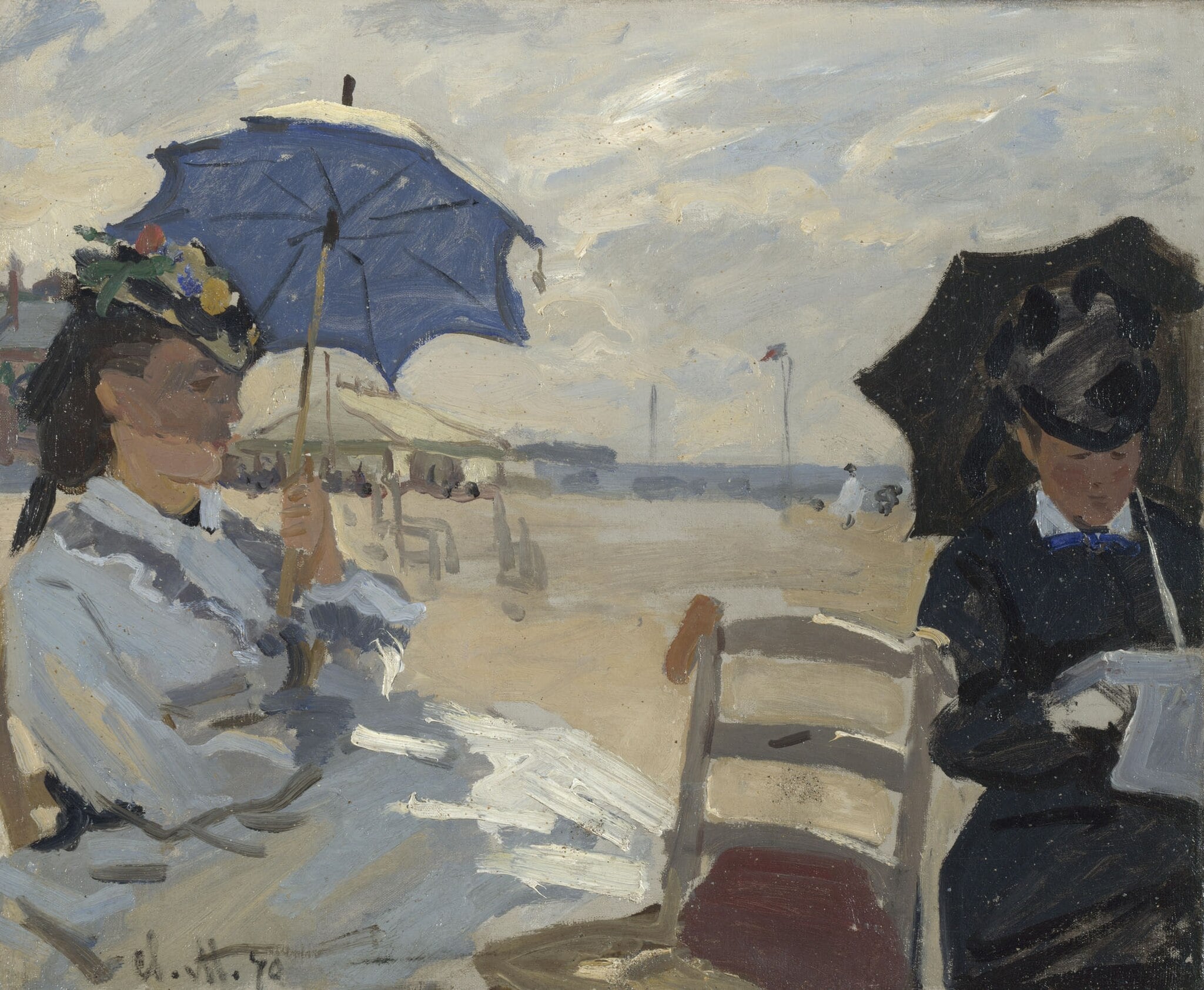
The Beach at Trouville
Claude Monet (1870)
Claude Monet’s The Beach at Trouville captures a wind-bright instant of <strong>modern leisure</strong> on the Normandy coast. Two women sit close to the viewer beneath a <strong>blue</strong> and a <strong>black parasol</strong>, their poses anchored against a hazy horizon where sea and sky fuse. Brisk strokes, embedded <strong>grains of sand</strong>, and snapshot-like <strong>cropping</strong> turn weather and time itself into the subject <sup>[1]</sup>.
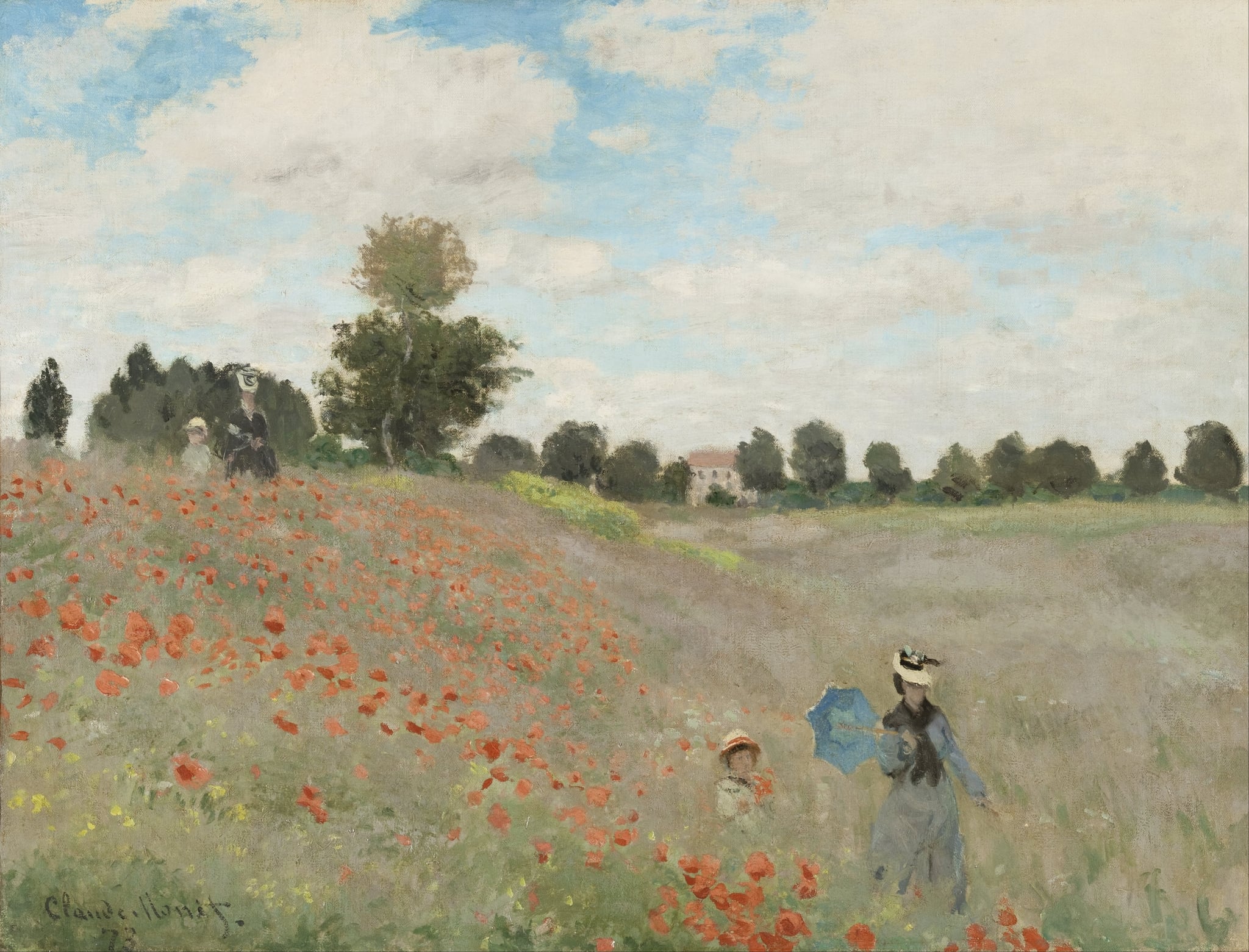
Poppies
Claude Monet (1873)
Claude Monet’s Poppies (1873) turns a suburban hillside into a theater of <strong>light, time, and modern leisure</strong>. A red diagonal of poppies counters cool fields and sky, while a woman with a <strong>blue parasol</strong> and a child appear twice along the slope, staging a gentle <strong>echo of moments</strong> rather than a single event <sup>[1]</sup>. The painting asserts sensation over contour, letting broken touches make the day itself the subject.
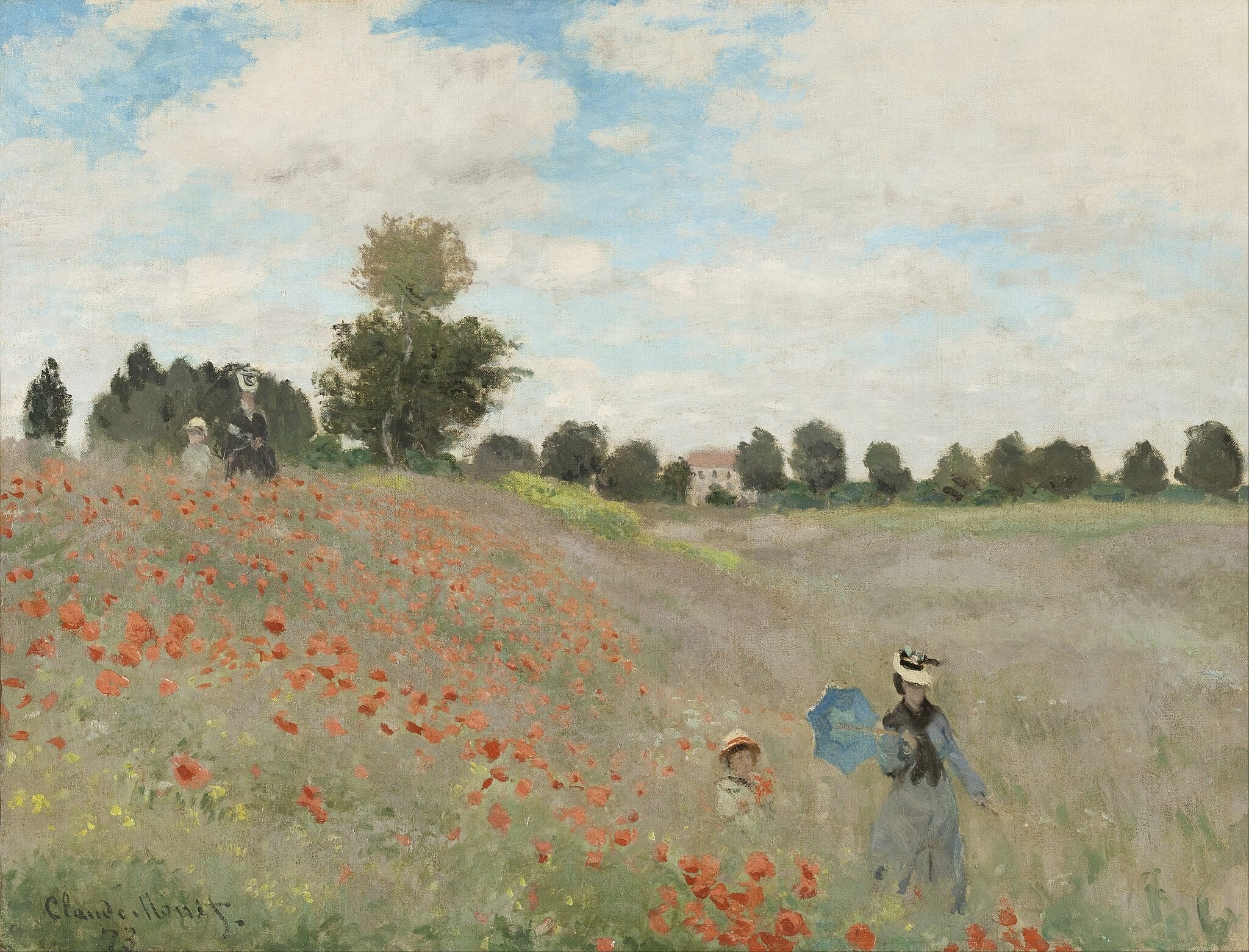
Poppy Fields near Argenteuil
Claude Monet (1873)
A modern pastoral where <strong>color and weather become the subject</strong>: in Poppy Fields near Argenteuil (1873), Monet arrays red poppies along a diagonal slope beneath an immense, changeable sky. Two promenading figures recur across the hill, turning a stroll into a <strong>rhythm of time and movement</strong> <sup>[1]</sup><sup>[2]</sup>.
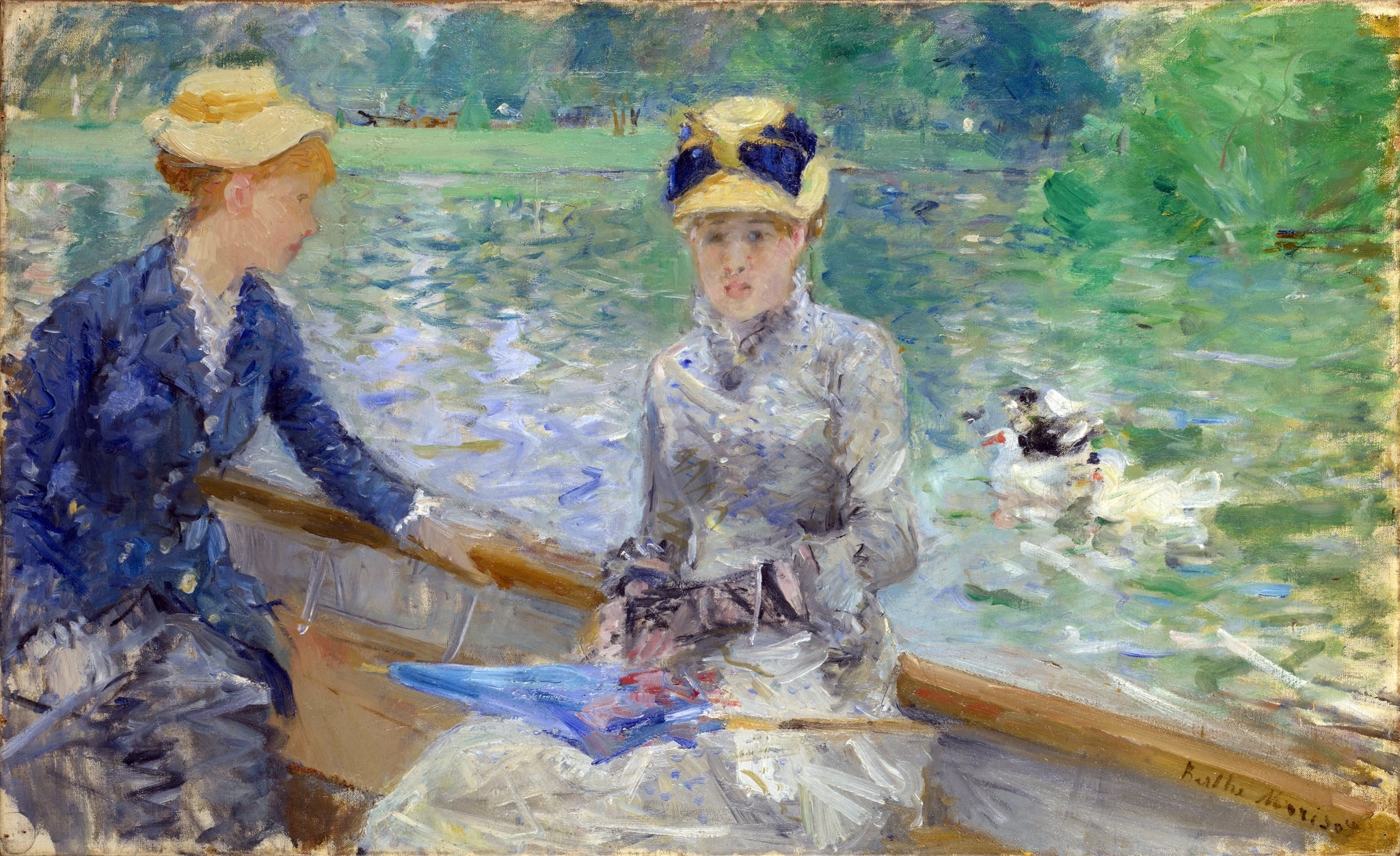
Summer's Day
Berthe Morisot (about 1879)
Two women drift on a boat in the Bois de Boulogne, their dresses, hats, and a bright blue parasol fused with the lake’s flicker by Morisot’s swift, <strong>zig‑zag brushwork</strong>. The scene turns a brief outing into a poised study of <strong>modern leisure</strong> and <strong>female companionship</strong> in public space <sup>[1]</sup>.