Book Symbolism
Absorbed looking, introspection, and quiet leisure
Common Themes
Artworks Featuring This Symbol
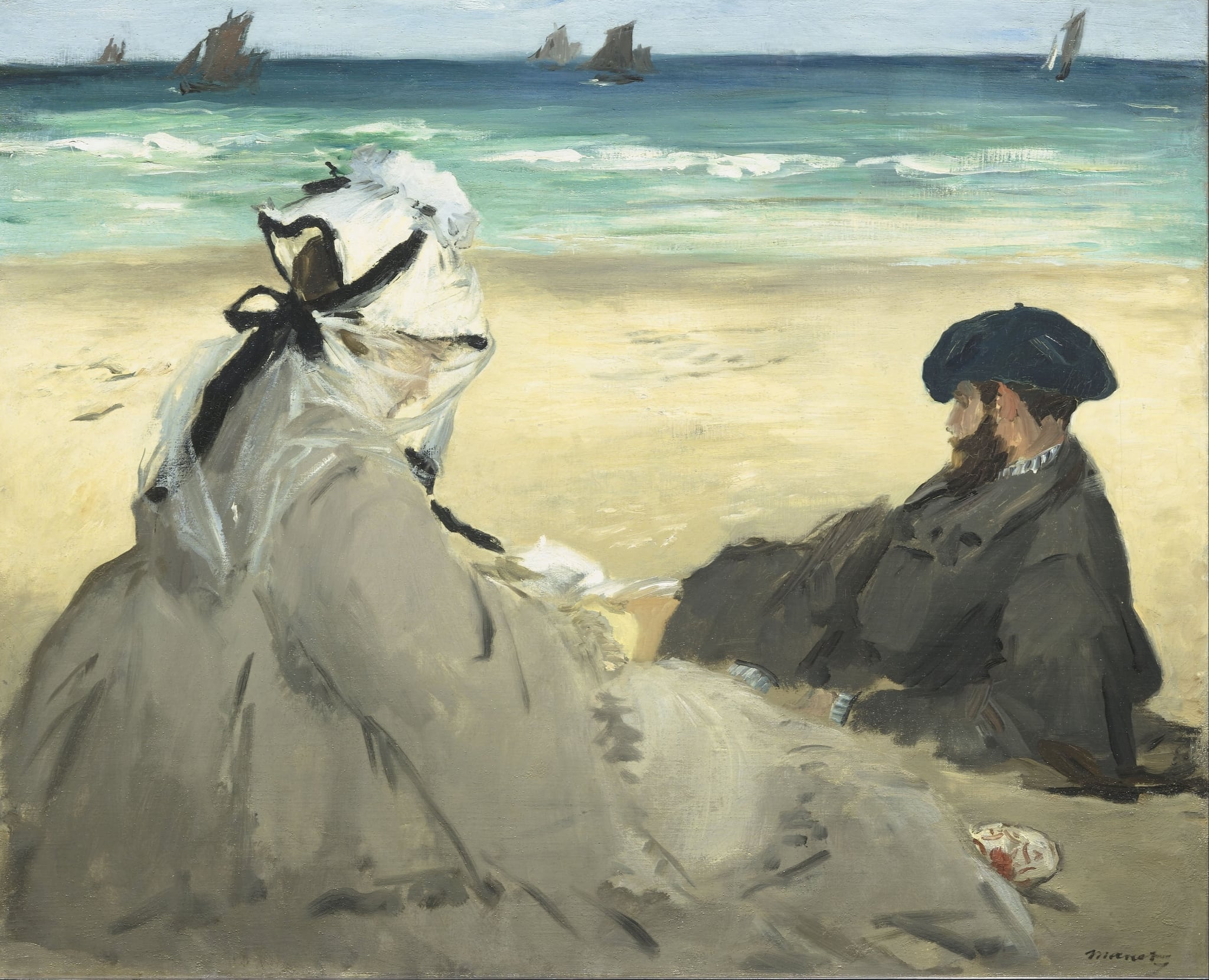
On the Beach
Édouard Manet (1873)
On the Beach captures a paused interval of modern leisure: two fashionably dressed figures sit on pale sand before a <strong>banded, high-horizon sea</strong>. Manet’s <strong>economical brushwork</strong>, restricted greys and blacks, and radical cropping stage a scene of absorption and wind‑tossed motion that feels both intimate and detached <sup>[1]</sup>.
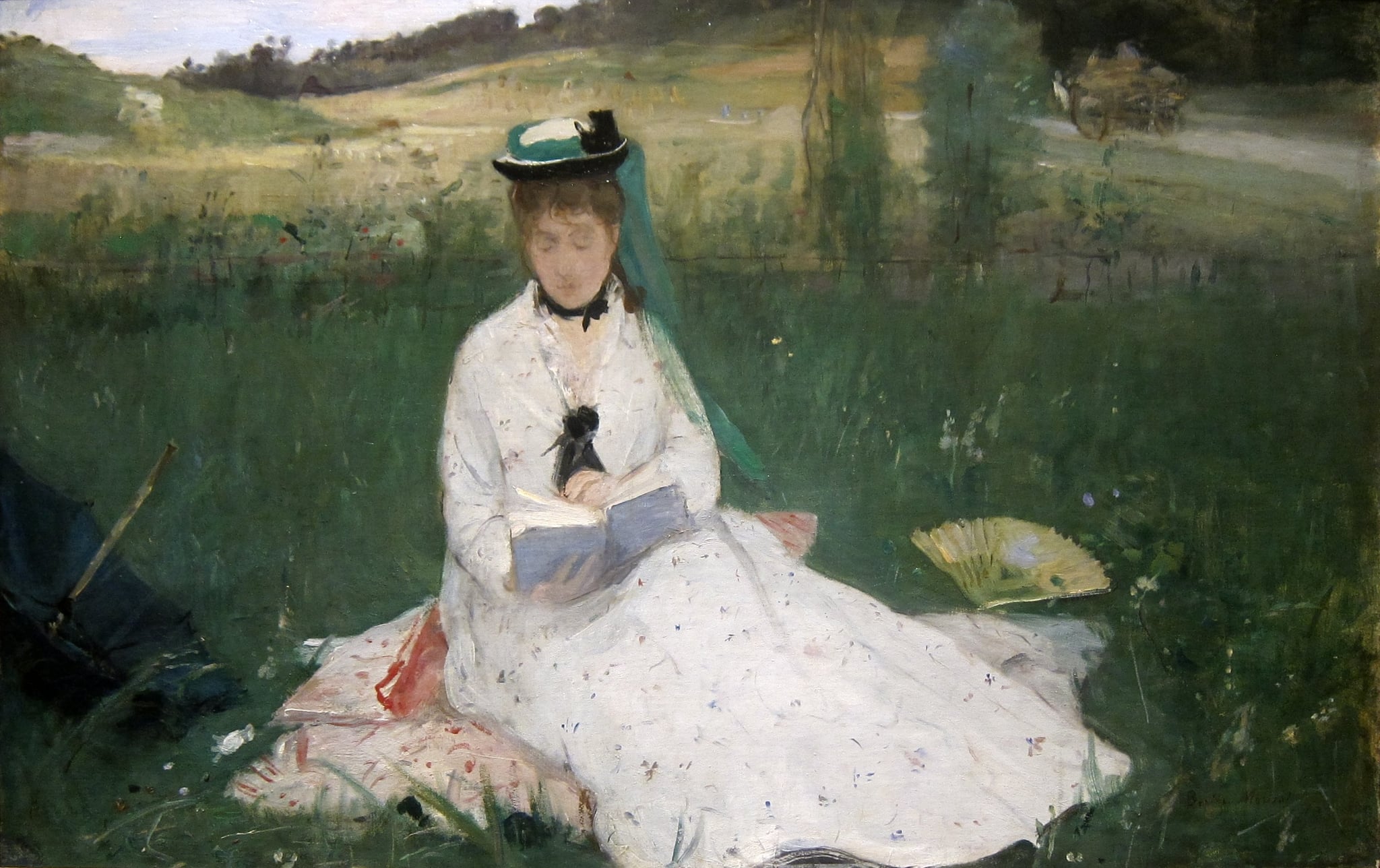
Reading
Berthe Morisot (1873)
In Berthe Morisot’s <strong>Reading</strong> (1873), a woman in a pale, patterned dress sits on the grass, absorbed in a book while a <strong>green parasol</strong> and <strong>folded fan</strong> lie nearby. Morisot’s quick, luminous brushwork dissolves the landscape into <strong>atmospheric greens</strong> as a distant carriage passes, turning an outdoor scene into a study of interior life. The work makes <strong>female intellectual absorption</strong> its true subject, aligning modern leisure with private thought.
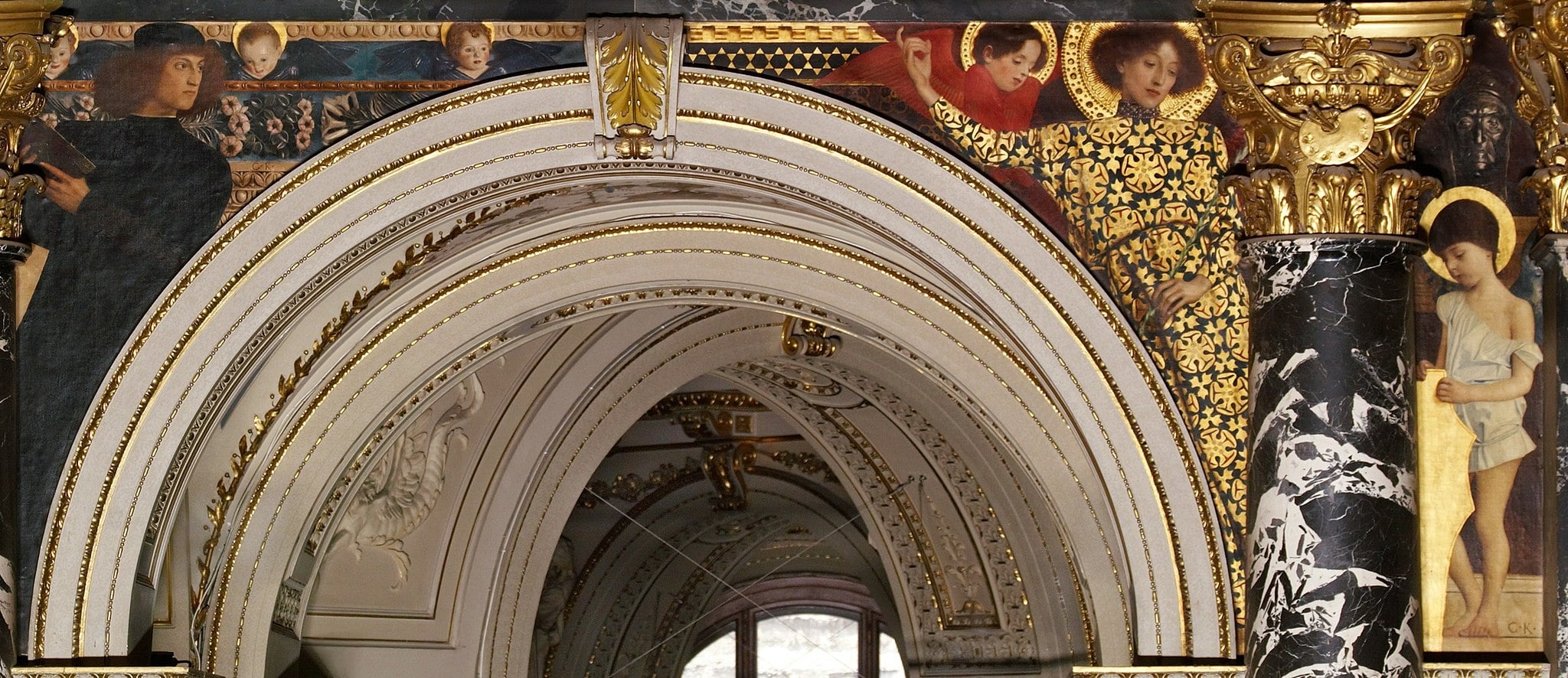
Old Italian Art
Gustav Klimt (1891)
Gustav Klimt’s <strong>Old Italian Art</strong> (1891) crowns the Kunsthistorisches Museum’s grand staircase with a shimmering allegory of trecento–quattrocento culture. A Florentine <strong>reader</strong>, a <strong>haloed</strong> saint-like figure in brocaded gold, putti, and a bust of <strong>Dante</strong> articulate a lineage of learning and piety, all fused to the building’s gilded architecture. Klimt’s patterned textiles and hovering angels already signal his move from Ringstraße historicism toward a <strong>decorative modern</strong> vision <sup>[1]</sup><sup>[2]</sup>.
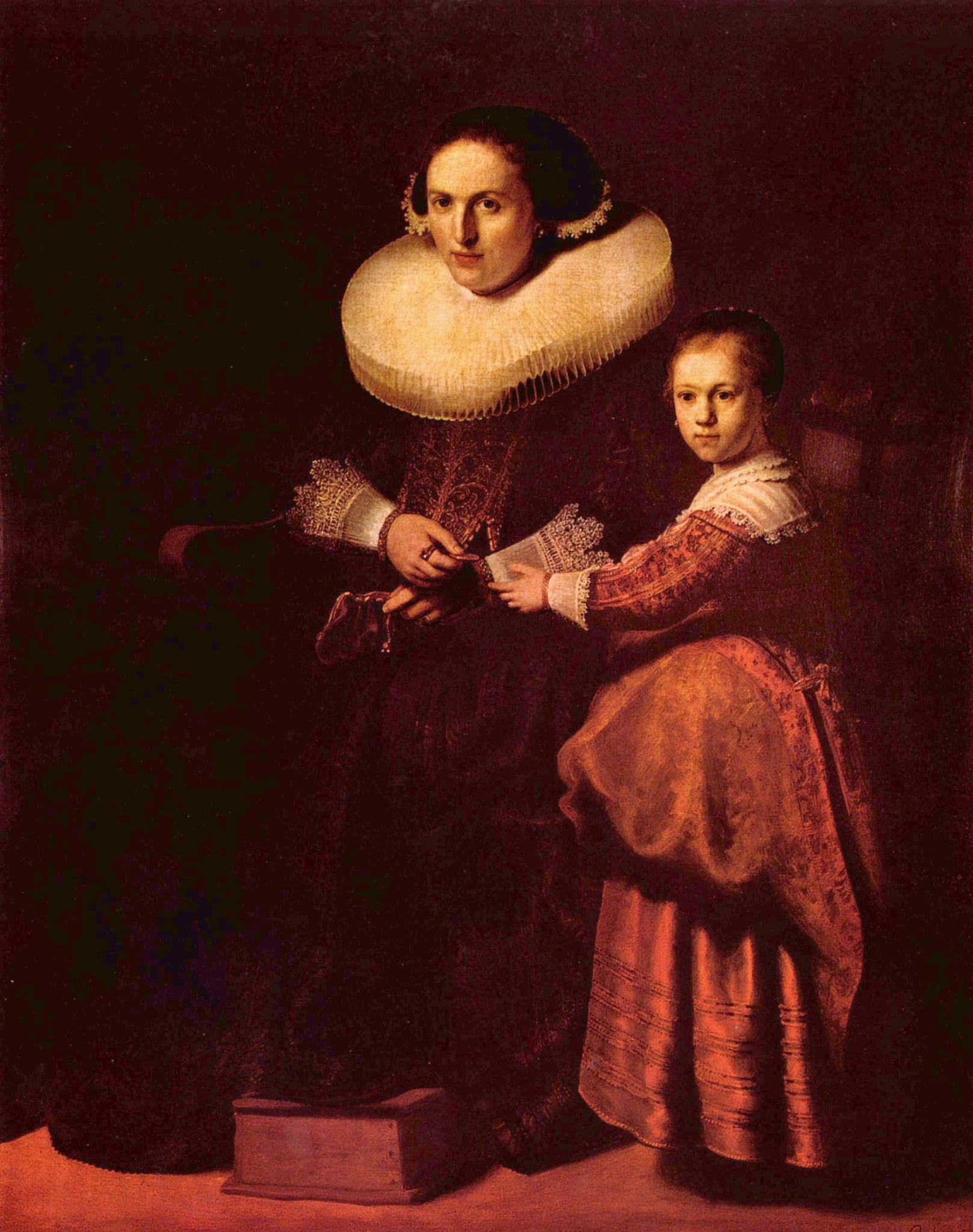
Portraits of Susanna van Collen and her Daughter Anna
Rembrandt van Rijn (c. 1632–33)
A mother and daughter step out of darkness, their faces, hands, and fabrics seized by Rembrandt’s <strong>chiaroscuro</strong>. The mother’s monumental <strong>ruff</strong> and sober black gown declare <strong>prosperity with restraint</strong>, while gloves, a clasped hand, and a book encode civility, lineage, and piety <sup>[1]</sup><sup>[4]</sup><sup>[5]</sup>.