Gaze
The “gaze” symbolism category traces how artists transform eyes, looks, and viewing positions into complex signs of power, interiority, surveillance, and modern self-consciousness across changing artistic regimes.
Featured Artworks
Adam and Eve
Gustav Klimt (1916–1918 (unfinished))
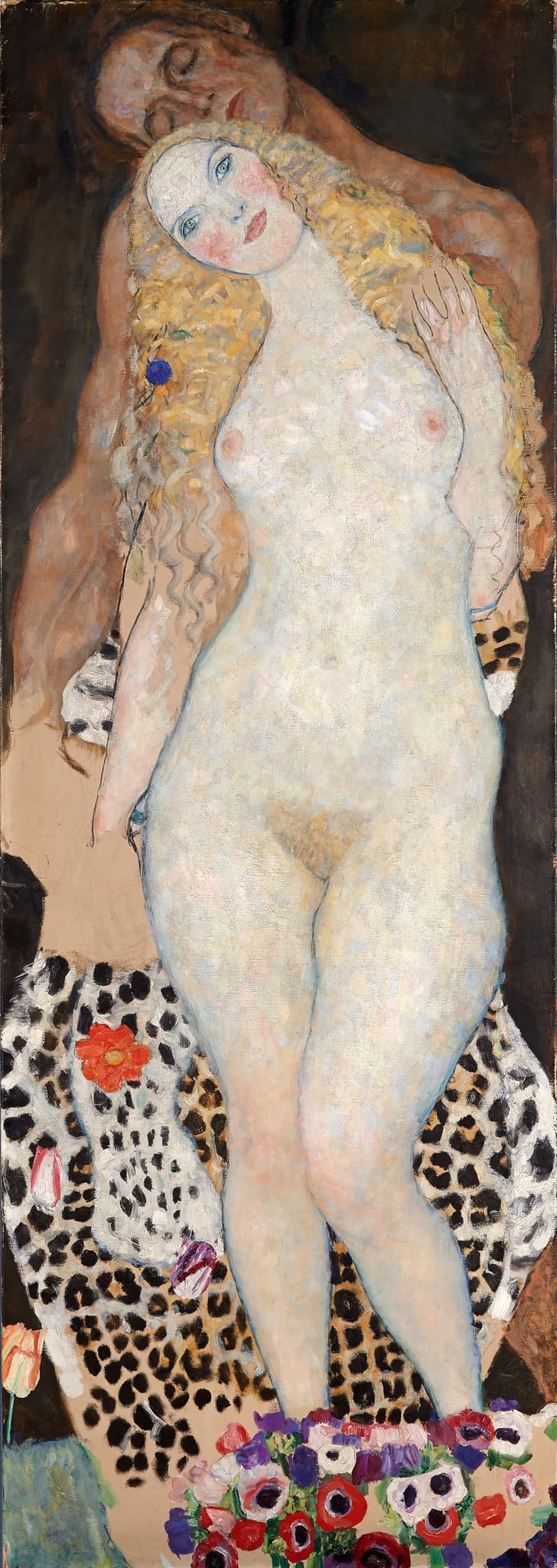
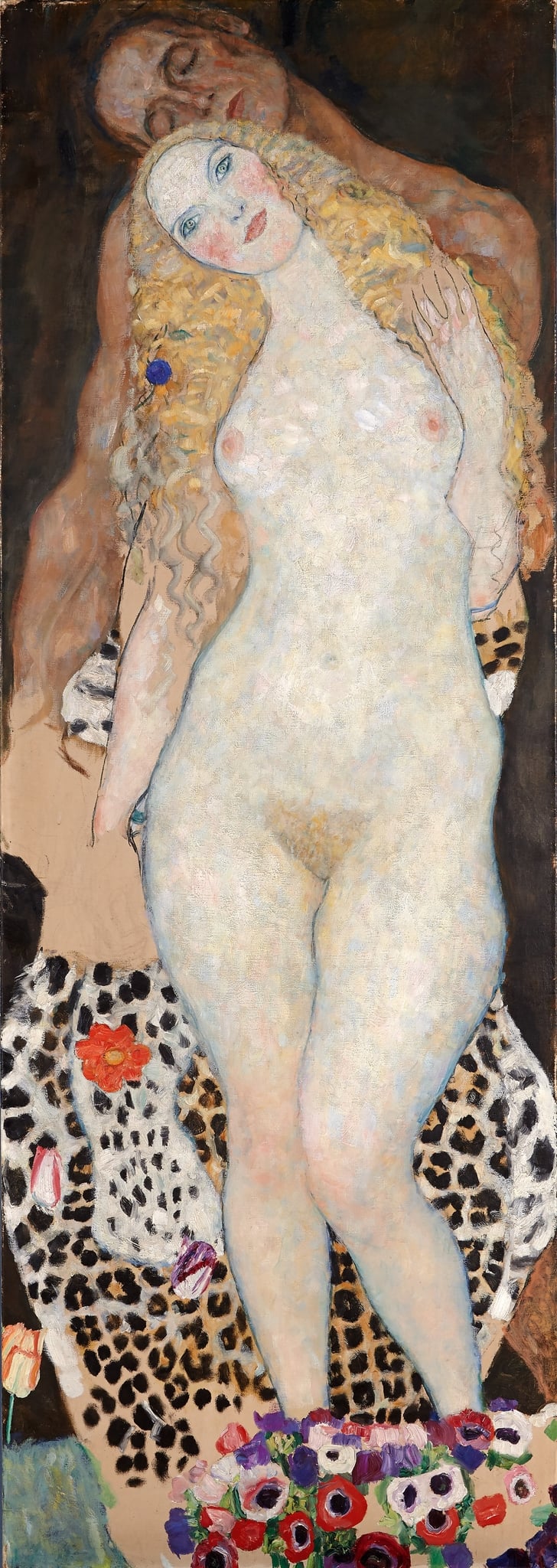
Gustav Klimt’s Adam and Eve recasts the biblical pair as a <strong>sensual, timeless allegory</strong> rather than a didactic tale. Eve’s <strong>luminous, opalescent body</strong> and direct gaze dominate, while Adam recedes in shadow, enfolding her amid a <strong>leopard pelt</strong> and a <strong>carpet of anemones</strong> that signal erotic vitality and fertility <sup>[2]</sup><sup>[3]</sup>.
Berthe Morisot with a Bouquet of Violets
Édouard Manet (1872)
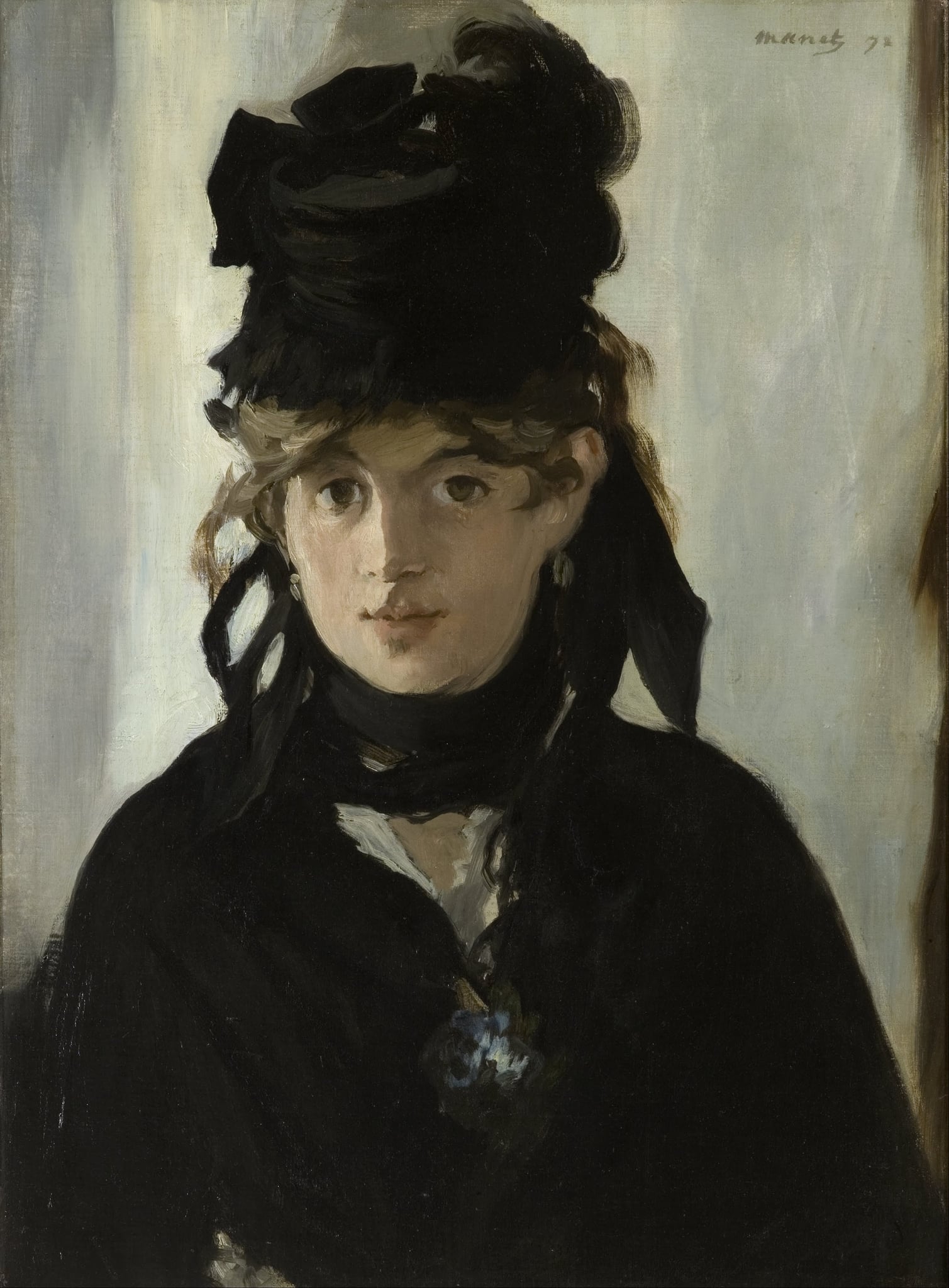
Édouard Manet’s Berthe Morisot with a Bouquet of Violets is a close, modern portrait built as a <strong>symphony in black</strong> punctuated by a tiny violet knot. Side‑light chisels the face from a cool, silvery ground while hat, scarf, and coat merge into one dark silhouette, and the eyes are painted strikingly <strong>black</strong> for effect <sup>[1]</sup>. The single touch of violets introduces a discreet, coded <strong>tenderness</strong> within the portrait’s refined restraint <sup>[1]</sup><sup>[3]</sup><sup>[4]</sup>.
Dustheads
Jean-Michel Basquiat (1982)
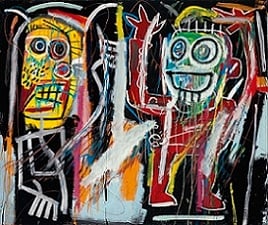
Dustheads stages two electrified, mask-like figures lunging out of a saturated black field, their concentric eyes and bared teeth pumping with <strong>manic, nocturnal energy</strong>. The title’s nod to PCP (“angel dust”) fuses <strong>ecstasy and menace</strong>, turning the scene into a charged allegory of altered perception and survival in downtown New York, 1982 <sup>[1]</sup><sup>[6]</sup>.
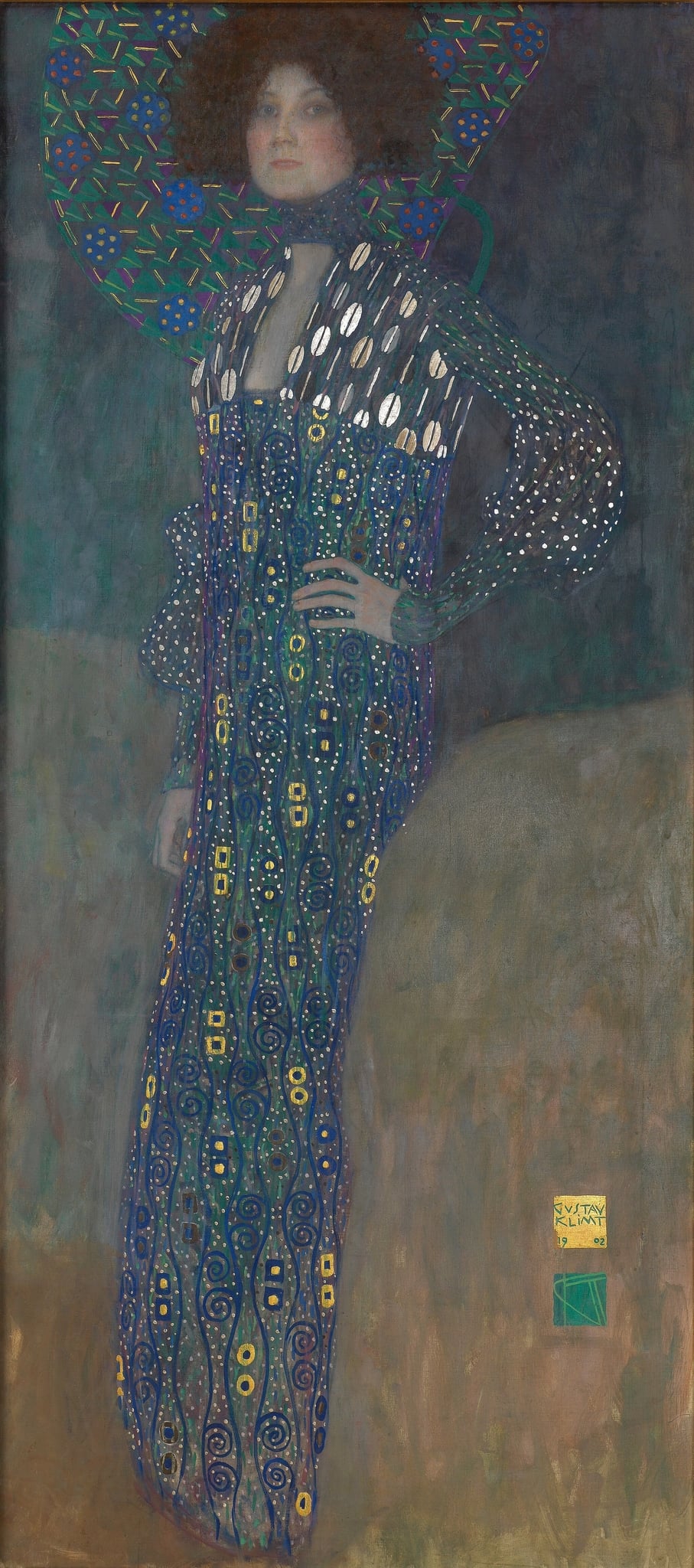
Emilie Flöge
Gustav Klimt (1902)
Gustav Klimt’s Emilie Flöge stages a modern identity as a work of <strong>design</strong> as much as portraiture: a columnar figure, hand on hip, radiates self-possession within a field of spirals, dots, and gold squares. The circular, flowered fan behind the head acts as a <strong>modern halo</strong>, collapsing depth and elevating presence in the Secessionist spirit of the <strong>Gesamtkunstwerk</strong> <sup>[1]</sup><sup>[2]</sup>.
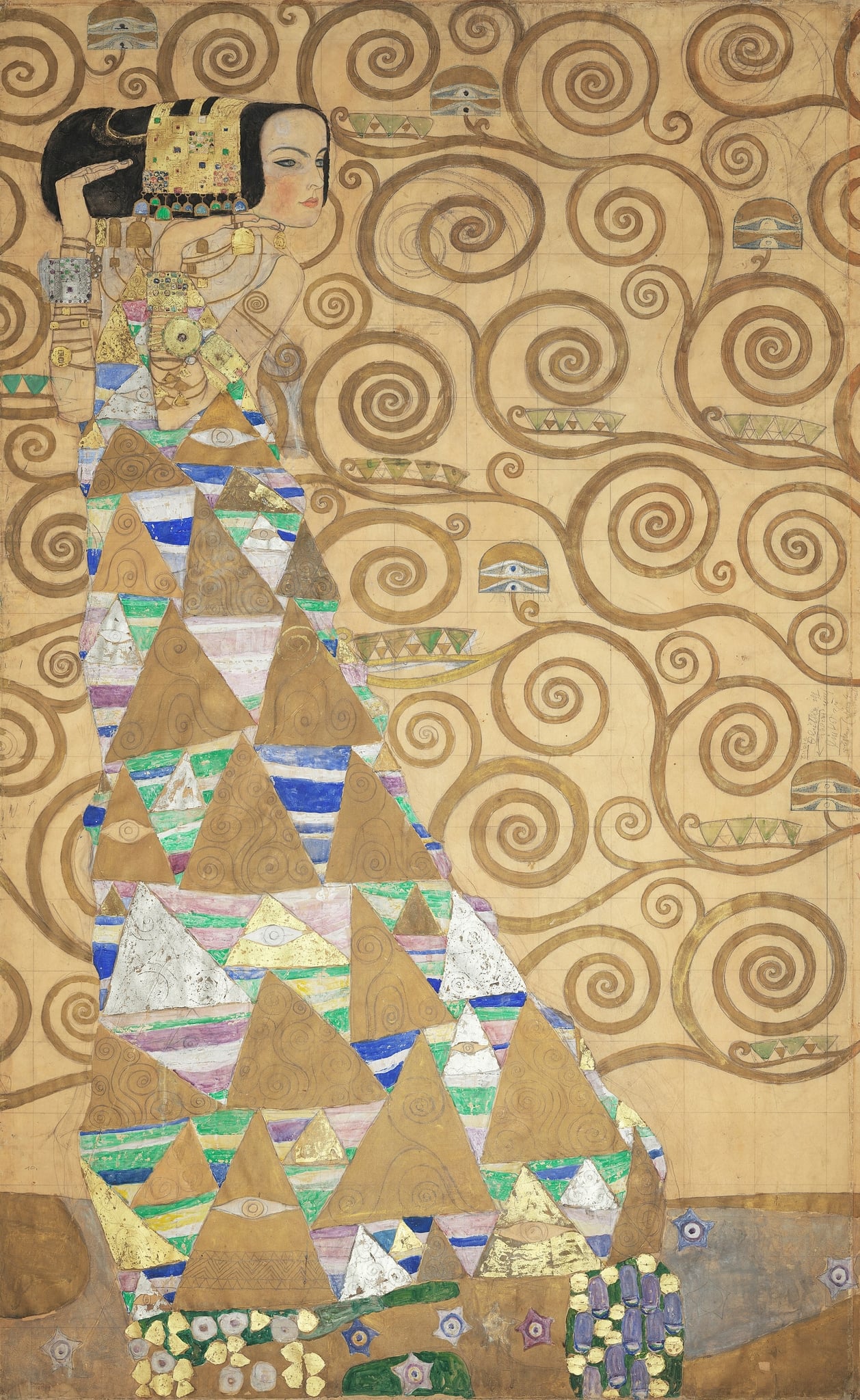
Expectation (Dancer)
Gustav Klimt (1911)
Expectation (Dancer) crystallizes a <strong>charged pause</strong>: a profile figure, rigid as an <strong>Egyptian relief</strong>, advances through a field of spiraling <strong>Tree of Life</strong> coils while a mosaic robe of triangles and watchful <strong>eyes</strong> armors her body. Klimt fuses <strong>ornament and symbol</strong> so that anticipation itself becomes pattern and gold-lit ritual <sup>[1]</sup><sup>[4]</sup>.
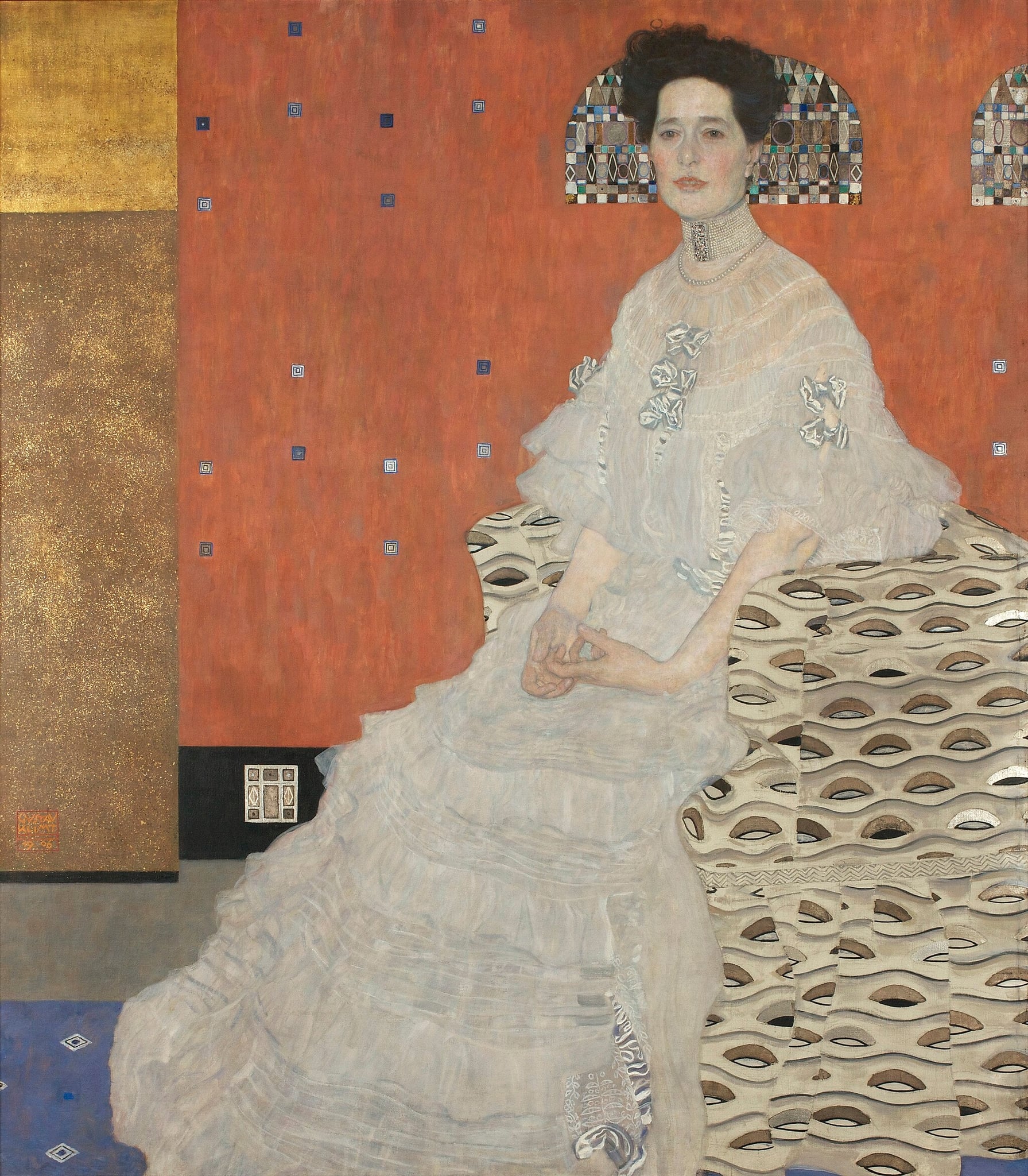
Fritza Riedler
Gustav Klimt (1906)
In Fritza Riedler, Gustav Klimt fuses a hyper‑real face and hands with an emphatically flat, ornamental world to stage a modern self caught between individuality and design. The sitter’s mist‑pale, ruffled gown seems to dissolve as she sits in a chair patterned with almond‑shaped <strong>“eyes,”</strong> before a terracotta wall, arched mosaic <strong>“windows,”</strong> and a radiant block of <strong>gold</strong>. The image reads like a secular icon: bourgeois portraiture elevated to ritual presence.
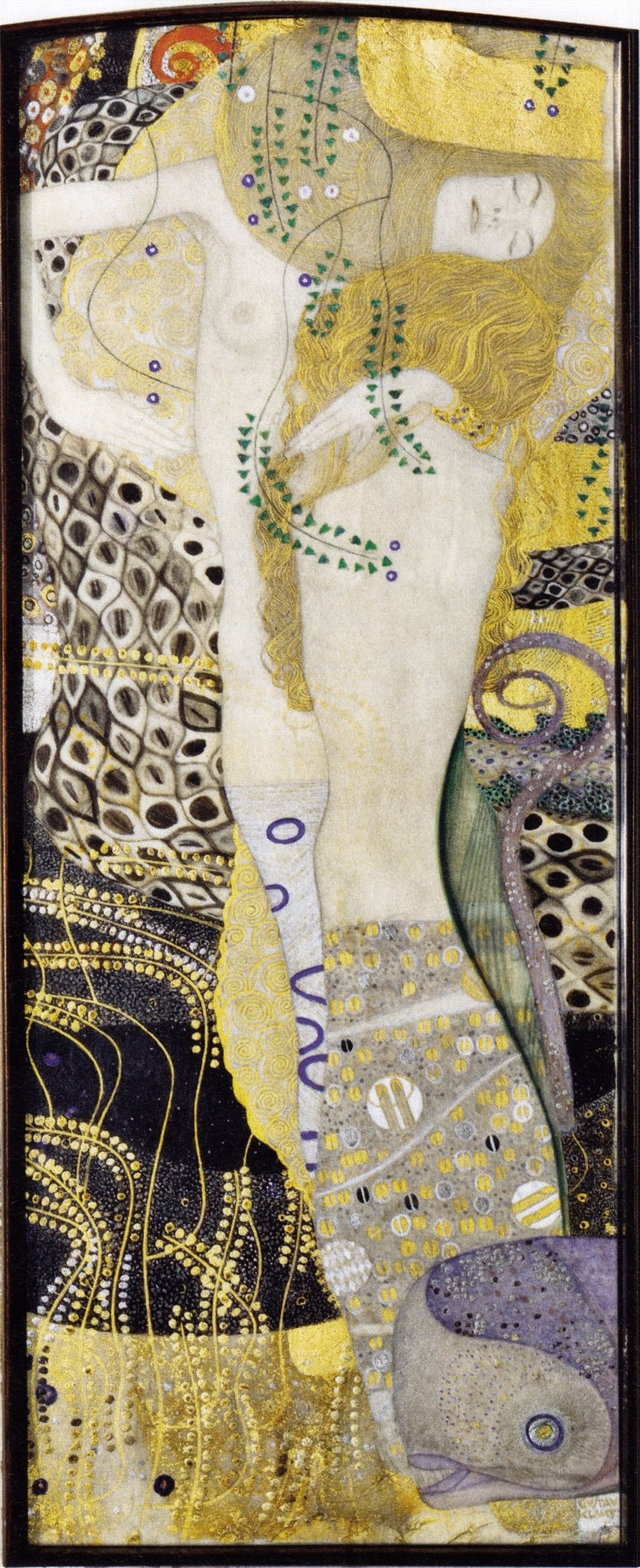
Girlfriends (Water Serpents I)
Gustav Klimt (1904; last revisions by 1907)
Gustav Klimt’s Girlfriends (Water Serpents I) stages two elongated nudes drifting in a jeweled, underwater field where bodies and ornament fuse into a single, <strong>luminous</strong> surface. Closed eyes, interlaced arms, and hair that streams like <strong>currents</strong> seal the scene in intimate secrecy, while metallic scales, eye-shaped ovals, and a watchful fish charge the water with <strong>erotic</strong> and <strong>mythic</strong> tension <sup>[1]</sup><sup>[2]</sup><sup>[3]</sup>.
Jane Avril
Henri de Toulouse-Lautrec (c. 1891–1892)
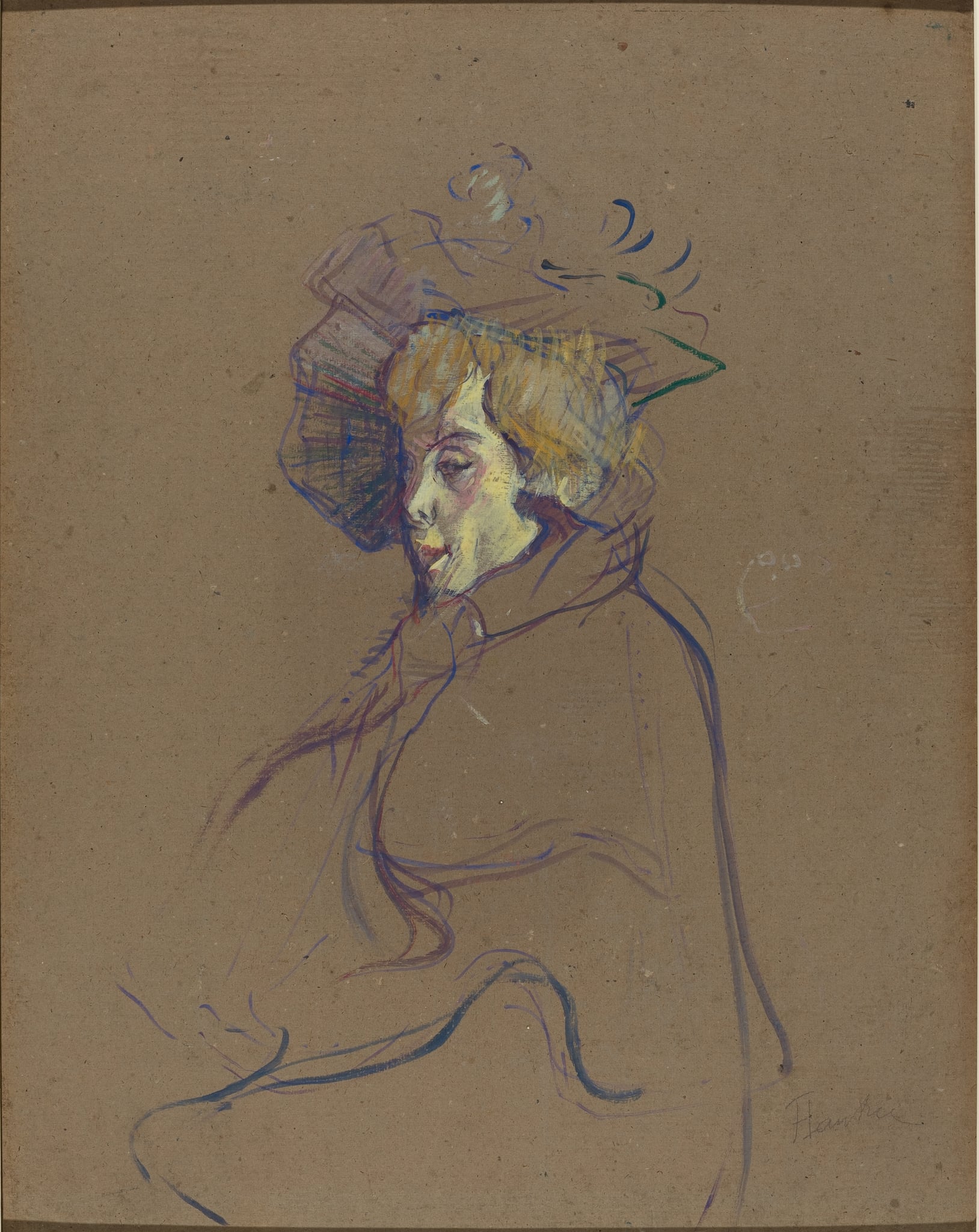
In Jane Avril, Henri de Toulouse-Lautrec crystallizes a public persona from a few <strong>urgent, chromatic strokes</strong>: violet and blue lines whirl into a cloak, while green and indigo dashes crown a buoyant hat. Her face—sharply keyed in <strong>lemon yellow, lilac, and carmine</strong>—hovers between mask and likeness, projecting poise edged with fatigue. The raw brown ground lets her <strong>whiplash silhouette</strong> materialize like smoke from Montmartre’s nightlife.
Jeanne Hébuterne (au foulard)
Amedeo Modigliani (1919)
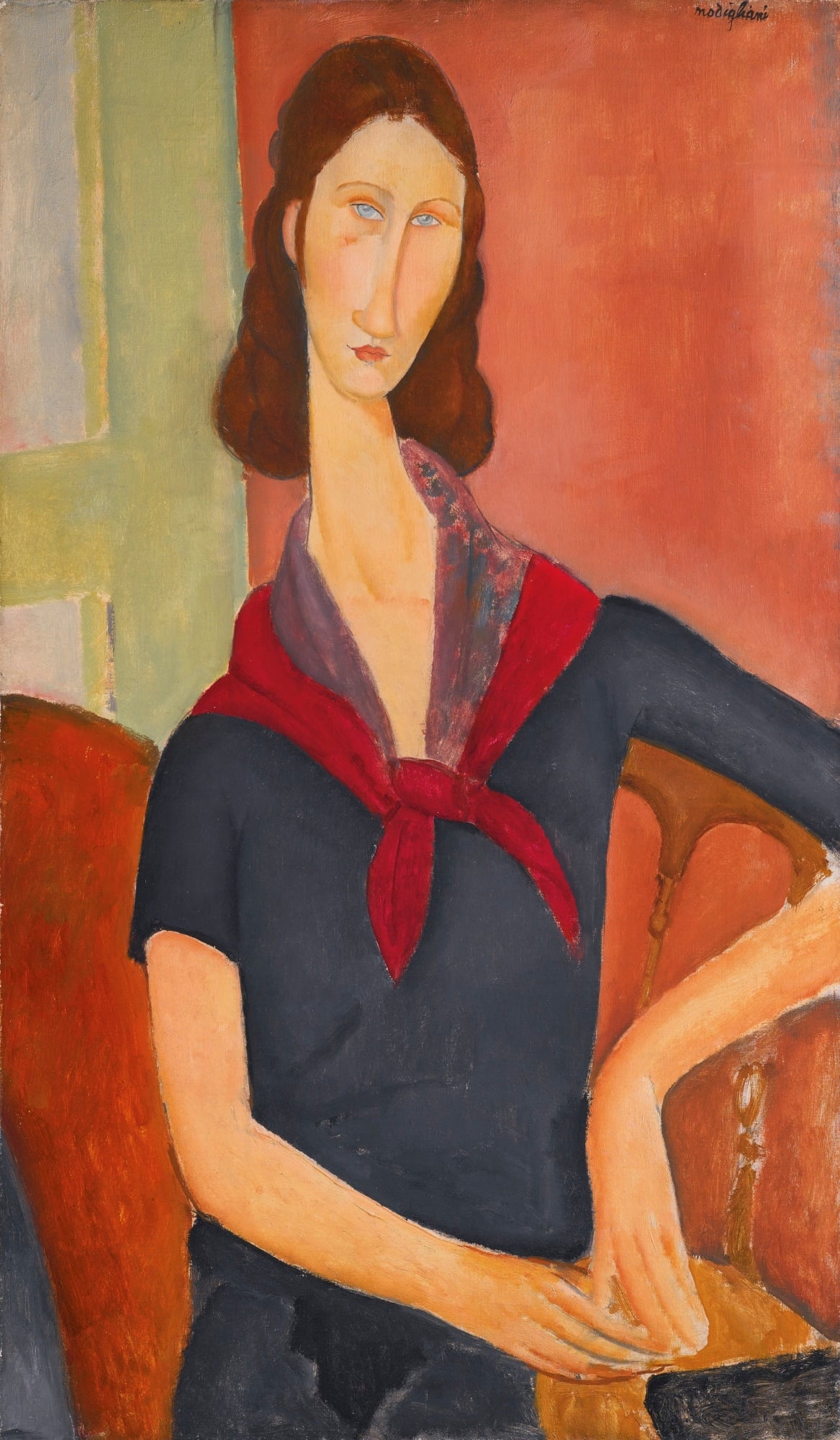
Jeanne Hébuterne (au foulard) crystallizes Modigliani’s late style into a poised emblem of <strong>tenderness held in restraint</strong>. The elongated neck, <strong>masklike visage</strong>, and cool navy dress are pierced by the <strong>red scarf</strong> at the throat, a chromatic node that concentrates feeling and presence <sup>[1]</sup><sup>[2]</sup>. The subtly indicated pupils—rare in many Modigliani portraits—sharpen her psychological immediacy amid the flattened, terracotta field <sup>[1]</sup>.
Les Demoiselles d'Avignon
Pablo Picasso (1907)
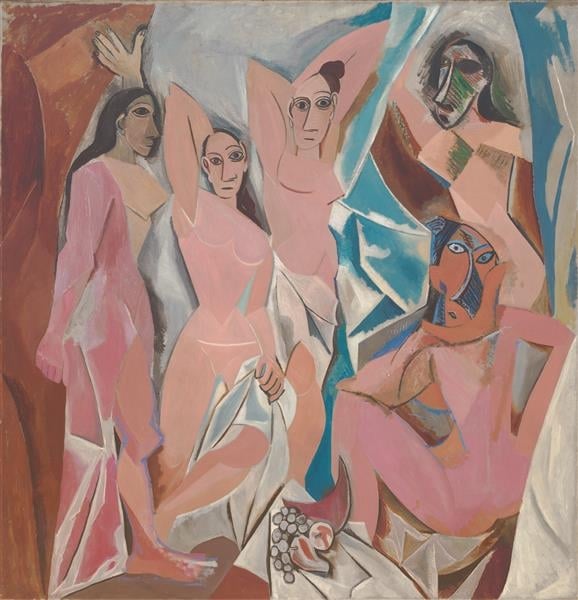
Les Demoiselles d'Avignon hurls five nudes toward the viewer in a shallow, splintered chamber, turning classical beauty into <strong>sharp planes</strong>, <strong>masklike faces</strong>, and <strong>fractured space</strong>. The fruit at the bottom reads as a sensual lure edged with threat, while the women’s direct gazes indict the beholder as participant. This is the shock point of <strong>proto‑Cubism</strong>, where Picasso reengineers how modern painting means and how looking works <sup>[1]</sup><sup>[2]</sup>.
Luncheon on the Grass
Édouard Manet (1863)
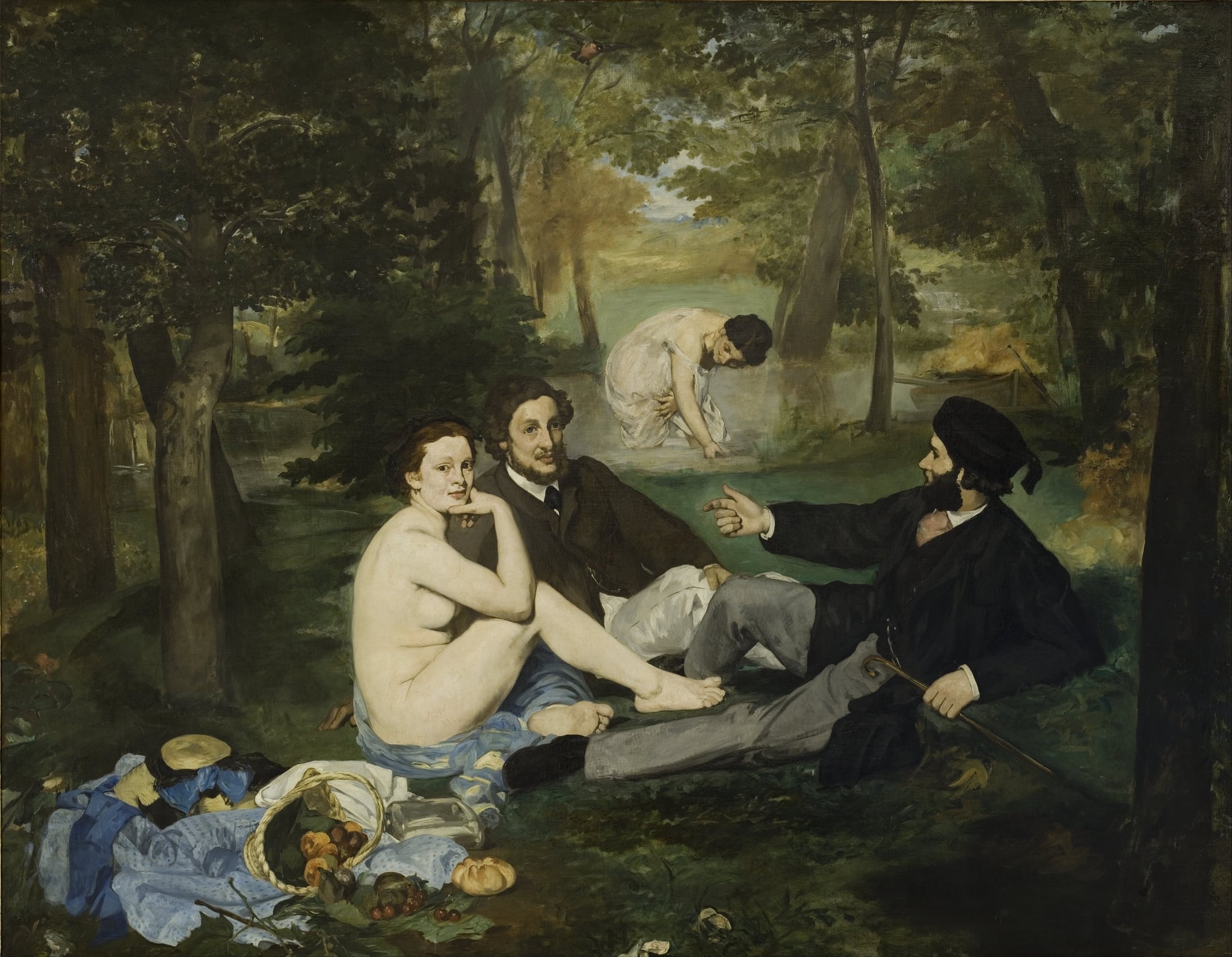
Luncheon on the Grass stages a confrontation between <strong>modern Parisian leisure</strong> and <strong>classical precedent</strong>. A nude woman meets our gaze beside two clothed men, while a distant bather and an overturned picnic puncture naturalistic illusion. Manet’s scale and flat, studio-like light convert a park picnic into a manifesto of <strong>modern painting</strong> <sup>[1]</sup><sup>[2]</sup>.
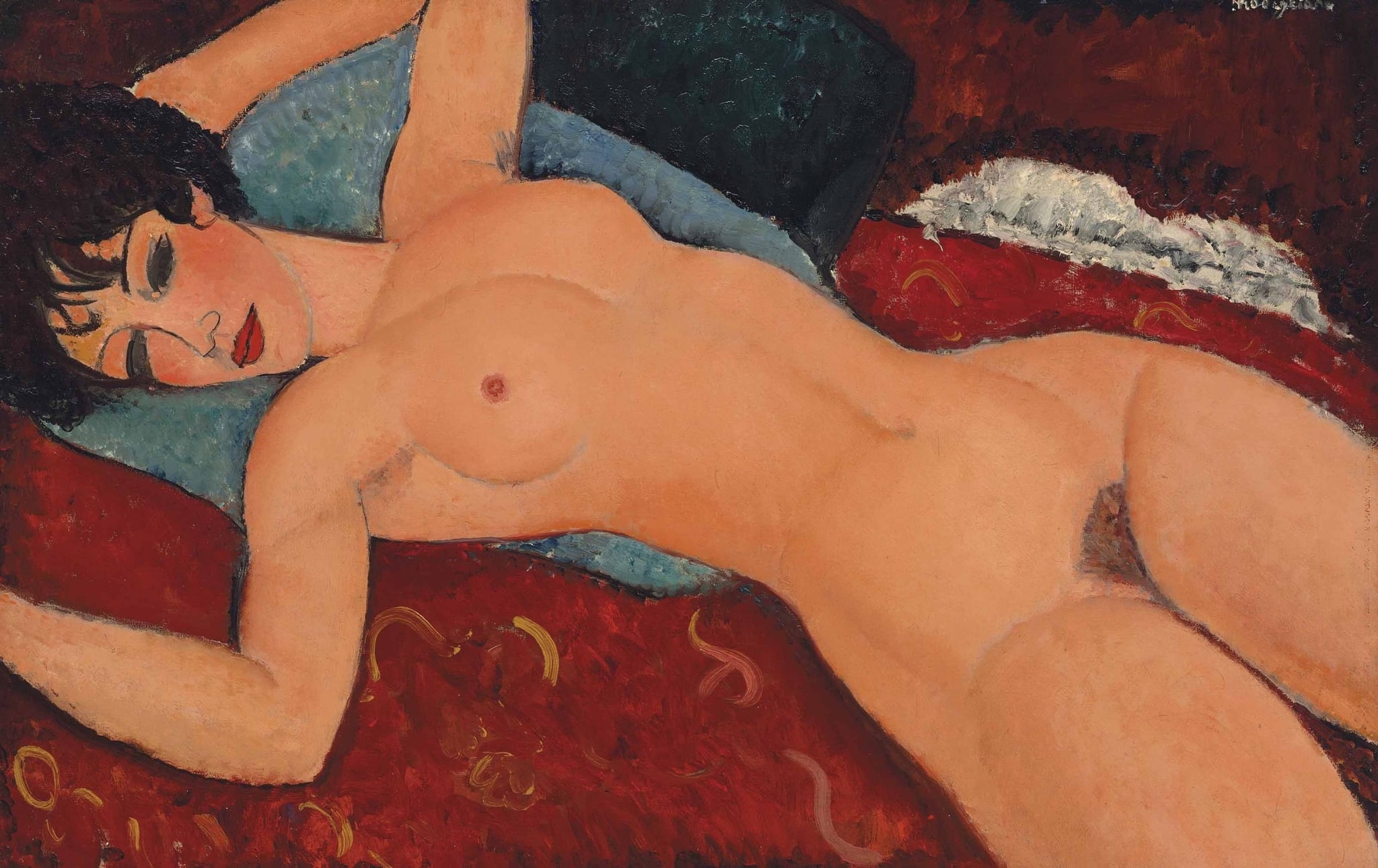
Nu couché
Amedeo Modigliani (1917)
Amedeo Modigliani’s Nu couché (1917) recasts the reclining nude as a <strong>modern icon of desire</strong>—a body reduced to <strong>lyric contour</strong> and glowing planes that stretch diagonally across a crimson bed. Warm, peach-toned flesh is keyed against <strong>saturated reds</strong> and <strong>cool blue pillows</strong>, fusing intimacy with monumentality while stripping away myth to confront eroticism directly <sup>[2]</sup><sup>[3]</sup>. Painted amid wartime Paris, it helped ignite the 1917 censorship scandal and later became a market landmark, underscoring its status as a defining image of <strong>modernism’s nude</strong> <sup>[4]</sup><sup>[5]</sup>.
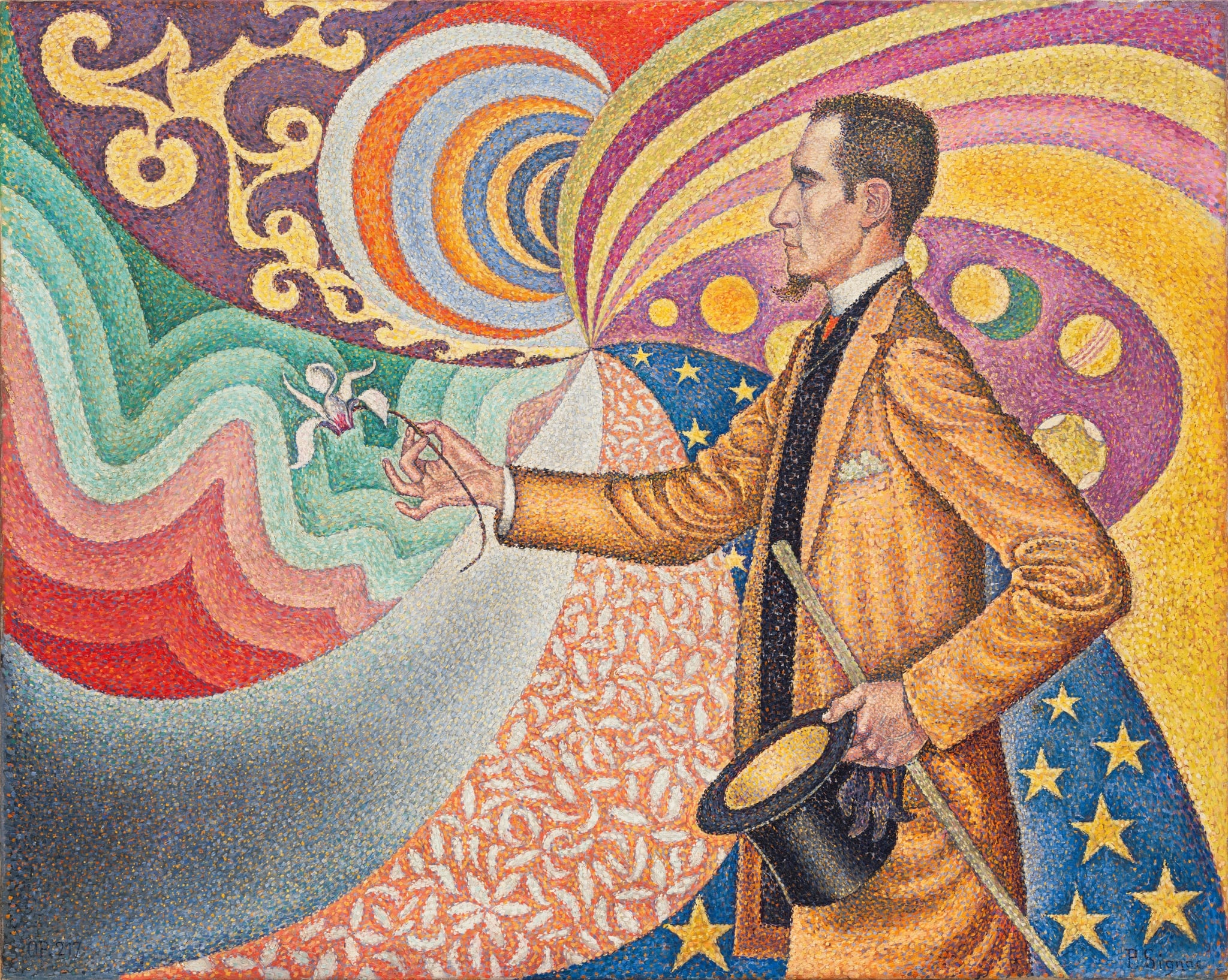
Portrait of Félix Fénéon
Paul Signac (1890)
Portrait of Félix Fénéon turns a critic into a <strong>conductor of color</strong>: a dandy in a yellow coat proffers a delicate cyclamen as concentric disks, whiplash arabesques, stars, and palette-like circles whirl around him. Rendered in precise <strong>Pointillist</strong> dots, the scene stages the fusion of <strong>art, science, and modern style</strong>.<sup>[1]</sup><sup>[2]</sup>
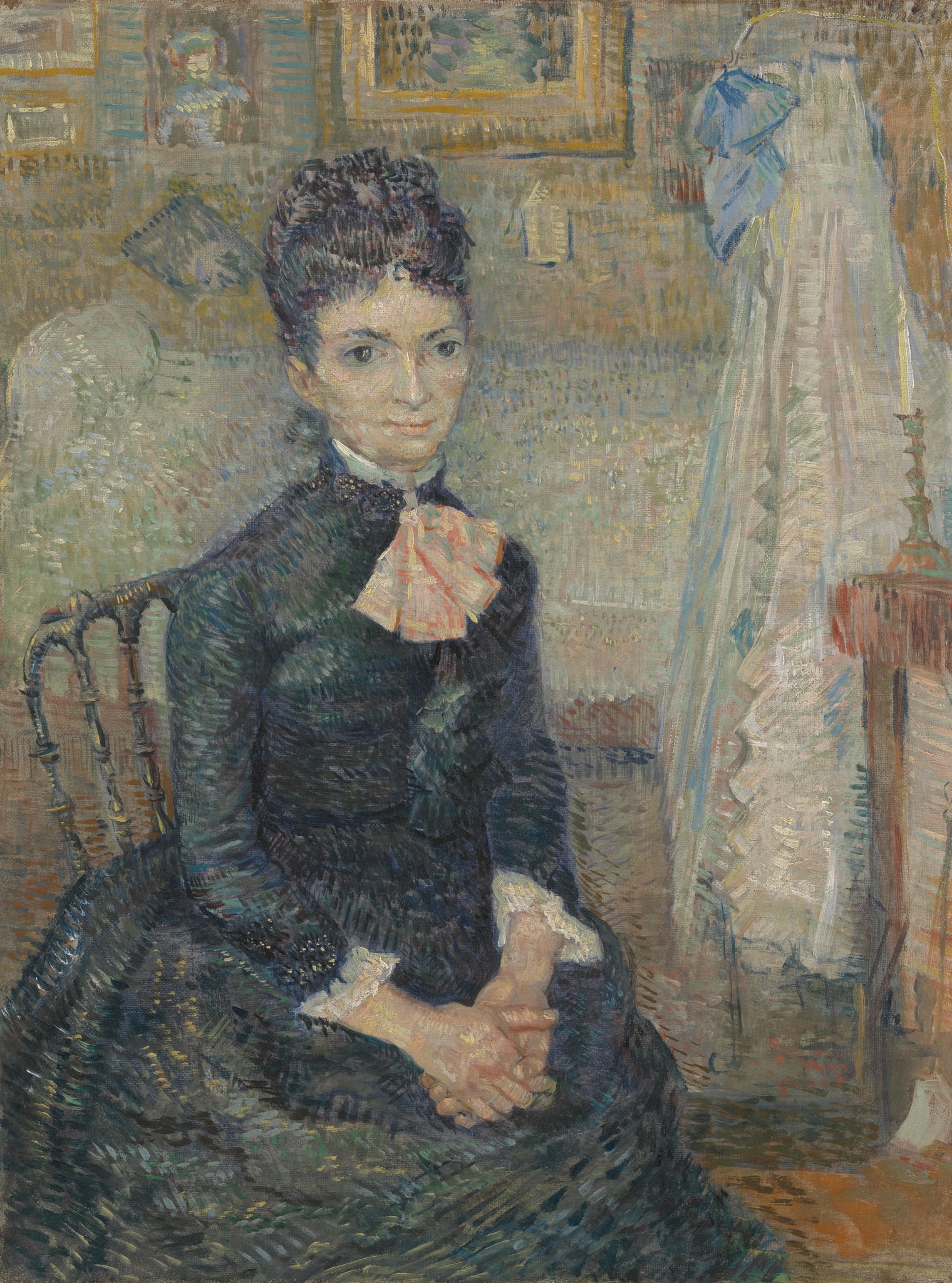
Portrait of Léonie Rose Charbuy-Davy
Vincent van Gogh (1887)
Vincent van Gogh’s Portrait of Léonie Rose Charbuy-Davy stages a composed, middle-class interior where a seated woman’s folded hands and dark blue-green dress meet a tremulous field of short, vibrating strokes. The cradle, fireplace glow, and dotted facture refract her poised exterior through <strong>modern, experimental color and touch</strong> <sup>[1]</sup><sup>[3]</sup>. The result is a portrait of <strong>maternal identity</strong> as much as a likeness, anchored by the hearth and cradle yet unsettled by the flicker of the paint itself <sup>[1]</sup>.
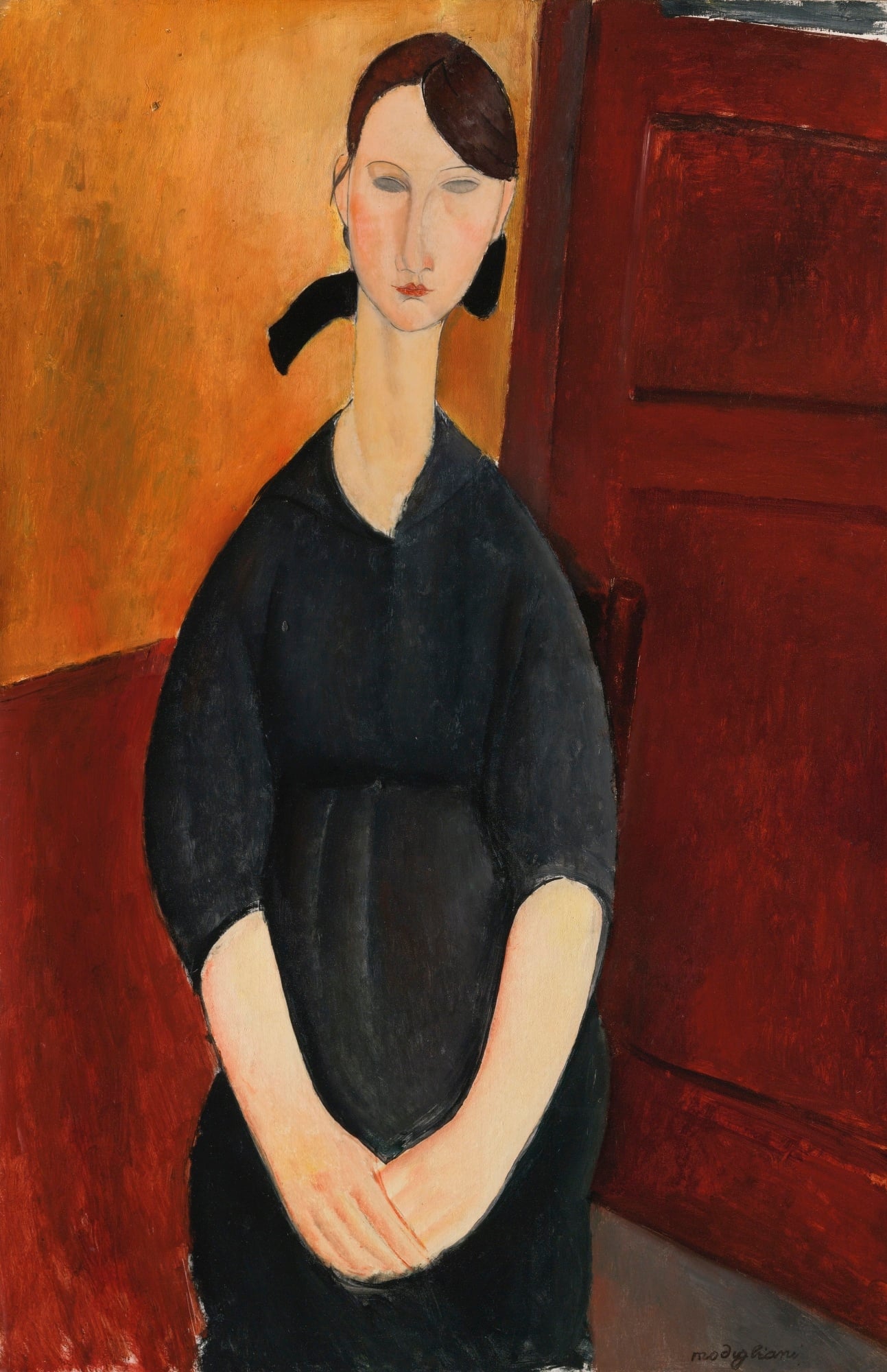
Portrait of Paulette Jourdain
Amedeo Modigliani (1919)
Portrait of Paulette Jourdain crystallizes a young sitter into a <strong>poised, timeless icon</strong>: an attenuated neck, mask-like almond eyes, and gently folded hands set before ochre walls and a <strong>slightly ajar red door</strong>. Modigliani’s sculptural contour and restrained palette turn likeness into an <strong>archetype of grace and inwardness</strong> <sup>[1]</sup><sup>[2]</sup><sup>[3]</sup>.
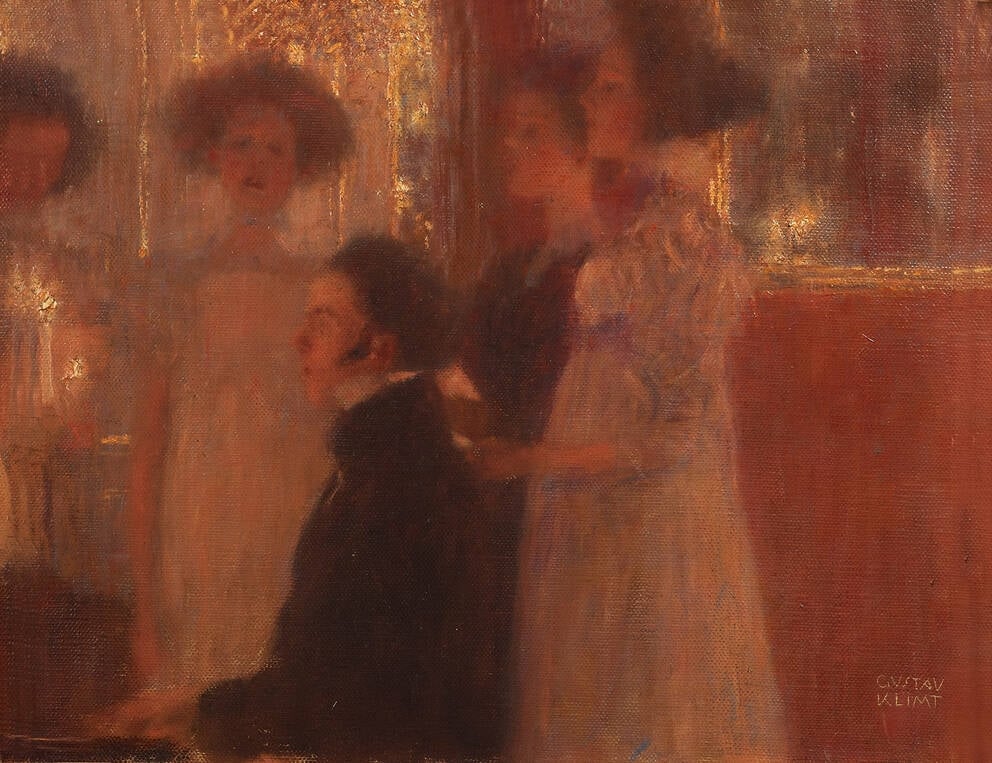
Schubert at the Piano. Design for the music room by Nikolaus Dumba
Gustav Klimt (1896)
Klimt’s 1896 oil study <strong>Schubert at the Piano. Design for the music room by Nikolaus Dumba</strong> turns a domestic recital into a glowing myth of listening. In dim, rosy-gold light, a dark-clad pianist is encircled by a soft choir of women whose blurred faces dissolve into the shimmer of the room. Klimt fuses contour and light so that sound seems to become <strong>radiance</strong>, anticipating his decorative modernism <sup>[1]</sup><sup>[2]</sup>.
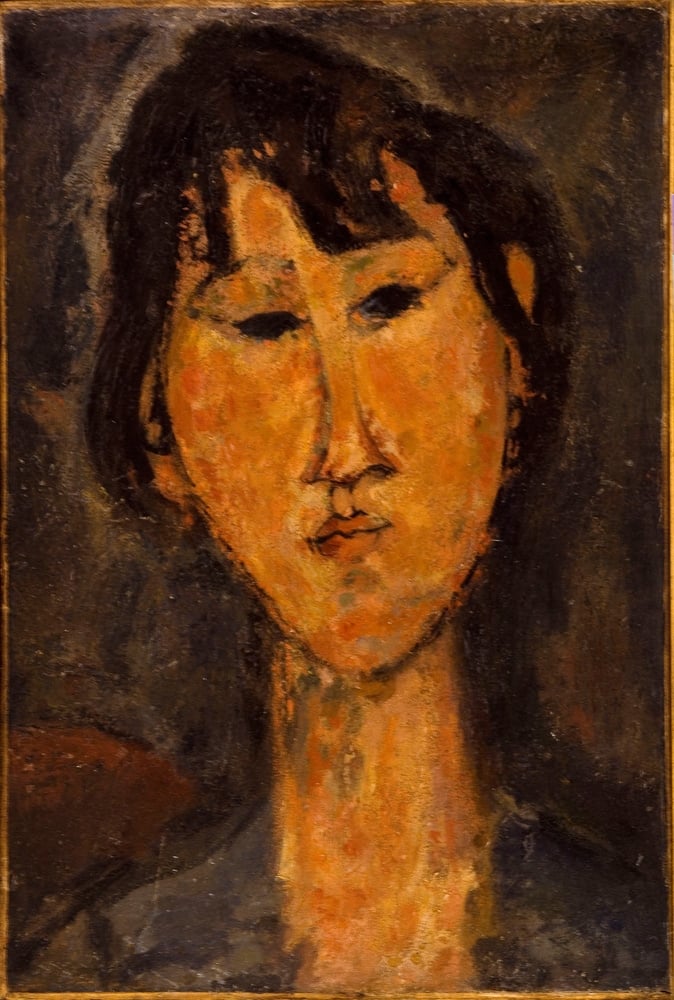
Tête
Amedeo Modigliani (1915)
<strong>Tête</strong> distills a human face into an icon: an ovoid head, blade-like nose, tight bow of lips, and slitted, pupil-less eyes emerging from a dark, smoky field. Drawing on his sculptural idiom, Amedeo Modigliani fuses <strong>elegance and estrangement</strong> so the sitter becomes a universal sign rather than a likeness <sup>[1]</sup><sup>[2]</sup>.
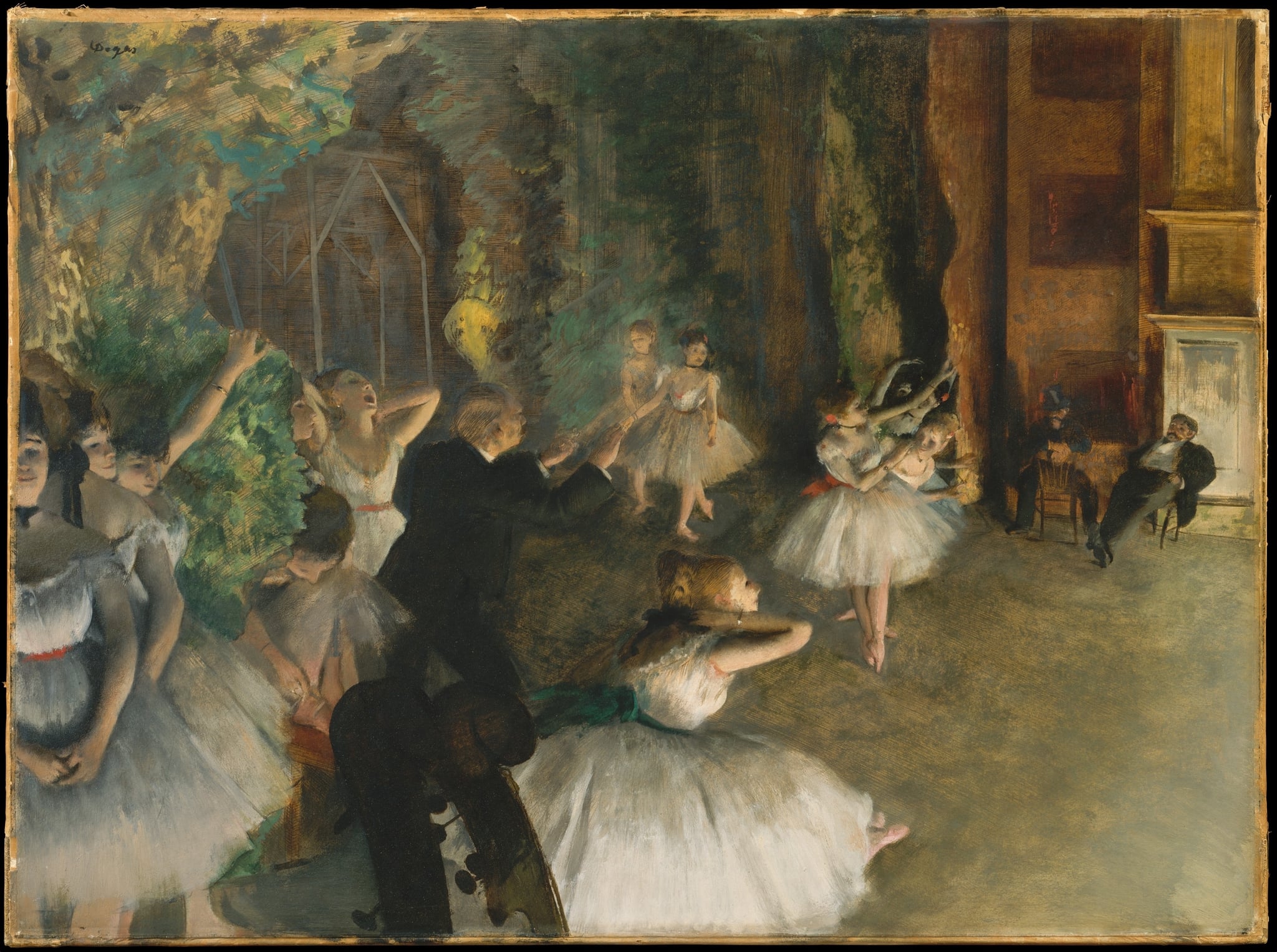
The Rehearsal of the Ballet Onstage
Edgar Degas (ca. 1874)
Degas’s The Rehearsal of the Ballet Onstage turns a moment of practice into a modern drama of work and power. Under <strong>harsh footlights</strong>, clustered ballerinas stretch, yawn, and repeat steps as a <strong>ballet master/conductor</strong> drives the tempo, while <strong>abonnés</strong> lounge in the wings and a looming <strong>double bass</strong> anchors the labor of music <sup>[1]</sup><sup>[3]</sup><sup>[4]</sup>.
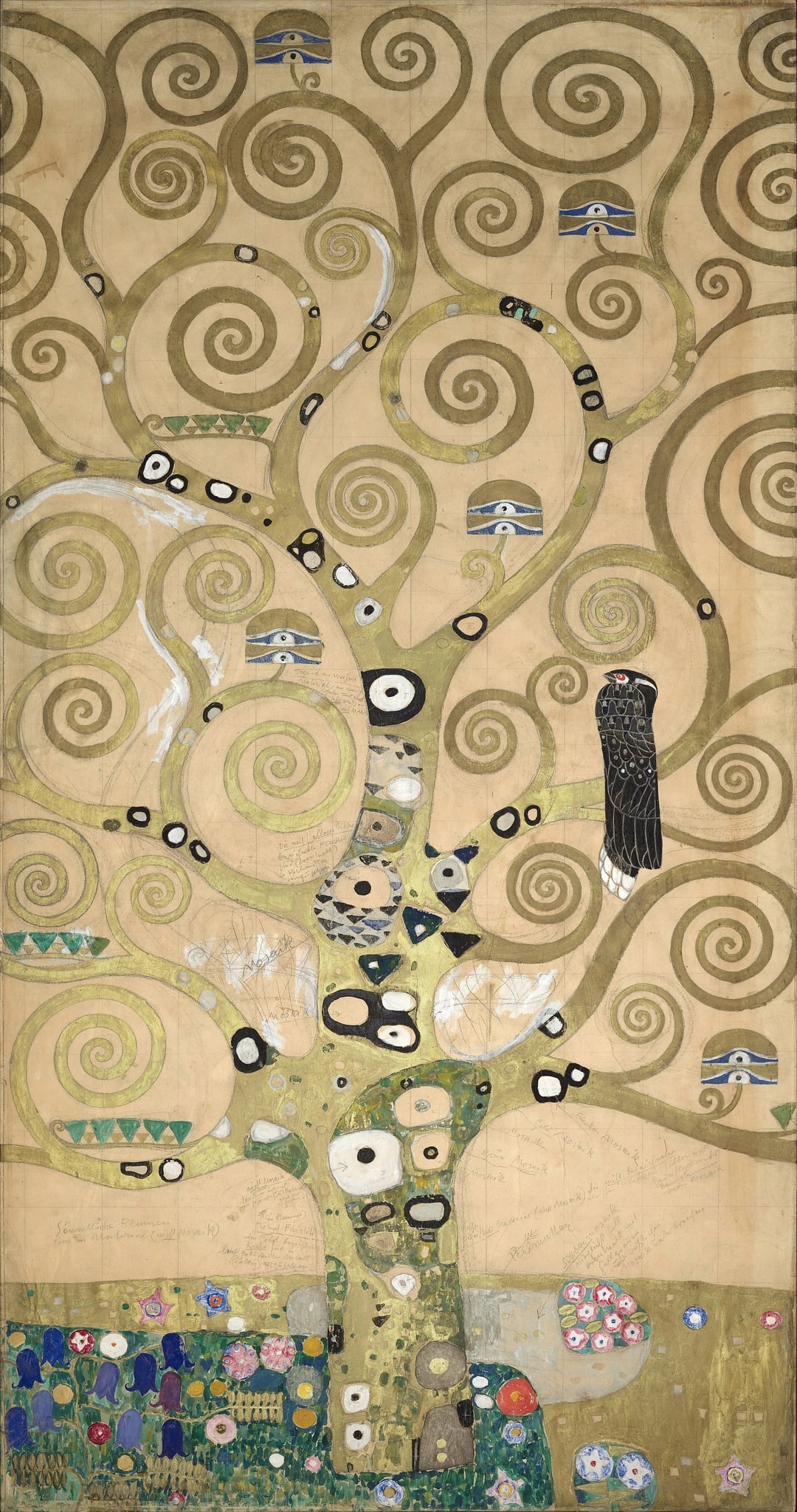
The Tree of Life
Gustav Klimt (1910–1911 (design; mosaic installed 1911))
Gustav Klimt’s The Tree of Life crystallizes a <strong>cosmological axis</strong> in a gilded ornamental language: a rooted trunk erupts into <strong>endless spirals</strong>, embedded with <strong>eye-like rosettes</strong> and shadowed by a black, red‑eyed bird. Designed as part of the Stoclet dining‑room frieze, it fuses <strong>symbolism and luxury materials</strong> to link earthly abundance with timeless transcendence <sup>[1]</sup><sup>[2]</sup>.
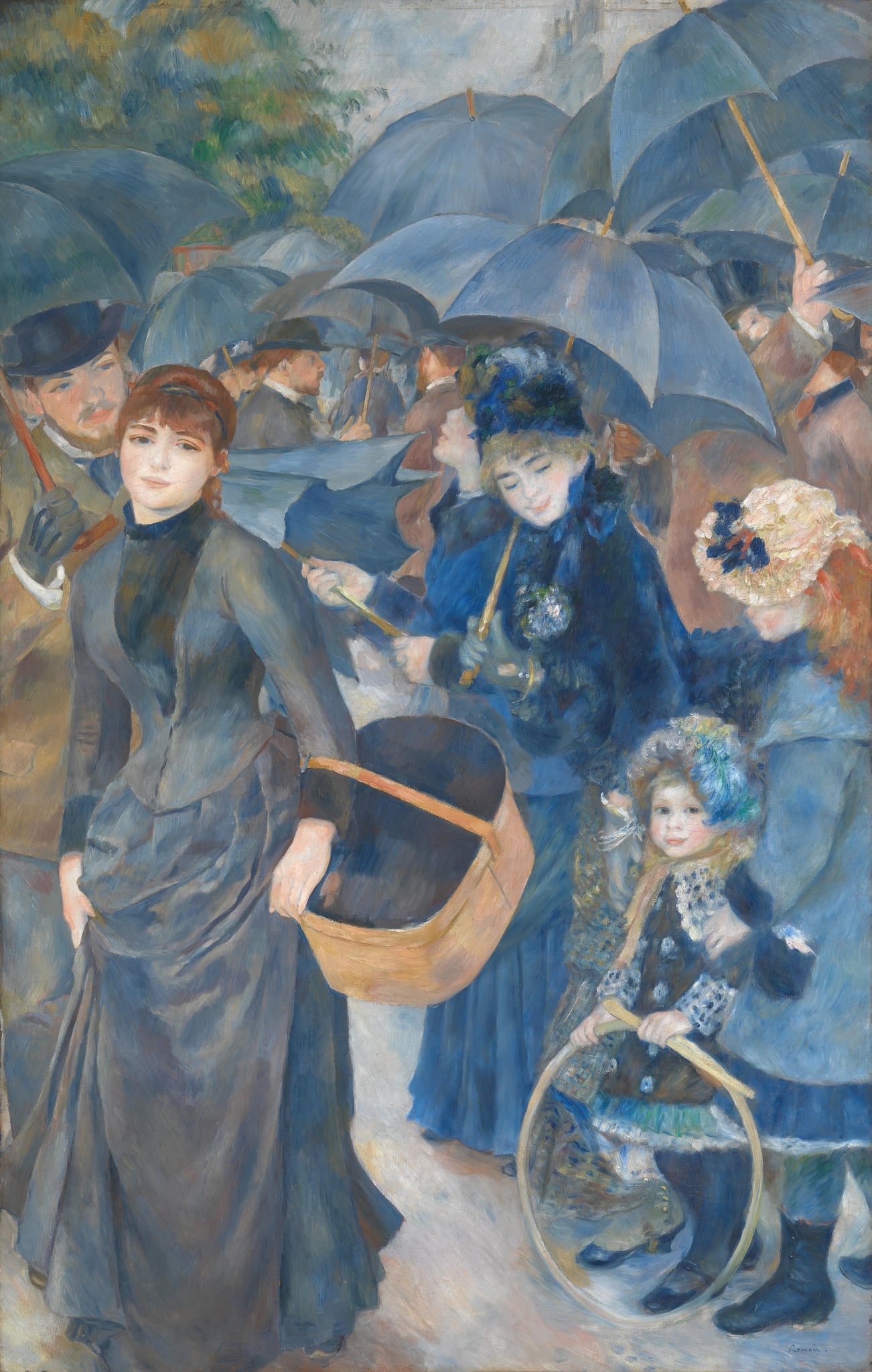
The Umbrellas
Pierre-Auguste Renoir (about 1881–86)
A sudden shower turns a Paris street into a lattice of <strong>slate‑blue umbrellas</strong>, knitting strangers into a single moving frieze. A bareheaded young woman with a <strong>bandbox</strong> strides forward while a bourgeois mother and children cluster at right, their <strong>hoop</strong> echoing the umbrellas’ arcs <sup>[1]</sup><sup>[5]</sup>.
Related Themes
Within art history, the gaze has never been a neutral conduit of vision; it is a coded site where power, desire, belief, and self-consciousness crystallize. From religious icons that posit a reciprocal, judging eye to modern portraits that dramatize the instability of looking, ocular motifs and directed gazes organize the relation between image and beholder. The symbols gathered under this category—ranging from almond-shaped eyes drained of pupils to confrontational stares, amorphous sfumato, and literal spectators within the depicted scene—chart a shift from transcendent watching to worldly surveillance and finally to reflexive, psychological seeing. They function both semiotically, as repeatable signs whose meaning can be learned, and iconographically, as motifs embedded in specific narratives and pictorial traditions.
At one pole stand motifs that literalize vigilance and oversight. Klimt’s Expectation (Dancer) offers a concentrated instance in the robe “armored” with eye-like ornaments. These embedded eyes and the surrounding concentric-ring circles operate semiotically as a field of watchfulness. They echo, in abstracted form, the “concentric-ring circles (‘eyes’/studs)” and related “concentric target/disks” described in the symbolism glossary: repeated ocular forms that can read simultaneously as eyes and as rivets or studs. In their iconographic context—the Tree of Life frieze and its gold-clad, ritual space—these eyes do not simply decorate; they signal a heightened state of alertness in which expectation is figured as an almost cosmological vigilance. The woman’s intent profile gaze, directed into the spiral-thick space ahead, fuses with the robe’s multiplied eyes to construct a total environment of perception: her body is both seeing and seen, a sensor among other sensors.
This ornamental vigilance recurs in Klimt’s Girlfriends (Water Serpents I), where “eye-shaped ovals/scales” and the rounded, watchful fish punctuate the drifting female bodies. The fish’s fixed circular eye functions iconographically as a sentinel at the edge of an otherwise secret scene of intertwined nudes with closed eyes. Semiotically, it mirrors the role of the all-seeing eye: a node of concentrated awareness that guarantees the scene’s visibility to some other presence, even as the lovers themselves remain inwardly turned. Klimt’s decorative eyes thus oscillate between apotropaic “Eyes of Horus” traditions—protective, healing vision—and a more modern, eroticized surveillance in which ornamental vision surrounds and frames intimate bodies.
The category also encompasses modern strategies that internalize the gaze, turning literal eyes into symbols of psychological depth or opacity. Modigliani’s Jeanne Hébuterne (au foulard) is paradigmatic. His almond-shaped eyes, when left without pupils in other works, are famously read as “mask-like eyes that reject literal description, signaling inwardness and mystery.” Here, however, the “almond eyes with visible pupils” puncture that mask, admitting a measured psychological immediacy. Semiotically, the tiny pupils operate as minimal but decisive marks that shift the head from archetype to subject. The sitter’s direct yet gentle gaze, stabilized by the elongated neck and terracotta field, presents an interior life that is accessible but guarded; it oscillates between the withheld, pupilless mask and the confronting eye/gaze associated with defiance and accusation. The red scarf at the throat further anchors this gaze, so that looking becomes bound to breath and voice: seeing and speaking are coiled together at the juncture of the self.
Édouard Manet’s Berthe Morisot with a Bouquet of Violets radicalizes another aspect of ocular symbolism: the eye as a constructed, emphatic focus point. The “deeply black eyes” are not naturalistic—the Musée d’Orsay notes their deliberate exaggeration—but function semiotically as dark anchors within a symphony of blacks. Their inky tonality intensifies the sitter’s “direct, steady gaze,” aligning with the entry’s emphasis on self-scrutiny and the craft of seeing. In iconographic terms, Morisot’s role as a painter inflects this gaze: she is not merely a model but a seeing subject, her black eyes a metonym for artistic vision itself. Manet’s decision to homogenize costume into near-abstract darkness further isolates the eyes as the composition’s semantic core: they hold the portrait’s tension between intimacy and distance, affection and reserve, as signaled by the discreet knot of violets.
If Manet and Modigliani probe subjective interiority, Picasso’s Les Demoiselles d’Avignon weaponizes the gaze as social and erotic confrontation. The “confrontational gaze/frontality” of three central figures and the mask-like, almond eyes of the two right-hand women enact what the glossary calls a “direct gaze of the nude” that “challenges passive, idealized classical nudity.” Semiotically, the direct stare collapses the classical hierarchy in which the female body is offered to an invisible viewer; instead, the women look back, indicting the beholder as participant in the brothel economy the painting exposes. The stylized, mask-like eyes—stripped of individualized softness—link to ethnographic and ritual masks, importing a non-Western visual vocabulary that both shields and hardens their faces. Iconographically, this move recasts the brothel not as anecdote but as a stage for modernity’s fractured, dangerous acts of looking: desire here is laced with threat, as the jagged still life below mirrors the sharpness of their gaze.
Jean-Michel Basquiat’s Dustheads extends the history of the gaze into the terrain of altered perception. The “concentric ‘target’ eyes” on the electrified, mask-like figures literalize hyperarousal; they are not eyes that see calmly, but eyes as sensors locked in overstimulated states. Semiotically, they merge the all-seeing eye with the technological crosshairs of modern targeting, embedding surveillance within the very physiology of the figures. The golden halo over one head complicates this further, affiliating the frantic gaze with the sanctifying motifs of earlier religious art. Iconographically, in the context of 1980s New York and the title’s reference to PCP users, these target-eyes register the psychic cost of urban visibility: to be “seen” as a dusthead is to be fixed in the crosshairs of policing, stigma, and myth. Basquiat thus retools the gaze as both symptom and accusation—a mark of survival within an environment of hostile watching.
Across these examples, intermediating gazes and halos modulate the relationship between image and viewer. In Klimt’s Fritza Riedler, the chair back patterned with “almond-shaped eyes” and the arched, window-like forms behind her head echo the function of a “circular halo/fan” in Emilie Flöge: they create an aura of iconic presence. Yet the ornamental eyes in Riedler’s chair also hint at the “gaze of society,” an undercurrent of social surveillance that frames her bourgeois poise and “Folded Hands and Upright Posture.” The sitter is elevated and constrained at once—her direct, composed look negotiated through a lattice of watching motifs. In Flöge’s portrait, by contrast, the halo-like fan behind the head underscores a self-fashioned modern identity; her unflinching gaze and hand-on-hip stance occupy that iconic circle with confident agency rather than submission.
Taken together, these works chart a historical evolution in the symbolism of the gaze. Pre-modern all-seeing and amuletic eyes, oriented toward cosmic order and protection, are reconfigured by Klimt into ornamental fields of erotic vigilance and secular guardianship. The mask-like, pupilless eyes associated with inward mystery in Modigliani’s vocabulary coexist, in the same period, with the confrontational, accusatory stares of Manet’s and Picasso’s modern women. By the late twentieth century, Basquiat’s target-eyes bear the imprint of policing, addiction, and media optics, marking a world in which to see and to be seen are inseparable from systems of control. Throughout, artists exploit the semiotic pliability of eyes and gazes—direct, averted, multiplied, or drained of detail—to stage the ethics and dangers of looking, turning the gaze itself into one of modern art’s most charged symbolic arenas.